Why Heavy Metals Demand a Different Treatment Strategy
Heavy metals — Pb, Zn, Hg, Ni, Cd, Cu, Cr, and As — share an engineering fingerprint of density above 3.8 g/cm³, a non-biodegradable persistence, and a tendency to accumulate in biosolids rather than break down (per PMC review, 2020). The organics playbook fails for metals: there is no metabolic pathway to "destroy" a copper ion, only a phase change into a sludge that must still be disposed of as hazardous waste. Compliance is therefore driven by removal-to-sludge, not destruction, and the binding floor in most jurisdictions is the WHO/USEPA permissible limit table (e.g., Pb 0.01 mg/L, Cd 0.003 mg/L, Hg 0.006 mg/L drinking-water equivalents) tightened for industrial discharge under 2026 EPA 40 CFR Part 437 for mining and ore processing, and the EU IED 2010/75/EU ELVs that sit between 0.05 and 0.5 mg/L for most heavy metals at the point of discharge. The highest-leverage move before any unit operation is source segregation: keeping plating rinse, battery black mass leachate, and acid mine drainage on separate streams lets the engineer pick tighter pH windows and avoid the chelation penalties that mixed streams impose. Without segregation, even a well-sized sulfide reactor will underperform because complexed metals resist precipitation.
Chemical Precipitation: Hydroxide and Sulfide
Hydroxide precipitation with NaOH or Ca(OH)₂ is the workhorse for heavy metals removal from industrial wastewater in the 1–100 mg/L range at acidic to neutral pH, but it produces voluminous sludge and leaves Zn, Ni, and Cd partially soluble in the narrow pH 8–9 window where many streams equilibrate (per PMC, 2020). Sulfide precipitation with Na₂S routinely exceeds 99% removal for Cd, Zn, and Cu, and clears As and Se by more than 98% and 92% respectively because metal sulfides have solubility products several orders of magnitude below their hydroxides (per PMC, 2020). The 2026 design tradeoff is real: sulfide systems need sealed reactors, H₂S monitoring, and sodium-hydroxide polishing, while hydroxide systems are simpler to operate but generate roughly three to five times more sludge per kilogram of metal removed. A further trap is flocculant selection — PAC, PAM, and polyferric sulfate cannot carry precipitated metals; a macromolecule or chitosan-derivative flocculant is required, and sludge wash testing with citric acid, HNO₃, or distilled water recovers 70%, 67%, and 69% of the metal load respectively (per PMC, 2020). A PLC-controlled coagulant and Na₂S dosing skid paired with a lamella clarifier with sludge recirculation covers the bulk-removal stage on a typical 2026 metal-finishing train.
| Parameter | Hydroxide Precipitation | Sulfide Precipitation (Na₂S) |
|---|---|---|
| Typical influent range | 1–100 mg/L dissolved metals | 1–500 mg/L, including low-pH streams |
| Best target metals | Cu, Pb, Cr(III), Ni (above pH 9) | Cd, Zn, Cu, Hg; As, Se as secondary targets |
| Removal efficiency envelope | 90–98% for most metals; 80–95% for Zn, Cd at pH 8–9 | >99% for Cd/Zn/Cu; >98% As; >92% Se (per PMC, 2020) |
| Sludge yield | High (3–5× stoichiometric metal mass) | Lower (1.5–2×), denser, easier to dewater |
| Operating pH window | 8–11 (metal-specific) | 2–9 (wider envelope) |
| Key 2026 safety/design note | Standard PPE, open-tank compatible | Sealed reactor, H₂S LEL monitoring, scrubber |
| Required flocculant | Macromolecule / chitosan derivative | Macromolecule / chitosan derivative |
Ion Exchange and Adsorption on Engineered Media
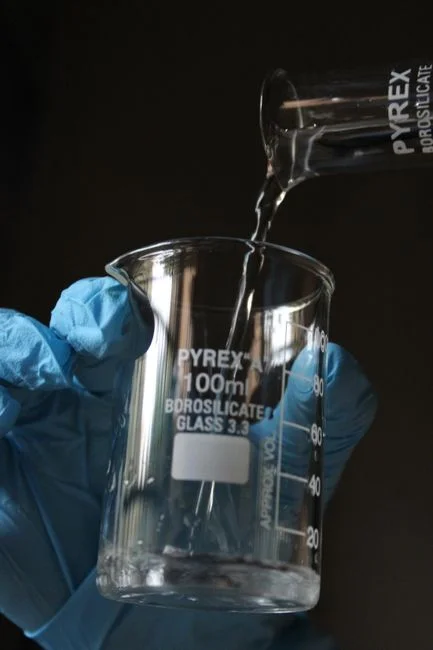
Cationic and chelating resins are the right polishing call for dilute finishing rinse waters below 10 mg/L where precipitation residuals are still above the discharge target, but the engineer must price the regeneration brine cycle into operating cost — spent brine carries 5–15% of the influent metal load and counts as a hazardous waste stream in most EU jurisdictions. Low-cost biosorbents slot in as a polishing layer rather than a stand-alone workhorse: coconut husk clears Fe, Cu, and Pb at greater than 90% efficiency at pH 5 (per PMC, 2020); acid-treated chitosan-coated coconut shell reaches 93% Zn²⁺ removal at 25 mg/L initial concentration in 3 hours at pH 6.3 (per PMC, 2020); and polyaniline-coated rice husk posts 93.08% Cd²⁺ removal, beating plain polyaniline and polyaniline/sawdust on the same feed (per PMC, 2020). In practice, an adsorption stage is always paired with a downstream multimedia filter ahead of RO or ion exchange to capture carry-over fines, and a water-softener pre-stage is needed if hardness exceeds 200 mg/L CaCO₃ to protect the resin capacity. The 2026 honest framing is that biosorbents earn their place on cost-per-kilogram-removed for dilute streams, not on beating precipitation on absolute removal.
Membrane and Electrochemical Methods
Membranes split into two functional roles on a metal-removal train: ultrafiltration acts as a suspended-solids guard that catches metal-hydroxide flocs and precipitated fines that escaped the clarifier, while nanofiltration and reverse osmosis reject dissolved ionic species with recoveries up to 95% in well-designed industrial RO skids (per npj Clean Water, 2021, on membrane maturity for dissolved heavy metals). RO is the closing unit operation when the goal shifts from discharge compliance to water reuse or zero-liquid-discharge — typical RO rejection sits at 95–99% for multivalent metal ions on properly pretreated feed. Electrochemical methods divide into three families: electrocoagulation, electroflotation, and electrodeposition. PMC's 2020 comparison is unambiguous — electroflotation shows consistent good removal across all heavy metals tested, electrodeposition recovers metals for reuse, and electrocoagulation drops below 50% removal for Cr, Ni, and Pb (per PMC, 2020), which downgrades EC from a primary workhorse to a niche tool in 2026 spec sheets. Power demand peaks near 35 °C for oil-containing wastewater, which is a useful design hint for real streams that carry trace cutting oils or lubricants, and modified MWCNT electrodes on the same hardware platform reach ~100% organics removal at 3 mA/cm² and 1 g/L Na₂SO₄ electrolyte (per PMC, 2020) — evidence that an electrochemical cell can be tuned to address metal-organic complexes upstream of precipitation. A typical high-recovery train pairs an UF system with an industrial RO system for final metal rejection.
| Parameter | Ultrafiltration (UF) | Nanofiltration (NF) | Reverse Osmosis (RO) | Electrocoagulation (EC) | Electroflotation (EF) |
|---|---|---|---|---|---|
| Rejects | Suspended metals, hydroxides, flocs | Divalent ions, organics >200 Da | Monovalent and multivalent ions | Dissolved metals via Fe/Al dosing | Attached bubbles float precipitates |
| Typical recovery | 90–95% | 80–90% | Up to 95% (well-pretreated feed) | n/a (batch/continuous) | n/a (batch/continuous) |
| Best target metals | All precipitated forms | Cu, Ni, Zn, Cd, Cr(VI) | All dissolved metals, including As | Cu, Zn (variable); poor for Cr/Ni/Pb | Cu, Zn, Ni, Cr (consistent) |
| Removal efficiency envelope | >99% on TSS | 85–95% for divalent metals | 95–99% for multivalent metals | <50% for Cr, Ni, Pb (per PMC, 2020) | Consistent good removal (per PMC, 2020) |
| Sludge / by-product | Concentrated retentate to sludge handling | Concentrate (15–25% of feed) | Concentrate (5–20% of feed) | Fe/Al hydroxide sludge | Float layer, low volume |
| Capex / opex rank | Low / low | Medium / medium | High / high (energy + membrane replacement) | Medium / medium-high (electrodes) | Medium / medium |
| 2026 fit | Always-on guard stage | Reuse polishing | ZLD / reuse final polish | Niche / hybrid duty only | Hybrid polishing for difficult metals |
How to Choose a Method: A 2026 Selection Framework
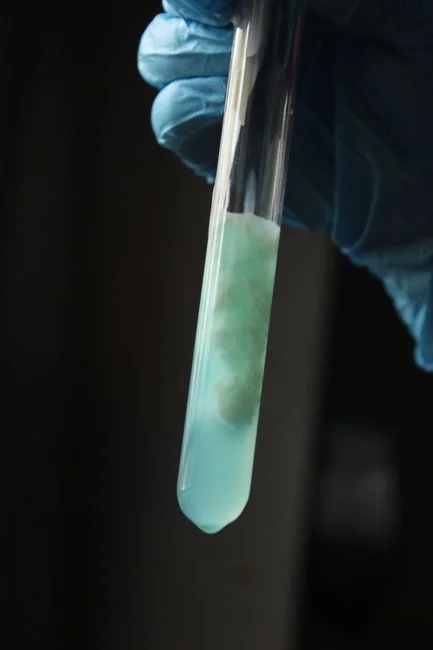
Method selection for heavy metals removal in industrial wastewater reduces to four practical rules that 2026 plant engineers actually apply. First, run precipitation first — hydroxide for broad metals at 1–100 mg/L, sulfide when Cd/Zn/Cu are present above 50 mg/L or when the regulatory target demands >99% removal. Second, polish with ion exchange or adsorption for dilute streams below 10 mg/L where precipitation residuals still exceed the discharge ELV. Third, deploy membrane (NF or RO) when the project target is reuse or zero-liquid-discharge rather than mere compliance, and budget the concentrate stream up front. Fourth, reserve electrocoagulation and electroflotation for hybrid duty — niche feeds, small flows, or footprint-constrained retrofits — not for primary removal of Cr, Ni, or Pb, where EC drops below 50% (per PMC, 2020). The matrix below scores each option on the criteria an EPC actually weighs at the bid table.
| Method | Influent range (mg/L) | Best target metals | Removal envelope | Sludge yield | Capex / opex rank | 2026 compliance fit |
|---|---|---|---|---|---|---|
| Hydroxide precipitation | 1–100 | Cu, Pb, Cr(III), Ni | 90–98% | High | Low / low | Broad compliance baseline |
| Sulfide precipitation (Na₂S) | 1–500 | Cd, Zn, Cu, Hg, As, Se | >99% (Cd/Zn/Cu); >98% As; >92% Se | Low (1.5–2× metal mass) | Medium / medium | Tightest ELVs, mining and metal finishing |
| Ion exchange (chelating resin) | <10 (polishing) | Cu, Ni, Zn, Cd | >95% on polished feed | Spent brine (hazardous) | Medium / high (brine) | Reuse water, semiconductor rinse |
| Adsorption (biosorbent / activated carbon) | <50 (polishing) | Pb, Cu, Fe, Zn, Cd | 90–93% on target metals | Spent media (regenerable) | Low / low–medium | Dilute polishing under EU IED ELVs |
| NF / RO membrane | <500 (post-precipitation) | All dissolved metals | 85–99% | Concentrate 5–25% of feed | High / high | ZLD, reuse, semiconductor UPW |
| Electrocoagulation | 10–200 | Cu, Zn (limited); not Cr/Ni/Pb | <50% for Cr/Ni/Pb | Fe/Al hydroxide sludge | Medium / medium-high | Not a primary 2026 compliance tool |
| Electroflotation | 10–200 | Cu, Zn, Ni, Cr (consistent) | Consistent good removal | Low-volume float | Medium / medium | Hybrid polishing, difficult matrices |
Selection must also be driven by what happens downstream of the reactor. A high-sulfide or high-hydroxide train that terminates at a clarifier without solids handling creates a compliance problem in a different unit operation — the sludge holding tank — so any 2026 spec should pair the metal-removal reactor with a plate-and-frame filter press for metal sludge sized for the projected dry-solids tonnage, and route the front end through a DAF system for precipitated metal-hydroxide sludge when influent TSS or oil/grease would blind a lamella. For project context on the regulatory anchor, see the 40 CFR Part 437 mining compliance guide, and for clarifier selection logic the DAF vs lamella clarifier for mining wastewater comparison is the right reference.
Building a Compliant 2026 Process Train
A compliant 2026 train strings the unit operations into a fixed sequence: headworks screening first, equalization and pH control second, primary separation third, polishing or recovery fourth, and sludge dewatering as the closing loop. The headworks stage uses a rotary mechanical bar screen to protect downstream pumps and mixers from rags, wipes, and oversize debris. Equalization absorbs shock loads and feeds an automatic chemical dosing skid that meters coagulant, flocculant, NaOH, and Na₂S according to pH and ORP setpoints. Primary separation drops the precipitated metal sludge — a DAF unit is the right pick when the stream carries emulsified oils or low-density flocs, while a lamella clarifier wins on footprint and capex for high-solids hydroxide streams. The polish stage runs a multimedia filter to protect downstream ion exchange or RO, with the RO skid producing reuse water and a concentrate that loops back to the equalization basin. For mixed organics-plus-metals streams, an MBR stage slots in ahead of RO. The metal-rich sludge from DAF, lamella, or MBR concentrates at a plate-and-frame filter press that lifts cake solids above 25% DS for hazardous-waste disposal. Compliance is anchored on EPA 40 CFR Part 437 for mining and ore processing, and on EU IED 2010/75/EU ELVs for European sites; both regimes drive the design toward the tight metal residuals that only a multi-stage train with online monitoring can guarantee. For online instrumentation on tight zinc ELVs, the online zinc monitoring guide is the right engineering reference, and for biological polishing on mixed streams the MBR vs activated sludge for mining streams comparison closes the loop. Equipment anchors for the train: rotary bar screen, MBR integrated unit for mixed matrices, and the integrated water purification skid for the polish package.
Frequently Asked Questions
Which precipitation chemistry gives the highest heavy metals removal efficiency in 2026?
Sulfide precipitation with Na₂S delivers >99% removal for Cd, Zn, and Cu and >98% / >92% for As and Se respectively, outperforming hydroxide precipitation for tighter 2026 ELVs under EPA 40 CFR Part 437 and EU IED 2010/75/EU (per PMC, 2020). The tradeoff is sealed-reactor design and H₂S monitoring.
Is electrocoagulation reliable for heavy metals removal from industrial wastewater?
No, not as a primary workhorse. PMC's 2020 review shows electrocoagulation drops below 50% removal for Cr, Ni, and Pb, while electroflotation and electrodeposition post consistent good removal. EC belongs in 2026 spec sheets as a niche or hybrid tool, not as a compliance anchor.
What removal efficiency does reverse osmosis achieve for heavy metals?
Industrial RO systems reject 95–99% of multivalent metal ions on properly pretreated feed and run at recoveries up to 95% in well-designed skids, making RO the standard final polish for water reuse or zero-liquid-discharge metal-finishing trains (per npj Clean Water, 2021). Pretreatment with UF and multimedia filtration is non-negotiable to protect membrane life.
What are the binding 2026 compliance limits for heavy metals discharge?
For U.S. mining and ore processing the anchor is EPA 40 CFR Part 437 with ELVs in the 0.05–2.0 mg/L range depending on metal and subcategory; for European sites EU IED 2010/75/EU sets ELVs typically between 0.05 and 0.5 mg/L for heavy metals at the discharge point, with WHO/USEPA drinking-water-equivalent limits (Pb 0.01, Cd 0.003, Hg 0.006 mg/L) as the downstream protection floor.
What pretreatment is required before a heavy metals removal reactor?
A 2026 train stages a rotary bar screen, equalization with pH/ORP control, and either a DAF or lamella clarifier ahead of the precipitation or ion-exchange reactor, with a plate-and-frame filter press handling the metal-rich sludge to greater than 25% dry solids for hazardous-waste disposal. Skipping pretreatment is the single most common cause of undersized-reactor complaints at commissioning.
Related Equipment
- industrial RO system for final metal rejection — specifications, capacity range, and technical data