Why Real-Time Zinc Monitoring Replaces Grab Sampling in 2026
Galvanizing rinse water routinely spikes to 50–500 mg/L zinc during shift changes and dump-rinse cycles, and 24-hour composite sampling dilutes those peaks below the 0.5–2.0 mg/L discharge limit before the lab certificate returns 3–7 days later. By the time the result lands, the discharge has occurred, the permit excursion is on the record, and the only remaining decision is how to write the check. EPA enforcement actions for zinc permit violations have averaged $10,000–$50,000 per incident in metal-finishing settlements over the last three years, against an installed cost of $8,000–$45,000 for a real-time analyzer — a single avoided excursion repays the CAPEX. Published metal-finishing plant studies report an 80–90% reduction in compliance excursions after replacing composite sampling with online zinc analyzers, primarily because the controller can act on a rising trend inside one residence time rather than after a week of paper trail. EU IED 2010/75/EU Article 5 already obliges operators in certain categories to apply "continuous monitoring" for listed metals; engineers should pull their own permit and verify whether the local competent authority has set a trigger level that pushes them into the same regime. A heavy-metal compliance framework for chromium and zinc that links trigger concentration, response time, and control action is the right place to start the justification memo, not the equipment datasheet.
How Zinc Online Monitoring Systems Work: Four Sensor Technologies Compared
A zinc analyzer is only as honest as its detection principle, and the four technologies commercially available in 2026 — anodic stripping voltammetry, colorimetric zincon, ion-selective electrodes, and online ICP-OES — occupy four distinct corners of the cost-versus-capability trade. Voltammetric sensors (ASV) deposit Zn²⁺ onto a mercury or bismuth working electrode at –1.2 V and strip it off, reaching 0.01–10 mg/L in 30–60 s; they only see free Zn²⁺, so strongly chelated streams from electroless plating baths will under-report. Colorimetric zincon analyzers react acid-digested sample with the zincon dye at pH 9.0 and read absorbance at 620 nm, covering 0.05–5 mg/L in 3–5 min; they tolerate turbidity up to 200 NTU and ship with reagent kits running $80–$150 per month. ISE zinc electrodes use a solid-state membrane, cover 1–100 mg/L in 2–5 min, and cost $2,000–$6,000 — but they fail below pH 4 and drift in chloride matrices above 0.5 M. Online ICP-OES delivers 0.001–100 mg/L across multi-metal panels in 60–90 s, with CAPEX of $35,000–$80,000 and argon consumption of 8–12 L/hr; it is overkill for a zinc-only discharge but earns its keep on a mixed heavy-metal outfall where Ni, Cu, Cr, and Zn must be reported simultaneously.
| Technology | Range (mg/L) | Response Time | Detection Limit | Key Interferences | Typical CAPEX (USD) |
|---|---|---|---|---|---|
| Anodic Stripping Voltammetry (ASV) | 0.01 – 10 | 30 – 60 s | 0.01 mg/L | Cu²⁺/Fe³⁺ above 5:1 molar ratio; strong chelants (EDTA, citrate) | $15,000 – $30,000 |
| Colorimetric Zincon | 0.05 – 5 | 3 – 5 min | 0.05 mg/L | Cu²⁺, Ni²⁺, Fe³⁺ at > 2:1; high turbidity > 200 NTU requires filtration | $8,000 – $18,000 |
| Ion-Selective Electrode (ISE) | 1 – 100 | 2 – 5 min | 1 mg/L | pH < 4; ionic strength > 0.5 M Cl⁻ | $2,000 – $6,000 |
| Online ICP-OES | 0.001 – 100 | 60 – 90 s | 0.001 mg/L | Minimal; spectral overlap manageable with modern echelle optics | $35,000 – $80,000 |
For most single-stream galvanizing or acid mine drainage duties with a 0.5–2.0 mg/L permit, voltammetry gives the lowest detection limit per dollar; for a high-zinc pickling line running 20–80 mg/L, colorimetric's robustness in turbid streams wins. ICP-OES belongs on a shared compliance skid, not a single outfall.
Zinc Discharge Limits: EPA, EU, and China GB 8978 Compliance Anchors

Three jurisdictions set the numbers an analyzer must hit, and the gap between them is narrow enough that one instrument range covers all three. The U.S. EPA's National Recommended Water Quality Criteria cite 1.0 mg/L total recoverable zinc as the freshwater acute benchmark and 0.5 mg/L for saltwater under 40 CFR §122; NPDES permits typically translate these into 30-day average limits of 0.5–1.0 mg/L at the outfall. The EU Industrial Emissions Directive 2010/75/EU and the Environmental Quality Standards Directive 2008/105/EC converge on 0.5 mg/L dissolved zinc for inland and other surface waters as an annual average, with a 1.0 mg/L maximum allowable concentration. China GB 8978-1996 sets a tiered structure: 2.0 mg/L for first-class discharge, 5.0 mg/L second-class, and zero detectable zinc in Class III groundwater protection zones — the strictest regime for any site near a drinking-water source. Engineers should set the analyzer alarm and control setpoint at 60–70% of the applicable permit limit, not at 100%, because a 3–5 minute analyzer response plus a 10–15 minute hydraulic residence time in a clarifier means the corrective dose must start before the limit is hit, not after. The same logic is laid out in our chromium discharge limit 2026 guide for parallel hexavalent chromium control.
| Jurisdiction | Standard / Directive | Limit Type | Threshold (mg/L) | Notes |
|---|---|---|---|---|
| United States | EPA 40 CFR §122; National Recommended Water Quality Criteria | Freshwater acute, total recoverable | 1.0 | Saltwater: 0.5 mg/L |
| European Union | IED 2010/75/EU; EQS Directive 2008/105/EC | Inland / other surface water, annual average | 0.5 | MAC: 1.0 mg/L |
| China | GB 8978-1996 | First-class discharge | 2.0 | Second-class: 5.0; Class III groundwater: non-detect |
Buying a Zinc Online Monitoring System: Selection Matrix and Total Cost
Procurement will want a five-year total cost of ownership, not a sticker price, because OPEX over the life of the analyzer routinely exceeds CAPEX for colorimetric and ICP units. ISE analyzers sit at the floor with $2,000–$6,000 hardware and a 5-year TCO around $15,000 per stream, but the technology only works where the zinc concentration stays above 1 mg/L — fine for a pickling bath overflow, useless for a treated effluent polishing step. Colorimetric zincon systems run $8,000–$18,000 CAPEX, $1,200–$2,500 per year in reagent, $600–$1,500 per year in valve and tubing replacement, $400–$800 per year in certified calibration standards, and $1,500–$4,000 per year for a service contract — landing at roughly $32,000 TCO over five years on a single stream. Voltammetric analyzers cost $15,000–$30,000 to buy and consume almost no reagent; their $48,000 TCO reflects more expensive working electrodes and longer calibration cycles. ICP-OES sits at $90,000 TCO over five years driven by argon, consumables, and the higher service contract. The decision rule that holds up in audit: select voltammetry for sub-1 mg/L compliance where the matrix also contains Cu or Fe above 2 mg/L; select colorimetric for single-stream high-zinc loads above 5 mg/L or where turbidity cannot be reduced below 50 NTU; select ICP only when multi-metal reporting is itself a permit requirement. For a plant with four or more outfalls, the ISE "low CAPEX" story flips — four ISE units at $15,000 each total $60,000, and a single shared voltammetric skid with a multi-stream multiplexer becomes the cheaper option. The same CAPEX/OPEX weighting logic applies to digital infrastructure, as detailed in the cloud monitoring platform buyer's guide.
| Technology | CAPEX (USD) | Reagent / yr | Consumables / yr | Service / yr | 5-Year TCO (1 stream) |
|---|---|---|---|---|---|
| ISE | $2,000 – $6,000 | $0 | $600 – $1,000 | $500 – $1,000 | ~$15,000 |
| Colorimetric Zincon | $8,000 – $18,000 | $1,200 – $2,500 | $600 – $1,500 | $1,500 – $4,000 | ~$32,000 |
| Voltammetric (ASV) | $15,000 – $30,000 | <$200 | $1,000 – $2,000 | $2,000 – $4,000 | ~$48,000 |
| Online ICP-OES | $35,000 – $80,000 | Argon $2,500 – $4,000 | $1,500 – $3,000 | $3,500 – $6,000 | ~$90,000 |
Integrating a Zinc Analyzer With SCADA, PLC, and 4-20 mA Loops
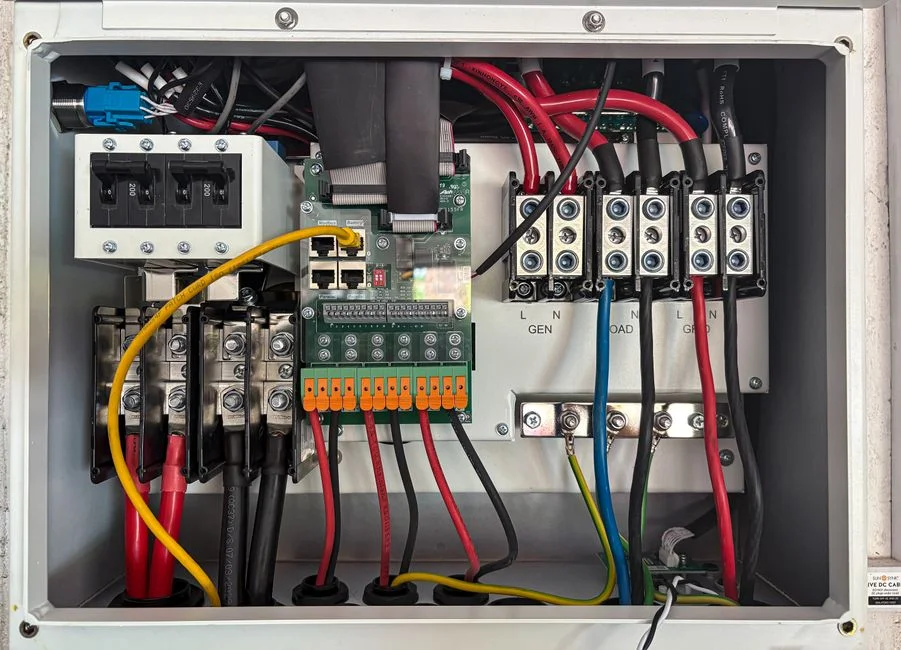
The most common reason a working bench analyzer never delivers value in the plant is a handshake failure with the existing automation layer, and that risk is fully preventable at the spec stage. A modern zinc analyzer should ship with at least three outputs as standard: a passive 4–20 mA loop scalable to the chosen range (e.g. 4 mA = 0 mg/L, 20 mA = 5.0 mg/L), Modbus RTU over RS-485 or Modbus TCP over Ethernet for register-level polling by the SCADA, and HART 7 for asset-management data such as remaining electrode life and calibration timestamp. Profibus PA and EtherNet/IP are available on premium models for plants locked into those fieldbuses. Sample conditioning is the make-or-break subsystem: the analyzer needs a continuous 50–100 mL/min flow, in-line filtration to <100 µm, pressure regulated to 0.5–4 bar, and a sample temperature held between 5–45°C. A bypass loop with a fast-loop / slow-loop valving arrangement keeps a small volume of fresh sample moving through the measurement cell during low-flow night shifts, preventing the stagnation that wrecks ISE drift. Commissioning should follow a fixed six-step protocol: bench-calibrate with certified standards, perform a 4–20 mA loop test against the PLC analog input, run a 72-hour burn-in with daily grab-sample cross-validation, verify PLC tag mapping and engineering units, update the control narrative to reflect the new closed-loop trim on the automatic chemical dosing system for zinc precipitation, and finally hand over a validation certificate signed by QA. Precipitated metal hydroxide sludge then drops into a DAF system for metal hydroxide sludge thickening, completing the closed loop from analyzer signal to sludge handling.
Frequently Asked Questions
What detection limit should I require for compliance with a 0.5 mg/L zinc discharge limit? Specify a method detection limit of at least 0.01–0.05 mg/L — voltammetry sits at the low end, colorimetric at the high end — and verify the limit at the operating pH and temperature rather than the factory brochure number.
How often does a zinc online analyzer need calibration and consumable replacement? Calibrate every 30–90 days with certified zinc standards traceable to NIST or equivalent, and budget full electrode or cap replacement on a 6–12 month cycle depending on sample loading and matrix aggressiveness.
Which sensor type is best for trace zinc below 0.1 mg/L versus the 0.5–5 mg/L compliance band? Anodic stripping voltammetry is the correct choice below 0.1 mg/L; colorimetric zincon is the practical choice across the 0.5–5 mg/L band where turbidity and reagent cost matter more than the last decimal place.
What communication outputs should a zinc analyzer support for plant integration? Require 4–20 mA, Modbus RTU/TCP, and HART 7 as standard; Profibus PA and EtherNet/IP are optional for plants with legacy fieldbus infrastructure.