Why Textile Mills Are Standardizing on Skid-Mounted Treatment Plants in 2026
Global textile processes consume roughly 830 million m³ of freshwater and discharge approximately 640 million m³ of effluent per year (Springer, 2025-01), and the US EPA sets a minimum dyeing water demand of 40 L per kg of cloth processed. For a 20 T/day fabric mill, that benchmark alone translates into ≈ 800 m³/day of influent — before any finishing effluent is added. Mills that retool in 2026 face three pressures simultaneously: shorter project timelines driven by 12–18 month EPC windows, shrinking plot areas inside dense textile parks in Tirupur, Surat, Ludhiana, and Faisalabad, and tightening consent conditions from State Pollution Control Boards.
PeerJ data shows textile water reuse below 70% across the sector, and printing/dyeing reuse at only 30% (PeerJ, 2019), which positions skid-based reuse loops as a revenue lever, not just a compliance line item. A factory-built, pre-piped modular unit integrating screening, equalization, DAF, biological treatment, MBR, and tertiary polishing cuts on-site civil work by 50–60% versus a conventional RCC effluent treatment plant and shortens installation to 6–10 weeks. For a deeper process walkthrough of the integrated train, see the integrated wastewater treatment plant for the textile industry (2026 guide).
The Pollutant Profile a Textile Skid Must Handle
Textile effluent is a moving target because each wet process adds a different chemical load. Desizing releases starch, carboxymethyl cellulose, and PVA, pushing BOD to 1,000–4,000 mg/L in that stream. Bleaching discharges chlorinated compounds and residual hydrogen peroxide. Mercerization dumps 5–10 g/L NaOH spikes into the equalization tank. Dyeing contributes sulphite, formaldehyde, surfactants, residual salts, and trace heavy metals — Cr, Cu, Zn, Ni, Co, Pb, and Fe — at 0.1–10 mg/L each (Springer, 2025-01). Printing adds thickeners, urea, and binders; finishing contributes softeners and fluorocarbon emulsions.
The combined influent envelope for a cotton/synthetic dyeing plant sits in the following range, and any skid sized against these bands will protect downstream biology and membranes:
| Parameter | Typical influent range | Driver |
|---|---|---|
| COD | 1,000–5,000 mg/L | Dyes, size, surfactants |
| BOD | 200–800 mg/L | Size, scouring wash water |
| TSS | 100–500 mg/L | Fibre lint, process solids |
| Color | 500–3,000 Pt-Co | Reactive, disperse, vat dyes |
| TDS | 2,000–10,000 mg/L | Salt from reactive dyeing |
| pH | 4–12 | Mercerization vs acid wash swings |
| Temperature | 30–70 °C | Hot wash and dye bath discharge |
Reactive dyes are the hardest to biologically treat because their fixed azo groups resist cleavage under aerobic conditions; disperse and vat dyes respond better to coagulation and membrane separation. This chemistry-to-equipment linkage is the reason a textile skid always starts with equalization and DAF before any biological stage — a sequencing mistake that is still common in 2026 retrofit quotations. For a parallel treatment of the same problem inside a self-contained cabinet, see the containerized wastewater treatment for textile industry (2026 engineering guide).
Standard Process Train Inside a Textile Skid
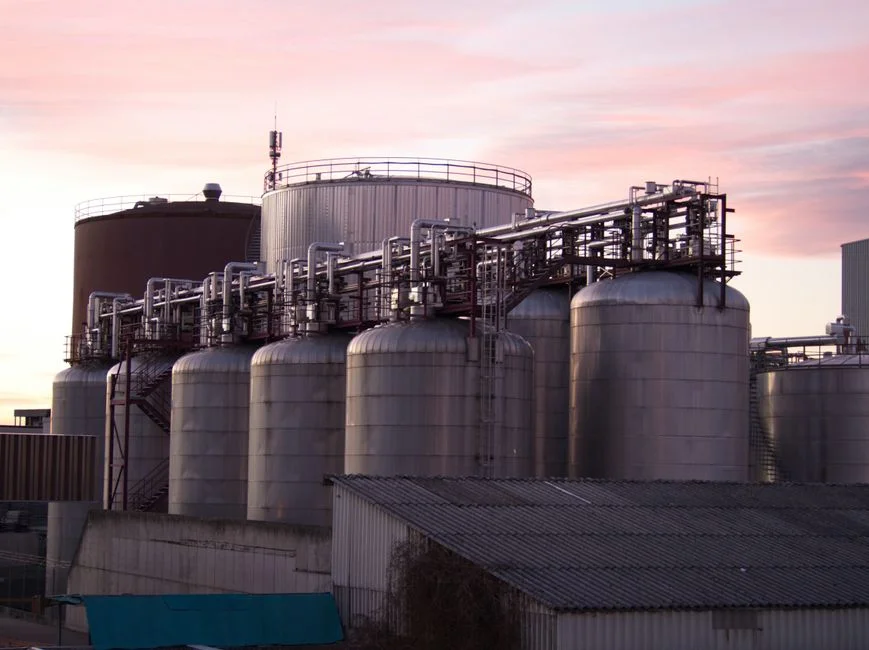
Validate any vendor P&ID against this eight-step reference. Each step targets a specific fraction of the pollutant profile above, and skipping or resequencing a step almost always causes membrane fouling or consent excursions within the first six months.
- Screening and grit removal. A rotary bar screen with 5–10 mm openings (a HydropureWater GX rotary bar screen in this duty) protects downstream pumps from fibres, lint, and stitching waste. Flow then passes through a grit chamber sized for 60 s retention at peak flow.
- Equalization. 8–24 h HRT with mechanical mixing, pH correction to 6.5–8.5, and cooling to under 40 °C using a plate heat exchanger. A dual-cell EQ allows one side to be drained for inspection while the other carries the full hydraulic load.
- Coagulation/flocculation + DAF. Polyaluminium chloride or ferric chloride dosing (200–500 mg/L) followed by anionic flocculant (1–5 mg/L) prepares the colloids for micro-bubble flotation. A HydropureWater DAF system covers 4–300 m³/h across 13 models, typically achieving 70–90% TSS and 50–80% colour reduction before biology, which protects the downstream MLSS from shock loads.
- Biological stage. Anoxic + aerobic (A/O) or sequencing batch reactor (SBR) configuration for COD, BOD, and ammonia removal. MLSS is held at 3,000–5,000 mg/L in the aerobic tank with a 6–10 h HRT. For mills under 100 m³/day, an A/O package unit such as the HydropureWater WSZ underground A/O system is a compact reference design.
- MBR polishing. Submerged PVDF flat-sheet or hollow-fibre membranes at 10–18 LMH flux deliver sub-1 μm filtrate with 60% less footprint than conventional activated sludge. A HydropureWater MBR system covers 10–2,000 m³/day and is the workhorse of textile water reuse trains in 2026.
- Tertiary / reuse. UF at 0.03 μm PVDF (a HydropureWater UF system at 2,000–40,000 L/h) followed by single- or two-pass RO for reuse-grade water. A HydropureWater industrial RO system typically runs at up to 95% recovery with 70–80% salt rejection in textile duty.
- Sludge handling. Wasted biosolids at 8,000–12,000 mg/L TSS are thickened on a plate-and-frame filter press to drop cake moisture below 75% before disposal. The HydropureWater plate and frame filter press covers 1–500 m² filtration area and is sized to the skid's biological yield.
- Disinfection. UV at 30–40 mJ/cm² or ClO₂ at 0.5–1.0 mg/L residual for reuse loops. A HydropureWater UV sterilizer handles non-saline reuse streams, while ClO₂ is preferred where biofilm control in storage tanks is critical.
Chemical dosing stabilizes the train. Coagulant, flocculant, pH adjusters (H₂SO₄ and NaOH), antiscalant for the RO, and sodium hypochlorite for CIP are metered by a HydropureWater automatic chemical dosing system with flow-paced control. Without it, pH excursions out of the EQ tank routinely push through and foul the MBR in under 48 hours.
Sizing the Skid: Capacity, Footprint, and Modular Limits
Translating a mill's daily flow into physical skid count is the most underrated engineering step in a textile ETP enquiry. The mapping below is what vendors should be quoting against in 2026; if a quotation does not break down into these modules, ask why.
| Plant capacity | Skid configuration | Typical covered footprint |
|---|---|---|
| 50 m³/day | 1 process skid + 1 EQ tank (pre-treatment + biology + MBR) | 40–60 m² |
| 200 m³/day | 3–4 skids (pre-treatment, biology, MBR, RO) | 180–250 m² |
| 500 m³/day | Parallel train of 2× 250 m³/day skids + shared EQ | 450–600 m² |
For comparison, a civil-built ETP of the same 200 m³/day capacity typically occupies 450 m², so the skid approach is 50–60% smaller on plot. The soft ceiling on a single skid is 8 m long × 2.5 m wide × 3 m tall for road transport; above ~250 m³/day, parallel trains are mandatory. DAF and MBR skids are usually split from the RO skid because of the 4–6 tonne weight differential and the need to isolate membranes during clean-in-place. Reference the HydropureWater WSZ underground A/O system for the small-mill end of this range.
Skid vs Containerized vs Civil-Built: Choosing the Right Delivery Model
Procurement managers in textile parks often receive three competing formats for the same duty. The decision turns on plot area, timeline, and expansion intent, not on unit price alone.
| Axis | Skid-mounted | Containerized | Civil-built |
|---|---|---|---|
| Manufacturing time | 6–10 weeks | 8–12 weeks | 16–30 weeks (on-site) |
| Transportation | Flat-bed truck | ISO container, road/rail | Loose equipment, multiple trucks |
| Civil work at site | Concrete plinth only | Concrete plinth only | RCC tanks, buildings, pipe racks |
| Footprint (200 m³/day) | 180–250 m² | 200–280 m² | ≈ 450 m² |
| Capacity ceiling per unit | ≈ 250 m³/day | ≈ 100 m³/day | No practical ceiling |
| Expandability | Add parallel skids | Add containers | Build out new basins |
| Relocatable | Yes, with crane | Yes, plug-and-play | No |
| Indicative CAPEX (USD/m³/day, 2026) | 250–600 | 300–700 | 180–450 |
Use a skid for 50–500 m³/day mills in established textile parks where plot is constrained and the mill plans to expand in 24–36 months. Use a containerized plant for pilot, R&D, or 3PL laundry duty below 100 m³/day where the unit must move. Use civil-built only above 2,000 m³/day integrated complexes, where RCC tank construction under direct EPC control is cheaper per m³ than imported skids. The common error in 2026 is forcing a 1,000 m³/day plant into a single 40 ft container — membranes and blowers must remain accessible for CIP, and the resulting 60–80 m² ISO envelope is technically impossible to maintain. A full side-by-side engineering comparison is in the containerized wastewater treatment for textile industry (2026 engineering guide).
2026 CAPEX and OPEX Bands for a Textile ETP Skid
Set procurement expectations before vendor contact. The 2026 bands below are ballparks from HydropureWater field data, not list prices, and they vary with influent loading, discharge vs reuse target, and local power tariffs.
| Cost band | Discharge-compliant skid | Reuse-grade skid (MBR + RO) |
|---|---|---|
| CAPEX (USD per m³/day) | 250–400 | 400–600 |
| OPEX (USD per m³ treated) | 0.15–0.25 | 0.25–0.40 |
| Power share of OPEX | ≈ 40% | ≈ 45% |
| Membrane replacement share of OPEX | 5–8% | 15–20% |
Power is dominated by aeration blowers (0.3–0.5 kWh/m³) and RO high-pressure pumps (0.8–1.2 kWh/m³) in reuse mode. Membrane replacement of UF elements every 3–5 years and RO elements every 2–3 years is the second-largest line item. Where combined freshwater + discharge tariffs exceed USD 0.50/m³, reuse-grade skids pay back in 3–5 years, which is the trigger most EPC leads use to justify the higher CAPEX envelope. For DAF sizing logic that drives the front-end of these economics, see the DAF design parameters 2026 engineering guide.
Regulatory Targets the Skid Must Hit in 2026
The same skid can be sold to an Indian, EU, and US customer, but the discharge envelope changes. Anchor the design to the strictest applicable rule, and the other two fall into place.
India. State Pollution Control Board consent typically requires pH 6.5–8.5, COD ≤ 250 mg/L, BOD ≤ 30 mg/L, TSS ≤ 100 mg/L, and total Cr ≤ 2 mg/L for discharge to drain. Zero Liquid Discharge is mandated in many textile parks in Tamil Nadu (Tirupur) and Gujarat (Surat), which pushes the design toward RO plus evaporation/crystallizer trains (Springer, 2025-01).
EU. Urban Waste Water Directive 91/271/EEC sets COD ≤ 125 mg/L after biological treatment for discharges to receiving waters. The Industrial Emissions Directive 2010/75/EU adds Best Available Technique limits on color, heavy metals, and total nitrogen for installations above the IED threshold.
USA. 40 CFR Part 410 splits textile effluent into subparts for cotton weaving, wool finishing, warp knitting, hosiery, and fabric finishing, with BPT (Best Practicable Control Technology), BCT (Best Conventional Control Technology), and BAT (Best Available Technology) tiers applied by subpart. ZLD is not federally mandated, but a single site permit can impose near-zero discharge in water-stressed basins in California, Arizona, and Texas. For a worked example of how industrial pretreatment limits cascade into the ETP design, see the US 40 CFR pretreatment compliance for industrial plants (2026 guide).
Frequently Asked Questions
What flow rate can a single skid-mounted textile ETP handle in 2026?
A single skid rarely exceeds 8 m × 2.5 m × 3 m for road transport, which sets a practical ceiling near 250 m³/day. Mills needing 500 m³/day should specify a parallel train of 2× 250 m³/day skids sharing equalization, and mills above that capacity generally move to civil-built construction or multi-line containerized plants.
What influent parameters must a textile skid be sized against?
Design against COD 1,000–5,000 mg/L, BOD 200–800 mg/L, TSS 100–500 mg/L, color 500–3,000 Pt-Co, TDS 2,000–10,000 mg/L, pH 4–12, and temperature 30–70 °C. These bands protect the DAF, biological stage, and MBR from shock loads and prevent reactive dye fixed-azo groups from bleeding through into the reuse stream.
What is the 2026 payback period for a reuse-grade textile skid?
Where combined freshwater and discharge tariffs exceed USD 0.50/m³, a reuse-grade skid (MBR + RO at USD 400–600 per m³/day CAPEX) typically pays back in 3–5 years. OPEX of USD 0.25–0.40 per m³ treated is dominated by aeration (≈ 40%) and membrane replacement (15–20%) per HydropureWater field data, 2026.
Does a textile ETP skid need Zero Liquid Discharge in 2026?
Not universally. ZLD is mandatory in Indian textile parks in Tirupur and Surat and increasingly specified in water-stressed US basins, but most EU mills discharge to a municipal sewer under Directive 91/271/EEC. The decision turns on local consent, water cost, and brine disposal options rather than process chemistry alone.