Why Dalton Plastics and Rubber Plants Are Indirect Dischargers Under 40 CFR Part 463
EPA promulgated 40 CFR Part 463 (Plastics Molding and Forming) in 1984, setting categorical pretreatment standards for plants that extrude, mold, coat, laminate, thermoform, calender, cast, foam, clean, or finish plastic products. At rulemaking, EPA counted roughly 10,260 PM&F facilities nationwide, of which 810 were direct dischargers and 1,145 were indirect dischargers, meaning the latter are governed by the General Pretreatment Regulation at 40 CFR Part 403 plus the local POTW's sewer-use ordinance (per EPA, 2024-04). For Whitfield County operations, that POTW is Dalton Utilities, and the federal/local stack defines your compliance perimeter.
Plastics product manufacturing sits inside NAICS 3261, the same statistical group that captures many Dalton-area molding and thermoforming lines. Rubber compounding in the same sewers typically falls under different SIC codes, but the discharge must clear Dalton Utilities' local limits before it reaches the treatment plant, requiring the same pretreatment train. Two scope clarifications matter to engineers: non-contact cooling water is excluded from Part 463 (though it may still be limited in an individual permit), and a plastic coating applied onto a formed metal substrate stays inside Part 463 rather than 40 CFR Part 413 (Electroplating) or Part 433 (Metal Finishing) per 40 CFR 433.10(b). Incorrect scoping leads to the wrong categorical standard for your discharge limits, a common audit finding when a Dalton-area plant is reclassified as a Significant Noncompliance (SNC) candidate.
What Goes Into the Sewer: Wastewater Streams From Plastics and Rubber Operations
Most plastics and rubber plants run four to six distinct wastewater streams that converge at the pretreatment headworks. Inventorying them by mass load, not just by volume, is the only way to size unit operations correctly. Cooling water blowdown is the largest volumetric stream but the lightest in pollutant load; it is usually closed-loop with tower side-stream filtration and discharged only on temperature or TDS trim. Equipment and product cleaning water is almost always the highest-load stream, carrying mold release, polymer fines, surfactants, and entrained oils that drive COD and oil & grease to the upper end of typical plant ranges. Finishing and de-flashing water adds suspended plastics and rubber dust, while coating, laminating, and printing rinse water contributes solvent traces, pigments, and isocyanate residues, the last of which is a specific concern under Part 463 and 40 CFR Part 414 for resin manufacturing.
Representative feed characteristics (per HydropureWater field data, 2025-2026, plastics and rubber sites in the US Southeast):
| Stream | COD (mg/L) | TSS (mg/L) | Oil & Grease (mg/L) | pH | Typical flow share |
|---|---|---|---|---|---|
| Cooling tower blowdown | 50–200 | 20–100 | <20 | 6.5–8.5 | 40–60% |
| Equipment/product cleaning | 1,500–5,000 | 500–2,000 | 300–1,500 | 5–10 | 20–35% |
| Finishing / de-flashing | 800–3,000 | 400–1,500 | 100–500 | 6–9 | 5–15% |
| Coating / laminating rinse | 500–2,500 | 200–800 | 100–1,500 | 5–10 | 5–15% |
| Combined feed (typical) | 500–5,000 | 200–2,000 | 100–1,500 | 5–10 | 100% |
Rubber vulcanization lines and polyurethane operations tend to sit at the upper end of the COD range, and their effluent frequently carries sulfides and phenols that require handling upstream of biological treatment.
The 2026 Pretreatment Compliance Path: Screening, Equalization, DAF, Biological, Polishing
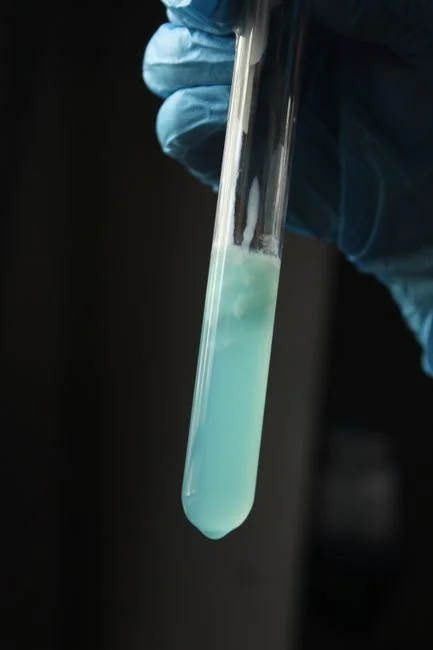
A pretreatment train that consistently clears Dalton Utilities' local limits at plastics and rubber sites follows six steps. Proper sequencing prevents the operational failures common in small plants during their first year of operation.
- Screening. Install a rotary bar screen with 1–3 mm openings ahead of any pump or membrane. Plastic pellets, purge strings, and fibrous rags from wiping cloths will foul a DAF or MBR within hours if they reach it unprotected.
- Equalization and pH correction. Molding cells discharge in slugs tied to shift changes and purging cycles. A properly sized EQ basin (typically 8–24 hours of average flow) with an automatic chemical dosing skid for pH neutralization keeps the downstream biological step inside its operating envelope and prevents the daily peaks that trigger SNC status.
- DAF with coagulant and flocculant dosing. An industrial DAF system with polymer and coagulant (typically ferric chloride or PAC) removes 80–95% of free and emulsified oils, 70–90% of TSS, and a meaningful fraction of COD before biology. This step is non-negotiable for plastics and rubber lines; sending raw emulsified oil into an MBR will foul the membranes in weeks.
- Biological treatment. Above roughly 20–50 m³/h, conventional activated sludge remains the lowest-cost option. For tighter footprints or sites targeting water reuse, an MBR system replaces the secondary clarifier and produces TSS <5 mg/L effluent that can feed a polishing step directly. See the MBR process explainer for sizing detail.
- UF polishing. A UF polishing system (typically 0.03 µm PVDF) drops TSS reliably below 5 mg/L and tightens the effluent ahead of any reuse RO. Effluent BOD/TSS well under the typical Dalton Utilities day-maximum of 250/250 mg/L is achievable.
- Continuous monitoring and reporting. Continuous pH, conductivity, and flow monitoring with a 24-hour composite autosampler is the minimum expected under 40 CFR Part 403 for a Categorical Industrial User (CIU). Baseline Monitoring Reports (BMR) and 90-day compliance reports still apply when triggered.
Pollutants to Watch in 2026: PFAS, Zinc, Lead, Hexavalent Chromium and Sulfides
Legacy BOD/TSS/oil & grease is no longer the full analyte list a Dalton-area plant should be tracking. In March 2026, testing at a Dalton Utilities water treatment plant detected two PFAS compounds above the not-yet-implemented federal limit, putting the entire tributary sewer shed on notice (Chattanooga Times Free Press, 2026-03-17). Proactive PFAS sampling of your own influent and effluent is defensible due diligence, and Dalton Utilities' enforcement posture is shifting ahead of the regulation. Outside PFAS, the parameter matrix to track in 2026 is wider than most pretreatment audits assume:
| Pollutant | Source at plastics/rubber plant | Typical local limit | Treatment response |
|---|---|---|---|
| PFAS (PFOA, PFOS, GenX) | Mold release, anti-stain coatings, processing aids | 4–10 ng/L (EPA, future) | GAC / ion exchange post-DAF; sample now to baseline |
| Zinc | Rubber accelerators, stabilizers | 1–3 mg/L (POTW) | Hydroxide precipitation in DAF stage |
| Lead | Pigment stabilizer, legacy equipment | 0.4–1 mg/L (POTW) | Co-precipitation with iron coagulant |
| Hexavalent chromium | Plastic-on-metal plating sub-lines | 0.1 mg/L (Part 433 reference) | Reduction to Cr(III) then precipitation; Part 463 governs, not Part 433 |
| Sulfides | Rubber vulcanization, PU cure | 1–10 mg/L (POTW) | Oxidation (H₂O₂ or NaOCl) and air strip upstream of biology |
| Temperature | Cooling water, dye bath dumps | ≤104 °F (40 °C) | Cooling tower trim, EQ basin, non-contact segregation |
Rubber compounding and urethane casting are the operations most likely to trigger local-limit excursions on zinc, lead, and sulfides; the corrective response is almost always upstream chemistry, not bigger tanks.
Choosing Between DAF, MBR and UF for a 2026 Dalton Pretreatment Retrofit

Equipment selection is driven by four variables: average flow, available footprint, reuse intent, and the tightness of the local limits you have to clear. A defensible decision framework for 2026 retrofits follows:
- Flow <20 m³/h, no reuse, standard local limits: DAF + activated sludge + a plate and frame filter press for sludge is the lowest CAPEX path. Use a high-efficiency sedimentation tank for primary solids capture ahead of the DAF if influent TSS routinely exceeds 1,500 mg/L.
- Flow 20–100 m³/h or tight footprint: MBR replaces the secondary clarifier and the polishing TSS step in one unit, delivers near-reuse effluent at <1 µm equivalent, and cuts the required plant area by roughly 30–40% versus CAS.
- Need for RO-quality polish or process-water reuse: Add UF (0.03 µm PVDF) upstream of RO, with MBR effluent as UF feed. This is also the configuration to choose if you intend to add GAC or ion-exchange resin for PFAS in 2026 or 2027, since UF protects the adsorption media from fouling.
- Sludge handling: Plate and frame filter press for plants producing >5 m³/d dry solids; a lamella clarifier (high-efficiency sedimentation tank) for high-rate primary capture on retrofit sites with limited floor space.
| Scenario | Recommended train | Footprint (relative) | CAPEX (relative) | Effluent TSS |
|---|---|---|---|---|
| <20 m³/h, no reuse | Screen + EQ + DAF + CAS + filter press | 1.0× | 1.0× | ≤30 mg/L |
| 20–100 m³/h, tight site | Screen + EQ + DAF + MBR + filter press | 0.6–0.7× | 1.3–1.5× | ≤5 mg/L |
| Reuse / future PFAS polish | Screen + EQ + DAF + MBR + UF + RO (GAC optional) | 0.7–0.8× | 1.6–2.0× | ≤1 mg/L |
For pretreatment compliance benchmarking in adjacent regions, the pretreatment compliance guide for Franklin, US and the Uniontown food and beverage pretreatment guide use a similar step-train approach and are useful for cross-checking your own mass balance.
Frequently Asked Questions
Do plastics molding plants near Dalton, GA need a pretreatment permit from Dalton Utilities?
Yes. Under 40 CFR Part 463 and the General
Frequently Asked Questions
What are the local sewer discharge limits for plastics plants in Dalton, Georgia?
Discharge limits in Dalton are governed by the Dalton Utilities Industrial Pretreatment Program, which mandates compliance with local limits including a Chemical Oxygen Demand (COD) cap typically set at 1,000 mg/L and a Total Suspended Solids (TSS) limit of 250 mg/L. Facilities must also adhere to specific metals limits, such as Zinc at 2.0 mg/L and Chromium at 1.0 mg/L, to prevent interference with the biological processes at the regional Water Quality Control Center.
Does 40 CFR Part 463 apply to rubber manufacturing?
No, 40 CFR Part 463 (the Plastics Molding and Forming Point Source Category) does not apply to rubber manufacturing. Rubber facilities are instead regulated under 40 CFR Part 428, which covers the Rubber Manufacturing Point Source Category, including tire and inner tube production, and latex-based rubber product manufacturing, each with distinct effluent limitation guidelines based on the specific production process.
What is the best wastewater treatment system for a plastics molding facility discharging to a POTW?
For most plastics molding facilities, an integrated system consisting of oil-water separation followed by Dissolved Air Flotation (DAF) is the industry standard for meeting POTW requirements. This configuration effectively removes emulsified oils and suspended resins, typically reducing TSS by 80-90% and Oil and Grease (O&G) levels to below 100 mg/L, ensuring compliance with local sewer use ordinances.
How do rubber plants remove oil and zinc from wastewater before sewer discharge?
Rubber plants typically utilize chemical precipitation followed by multi-stage filtration to manage zinc levels, often employing sodium sulfide or hydroxide precipitation to drop zinc concentrations from high process levels to below the local 2.0 mg/L limit. For oil removal, these facilities utilize coalescing plate separators or membrane filtration units to break down stable emulsions and achieve effluent concentrations that satisfy standard POTW discharge permits.
Do Dalton plastics plants need to test for PFAS in 2026?
Yes, as of 2026, many industrial facilities in Dalton are subject to increased monitoring requirements under updated EPA and state-level directives regarding Per- and Polyfluoroalkyl Substances (PFAS). While specific permit requirements vary by facility size and discharge volume, plants are increasingly required to perform quarterly sampling for specific compounds like PFOA and PFOS as part of their Industrial Pretreatment Program reporting requirements to ensure concentrations remain below emerging health advisory levels.