Why Textile Effluent Needs an Integrated — Not Standalone — Treatment Plant
A modern textile mill generates roughly 200 L of wastewater per kg of finished fabric, and the global dye discharge is approximately 280,000 tonnes per year (Ghaly et al., 2014; Stone et al., 2020, as cited in Gomes et al., 2025, S3). The wet process is not one stream but eight — sizing, desizing, scouring, bleaching, mercerizing, dyeing, printing and finishing — each producing a distinct pollutant mix (Babu et al., 2007; Liu et al., 2010, as reviewed in S2). A cotton reactive-dyeing line typically runs at COD 800–2,500 mg/L, color 1,000–1,500 ADMI units and pH 9–12; a polyester disperse-dyeing line runs at lower COD but high TDS, oil and carrier residues. A standalone clarifier or a single biological unit cannot hold both within one envelope.
The mismatch is structural, not technological. China's textile sector alone discharged 1.84 billion tonnes of wastewater in 2015, and the printing-and-dyeing water reuse rate sat at only 30% (China National Textile and Apparel Council, 2018, S1). Globally, textile production accounts for nearly 20% of industrial water pollution (European Parliament, 2020, as cited in S3). For a buyer designing a plant in 2026, that translates into one rule: every mill stream must enter a coordinated train that buffers flow, strips color, removes bulk COD biologically, polishes recalcitrant chromophores, and either discharges safely or reuses water — not a collection of independent unit operations bolted together.
Pollutant Load by Wet-Process Step: Mapping the Influent
The first engineering question in any textile ETP design is not "what reactor should I buy" but "which of my eight wet-process steps is driving the load." The answer shapes the equalization strategy, the DAF chemistry, and whether anaerobic pretreatment is even feasible.
Sizing and desizing dominate COD and BOD when polyvinyl alcohol (PVA) or modified starch is used; this liquor often carries 40–60% of the total plant COD, and its BOD₅/COD ratio of roughly 0.4–0.6 means it is genuinely biodegradable — provided it is segregated and fed to the anaerobic stage separately (S2; Holkar et al., 2016). Scouring and bleaching effluents arrive alkaline (pH 10–13) and hot (60–95 °C), loaded with surfactants, residual H₂O₂, and silicates. Mercerizing liquor carries 20–25% NaOH and must be neutralized (typically with the acidic bleaching wastewater or recovered NaOH) before any biological step. Dyeing is the color and metal source: reactive, disperse, vat and azo dyes run 10–50 mg/L in normal mixed effluent, but a single dye-house discharge can hit 7,000 mg/L (Koprivanac et al., 1993, as cited in S2), with ADMI color in the 1,000–1,500 range. The principal metals — Cr, Zn, Co, Cu — originate in the dye chromophores (Adinew, 2012, S2). Printing paste adds thickeners (alginate, guar), urea, and residual dyes. Finishing drives the chronic-toxicity load through softeners, formaldehyde-based easy-care resins, and fluorocarbons that contribute to adsorbable organic halides (AOX).
| Wet-process step | Dominant pollutants | Typical pH / temperature | Treatment implication |
|---|---|---|---|
| Sizing & desizing | PVA, starch, high BOD/COD (40–60% of plant COD) | pH 6–8; 50–80 °C | Segregate and feed to anaerobic reactor first |
| Scouring & bleaching | Surfactants, H₂O₂, silicates, alkaline liquor | pH 10–13; 60–95 °C | Cool and neutralize before biology |
| Mercerizing | 20–25% NaOH | pH >13; cold | NaOH recovery or inline neutralization |
| Dyeing (reactive / disperse / vat / azo) | Color 10–50 mg/L (up to 7,000 in dye-house), Cr/Zn/Co/Cu, salts | pH 5–12; 60–130 °C | DAF for TSS/color, AOP for residual chromophores |
| Printing | Alginate/guar thickeners, urea, residual dyes, surfactants | pH 7–9; 30–60 °C | High COD from thickeners; biology-tolerant |
| Finishing | Softeners, formaldehyde resins, fluorocarbons, AOX | pH 5–7; 30–50 °C | Drives AOX; addressed by AC and AOP |
The 2026 Integrated Treatment Train: Stage by Stage
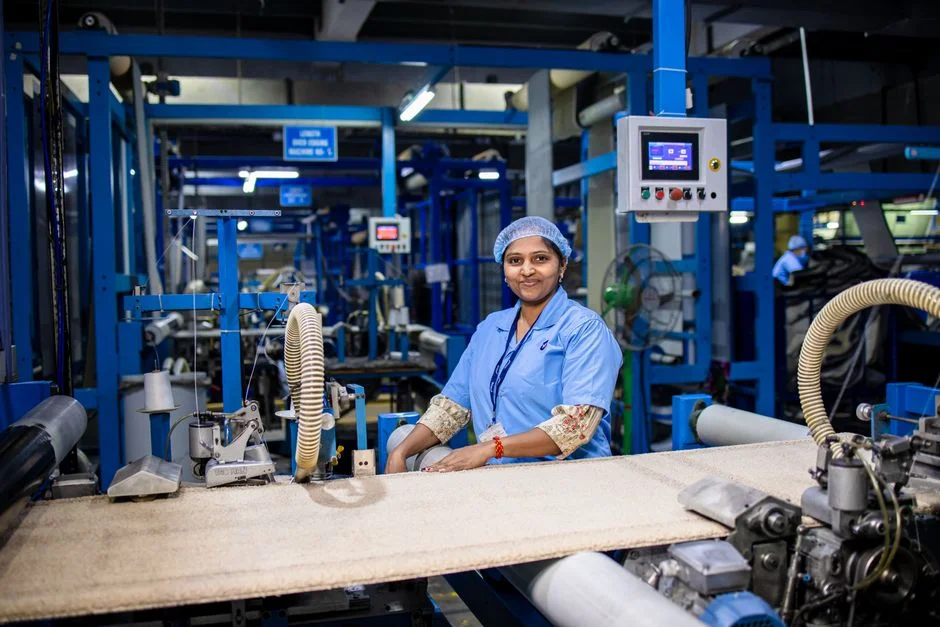
The 2026 reference design for a textile ETP is a seven-stage continuous train. The order matters: equalization first to dampen shock loads, DAF next to lift TSS and a first pass at color, anaerobic then aerobic biology to destroy the bulk COD, advanced oxidation to break recalcitrant azo and anthraquinone chromophores, multimedia and carbon polishing, then RO for reuse or ZLD polishing for zero discharge. Sludge handling is the seventh stage, not an afterthought.
Stage 1 — Equalization and screening. A rotary bar screen removes lint and packaging debris; an equalization tank with 6–12 h hydraulic retention time (HRT), pH correction and temperature control dampens the swings between a 95 °C mercerizing dump and a cool rinse. Without this buffer, downstream biology will never hold a steady MLSS.
Stage 2 — Coagulation and DAF. A textile-duty DAF (4–300 m³/h) doses ferric chloride or polyaluminum chloride (PAC) plus anionic polyacrylamide to float TSS, residual color and colloidal dye. DAF alone typically removes 50–92% of TSS and 30–60% of color, leaving effluent TSS in the 50–100 mg/L range. The floated sludge goes directly to a sludge buffer tank. For high-TDS dyeing streams, a side-by-side comparison of DAF vs API separator for dyeing wastewater is worth reading before specifying.
Stage 3 — Anaerobic (UASB / EGSB / hybrid ABR). The high-strength, warm desize liquor is segregated and fed first to an upflow anaerobic sludge blanket (UASB) or expanded granular sludge bed (EGSB) reactor. At 10–15 kg COD/m³·day organic loading, anaerobic biology delivers 60–80% COD removal and produces roughly 0.35 m³ of biogas per kg of COD removed — a useful energy offset in 2026 designs. Source-segregating desize liquor in this way is the single most effective COD-relief move on the whole plant: it typically pulls 20–40% of total COD off the downstream aerobic stage (per HydropureWater field data, 2025).
Stage 4 — Aerobic / MBR. The anaerobic effluent, blended with the lower-strength streams, enters an integrated MBR system using DF-series flat-sheet MBR modules in PVDF. Operating at MLSS 8,000–12,000 mg/L, MBR delivers effluent COD below 100 mg/L, TSS below 5 mg/L and BOD below 10 mg/L at a sustainable flux of 12–18 LMH. For readers new to membrane biology, the MBR process explainer covers the hydraulics in detail. MBR replaces the secondary clarifier entirely and stabilizes downstream RO by cutting SS to near zero.
Stage 5 — Advanced oxidation. Reactive and disperse azo chromophores are notoriously recalcitrant. Ozone (O₃) or Fenton's reagent (H₂O₂/Fe²⁺) at 30–60 min contact time drops color below 50 ADMI units and reduces AOX. Fenton is preferred where iron is already dosed at the DAF; ozone is preferred where the mill wants to avoid brine buildup.
Stage 6 — Polishing and reuse. Multimedia filtration, activated carbon, and a final disinfection step (UV or an on-site ClO₂ generator) prepare the water for either discharge or RO feed. Where reuse is targeted, an industrial RO system running at 65–75% recovery sends 60–70% of the MBR permeate back to dyeing and rinsing, cutting freshwater draw by 50–65%.
Stage 7 — Sludge handling. Combined DAF float and waste-activated sludge is thickened in a lamella clarifier, then dewatered in a plate-and-frame filter press to a target cake dryness of 25–35%. Cake is typically sent to a cement kiln, brick kiln, or hazardous-waste incinerator depending on metals content.
| Stage | Unit operation | Key parameter / target | Typical removal |
|---|---|---|---|
| 1 | Equalization + bar screen | 6–12 h HRT, pH 6–9, T <40 °C | Flow / temperature damping |
| 2 | Coagulation / DAF | FeCl₃ or PAC + polyacrylamide | 50–92% TSS, 30–60% color |
| 3 | Anaerobic (UASB / EGSB) | 10–15 kg COD/m³·day | 60–80% COD |
| 4 | MBR (PVDF flat-sheet) | MLSS 8,000–12,000 mg/L, flux 12–18 LMH | COD <100 mg/L, TSS <5 mg/L |
| 5 | Ozone or Fenton AOP | 30–60 min contact | Color <50 ADMI |
| 6 | Multimedia + AC + RO | RO recovery 65–75% | TDS <500 mg/L in permeate |
| 7 | Filter-press dewatering | 25–35% cake dryness | Volume reduction ~90% |
Direct Discharge, Partial Reuse, or ZLD: Choosing the Right Layout
The technical train above can be capped at three different points, and the right cap depends on the receiving water body, the local water price, and the regulatory regime.
Direct-discharge layout ends at Stage 5 — equalization, DAF, biology, and AOP — with the clarified, decolorized, biologically stable effluent going to a municipal sewer or a receiving watercourse. This is the lowest-CapEx option and is appropriate where receiving-water dilution capacity is high, TDS is not a regulatory pain point, and discharge consent limits for BOD, COD, color, and AOX are achievable without RO. It is rarely the right answer in water-stressed regions or where the receiving water is sensitive.
Partial-reuse layout adds Stage 6 (RO) after AOP. Sixty to seventy percent of the treated effluent is returned to dyeing and rinsing, reducing freshwater draw by 50–65%. It is the preferred option in 2026 for mills in Tamil Nadu, Dhaka, Hanoi, Bursa, and any East African industrial park where groundwater depletion is now a board-level concern.
Full Zero Liquid Discharge (ZLD) sends the RO concentrate into a brine concentrator followed by a mechanical vapor recompression (MVR) crystallizer. ZLD recovers more than 95% of the inflow as water, with the balance leaving as a solid salt cake. CapEx runs 4–6× that of a direct-discharge plant and OpEx is high, so ZLD is justified only where the discharge is fully banned (industrial parks in China, certain Indian pharma and textile parks), where the influent TDS is consistently above 5,000 mg/L, or where the receiving water is a closed basin with no dilution capacity. In all other cases, partial reuse is the economic optimum in 2026.
| Layout | Treatment chain | Water recovery | Indicative CapEx (per m³/day) | Best-fit site |
|---|---|---|---|---|
| Direct discharge | EQ → DAF → Anaerobic → MBR → AOP | 0% (effluent to environment) | ₹8–18 Lakh ($10,000–22,000) | Adequate receiving water, no reuse mandate |
| Partial reuse | EQ → DAF → Anaerobic → MBR → AOP → RO | 60–70% | ₹20–40 Lakh | Water-stressed regions, freshwater >$0.8/m³ |
| Full ZLD | Partial reuse + brine concentrator + MVR crystallizer | >95% | ₹60–1.2 Cr | Discharge-ban parks, TDS >5,000 mg/L influent |
2026 Cost Benchmarks: CapEx, OpEx and Payback
The numbers below are 2026 reference points for South Asian, Southeast Asian, Turkish, and East African sites, derived from HydropureWater project data and EPC benchmarks from 2025. They assume a 1,000 m³/day textile ETP with combined cotton reactive and polyester disperse streams.
A direct-discharge integrated ETP runs CapEx of roughly ₹8–18 Lakh per m³/day of capacity (about $10,000–22,000) and OpEx of ₹0.8–1.5 Lakh per m³ treated. The dominant OpEx line items are power for aeration and DAF air compression, plus coagulant and polymer dosing.
A partial-reuse ETP including RO pushes CapEx to roughly ₹20–40 Lakh per m³/day, with OpEx of ₹2–3.5 Lakh per m³ — the increase driven by RO membrane replacement every 2–3 years and a 0.6–0.9 kWh/m³ energy load on the high-pressure pump.
A full ZLD is ₹60–1.2 Cr per m³/day in CapEx and ₹5–9 Lakh per m³ in OpEx. Payback is regulated-driven, not water-driven; it lives or dies on whether local authorities will accept brine discharge or have a 2026 zero-discharge mandate in force.
For a partial-reuse plant, simple payback on the additional RO investment versus direct discharge is typically 3–5 years when freshwater unit cost exceeds $0.8/m³ and the regulator charges a discharge levy. Below that water price, partial reuse is still compliance-driven, not financially driven.
| Layout | CapEx (₹/m³/day) | OpEx (₹/m³ treated) | Typical payback |
|---|---|---|---|
| Direct discharge | 8–18 Lakh | 0.8–1.5 Lakh | Compliance-driven |
| Partial reuse | 20–40 Lakh | 2–3.5 Lakh | 3–5 years (when freshwater >$0.8/m³) |
| Full ZLD | 60 Lakh–1.2 Cr | 5–9 Lakh | Regulation-driven only |
How to Select a Textile ETP Supplier: A 6-Point Checklist
The technical specification is only half of the procurement problem. The other half is making sure the supplier has actually built a textile plant on the same fabric mix, not a generic municipal digiter.
- Confirm at least three documented textile-mill references within the last five years on the same fabric mix (cotton reactive, polyester disperse, or blended) — site visits, not just project lists, are the proof.
- Require a guaranteed performance table at the outlet with specific numerical commitments for COD, BOD, color (ADMI), TDS, Cr(VI), and AOX — not generic "% removal" claims.
- Validate the MBR and RO are sized with a 20% hydraulic margin for production growth. Most 2026 retrofits happen because the original plant was sized to today's flow, not next year's.
- Check that PLC/SCADA covers equalization, DAF chemistry, MBR aeration and backwash, RO CIP, and sludge handling. A plant that runs on manual chemistry is a plant that will fail the next consent test.
- Confirm local availability of consumables (membranes, chemicals, filter cloth) with a lead time of seven days or less — three days is the safer benchmark. Imported consumables with 6–8 week lead times are an operational risk.
- Insist on a 12-month performance warranty with liquidated-damages clauses for non-compliance at the outlet. Verbal performance guarantees have no commercial value. Chemical dosing is typically best handled by an automatic chemical dosing system that ties polymer and coagulant feed to online flow and TSS signals.
Frequently Asked Questions
What does an integrated wastewater treatment plant for the textile industry cost in 2026?
CapEx ranges from ₹8–18 Lakh per m³/day for direct discharge to ₹60 Lakh–1.2 Cr per m³/day for full ZLD; partial reuse sits at ₹20–40 Lakh per m³/day. OpEx runs ₹0.8–1.5 Lakh per m³ (direct), ₹2–3.5 Lakh per m³ (partial reuse), and ₹5–9 Lakh per m³ (ZLD).
Which treatment stage removes color from reactive dye wastewater?
Color is removed in two stages: DAF/coagulation lifts 30–60% in Stage 2, and ozone or Fenton advanced oxidation in Stage 5 drives residual color below 50 ADMI by breaking the azo and anthraquinone chromophores that biology cannot touch.
How is chromium and other heavy metals handled in textile ETP design?
Hexavalent chromium is reduced to Cr(III) at the equalization stage with ferrous sulfate or sodium metabisulfite, then precipitated as Cr(OH)₃ at pH 8–9 in the DAF/coagulation stage. The hydroxide sludge is captured in the filter-press cake; final polishing for dissolved metals uses ion exchange if the consent limit is tight.
What is the single biggest COD-relief move a mill can make in 2026?
Source-segregating the desize liquor and feeding it directly to the anaerobic reactor. This single pipework change typically removes 20–40% of total plant COD before the mixed stream ever reaches the MBR, shrinking aeration demand and MBR membrane area.
Is ZLD mandatory for textile mills in 2026?
Not universally, but it is mandatory inside zero-discharge industrial parks in China and parts of India, and it is effectively mandatory where the mill draws from a stressed aquifer and discharges to a closed water body. Elsewhere, partial reuse at 60–70% water recovery is the regulatory and economic sweet spot.