What Makes Tannery Wastewater So Hard to Treat
Tannery wastewater combines beamhouse soak liquors, chrome tanning floats, retanning baths, and wet-finishing wash water into a single stream with COD of 3,000–10,000 mg/L, BOD/COD ratios frequently below 0.3 (per Springer 20-year review, 2022), total chromium of 50–500 mg/L, sulfide of 200–800 mg/L, and total dissolved solids between 2,000 and 40,000 mg/L. Dark color from dyestuffs and vegetable tannins adds UV-quenching load that interferes with photolysis and disinfection. The combined toxicity is what defeats a generic package plant: sulfide, trivalent chrome, and high salinity all inhibit the same nitrifying bacteria (Nitrosomonas, Nitrobacter) that need to handle 200–600 mg/L ammonia from deliming baths. A 1991 Water Research pilot study demonstrated that nitrification/denitrification is feasible on a blend of 90% chrome-tannery effluent and 10% domestic sewage without external carbon, but only after the chrome and sulfide are addressed upstream. pH swings between 2 (deliming/bating) and 12 (liming) make equalization non-negotiable before any biological stage. A summary profile is below.
| Parameter | Beamhouse | Tan-yard | Wet-finishing | Combined raw |
|---|---|---|---|---|
| pH | 10–12 | 3.5–5.0 | 6–8 | 7–9 (after EQ) |
| COD (mg/L) | 8,000–20,000 | 3,000–6,000 | 1,500–3,000 | 3,000–10,000 |
| Total Cr (mg/L) | <20 | 200–2,000 | 10–50 | 50–500 |
| Sulfide (mg/L) | 200–800 | <5 | <5 | 200–800 |
| TDS (mg/L) | 5,000–40,000 | 10,000–30,000 | 2,000–5,000 | 2,000–40,000 |
| NH3-N (mg/L) | 200–600 | 50–150 | 20–50 | 200–600 |
Influent Characterization: The Numbers That Drive Every Design Choice
Every reactor volume, pump size, and chemical dose in a tannery treatment train follows from the influent parameter table. Engineers should freeze this table in the basis-of-design memo before any equipment selection, then size units against the worst-case peak rather than the annual mean. The four columns below — beamhouse, tan-yard, finished wastewater, and regulatory target — give both the design envelope and the compliance ceiling. China GB 30486 sets COD at ≤100 mg/L and ammonia at ≤15 mg/L for direct discharge; the EU BREF tannery reference document tightens COD to ≤125 mg/L with chromium (total) at ≤0.5–1.0 mg/L depending on receiving water; the EPA leather NESHAP (40 CFR 63, subpart KK) governs HAP emissions and effluent limitations for the chrome plating byproduct stream. Cr(VI) below 0.1 mg/L is the near-universal target across all three regimes for both discharge and reuse.
| Parameter | Beamhouse range | Tan-yard range | Finished WW range | Regulatory target |
|---|---|---|---|---|
| COD (mg/L) | 8,000–20,000 | 3,000–6,000 | 1,500–3,000 | ≤100 (GB 30486), ≤125 (EU BREF) |
| Total Cr (mg/L) | <20 | 200–2,000 | 10–50 | ≤0.5 (EU BREF tannery) |
| Cr(VI) (mg/L) | ND | 0–5 (legacy processes) | ND | ≤0.1 (universal) |
| Sulfide (mg/L) | 200–800 | <5 | <5 | ≤1.0 after oxidation |
| NH3-N (mg/L) | 200–600 | 50–150 | 20–50 | ≤15 (GB 30486) |
| TDS (mg/L) | 5,000–40,000 | 10,000–30,000 | 2,000–5,000 | No universal; site-specific |
| pH | 10–12 | 3.5–5.0 | 6–8 | 6–9 (discharge) |
Stream Segregation and Equalization: The First 20% of Total Cost
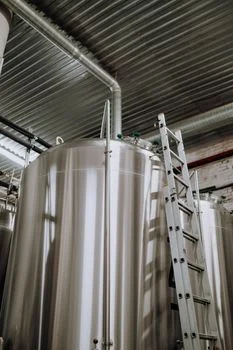
Blending chrome-bearing and sulfide-bearing streams is the single most expensive mistake a tannery buyer can make: it forces complete sulfide oxidation in the presence of chrome, generates a mixed sludge that cannot be sold back to the chrome-tannery bath, and consumes 30–50% more NaOH for neutralization. The correct sequence is to segregate the chrome stream (tanning, retanning) from the sulfide stream (soaking, liming, unhairing) at the source, oxidize the sulfide first via acidification to pH 4 followed by air stripping or H2O2 dosing at 1.5–2.0 kg H2O2 per kg sulfide removed, then recombine for equalization. Equalization basin sizing of 8–12 hours of total hydraulic retention dampens the pH 2↔12 swing and brings COD variability inside ±20% so downstream biology does not see shock loads. A rotary bar screen for tannery headworks with 3–6 mm aperture is the standard first unit operation to protect downstream pumps from hides, hair, and trimming debris that otherwise foul biological tanks within days.
Chromium Removal and Recovery: Precipitation, Ion Exchange, or Membrane
Chemical precipitation with NaOH or MgO at pH 8.0–9.0 remains the default chromium recovery step and returns 90–99% of Cr(III) as a hydroxide sludge that can be redissolved in sulfuric acid and reused directly in the chrome tanning bath — a 30–50% fresh-chrome saving per the Springer 20-year review (2022). If hexavalent chrome is present (older chrome-tanning formulations, bichromate oxidation steps, or thermal oxidation side reactions), it must be reduced first with FeSO4 or NaHSO3 at pH 2.0–3.0, with a stoichiometric demand of roughly 3.0 kg FeSO4 per kg Cr(VI) before the hydroxide precipitation stage. Ion exchange with weak-acid cation resin polishes residual chrome to below 0.05 mg/L for reuse-grade water, but adds 25–40% OPEX versus precipitation alone (HydropureWater field data, 2026) and generates a regenerant brine that must be handled separately. Nanofiltration and RO recover more than 99% of chrome and enable ZLD loops, but membrane fouling is the dominant OPEX risk per the 2023 Collagen & Leather membrane recap. An automatic chemical dosing for chrome precipitation skid sized for 5–20 L/h NaOH and 2–8 L/h reducer is the practical way to hold the pH window inside ±0.2 units on a shifting influent.
| Technology | Effluent Cr (mg/L) | Cr recovery to bath | Relative OPEX | Best fit |
|---|---|---|---|---|
| NaOH/MgO precipitation | 0.5–2.0 | 90–99% | 1.0× (baseline) | All sizes; standard 2026 choice |
| Weak-acid cation IX | <0.05 | 95–99% | 1.25–1.40× | Reuse trains, low-flow polish |
| NF / RO | <0.05 | >99% | 1.5–2.0× | ZLD, salt recovery, >500 m³/day |
| Cr(VI) reduction + ppt | <0.1 | 90–95% | 1.15–1.30× | Legacy hexavalent streams |
Biological Treatment: MBR vs SBR vs UASB for the Main COD/Nitrogen Train
The secondary stage decides the effluent quality, the footprint, and the reuse ceiling. A submerged MBR system for tannery effluent with PVDF flat-sheet membranes at 0.1–0.4 μm delivers the lowest footprint and the best reuse-quality water (COD ≤50 mg/L, TSS ≤5 mg/L, turbidity <1 NTU) but is the most CAPEX-heavy option per m³ of capacity and demands stable mixed liquor suspended solids around 8,000–12,000 mg/L. A sequencing batch reactor (SBR) offers 15–25% lower CAPEX than MBR at the cost of TSS variability (typically 10–30 mg/L in the effluent) and a larger equalization volume, and works well for 100–500 m³/day plants with stable influent. Upflow anaerobic sludge blanket (UASB) followed by a post-aerobic stage is the lowest-energy option at 0.10–0.20 kWh/m³ versus 0.45–0.65 kWh/m³ for MBR, but requires reactor temperature above 20°C and is sensitive to chrome spikes above 5 mg/L. Nitrification/denitrification is feasible on a chrome-tannery plus domestic sewage blend without external carbon per the 1991 Water Research pilot; for tannery-only streams with BOD/COD below 0.25, a methanol or glycerol feed of 2.5–3.5 kg per kg NO3-N removed is needed to hold TN below 15 mg/L. The MBR stage uses a PVDF flat sheet MBR membrane module rated at 10–18 LMH, and a lamella clarifier for tannery biological effluent is the standard post-biology TSS polishing step in SBR and UASB trains.
| Reactor | Effluent COD (mg/L) | Effluent TSS (mg/L) | Energy (kWh/m³) | Footprint | Best fit |
|---|---|---|---|---|---|
| MBR (PVDF, 0.1–0.4 μm) | ≤50 | ≤5 | 0.45–0.65 | Smallest | Reuse-grade, >500 m³/day |
| SBR | 80–150 | 10–30 | 0.30–0.45 | Medium | 100–500 m³/day, batch flexibility |
| UASB + post-aerobic | 120–200 | 20–50 | 0.10–0.20 | Largest | Warm climate, stable chrome |
Polishing, Reuse, and Sludge Handling
Polishing closes the water loop and the solids loop. Multi-media filtration (sand + anthracite + garnet) followed by UF at 0.01–0.1 μm brings MBR effluent to less than 1 NTU turbidity, suitable as RO feed. Industrial RO at 65–75% recovery then turns the polished stream into boiler feed or process wash water, and total CAPEX per m³/day rises by $180–$320 when RO is added (HydropureWater field data, 2026). A multi-media filter for tannery reuse pretreatment sized at 10–15 m/h and a brackish-water RO system for tannery ZLD are the standard polishing package. Tannery sludge is high in chrome (often 1–3% dry basis) and protein, and a filter press for chrome-bearing tannery sludge at 1.2–1.8 MPa produces a 28–35% dry cake suitable for secure landfill or off-site chrome recovery. Discharge to surface water or irrigation requires ClO2 or UV disinfection; a ClO2 generator for tannery effluent disinfection is preferred when coliform log-4 kill must be guaranteed under variable ammonia load, since ClO2 retains biocidal efficiency at NH3-N above 5 mg/L where free chlorine would be lost to chloramine formation.
2026 CAPEX and OPEX: What to Put in the Budget
Full-train CAPEX in 2026 — screening, equalization, chrome precipitation, biological, clarifier, filter, disinfection — runs USD $350–$1,400 per m³/day of installed capacity. MBR sits at the upper end ($900–$1,400), SBR and UASB sit at the lower end ($350–$700), and RO polishing adds another $180–$320 per m³/day on top. OPEX in 2026 is USD $0.40–$1.10 per m³ treated, dominated by electricity at 40–55% of the total, chemicals at 20–30%, and sludge handling at 10–15% (HydropureWater field data, 2026). Chrome recovery credit offsets $0.05–$0.12 per m³ of OPEX, and the offset scales with tannery size — a 2,000 m³/day plant typically recovers 8–15 t/yr of Cr(III) sulfate, worth $40,000–$90,000/yr at 2026 chrome prices. Add a 15–20% contingency line for membrane fouling events and CIP chemicals when designing with UF/RO polishing, since CIP frequency in tannery reuse trains is typically 2–4 times per year.
| Cost line | 2026 range (USD) | Share of OPEX | Notes |
|---|---|---|---|
| Full-train CAPEX | $350–$1,400 per m³/day | — | MBR high end, SBR/UASB low end |
| RO polishing add-on | $180–$320 per m³/day | — | ZLD or reuse only |
| Electricity | $0.18–$0.55 per m³ | 40–55% | MBR 0.45–0.65 kWh/m³ |
| Chemicals (NaOH, H2O2, coagulant) | $0.10–$0.30 per m³ | 20–30% | 1.5–2.0 kg H2O2/kg S²⁻ |
| Sludge handling | $0.05–$0.15 per m³ | 10–15% | Filter press, landfill tipping |
| Chrome recovery credit | −$0.05 to −$0.12 per m³ | Offset | Scales with plant size |
| Total OPEX | $0.40–$1.10 per m³ | 100% | Add 15–20% membrane contingency |
Frequently Asked Questions
What is the best biological reactor for a 500 m³/day tannery wastewater treatment plant in 2026?
For 500 m³/day with reuse intent, an MBR with PVDF flat-sheet membranes is the strongest fit: effluent COD ≤50 mg/L, TSS ≤5 mg/L, footprint roughly half that of SBR. For discharge-only plants in warm climates, UASB plus post-aerobic cuts energy to 0.10–0.20 kWh/m³ and CAPEX by 35–45%. See the full 2026 chromium removal technology comparison for reactor-by-reactor sizing.
How do you hit Cr(VI) below 0.1 mg/L when legacy tannery streams still contain hexavalent chrome?
Reduce first with FeSO4 at pH 2.0–3.0 (roughly 3.0 kg FeSO4 per kg Cr(VI)), hold the ORP below +250 mV for 20–30 minutes, then raise pH to 8.0–9.0 with NaOH or MgO to precipitate Cr(III) as hydroxide. Polishing with weak-acid cation resin pushes total chrome below 0.05 mg/L for reuse loops. This sequence is consistent with EU BREF tannery BAT and China GB 30486 discharge limits.
What is the 2026 CAPEX range for a complete tannery wastewater treatment train at 1,000 m³/day?
USD $350,000–$1,400,000 for the full biological train excluding RO, and a further $180,000–$320,000 if RO polishing is added. MBR-based trains sit at the upper third of this range. OPEX in 2026 runs $0.40–$1.10 per m³, with chrome recovery credits of $0.05–$0.12 per m³ offsetting the chemical line (HydropureWater field data, 2026).
Which compliance regime is the strictest for tannery effluent — EPA, EU BREF, or China GB 30486?
China GB 30486 is the tightest on conventionals (COD ≤100 mg/L, NH3-N ≤15 mg/L) for direct discharge. The EU BREF tannery document is the tightest on chrome (total Cr ≤0.5–1.0 mg/L, Cr(VI) ≤0.1 mg/L) and adds reuse incentives. EPA leather NESHAP (40 CFR 63, subpart KK) governs HAP emissions from chrome-side processes and ties effluent limits to the BMP/bat basis. For a 2026 plant, design to the strictest of the three regimes the receiving jurisdiction will accept.