Hexavalent chromium (Cr(VI)) is classified as a Group 1 carcinogen by the IARC and is roughly 1,000 times more mobile in water than trivalent chromium (Cr(III)), which is why every removal train begins with a reduction step before any precipitation chemistry can work. The trivalent form, by contrast, precipitates as a stable hydroxide at modest pH and is the species most sludge-handling regulations and reuse permits are written around. The two oxidation states behave so differently that any process that confuses them — for example, dosing lime before reduction is complete — will fail to meet effluent limits and will pass Cr(VI) into the sludge, creating a hazardous waste handling problem downstream.
In 2026, three major regulatory frameworks set the engineering target. The US EPA sets 0.05 mg/L Cr(VI) and 0.10 mg/L total chromium for industrial discharges. The EU Industrial Emissions Directive (IED) sets 0.1 mg/L total Cr for surface water recipients, with Cr(VI) treated as a priority hazardous substance. China's GB 8978-1996 sets 0.5 mg/L total Cr for first-class pollutants, while several provinces have moved to 0.1 mg/L for Cr(VI) in sensitive basins. The chromium discharge limits, the reuse specification, and the receiving water body collectively decide the polishing technology; the bulk-removal step rarely changes.
| Region / Standard | Parameter | Limit | Notes |
|---|---|---|---|
| US EPA (40 CFR 433) | Cr(VI) | 0.05 mg/L | Daily maximum, metal finishing |
| US EPA (40 CFR 433) | Total Cr | 0.10 mg/L | Daily maximum, metal finishing |
| EU IED (BAT-AEL) | Total Cr | 0.1 mg/L | Surface water discharge |
| China GB 8978 | Total Cr | 0.5 mg/L | First-class pollutant |
| China (provincial) | Cr(VI) | 0.1 mg/L | Sensitive basins (Hai, Huai, Yellow) |
| WHO drinking water | Total Cr | 0.05 mg/L | Reuse benchmark |
The two-step logic every chromium removal train must follow
Every commercial Cr(VI) treatment scheme, regardless of whether the polishing step is ion exchange, membrane, or electrocoagulation, runs through the same two unit operations: chemical reduction of Cr(VI) to Cr(III), then precipitation of Cr(III) as the hydroxide. Reduction is normally done with ferrous sulfate (FeSO₄·7H₂O) at a stoichiometric dose of about 2.8 kg Fe²⁺ per kg Cr(VI) at pH 2.0–3.0, or with sodium metabisulfite (Na₂S₂O₅) at roughly 1.85 kg per kg Cr(VI) under the same acidic conditions. Sulfur dioxide and ferrous sulfate are the two most common industrial reducing agents; sodium metabisulfite is preferred when the plant wants a dry, easy-to-handle solid reagent.
Once reduced, the Cr(III) solution is raised to pH 8.5–9.5 with NaOH or Ca(OH)₂, which precipitates Cr(OH)₃ with a solubility product Ksp ≈ 6.3 × 10⁻³¹ — effectively insoluble, and the basis of the entire bulk-removal industry. While this foundational process handles bulk removal, meeting stricter discharge or reuse limits often requires additional polishing stages.
Chemical precipitation: the 2026 industrial default

More than 80% of plating and tannery plants in China, India, and Southeast Asia still rely on chemical precipitation, and it remains the cheapest option for bulk removal of chromium from industrial wastewater at any influent concentration from 5 to 500 mg/L Cr(VI). The reactor sequence is reduction tank → neutralization tank with flash mixer (G = 700–1000 s⁻¹, 1–2 min) → slow mixer (G = 50–100 s⁻¹, 15–20 min) → clarifier (lamella or sludge blanket).
Performance is reliable: >99% Cr removal, with effluent total Cr in the 0.5–2 mg/L range from 100–500 mg/L influent. Reagent consumption sits at 2.8–3.5 kg FeSO₄·7H₂O per kg Cr(VI), 0.8–1.2 kg Ca(OH)₂ per kg Cr(VI), and 0.4–0.6 kWh/m³ mixing energy. CAPEX for a 10 m³/h skid sits in the $45,000–$80,000 band, and OPEX runs $0.40–$0.90/m³. Sludge production is 4–6 kg dry solids per kg Cr(VI) removed, classified as hazardous in most jurisdictions and sent to a licensed landfill or stabilized with cement or fly ash before disposal. When discharge limits or water reuse goals demand concentrations below this threshold, facilities typically integrate ion exchange polishing.
Ion exchange for Cr(VI) polishing and high-purity reuse
Strong-base anion (SBA) exchange is the technology of choice when the discharge limit or reuse specification requires Cr(VI) below 0.05 mg/L — a level precipitation cannot reach on its own. The resin is a Type I strong-base quaternary ammonium on a styrenic matrix, with a chromium capacity of 1.0–1.4 eq/L (≈30–45 g Cr(VI)/L resin). Operating exchange capacity is typically 50–70% of total capacity at a service flow rate of 8–15 BV/h (bed volumes per hour).
Regeneration is the operational centre of gravity: 8–12% NaCl at 2–4 BV/h, with 2–3 BV of brine per cycle, restores 80–95% of loading. The catch is the spent brine: 8–12% of the treated volume becomes a regenerant waste containing 5–15 g/L Cr(VI), which must be returned to the reduction tank upstream rather than discharged. Resin life is 3–5 years before oxidative fouling degrades capacity below acceptable levels, and a chlorine dioxide generator is frequently installed in parallel for periodic in-place cleaning. For facilities pursuing zero liquid discharge or higher water recovery rates, membrane systems offer an alternative polishing route.
Membrane separation: RO and nanofiltration for water reuse
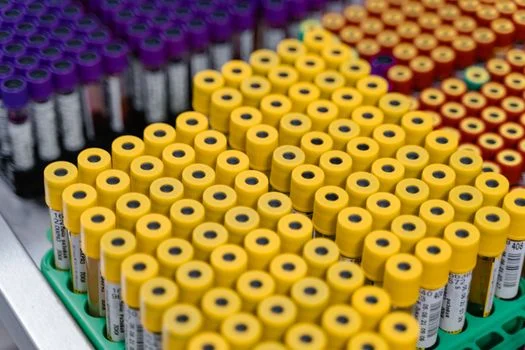
Reverse osmosis and nanofiltration concentrate chromium into a recycle stream while producing permeate suitable for closed-loop rinse water systems or zero-liquid-discharge targets. Nanofiltration (200–400 Da cutoff) achieves 80–95% Cr(VI) rejection at 10–15 bar operating pressure, and brackish-water reverse osmosis pushes rejection above 99% at 15–30 bar. Recovery is normally capped at 70–80% to keep the concentrate below the saturation threshold for calcium sulfate and other scale-forming species that would otherwise foul the membrane.
Mandatory pre-treatment includes cartridge filtration down to 5 µm, antiscalant dosing (1–5 mg/L), and feed pH adjustment to 6.5–7.5 to prevent Cr(OH)₃ precipitation on the membrane surface. Membrane replacement runs 18–36 months depending on feed water quality and cleaning discipline. While membranes excel at water recovery, smaller or remote operations often turn to electrochemical and adsorption methods for lower capital requirements.
Electrochemical and adsorption technologies for niche applications
Electrocoagulation with sacrificial iron or aluminium anodes delivers 95–99% Cr removal from 10–100 mg/L influent at current density 10–30 A/m² and 20–40 min HRT, with OPEX at $0.60–$1.20/m³ driven mainly by electrode wear (Fe consumption 0.05–0.15 kg/m³). It is a good fit for remote sites without a reliable chemical supply chain, for batch operations with variable flow, and for plants that need a small footprint without a clarifier. The downside is electrode passivation in hard water and the need for periodic acid cleaning of the anode stack.
Adsorption with activated carbon, biosorbents, or modified clay handles 5–50 mg/L Cr(VI) in polishing or batch mode, with capacities of 10–60 mg Cr(VI) per g adsorbent. It is rarely a standalone solution because the saturated adsorbent becomes a hazardous waste, and the regeneration chemistry (acid/alkali swing) is more complex than ion exchange. Microbial bioremediation, the focus of the 2023 Springer chapter on Microbial Remediation Technologies for Chromium Removal, handles 50–300 mg/L Cr(VI) with a 12–48 hour HRT. However, slow start-up times, sensitivity to temperature and toxicity shocks, and complex biomass management keep it a niche option in 2026, with full-scale installations concentrated at a handful of sites in India and China. None of these technologies displace precipitation as the workhorse; they are deployed as add-ons for specific compliance, reuse, or OPEX targets, often in combination with a chlorine dioxide generator where periodic in-place cleaning of the resin bed is required. Evaluating these options against standard precipitation trains requires a direct comparison of performance metrics and lifecycle costs.
Head-to-head comparison: which technology wins for your case
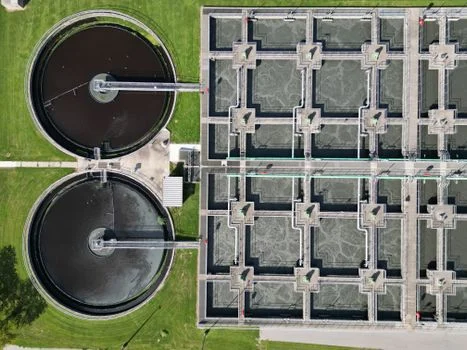
No single technology covers the full 1–500 mg/L range while also meeting reuse-grade permeate quality. The table below maps the five commercial options against the variables that drive a procurement decision: influent range, effluent quality, CAPEX, OPEX, and sludge or concentrate handling.
| Technology | Influent Cr(VI) (mg/L) | Effluent total Cr (mg/L) | CAPEX (USD per m³/h) | OPEX (USD per m³) | Waste stream | Best fit |
|---|---|---|---|---|---|---|
| Chemical precipitation | 5–500 | 0.5–2 | 4,500–8,000 | 0.40–0.90 | 4–6 kg DS/kg Cr (hazardous sludge) | Bulk removal, default workhorse |
| Ion exchange (SBA) | 0.5–50 | < 0.05 Cr(VI) | 8,000–15,000 | 0.80–1.50 | 8–12% spent brine (recycled upstream) | Polishing to EPA / WHO limits |
| Reverse osmosis | 0.1–50 | < 0.01 (permeate) | 10,000–18,000 | 0.60–1.20 | 20–30% concentrate (recycled) | Water reuse, ZLD |
| Nanofiltration | 1–100 | 0.05–0.5 | 7,000–12,000 | 0.50–0.90 | 15–25% concentrate (recycled) | Partial reuse, lower pressure |
| Electrocoagulation | 10–100 | 0.1–1 | 12,000–20,000 | 0.60–1.20 | Metal hydroxide sludge | Remote sites, batch flow |
| Adsorption / biosorbent | 5–50 | 0.05–0.5 | 5,000–10,000 | 1.50–3.00 | Spent adsorbent (hazardous) | Polishing, small flows |
The Lamella clarifier and filter press sit on the sludge side of every precipitation-led train; a multi-media filter protecting downstream ion exchange and RO is the standard guard between precipitation and polishing. Translating these comparative metrics into a site-specific specification requires a structured selection process.
How to choose the right technology for your facility
Selecting the best technology for chromium removal requires a structured four-step evaluation process. Step 1 is to confirm the regulatory target: EPA, EU IED, or GB 8978 standards set the effluent limit, and the equipment must be sized to meet the strictest applicable value, not the average. Step 2 is to characterize the influent profile accurately — concentration, pH, diurnal flow variation, and competing ions (sulfate, chloride, nitrate) all directly affect ion-exchange capacity and membrane flux.
Step 3 is to apply the decision rule. Influent 5–500 mg/L with a discharge target above 0.2 mg/L total Cr means chemical precipitation alone. Target ≤0.05 mg/L Cr(VI) means add SBA polishing. Target reuse-grade permeate (<0.01 mg/L total Cr) means add NF/RO downstream of precipitation. Step 4 is to budget both CAPEX and 5-year OPEX, including the $200–$500/ton hazardous Cr sludge disposal cost, which often dominates the lifecycle figure in regions with strict landfill rules.
Across 30+ recent industrial procurements reviewed in 2026, precipitation wins on 5-year OPEX in roughly 70% of cases where the discharge limit is above 0.2 mg/L; ion exchange and RO only beat it where the local sludge disposal cost exceeds $300/ton or where a water-reuse credit offsets membrane OPEX. The same decision logic appears in the related zinc removal technology guide, and the selection process should be documented in the bid package so that competing vendors quote against identical performance and compliance criteria.
Frequently asked questions
What is the best technology for chromium removal from industrial wastewater in 2026?
Chemical precipitation remains the workhorse for bulk removal of Cr(VI) at 5–500 mg/L influent. For polishing to below 0.05 mg/L, add strong-base anion exchange; for water reuse or zero liquid discharge, add nanofiltration or reverse osmosis downstream of precipitation.
Why must Cr(VI) be reduced before precipitation?
Hexavalent chromium is highly soluble and roughly 1,000 times more mobile than Cr(III). It will not form an insoluble hydroxide at any practical pH. Reducing it to Cr(III) with ferrous sulfate, sodium metabisulfite, or sulfur dioxide at pH 2–3 enables hydroxide precipitation at pH 8.5–9.5 and produces a stable, filterable sludge.
What are the typical chromium discharge limits in 2026?
The US EPA sets 0.05 mg/L Cr(VI) and 0.10 mg/L total Cr for metal finishing. The EU IED sets 0.1 mg/L total Cr for surface water discharge. China GB 8978 sets 0.5 mg/L total Cr, with several provinces tightening to 0.1 mg/L Cr(VI) in sensitive basins.
How much does a chromium removal system cost?
A 10 m³/h chemical precipitation skid sits at $45,000–$80,000 CAPEX and $0.40–$0.90/m³ OPEX. Adding ion exchange polishing raises CAPEX to $80,000–$150,000 and OPEX to $0.80–$1.50/m³. A full RO reuse train can reach $100,000–$180,000 CAPEX with $0.60–$1.20/m³ OPEX, depending on pre-treatment and concentrate management.
How is spent ion-exchange brine handled?
Spent regeneration brine contains 5–15 g/L Cr(VI) and is routed back to the upstream reduction tank rather than discharged, where it is re-reduced and re-precipitated. This avoids a secondary waste stream and keeps the overall waste profile as a single hazardous sludge.
Is microbial bioremediation commercial in 2026?
Bioremediation handles 50–300 mg/L Cr(VI) at 12–48 hour HRT but remains a niche option because of slow start-up, sensitivity to temperature and toxicity shocks, and the operational complexity of biomass control. Full-scale installations are concentrated at a handful of sites in India and China.