United Utilities named DuPont the preferred supplier of membrane bioreactor technology on 11 February 2026 for expansions at Eccles, Salford and Wigan (United Utilities, 2026). The Wigan works serves more than 437,000 people and is expected to host the UK's largest MBR once complete. Earlier project descriptions cited a 120 MLD design case and about 60% footprint reduction versus conventional activated sludge (CAS). An MBR wastewater treatment system UK duty commonly targets 92-97% COD removal and 99%+ pathogen reduction, with CAPEX around £1.2-1.8M per 1,000 m³/day and energy of 0.8-1.2 kWh/m³ at 12-15°C.
This guide covers specs, costs and compliance, and when an MBR wastewater treatment system beats MBBR or CAS for municipal or industrial duty. Treat older capacity notes as design benchmarks until as-built data are published.
Why Specify an MBR Wastewater Treatment System UK
UK membrane plants are specified when permits need BOD below 5 mg/L, TSS below 1 mg/L and a plot near 0.2-0.4 m²/PE. Energy rises to 0.8-1.2 kWh/m³ at 12-15°C, against 0.4-0.6 kWh/m³ for conventional activated sludge. Phosphorus near 0.25 mg/L still needs chemical dosing beside the membrane barrier.
UK operators specify MBR when permits tighten on solids, pathogens and nutrients, and when plot area is scarce. Typical municipal targets are BOD below 5 mg/L, TSS below 1 mg/L and phosphorus often below 0.5 mg/L. Footprint falls toward 0.2-0.4 m²/PE versus 1.0-1.5 m²/PE for CAS, while energy rises to 0.8-1.2 kWh/m³ versus 0.4-0.6 kWh/m³ for CAS.
Phosphorus remains a dominant freshwater pressure in England. The Environment Agency phosphorus challenges report was last updated on 20 November 2025 to support the SWMI consultation (Environment Agency, 2025). Earlier programme language often framed large nutrient-cut ambitions, including historic briefing claims of about a 50% reduction push on phosphorus and nitrogen discharges from wastewater plants on sensitive waters. According to Defra (19 July 2025), the interim Environmental Improvement Plan target is a 50% cut in phosphorus from treated wastewater by the end of January 2028.
The Environment Act statutory target is an 80% reduction by 2038 against the 2020 baseline of 8,340 tonnes. Excessive phosphorus is the most common reason water bodies in England miss good ecological status (Defra, 2025). Defra notes that the 50% interim target sits inside the Environmental Improvement Plan review. Plant-level permits still set numeric BOD, TSS, ammonia, nitrogen and phosphorus limits that vary by receiving water.
Where those limits sit near technically demanding phosphorus values around 0.25 mg/L, membrane solids capture plus chemical dosing is frequently part of the compliance package.
The Wigan programme shows the municipal scale now moving into AMP delivery. According to Water Industry Journal (2026), the scheme sits inside a £230 million investment and aims to cut phosphorus, ammonia and iron discharges to the River Douglas, with completion anticipated by 2030. DuPont reported that MemCor was chosen through competitive bidding for Eccles, Salford and Wigan, citing future effluent standards and life-cycle operation (DuPont PR Newswire, 18 Feb 2026). Older briefing notes still quote the 437,000 PE service base, a 120 MLD capacity case, over 95% BOD removal, and a 60% smaller footprint versus a CAS layout.
Treat those figures as design benchmarks until as-built performance is published. Water Industry Journal also reports work at Skelmersdale in the same initiative, plus £50 million already announced at six Wigan sites for storage that cuts storm overflow use. According to United Utilities (11 February 2026), the wider company programme invests more than £13bn over the next five years to protect more than 500 km of rivers, lakes and bathing waters. Delivery runs through the Enterprise model with seven partners, including C2V, Costain, Jacobs, Murphy, Kier, Mott MacDonald Bentley and MWH Treatment (United Utilities, 2026).
Industrial sites follow the same logic when influent is strong and reuse matters. Food processors, pharmaceutical plants and breweries in the UK use MBR on COD loads from about 2,000-10,000 mg/L, often targeting effluent COD below 50 mg/L for direct discharge or polishing. Most plants we size for food wastewater still need FOG removal upstream. Without it, cold-weather flux collapses fast and CIP intervals shrink.
For a parallel package on another regulated market, see MBR Wastewater Treatment System in New Zealand: Cost, Tech &.
Municipal drivers differ slightly from industrial ones, but the equipment logic overlaps. Water companies need overflow reduction, tighter river quality and room for housing growth on constrained works. Factories need trade-consent headroom and sometimes process-water reuse. In both cases MBR is a solids and pathogen barrier first, and a nutrient platform second. Chemical phosphorus removal still carries much of the TP duty when limits approach 0.25 mg/L.
Procurement teams should also weigh operator skill and spares logistics. MBR is not a set-and-forget secondary plant. TMP trending, integrity testing and chemical handling must sit in the O&M plan before CAPEX approval. If your team already runs fine-bubble aeration and SCADA well, the jump is manageable.
If not, budget training and vendor support in year one rather than after the first fouling event.
How MBR systems work in UK wastewater conditions
MBR trains integrate activated sludge with membrane filtration, combining secondary treatment and fine solids separation in one process step. Influent usually passes fine screens, then an anoxic zone for denitrification, then an aerobic bioreactor where heterotrophs and nitrifiers work the load. Submerged PVDF membranes with pore sizes of 0.1-0.4 µm sit in the mixed liquor. UK designs often run MLSS at 8-12 g/L, versus 2-4 g/L in CAS, which shrinks biological volume for the same organic and nitrogen load.
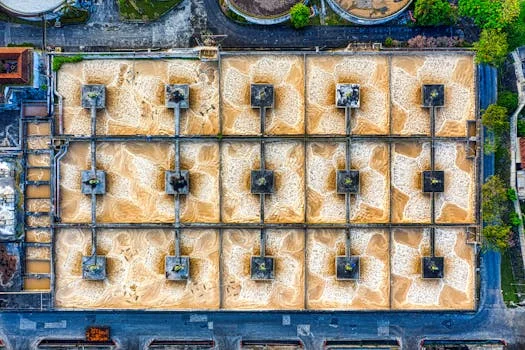
mbr membrane flux cool climate uk
Membrane flux in a cool UK climate generally sits at 15-25 LMH, often below the 20-30 LMH used in warmer climates. Wastewater temperatures of 12-15°C raise viscosity and slow kinetics, so fouling control dominates blower sizing more than summer design sheets from hotter markets. Air scour from beneath the modules keeps the cake moving. That scour air is a large share of plant power on municipal duty.
UKWIR-linked industry benchmarks still place total MBR energy near 0.8-1.2 kWh/m³, with roughly 60% tied to membrane aeration blowers under typical municipal conditions. Aeration scouring rates of 0.2-0.3 Nm³/m²/h are the usual control band for submerged modules in cool UK mixed liquor.
What flux suits a cool UK climate?
Cool-climate continuous duty should sit in the lower half of 15-25 LMH when mixed liquor is 12-15°C. Most plants we size for northern England municipal works run nearer 15-18 LMH in winter and only stretch flux in summer trials. Peak wet-weather factors then decide standby membrane trains or equalisation. Copying a warm-climate sheet without that derate is how winter TMP alarms start.
UK-specific loads complicate stable operation. High FOG from food plants, recalcitrant pharmaceutical residues and seasonal tourist peaks in coastal towns such as Blackpool all swing influent quality week to week. Hydraulic Retention Time (HRT) of 6-12 hours is common when temperatures sit in the low teens and complete nitrification is required. Chemical cleaning-in-place every 3-6 months with sodium hypochlorite or citric acid is normal practice.
Membrane modules generally need replacement every 5-8 years depending on foulant load and warranty terms. Skilled UK technician rates of £40-£60 per hour should be in the OPEX model from day one.
HydropureWater supplies an integrated MBR Membrane Bioreactor Wastewater Treatment System configured for these cool-climate flux and scour envelopes. On industrial packages we usually freeze screen aperture, FOG limit and peak factor before membrane area, because those three inputs move CAPEX more than brochure flux claims.
| Parameter | Typical Range for UK MBR Systems | Impact on Performance |
|---|---|---|
| Operating Temperature | 12-15°C | Lower temperatures increase water viscosity and reduce biological activity, potentially increasing fouling. |
| MLSS Concentration | 8-12 g/L | Higher MLSS allows for smaller biological tanks but requires effective membrane scouring to prevent fouling. |
| Membrane Pore Size | 0.1-0.4 µm | Determines effluent quality (e.g., pathogen removal) and resistance to fouling. |
| Membrane Flux Rate | 15-25 LMH | Lower than warmer climates due to temperature; optimized for stable operation and reduced fouling. |
| Aeration Scouring Rate | 0.2-0.3 Nm³/m²/h | Critical for controlling membrane fouling and providing oxygen for biological treatment. |
| Hydraulic Retention Time (HRT) | 6-12 hours | Optimized for complete biological degradation given UK temperatures and influent characteristics. |
Designers should not copy warm-climate flux sheets into UK tenders without a temperature derate. At 12-15°C, viscosity and slower particle back-transport push you toward the lower half of the 15-25 LMH band for continuous duty. Peak wet-weather factors then decide whether you need standby membrane trains or equalisation. Hold the winter set-point in the control narrative, not only the nameplate flux.
mbr vs mbbr vs cas comparison uk
MBR systems deliver the tightest solids barrier of the three common UK secondary options, with TSS usually below 1 mg/L and pathogen removal above 99% across the membrane. MBBR effluent typically sits at 10-30 mg/L TSS, and CAS at 20-50 mg/L TSS, so both often need tertiary filtration or disinfection to match MBR reuse or sensitive-water consents. Footprint tells the other half of the story: MBR at 0.2-0.4 m²/PE versus MBBR at 0.5-0.8 m²/PE and CAS at 1.0-1.5 m²/PE on comparable PE bases.
Energy and capital reverse that ranking. MBR draws 0.8-1.2 kWh/m³ against 0.5-0.7 kWh/m³ for MBBR and 0.4-0.6 kWh/m³ for CAS. Indicative CAPEX per 1,000 m³/day runs £1.2-£1.8M for MBR, £0.8-£1.2M for MBBR and £0.5-£0.9M for CAS. When a UK phosphorus consent sits below 0.5 mg/L, MBR can often meet solids-related polishing without a separate tertiary filter; MBBR and CAS usually cannot. Sludge mass is typically lower with MBR because higher MLSS and longer solids retention time keep more biomass in the reactor instead of the waste stream.
Which UK process wins on tight consents?
MBR wins when the consent needs TSS below 1 mg/L, pathogen removal above 99% and a plot near 0.2-0.4 m²/PE. Choose MBBR when CAPEX is tight, operators are thin on the ground and the consent still allows a simple tertiary add-on. Choose CAS when land is cheap and existing tanks have life left. Choose MBR when the consent, reuse scheme or urban plot leaves little room for solids breakthrough.
A broader technology scorecard, including hollow-fiber module trade-offs, is summarised in the hollow fiber MBR vs alternatives engineering comparison.
For retrofit jobs, dig into hydraulic profiles before you pick a process label. Many UK works have storm tanks, old final settlement tanks and constrained power feeds. MBR may free land for storm storage, which is now a board-level issue as overflow reduction programmes expand. That land trade can justify MBR even when raw kWh/m³ looks worse on a spreadsheet that ignores civil replacement.
| Feature | MBR System | MBBR System | Conventional Activated Sludge (CAS) |
|---|---|---|---|
| Effluent Quality (TSS) | <1 mg/L | 10-30 mg/L | 20-50 mg/L |
| Pathogen Removal | >99% (membrane barrier) | Moderate (requires disinfection) | Low (requires disinfection) |
| Footprint Requirement | 0.2-0.4 m²/PE | 0.5-0.8 m²/PE | 1.0-1.5 m²/PE |
| Energy Consumption | 0.8-1.2 kWh/m³ | 0.5-0.7 kWh/m³ | 0.4-0.6 kWh/m³ |
| Typical CAPEX (per 1,000 m³/day) | £1.2-£1.8M | £0.8-£1.2M | £0.5-£0.9M |
| Compliance (UK P <0.5 mg/L) | Achieves directly | May require tertiary treatment | Requires tertiary treatment |
| Sludge Production | Lower (higher MLSS) | Moderate | Higher |
mbr wastewater treatment for food industry uk
Food factories in the UK use MBR on COD loads from about 2,000-10,000 mg/L when the effluent target is COD below 50 mg/L. That result holds only after FOG removal. Most plants we size for dairies, ready meals and breweries foul the membrane on fat long before the COD average looks high. Cold influent at 12-15°C makes that fat stickier, so winter flux should stay in the lower half of 15-25 LMH.
When should UK food plants choose MBR?
Choose MBR when the trade consent or a reuse scheme needs low solids and COD below 50 mg/L on a tight plot. Put dissolved air flotation or a heavy grease trap ahead of the anoxic zone, and freeze the FOG limit before membrane area. pH swings from clean-in-place chemicals in the factory need correction upstream. A neutral, screened feed protects 0.1-0.4 µm PVDF pores better than a larger recovery-clean budget.
Sample COD, FOG, pH and metals in the trade agreement, then match any direct river permit if the site does not discharge to sewer.
UK compliance and discharge standards for MBR plants
UK wastewater discharges are controlled under Environment Agency environmental permits that translate Water Framework Directive objectives into site-specific numeric limits. Typical municipal consent bands still referenced in UK design briefs include BOD below 20 mg/L, TSS below 30 mg/L and ammonia below 5 mg/L as baseline secondary standards, with much tighter figures on sensitive waters. MBR plants are usually sized to BOD below 5 mg/L and TSS below 1 mg/L so the solids and pathogen barrier is not the limiting step when nutrient polishing is added. The phosphorus trajectory cited here is the England rule.
Copy the site permit rather than a national average.

Phosphorus consents below 0.5 mg/L are common on eutrophic catchments. Some permits push toward technically demanding values near 0.25 mg/L where the receiving water requires it. Nitrogen limits often sit near 10 mg/L total nitrogen on sensitive sites. MBR helps by removing particulate-bound nutrients and delivering a clear feed to chemical dosing or post-anoxic stages.
Pathogen reduction above 99% across the membrane also reduces reliance on a fragile final clarifier before UV or chlorination where disinfection is required. According to Defra (19 July 2025), the England interim target is a 50% phosphorus cut from treated wastewater by the end of January 2028. The Environment Act target is an 80% cut by 2038 against 8,340 tonnes in 2020.
Industrial dischargers face a second layer. Trade effluent agreements with sewerage undertakers add COD, FOG, pH and metals clauses on top of any direct environmental permit. A brewery or ready-meal factory that fails FOG or COD peaks can still breach the trade consent even if the MBR permeate looks excellent on TSS. Align sampling points and peak factors with both documents before you freeze membrane area.
Defra's 19 July 2025 pledge is a 50% cut in storm overflow spills by the end of December 2029, against a 2024 baseline, across about 14,500 storm overflows in England. In 2024 those spills lasted a record 3,614,428 hours, which is why storm storage still sits beside any MBR land saving. A smaller biological footprint only helps the river if the freed plot becomes usable storm volume. Ask for that volume in the same appraisal as the membrane area.
Selection checklist used on most UK MBR appraisals:
- Confirm dry-weather and peak wet-weather flows, including storm return assumptions.
- List BOD, COD, TSS, NH4-N, TN, TP and pathogen limits from the draft permit or trade consent.
- Check available plot area against 0.2-0.4 m²/PE for MBR versus larger CAS/MBBR envelopes.
- Model energy at 0.8-1.2 kWh/m³ with UK tariff scenarios, not overseas benchmarks.
- Decide sludge route early; membrane plants still need thickening and dewatering capacity.
- Define CIP chemistry, waste disposal and membrane warranty terms before CAPEX sign-off.
- If reuse or RO feed is planned, specify SDI, turbidity and residual nutrient targets at the MBR outlet.
Sludge from high-MLSS MBR tanks is concentrated but still needs mechanical dewatering before haulage or digestion. Many UK sites pair the bioreactor with a plate and frame filter press for MBR sludge dewatering so cake solids meet landfill or recovery contracts without overflowing skip logistics.
Documentation for the Environment Agency and for the sewerage undertaker should tell the same story. Sampling frequency, composite versus spot samples, and upper-tier breach definitions all affect whether an MBR is compliant on paper or resilient in wet weather. Build the control narrative around TMP, MLSS, DO and chemical dose, not only monthly lab BOD. Auditors increasingly ask how the plant behaves on the wettest days, not the average day.
Where bathing waters or shellfish waters sit downstream, pathogen metrics dominate the conversation even if the numeric consent is written around BOD and ammonia. Membrane barrier performance above 99% pathogen removal is then a planning asset, provided integrity tests and spare modules are real, not theoretical. UV may still be required, but the upstream solids load to the UV channel stays low when the MBR is healthy.
What do MBR and RO systems cost in UK projects?
MBR and RO unit costs stack when the duty is reuse or high-purity industrial water, not simple river discharge. Treat them as two CAPEX lines with different failure modes. The MBR produces low-TSS, low-turbidity biological effluent. The RO then rejects dissolved salts and residual organics.
If the MBR is undersized or poorly scoured, the RO pays the fouling bill first.
For UK MBR alone, use £1.2-£1.8M per 1,000 m³/day as the installed process band, with membranes at 30-40% of that CAPEX. Civil works often take 20-30%, mechanical and electrical 20-25%, and controls 10-15%, with UK M&E labour commonly modelled at £60-£100 per hour. Annual OPEX for municipal-scale MBR commonly lands around £200k-£300k per 10,000 PE per year. Energy is 40-50% of that OPEX, membrane replacement 20-30% on a 5-8 year life, chemicals 10-15%, and labour 10-15%.
Adding RO raises both power and cartridge or antiscalant costs. RO skid CAPEX is project-specific and depends on recovery, feed TDS and concentrate disposal. The process rule is clearer than the price list: hold MBR TSS below 1 mg/L with stable turbidity before the RO cartridge filters, or expect rapid differential pressure rise. Payback versus CAS for MBR-only upgrades is often quoted at 7-12 years.
Versus MBBR the band is often 5-9 years when tertiary filters, land and sludge haulage are fully costed into the alternative.
Funding and large-project context still matter in UK appraisals. Older Wigan briefing figures cited about £45 million CAPEX with roughly £3.2 million per year in avoided chemicals, sludge and comparative energy for an equivalent consent pathway. Treat those as historical project illustrations, not a current tariff. The 2026 United Utilities programme framing instead places the Wigan MBR inside a wider £230 million catchment investment through 2030.
EU Horizon-style innovation grants and UK green infrastructure lending can offset pilots, but eligibility and deadlines change. Finance teams should verify current windows rather than copy prior bid text.
| Cost Category | Component | Typical Percentage of Total | UK Specifics/Notes |
|---|---|---|---|
| CAPEX (£1.2-£1.8M per 1,000 m³/day) | Membranes | 30-40% | Primary cost driver, varies by membrane type and supplier. |
| Civil Works | 20-30% | Reduced due to smaller footprint; UK land costs can be high. | |
| Mechanical & Electrical | 20-25% | Pumps, blowers, pipework, UK labor rates £60-£100/hour. | |
| Controls & Automation | 10-15% | PLC/SCADA for process optimization and remote monitoring. | |
| OPEX (£200k-£300k per 10,000 PE/year) | Energy | 40-50% | Dominant cost, mainly for aeration; UK electricity prices vary. |
| Membrane Replacement | 20-30% | Annualised cost over 5-8 year membrane lifespan. | |
| Chemicals | 10-15% | For membrane cleaning and nutrient removal (if needed). | |
| Labor & Maintenance | 10-15% | Routine checks, cleaning, repairs; UK technicians £40-£60/hour. | |
| ROI (Payback Period) | VS CAS | 7-12 years | Savings from reduced footprint, sludge, and tertiary treatment. |
| VS MBBR | 5-9 years | Savings from superior effluent quality and lower sludge. |
When estimators build combined MBR plus RO equations, separate membrane replacement calendars. MBR modules on a 5-8 year cycle and RO elements on a different cycle will distort NPV if you annualise them as one line. Also model concentrate disposal and CIP waste as real OPEX, not a footnote. Those two lines often decide whether reuse beats mains water plus trade effluent charges.
Sensitivity tables help boards more than single-point NPVs. Shift UK power price by ±20%, membrane life from 5 to 8 years, and sludge haulage by ±15%, then re-rank MBR against MBBR plus tertiary filtration. In many UK industrial cases the ranking flips only when land lease cost or reuse water value is included. Pure process CAPEX comparisons that ignore land and trade charges understate MBR.
For combined MBR and RO equations used in reuse FEED studies, state recovery, concentrate fate and antiscalant demand explicitly. Keep the MBR CAPEX band of £1.2-£1.8M per 1,000 m³/day separate from RO so reviewers can see which unit carries risk. Then add shared intake, tanks and power once. Defra described a separate England-wide figure of £104 billion for pipes and treatment works in its 19 July 2025 announcement.
Do not mix that national total with a works band of £1.2-£1.8M per 1,000 m³/day, or with United Utilities' own figure of more than £13bn over the next five years.
Operational best practices for UK MBR plants
Membrane fouling control sets UK MBR reliability more than any brochure flux number. In cold weather, operators often hold air scour near 0.2-0.3 Nm³/m²/h to keep shear on the fibre or flat-sheet surface. High-FOG food wastewater needs dissolved air flotation or heavy grease trapping before the bioreactor. Otherwise irreversible wetting loss appears within months and recovery cleans stop working.
A well-tuned pre-treatment DAF system for high-FOG UK wastewater is cheaper than an early membrane change-out on most food sites we review.
CIP programmes for PVDF modules typically use sodium hypochlorite at 200-500 mg/L for organic foulants and citric acid at 1-2% for inorganic scale. Preventative cleans every few months beat emergency recovery cleans after TMP spikes. Automated dosing helps keep residual and contact time inside membrane warranty limits. Plants evaluating that path can look at PLC-controlled chemical dosing for MBR membrane cleaning rather than manual drum pumps on night shift.
Energy optimisation usually starts with VFDs on blowers and permeate pumps. UK sites that trim airflow to actual TMP and dissolved oxygen demand often cut 15-20% of aeration power versus fixed-speed baseload. Watch filamentous bulking on high-carbohydrate brewery waste. Treat pharmaceutical residuals as a fouling and toxicity risk, not only a COD number on the lab sheet.
Track SVI, MLSS and TMP trends weekly. Most plants we support catch fouling shifts there before flux collapses and production is curtailed.
Operator competence closes the loop. CIWEM and Water Industry Skills pathways remain the common UK training routes, with vendor-specific MBR modules for CIP, integrity testing and PLC alarms. Budget training in year-one OPEX. Do not leave it as an afterthought once the membranes are wet and the first TMP alarm arrives at 02:00.
Spare strategy is part of operations, not procurement trivia. Hold critical blower belts, permeate pump seals and at least one membrane module or cassette path that matches the installed family. UK lead times for specialty parts still stretch after busy AMP award seasons. Plants that wait until a cassette fails discover that effluent quality risk arrives before the crate does.
Seasonal tourist loads need a written playbook. Coastal works that swing from winter base flow to summer peaks should pre-define MLSS targets, spare membrane online criteria and CIP triggers. Waiting until hotel occupancy spikes to discover FOG and carbohydrate shocks is how winter membranes get damaged in July. Pair that playbook with DAF or grease management on the collection system where food premises dominate.
Whole-life carbon is entering UK water company appraisals alongside cost. Higher MBR aeration energy can look worse on operational carbon, yet avoided concrete from a smaller footprint and avoided tertiary filters can offset embodied carbon. Ask for both operational and embodied figures in tender returns. A decision based only on kWh/m³ misses the civil package that dominates many AMP8 upgrade scores.
Data hygiene matters as much as membrane chemistry. Log TMP at standard temperature, specific aeration demand, and CIP chemical consumption per m² of membrane. Without those series, warranty discussions become opinions. With them, you can show whether winter fouling is a design issue, an FOG issue, or an aeration control issue.
That distinction saves real money on the second cassette purchase.
Who this is for and next step
UK buyers should weigh MBR at 0.8-1.2 kWh/m³ against CAS at 0.4-0.6 kWh/m³ before they treat land as free. This note is for plant engineers, EPC leads and procurement managers sizing an MBR wastewater treatment system UK duty against MBBR and CAS. It is also for industrial EHS managers who must hold trade effluent charges while protecting a reuse scheme. Look elsewhere if you only need coarse solids removal, or if your discharge already meets limits with existing secondary tanks and cheap land.
Bring flow duration curves, influent COD and FOG, draft permit limits and a plot sketch before vendor talks. If you are sizing a UK MBR train for cool temperatures, FOG load or RO feed, send those inputs through the HydropureWater project inquiry form for a duty-specific review.
Frequently Asked Questions
What is the largest MBR wastewater plant planned in the UK?
United Utilities expects the Wigan works, serving more than 437,000 people, to host the UK's largest MBR after naming DuPont the preferred supplier on 11 February 2026. Earlier design notes cited MemCor, about 120 MLD and roughly 60% footprint reduction versus CAS. Water Industry Journal places the scheme in a £230 million investment, with completion anticipated by 2030.
Which is better for UK consents: MBBR or MBR?
MBR is the stronger choice when you need TSS below 1 mg/L, high pathogen removal and phosphorus polishing on a tight plot. MBBR usually wins on lower CAPEX and simpler operation, but often needs tertiary filtration to hit sensitive UK phosphorus limits below 0.5 mg/L. Pick from the consent and land constraint first, then compare whole-life energy and membrane replacement.
How is wastewater treated in the UK?
UK treatment typically starts with screening and grit removal, then biological secondary treatment such as MBR, MBBR or CAS, then any tertiary polishing required by the permit. Disinfection, sand filtration or chemical phosphorus removal may follow. MBR combines biology and membrane solids separation, so many sites avoid a separate tertiary filter when solids and pathogens drive the consent.
What are the main disadvantages of MBR systems?
Higher CAPEX at about £1.2-£1.8M per 1,000 m³/day, energy use of 0.8-1.2 kWh/m³, and membrane replacement every 5-8 years are the main penalties versus CAS. Fouling risk rises in cold UK wastewater and on high-FOG or pharmaceutical loads if pre-treatment is weak. Those costs are the trade for footprint and effluent certainty.
Can MBR systems treat industrial wastewater in the UK?
Yes. UK food, pharma and brewery sites use MBR on high-COD streams when discharge or reuse limits are tight. Pre-treatment such as DAF for FOG or pH correction is usually mandatory to protect membranes. Historical industrial examples in older briefings include large starch wastewater duties around 10,000 m³/day; always re-validate loads and trade consents for the current site.