Why Textile Mills Are Specifying Modular Sewage Treatment in 2026
Textile mills are buying factory-assembled ETP skids in 2026 because three forces — tightening color and chromium consents, a binding water-stress cap on fresh water, and a CAPEX cycle that punishes a 12-month build — now coincide. In 2015 the Chinese textile industry discharged 1.84 billion tons of wastewater and 206 kt of COD, ranking third and fourth respectively among 41 key industries for five consecutive years (per PeerJ 2020, S1). Reuse tells the same story from the demand side: the textile sector reused under 70% of its process water against an 80% national industrial average, and the printing and dyeing sub-sector reused only 30% (per PeerJ 2020, S1). That gap is what a modular reuse polish is sold against.
The 2026 drivers are regional and converging. India CPCB/SPCB consent renewals are tightening color (often referenced to 1/10 dilution equivalent), TDS, and chromium on dyeing units. The EU IED textile BREF (2024 rev., in force from 2026) pushes ZLD in water-stressed basins, with subcategory-dependent COD limits of 27–162 mg/L. Bangladesh and Vietnam are expanding EPR frameworks that penalize untreated dye-house discharge, and Vietnam QCVN 40:2011/BTNMT (Category A) sets the BOD/COD/TSS/color envelope for most mill sites. A dyeing/finishing line generates 80–150 L of wastewater per kg of finished textile, so a 20 t/day finishing line drives 1,600–3,000 m³/day of design flow (HydropureWater field data, 2026).
The procurement response is the factory-assembled skid or ISO container. Lead time is 8–14 weeks ex-works for a standard modular train and 16–20 weeks when MBR is included, against 8–12 months for a poured civil ETP (HydropureWater field data, 2026). A modular train is relocatable, factory-tested, and slashes civil work; the trade-off is less hydraulic flexibility at very large single-train flows, which is why most buyers in 2026 specify two parallel trains above 500 m³/day rather than one oversized unit.
What "Modular" Actually Means: Skid, Container, and Hybrid Architectures
"Modular" is not one product. Engineers get cleaner RFQs when they pin the vendor to one of three architectures, each with a different footprint, lead time, and outdoor rating. A skid-mounted system is an open-frame assembly of headworks, DAF, biological reactor, and polishing on a common base; sized at 25–40 m² per 100 m³/day, it is meant for indoor or sheltered installation and easy maintenance access. An ISO-containerized system packages the full process train inside a 20 ft or 40 ft ISO frame with HVAC, MCC, and outdoor-rated enclosure; the unit ships plug-and-play and can be moved between sites as a lease asset. A hybrid layout keeps headworks and chemical dosing on indoor skids for operator access, while the MBR cassette block, MCC, and tertiary polish sit in one or two ISO containers alongside the building. A reference architecture for the indoor biological skid is an integrated MBR system feeding an MBR cassette block; for buried or low-footprint sites the alternative is a compact skid such as the WSZ underground package unit for flows up to 80 m³/h.
Lead time is the first decision driver. A standard skid ex-works at 8–14 weeks, a containerized train with MBR included at 16–20 weeks, and a civil ETP at 8–12 months (HydropureWater field data, 2026). The break-point most 2026 buyers apply is 500 m³/day per train: above that, two parallel packages outperform one oversized unit on redundancy, shipping, and permit staging (HydropureWater field data, 2026). The trade-off against poured concrete is straightforward — modular wins on install speed, civil cost, and relocatability; it loses hydraulic flexibility at very high single-train flows where concrete basins still set the cost-per-m³ benchmark.
| Architecture | Footprint per 100 m³/day | Lead time (ex-works) | Outdoor-rated | Relocatable | Best fit |
|---|---|---|---|---|---|
| Skid-mounted | 25–40 m² | 8–14 weeks | No (shelter required) | Yes (with crane) | 50–200 m³/day indoor mills |
| ISO container (20/40 ft) | 15–25 m² | 16–20 weeks (with MBR) | Yes | Yes (truck) | Remote sites, multi-site operators, lease models |
| Hybrid (skid head + container bio) | 30–50 m² | 14–20 weeks | Partial (bio block outdoor) | Yes | 200–500 m³/day congested sites |
Raw Textile Effluent: Why the Influent Drives the Modular Train
Textile mixed effluent is not a municipal sewage problem with extra steps. A municipal-style STP will fail a dye house on color, on salinity, and on pH swing — the three parameters that drive the modular train. Per Azanaw 2022 and PeerJ 2020, raw dye-house mixed effluent typically lands at COD up to 5,000 mg/L, BOD 200–800 mg/L, TSS 100–500 mg/L, color 500–2,000 Pt-Co, TDS up to 5,000 mg/L, and pH 6–11 (S4). The BOD/COD ratio sits at 0.2–0.4 (per Azanaw 2022, S4) — the tell that most organics are non-biodegradable dyes, auxiliaries, and sizing residues, not the readily oxidizable fraction a CAS basin was designed for.
Reactive dye baths add the second technical problem. Salt loadings of NaCl and Na₂SO₄ at 1,000–5,000 mg/L TDS inhibit biomass osmotically, so CAS performance collapses long before MBR does, and a CAS-only design will not deliver consistent color removal. MBR with a submerged 0.1 μm PVDF membrane tolerates the higher mixed-liquor TSS and the salt swings that punish a conventional basin. When the consent is binding on TDS — typically for inland India, southern EU water-stressed basins, or for a mill selling permeate to a wash-water buffer — an RO polish is added downstream at 60–75% recovery, sized for 30–50% of the MBR permeate.
Source segregation is the cheapest insurance on the skid. Hazardous sub-streams — reactive and disperse dye baths, sizing and desize liquor, printing wash, and bleach effluents — should be split from general wash water so the equalization tank can be sized at 8–12 hours HRT and a single pH correction loop handles the swing (HydropureWater field data, 2026). The sizing rule of thumb: average dry-season flow × 1.2–1.4 peaking factor drives the modular train duty, with the equalization basin sized to absorb one full reactive dye-batch discharge.
| Parameter | Raw textile effluent (typical range) | Modular MBR train target |
|---|---|---|
| COD | 500–5,000 mg/L (mixed) | ≤ 50 mg/L |
| BOD | 200–800 mg/L | ≤ 10 mg/L |
| TSS | 100–500 mg/L | ≤ 5 mg/L |
| Color | 500–2,000 Pt-Co | ≤ 30 Pt-Co |
| TDS | 1,000–5,000 mg/L | ≤ 2,000 mg/L (no RO); ≤ 500 mg/L (with RO polish) |
| pH | 6–11 | 6.5–8.5 |
| BOD/COD ratio | 0.2–0.4 (Azanaw 2022) | — |
The Modular Train, Stage by Stage
The block flow for a 50–500 m³/day modular train reads in plain text: Influent → Bar Screen → Equalization → DAF → Biological (MBR / SBR) → Sand Filter → Carbon or Ozone → UV → Treated Tank → Reuse or Discharge. Each stage has a specific job, and a vendor block flow that omits any of the first four is a flag.
Headworks begin with a rotary bar screen sized to the fibrous debris typical of textile wash water — fibers, lint, and packaging fragments that would rag a transfer pump in a week. Equalization follows at 8–12 hours HRT, sized as a single concrete or coated-steel basin with mechanical mixing, pH correction, and a level transmitter tied to the equalization pump. The job of equalization is hydraulic and chemical — absorb a single reactive dye-batch dump and a bleach-line slug before they reach the biomass. Without it, foam, bulking sludge, and sulfide inhibition show up in the MBR within a shift.
DAF pre-treatment is non-negotiable. A DAF pre-treatment unit cuts TSS, color, and a fraction of COD by floated coagulation, and it protects the MBR from the suspended solids and emulsified oils that would otherwise foul the cassettes. The biological stage defaults to MBR for textile — a submerged flat-sheet PVDF MBR module with 0.1 μm nominal pore, 80–225 m² per cassette, 32–135 m³/day permeate per cassette, and clean-in-place routines that an operator can run in shift (HydropureWater field data, 2026). Tertiary polish is a multi-media filter to SDI <5 protecting any downstream RO, followed by activated carbon or ozone for residual color and a UV sterilizer or chlorine dioxide generator for disinfection residual. Sludge from DAF and MBR waste is dewatered on a plate-and-frame filter press, with polymer dosed from an automatic chemical dosing system sized at 15–25% of installed cost — bundling it into the package scope avoids a hidden second CAPEX.
For a deeper regional frame and matching compliance map, the containerized textile ETP guide walks the same train inside an ISO frame.
MBR vs SBR vs CAS: Picking the Right Biological Stage for the Modular Skid
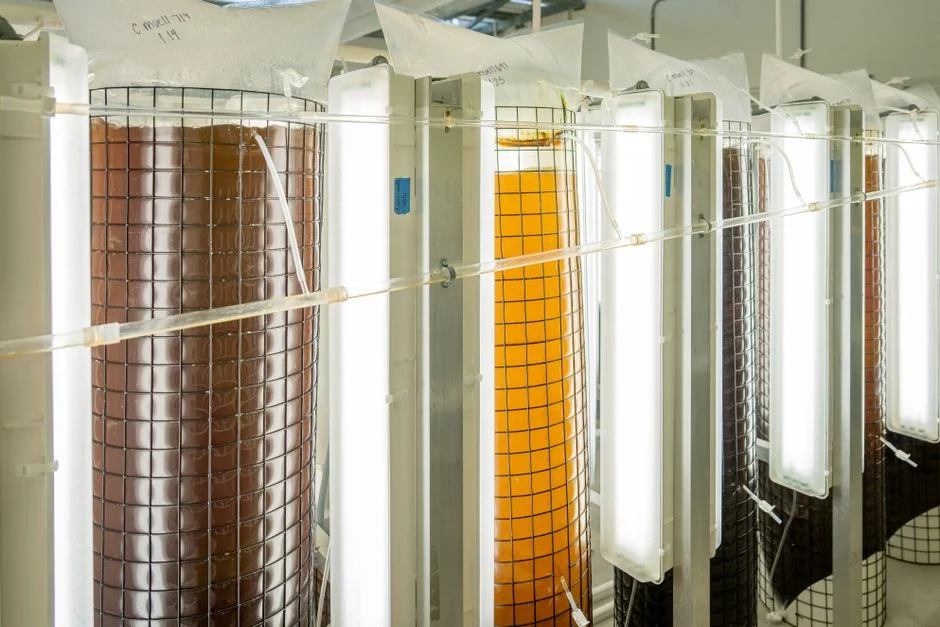
The biological stage is where the package-versus-civil decision is made, and where most vendor bids diverge. The decision rule is textile-specific: pick the reactor that closes the consent without an operator you do not have.
CAS is the cheapest CAPEX but the worst fit for reactive and disperse dyes; it needs generous land and influent COD below 800 mg/L to hit the consent, and it will not deliver the color removal the new 2026 consents ask for. SBR cuts the footprint to about 60% of CAS and tolerates batch dyeing schedules, but it is a sequencing operation that needs a competent operator on shift to manage cycle timing, sludge wasting, and decant. MBR with a submerged 0.1 μm PVDF flat-sheet delivers >95% color removal, sits in roughly 40% of the CAS footprint (60% smaller than CAS, per HydropureWater MBR data, 2026), and discharges reuse-ready permeate. The OPEX penalty is membrane CIP, spares, and aeration energy — typically USD 0.25–0.55 per m³ treated overall, with the membrane step inside that range.
Decision rule: choose MBR when reused water feeds back to dyeing wash or when effluent BOD/COD must be under 30/100 mg/L; choose SBR for medium-tight effluent limits where skilled operators are available; choose CAS only for low-strength effluent below 800 mg/L COD with unconstrained land. For the broader MBR trade-off space, the MBR vs extended aeration analysis and the MBBR cost benchmark for textile dyeing lay out the CAPEX and OPEX deltas in 2026 numbers.
| Reactor | Textile effluent fit | Relative footprint (CAS = 110) | Color removal | OPEX profile | Operator skill | Best fit |
|---|---|---|---|---|---|---|
| CAS | Poor on reactive / disperse dyes | ~110 | Low | Low | Basic | Low-strength influent < 800 mg/L COD, generous land |
| SBR | Medium | ~60 (60% smaller than CAS) | Medium | Medium | Skilled (cycle control) | Batch dyeing, medium-tight limits |
| MBR (PVDF 0.1 μm) | Tight | ~40 (60% smaller than CAS) | > 95% | Higher (CIP, spares, energy) | Standard (PLC-driven) | Reuse, tight consents, congested sites |
2026 Compliance Targets Across the Major Buying Regions
Convert the consent to operate from a slogan into numbers the RFQ can be scored against. The four buying regions a mill engineer most often writes to in 2026 are India, the EU, Vietnam, and Bangladesh, and the four have different binding parameters.
India CPCB/SPCB (dyeing CETP) consent renewals are tightening color (often 1/10 dilution equivalent), TDS, and chromium on dyeing units, and the "reasonable reuse" clause is now appearing in newer consents. EU IED textile BREF (2024 rev., in force 2026) sets subcategory-dependent COD of 27–162 mg/L, with the tightest limits in water-stressed basins and an effective ZLD push for southern EU sites. Vietnam QCVN 40:2011/BTNMT (Category A) sets the standard industrial envelope across BOD, COD, TSS, and color. Bangladesh DoE is moving under an EPR-driven framework that penalizes untreated dye-house discharge.
A well-designed MBR + sand + carbon/UV modular train typically delivers BOD ≤10 mg/L, COD ≤50 mg/L, TSS ≤5 mg/L, and color ≤30 Pt-Co without a separate RO step — enough to meet most parameters across the four jurisdictions, with an RO polish only needed when TDS is the binding parameter (HydropureWater field data, 2026). The 30–50% reuse routing to a wash-water buffer is the lowest-cost way to satisfy a "reasonable reuse" clause while displacing fresh water. For buyers in the Gulf evaluating similar permits, the Qatar textile wastewater compliance guide covers the parallel frame; the broader integrated textile ETP guide maps the same numbers across a civil ETP option.
| Region | Consent frame | Binding parameter | Modular MBR train fit |
|---|---|---|---|
| India CPCB/PCB (dyeing CETP) | 2026 consent renewal; color / TDS / chromium | Color, chromium | Hits with MBR + carbon; RO only if TDS binding |
| EU IED Textile BREF (2024 rev., 2026 in force) | COD 27–162 mg/L, subcategory-dependent | COD, TDS in water-stressed basins | Hits subcategory-dependent COD; RO polish for ZLD push |
| Vietnam QCVN 40:2011/BTNMT (Cat. A) | Industrial BOD / COD / TSS / color envelope | Color, COD | Hits with MBR + carbon + UV |
| Bangladesh DoE (EPR-driven) | Penalty on untreated discharge; "reasonable reuse" | Color, reuse obligation | Hits with MBR + carbon; reuse to wash water |
Modular vs Package vs Civil ETP: A 2026 Decision Matrix
This is the matrix the mill engineer pastes into the internal memo defending the choice. The four options compared below are modular skid, modular container, package plant, and poured civil ETP — each scored on the same five decision columns plus the 500+ m³/day break-point.
A modular skid at USD 90,000–180,000 ex-works for 50 m³/day is the cheapest entry point, installs in 8–14 weeks, and scales by parallel trains. A modular container (ISO 20/40 ft) costs 10–25% more and ships at 16–20 weeks when MBR is included, but is outdoor-rated and relocatable by truck. A package plant is a hybrid term — vendors use it for any factory-built unit, typically with less integrated biological stage and more civil work on site than a true modular skid. A poured civil ETP is the lowest $/m³ at very high flows and the longest build at 8–12 months, and is not relocatable. Above 500 m³/day per train, two parallel modular trains outperform one oversized unit on redundancy, shipping, and permit staging (HydropureWater field data, 2026). For the upstream headworks choice that drives the matrix, the DAF design parameters 2026 engineering guide is the companion read.
| Option | CAPEX (50 m³/day, ex-works, USD) | Install time | Footprint per 100 m³/day | Relocatable | Scales to 500+ m³/day | Typical buyer |
|---|---|---|---|---|---|---|
| Modular skid | 90k–180k | 8–14 weeks | 25–40 m² | Yes (crane) | Parallel trains | 50–200 m³/day indoor mills |
| Modular container (ISO 20/40 ft) | 110k–220k | 16–20 weeks (with MBR) | 15–25 m² | Yes (truck) | Parallel trains | Remote / multi-site operators |
| Package plant | 100k–200k | 10–16 weeks | 30–45 m² | Limited | Parallel trains | Buyers wanting a turnkey single-vendor scope with some civil work |
| Poured civil ETP | 180k–400k (50 m³/day, with civil) | 8–12 months | 60–100 m² | No | Single oversized basin | Greenfield sites > 2,000 m³/day, lowest $/m³ at very high flow |
CAPEX, OPEX, and the Reuse ROI in 2026 Numbers
CAPEX anchors below are ex-works for a complete modular train (headworks, equalization, DAF, biological, tertiary, sludge dewatering, MCC) without civil building or site erection. Add 15–20% for installation and 10% for commissioning. The 50 m³/day range lands at USD 90,000–180,000; 100 m³/day at USD 130,000–250,000; 200 m³/day at USD 160,000–320,000; and 500 m³/day at USD 350,000–750,000 (HydropureWater field data, 2026). Sludge handling typically adds 15–25% to total installed cost, which is why bundling a plate-and-frame filter press into the package scope avoids a hidden second CAPEX.
OPEX runs at USD 0.25–0.55 per m³ treated, split roughly as 30–50% energy (blowers, transfer pumps, MBR permeate suction), 15–20% chemicals (coagulant, flocculant, NaOH, hypochlorite or ClO₂), 10% membrane replacement and spares, and the balance labor and sludge disposal (HydropureWater field data, 2026). The three cost drivers that move any quote ±20% are material of construction (SS304 vs SS316 vs carbon-steel rubber-lined), automation level (PLC+HMI vs full SCADA with remote telemetry), and local content versus imported skids. When TDS is binding on the consent, an industrial RO polish at 60–75% recovery is added, sized for 30–50% of MBR permeate; for the broader RO vs ion-exchange decision, the RO vs ion-exchange 2026 OPEX verdict lays out the operating-cost deltas.
The reuse ROI is the number a finance director will challenge, and it is the number the top search results do not put in front of the reader. A 100 m³/day modular STP routing 50% of permeate to a wash-water buffer saves roughly 18,000 m³ of fresh water per year. At USD 1.5–3.0 per m³ of process water in India, Bangladesh, Vietnam, Türkiye, and Egypt, that repays the CAPEX delta versus a CAS-only design in 2–3 years (HydropureWater field data, 2026). The MBR skid does the heavy lifting on TSS and organics; RO only enters when TDS or a closed-loop ZLD push makes it the binding parameter.
| Capacity | CAPEX (USD, ex-works, 2026) | Footprint (m², with sludge) | OPEX (USD per m³ treated) | Reuse ROI (vs CAS-only) |
|---|---|---|---|---|
| 50 m³/day | 90k–180k | 25–40 | 0.25–0.55 | 2–3 years at 50% reuse |
| 100 m³/day | 130k–250k | 35–55 | 0.25–0.55 | 2–3 years at 50% reuse |
| 200 m³/day | 160k–320k | 50–80 | 0.25–0.55 | 2–3 years at 50% reuse |
| 500 m³/day | 350k–750k | 90–140 | 0.25–0.55 | 2–3 years at 50% reuse |
Frequently Asked Questions
What flow range does a modular sewage treatment system for textile industry actually cover per train?
Modular trains for the textile industry cover 50–500 m³/day per train in 2026. Above 500 m³/day per train, most buyers specify two parallel packages rather than one oversized unit, on redundancy, shipping, and permit-staging grounds (HydropureWater field data, 2026).
Can a modular MBR + RO textile train hit wash-water reuse quality without a separate color-removal step?
Yes. An MBR followed by RO, or an MBR followed by UF plus ozone, consistently reaches under 50 mg/L COD and under 30 Pt-Co color, suitable for wash-water reuse in dyeing and finishing (per Azanaw 2022 polishing data, S4). The flat-sheet PVDF MBR module closes the color loop before the RO polish.
What does a 50 m³/day modular textile ETP cost in 2026 ex-works, and what is the payback vs a CAS-only design?
USD 90,000–180,000 ex-works for the skid, plus 15–20% for installation and 10% for commissioning, with another 15–25% if a full sludge dewatering line is bundled (HydropureWater field data, 2026). The CAPEX delta versus a CAS-only design pays back in 2–3 years when 30–50% of fresh water is displaced by reuse and ZLD-related consent penalties are avoided.
Is a containerized textile ETP different from a package plant, and when is the container version the right pick?
Yes. A containerized textile ETP ships the full train inside an ISO 20/40 ft frame with MCC, HVAC, and outdoor rating, and is the right pick for remote sites, multi-site operators, and lease models. The containerized textile ETP guide walks the same train inside an ISO frame and compares it line-by-line against an indoor skid.