2026 Cost Snapshot: What Does an MBBR System for Textile Dyeing Actually Cost?
An MBBR for textile dyeing wastewater in 2026 runs $0.10–$0.45 per m³ in OPEX and $150–$1,200 per m³/day in CAPEX, with the spread driven almost entirely by influent toxicity, pretreatment quality, and plant scale. The peer-reviewed anchor is Yang et al. (2020, Treatment of Textile Wastewater by CAS, MBR, and MBBR, cited 125×), which reported a full-scale MBBR CAPEX of €115,500 and an MBBR-stage OPEX of 0.10 €/m³ against a CAS baseline of 1.05 €/m³. Converting the 2020 euro figure at 2026 industrial exchange rates puts that benchmark case near $125,000 USD, exclusive of civil works — a useful pivot point but not a universal budget number.
The OPEX range breaks down roughly as follows: aeration energy 40–55%, sludge handling 15–25%, chemical and nutrient dosing 10–15%, media top-up 5–8%, with the remainder covering maintenance, labor, and consumables. Field data from JUNTAI (2025-12) also documents ~$150/ton saved on sludge disposal because MBBR generates 30–50% less waste activated sludge than conventional activated sludge (CAS) — biofilm biomass stays attached to the carrier, so it does not turn over into the wastestream. A detailed cost stack sits in the table below; the consumables line is expanded further in the MBBR Spare Parts and Consumables Cost: 2026 OPEX Breakdown worksheet.
| Cost Line Item | Share of MBBR OPEX | 2026 Unit Basis | Notes |
|---|---|---|---|
| Aeration energy | 40–55% | 0.3–0.6 kWh/m³ at $0.08–0.12/kWh | Dominant variable cost; tied to BOD/COD load |
| Sludge handling | 15–25% | 0.05–0.15 kg TSS/kg COD removed | ~30–50% lower yield vs CAS; ~$150/ton disposal saving (JUNTAI 2025-12) |
| Chemicals / nutrients | 10–15% | Urea + phosphoric acid dosing | Textile effluent is typically N- and P-deficient |
| Media top-up | 5–8% | 2–3% annual carrier replacement | HDPE/PP carriers at $80–$200/kg |
| Maintenance / labor | 10–15% | Site-specific | Lower than CAS — no sludge recirculation pumps |
Crucially, the 0.10 €/m³ OPEX in Yang (2020) Table 6 reflects the biological stage only, on influent that has already been physico-chemically pretreated to COD 800–1,500 mg/L. Raw dyeing effluent fed directly to the MBBR will push OPEX 3–4× higher through excess aeration, media fouling, and sludge yield — a point most conceptual articles omit.
Why Textile Dyeing Wastewater Is Hard on Biology — and Why MBBR Survives It
Textile dyeing effluent is hostile to most biological treatment, and that hostility is exactly why a budget proposal built on CAS or SBR numbers from municipal plants collapses on contact with a real dye house. JUNTAI (2025-12) catalogs four stressors that arrive simultaneously: azo dyes and phenols from reactive and disperse dyes, total dissolved solids (TDS) up to 15% from Glauber salt (Na₂SO₄) used as a dye-fixing electrolyte, pH swings from 2 to 12 across scouring/bleaching/dyeing batches, and chlorinated solvent spikes from occasional finish-line washouts. Conventional activated sludge flocs disintegrate under this loading; bulking and color pass-through follow within weeks.
The moving bed biofilm reactor (MBBR) tolerates these shocks because the biology is immobilized on HDPE or PP carriers fluidized by fine-bubble aeration, providing 500–1,200 m²/m³ of protected surface area (JUNTAI 2025-12) — typically 2–3× the volumetric loading a CAS tank of identical size can absorb. Toxic azo compounds first adsorb onto the carrier surface, then specialized biofilm consortia mineralize them through reductive cleavage of the azo bond followed by oxidative breakdown of the aromatic amines. Because the carriers are constantly in motion, the outer biofilm sloughs and re-grows; a toxic shock that would wipe out a suspended-growth basin only damages the exposed outer layer of an MBBR carrier, leaving the protected inner consortia intact.
Simultaneous nitrification and denitrification occur within a single MBBR tank because of the dissolved-oxygen gradient inside each biofilm — aerobic nitrifiers colonize the outer surface, facultative denitrifiers the anoxic core. For textile effluent with its typically high ammonia (50–200 mg/L) from dyeing auxiliaries, this eliminates the separate anoxic zone a CAS design would require, and it removes a CAPEX line item before the budget conversation even starts. For discharge color limits in regulated markets, see the parallel guide on Color Discharge Limit in Kenya 2026: EMCA Standards, Compliance & Treatment.
CAPEX Breakdown: What You're Paying For in a 2026 MBBR Installation
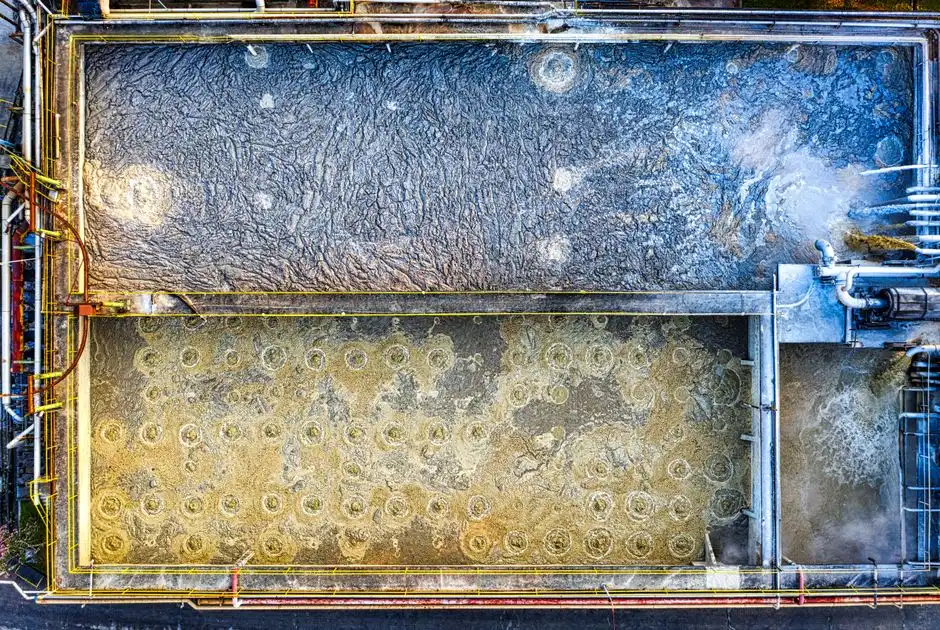
An MBBR CAPEX line-item stack for 2026 looks like this: civil works and tankage 25–35%, HDPE biofilm carriers at 30–67% volumetric fill running $80–$200/kg, fine-bubble aeration grids with blowers 10–15%, inlet screens and flow distribution 5–8%, instrumentation and control 5–10%, and installation/commissioning 10–15%. The Yang (2020) anchor of €115,500 (~$125,000 in 2026 USD) excluded civil works; budget planners should add that back as a site-specific line.
CAPEX per m³/day follows a steep economy-of-scale curve, and this is where the high-end of the $150–$1,200 range gets its meaning. Plants at 50 m³/day (a small batch dye house) sit at $1,000–$1,200/m³/day because tankage, blowers, and control systems are largely fixed-cost. At 1,000 m³/day, the same equipment scales into $150–$250/m³/day. A 500 m³/day cotton dye house typically lands at $200–$350/m³/day installed, which is the band used in the worked example further down.
| CAPEX Line | Share of Total | 2026 Unit Cost | Engineering Note |
|---|---|---|---|
| Civil / tankage | 25–35% | Site-specific | Often the largest single line; RCC or epoxy-coated MS |
| HDPE/PP carriers | 15–25% | $80–$200/kg | 30–67% volumetric fill; 10+ year design life |
| Aeration grid + blowers | 10–15% | $0.08–$0.12/kWh operating | Fine-bubble EPDM membranes preferred |
| Screens / inlet works | 5–8% | Per screen basis | Protects carriers from rag fouling |
| Instrumentation / control | 5–10% | Per I/O point | DO, pH, ORP, level minimum |
| Installation / commissioning | 10–15% | 20–30% of equipment | Add 8–12 weeks for biofilm maturation |
| DAF pretreatment | Separate line | $80–$200/m³/day | Mandatory before MBBR for dye wastewater |
The DAF pretreatment line is non-negotiable for textile effluent. A DAF pretreatment system for dye removal at $80–$200/m³/day strips color, colloidal dye, and suspended solids before they reach the MBBR; without it, carriers foul within 6–12 months and the media replacement budget triples. Skipping DAF to save CAPEX is the most common budget error in retrofit dye-house projects.
OPEX Deep Dive: The 0.10 €/m³ Number, Line by Line
Yang (2020) Table 6 reports total plant OPEX of 1.05 €/m³ for a CAS baseline textile plant and approximately 0.10 €/m³ for the MBBR stage specifically — the latter is the biological-stage cost, not the full-plant OPEX. That distinction matters when defending the figure to procurement: MBBR does not eliminate equalization, screening, or sludge dewatering costs; it replaces the aeration-tank biology at lower cost than CAS.
Aeration is the dominant line at 40–55% of biological OPEX. Industrial 2026 tariffs in Bangladesh, India, Vietnam, and Turkey range $0.08–$0.12/kWh, and a textile MBBR typically draws 0.3–0.6 kWh/m³ depending on BOD/COD load and target effluent quality. At $0.10/kWh and 0.45 kWh/m³, aeration alone is $0.045/m³ — almost half the Yang benchmark. Media replacement is the easiest line to budget: HDPE carriers last 10+ years, but plan 2–3% annual top-up for attrition and carrier loss during screen maintenance, at $80–$200/kg. Sludge handling is where MBBR beats CAS decisively: 0.05–0.15 kg TSS per kg COD removed versus 0.30–0.45 kg for CAS, and downstream dewatering on a sludge dewatering filter press drops from a daily chore to a weekly one. Nutrient dosing (urea, phosphoric acid) typically accounts for 5–12% of OPEX because textile effluent is N- and P-deficient relative to the COD loading the biology needs.
Two caveats for budget defense. First, the Yang 0.10 €/m³ assumes influent COD of 800–1,500 mg/L after physico-chemical pretreatment; raw reactive-dye effluent at 2,500–4,000 mg/L COD will push MBBR OPEX to $0.30–$0.45/m³ even with good DAF upstream. Second, the $150/ton sludge saving cited by JUNTAI (2025-12) is a real number but applies to the disposal cost differential, not the total sludge cost — total biological-stage OPEX still has to carry dewatering energy and polymer, expanded in the Sludge Thickening Cost Reduction: 2026 Engineering Guide to Cut OPEX.
MBBR vs MBR vs SBR for Textile Dyeing: A 2026 Comparison
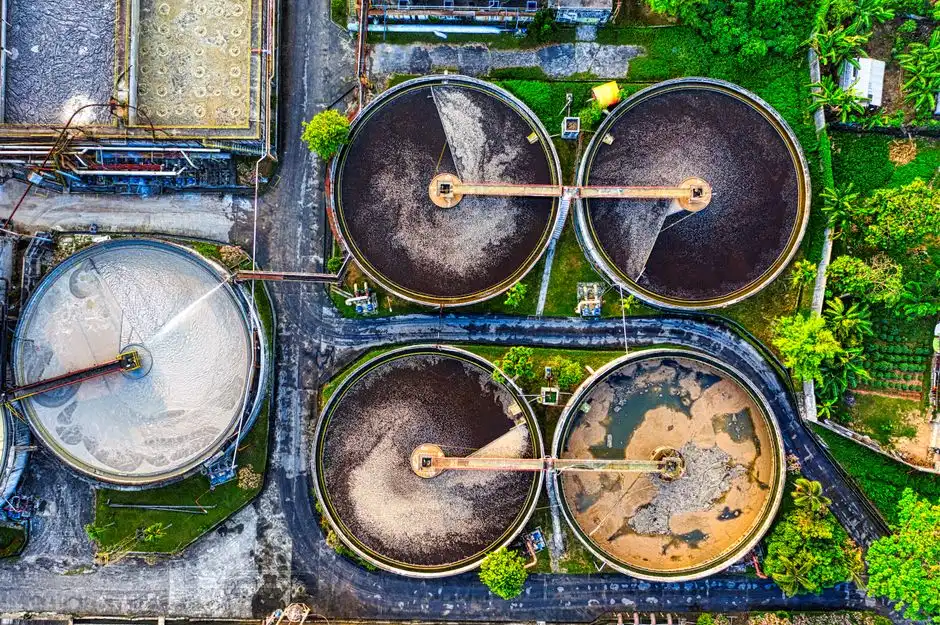
Three competing technologies get evaluated against MBBR for textile retrofit work: MBR (membrane bioreactor), SBR (sequencing batch reactor), and CAS. The matrix below is the single artifact most procurement teams will screenshot and circulate internally.
| Parameter | MBBR | MBR | SBR | CAS |
|---|---|---|---|---|
| CAPEX ($/m³/day, 2026) | $150–$350 | $400–$700 | $150–$300 | $120–$250 |
| OPEX ($/m³, 2026) | $0.10–$0.45 | $0.35–$0.55 | $0.18–$0.30 | $0.40–$1.05 |
| Effluent COD (mg/L) | 100–200 | <50 | 120–200 | 200–400 |
| Color removal | 60–85% (with DAF upstream) | 70–90% | 55–75% | 40–60% |
| Footprint | Compact | Compact | Large (≥2 tanks) | Large |
| Textile shock tolerance | High (biofilm protected) | Medium (membranes foul on shock) | Low (sludge fully exposed) | Low (bulking) |
| Membrane / media replacement | Carriers 10+ yr | Membranes 5–8 yr | Decanter 8–12 yr | None |
MBR wins on effluent quality — sub-50 mg/L COD and near-zero suspended solids — but it costs 3–4× more to operate than MBBR and requires membrane replacement every 5–8 years, which alone can run 20–30% of original CAPEX. For a textile plant discharging to a municipal sewer or to a water body with a 150 mg/L COD standard, MBR is over-specified. SBR is competitive on CAPEX but loses to MBBR on shock tolerance because the biology is fully suspended and exposed during the fill and react phases of each batch — a pH 2 spike from a bleach wash will kill an SBR basin in a way it will not kill an MBBR. CAS is the loser on every line for textile effluent: bulking, color pass-through, and high sludge yield make it functionally obsolete for modern dye houses. The SBR economics are detailed in SBR Operating Cost in 2026: OPEX Breakdown, Energy Use & Cost Reduction.
Sizing Example: 500 m³/day Cotton Dyeing Plant — Line-Item Budget
Concrete worked cases convert abstract cost ranges into a number a CFO can sign. The reference plant: 500 m³/day cotton reactive-dye house in Bangladesh or India, influent COD 1,200 mg/L, BOD 400 mg/L, TDS 8%, pH 9–11, discharge limit COD <150 mg/L and color <100 Pt-Co per typical Department of Environment (DoE) Bangladesh and CPCB India standards. The biology needs to remove roughly 600 kg COD/day, which at a design loading of 1.0 kg COD/m³·day (a conservative textile MBBR figure) requires 600 m³ of bioreactor volume — split into 2–3 tanks in series for plug-flow color reduction.
| Line Item | Basis | CAPEX (USD) | Annual OPEX (USD) |
|---|---|---|---|
| MBBR bioreactor (tankage + carriers + aeration) | 500 m³/day × $250/m³/day | $125,000 | — |
| DAF pretreatment | 500 m³/day × $120/m³/day | $60,000 | — |
| Equalization + pH correction | $40/m³/day | $20,000 | — |
| Sludge dewatering (filter press) | Lump | $35,000 | — |
| Instrumentation + control | Lump | $25,000 | — |
| Installation + commissioning (15%) | Subtotal × 15% | $39,750 | — |
| Total installed CAPEX | — | $304,750 | — |
| Aeration energy | 500 m³/day × 0.45 kWh × $0.10 × 365 | — | $8,213 |
| Chemicals (nutrients, pH) | 500 × $0.04 × 365 | — | $7,300 |
| Sludge disposal | ~150 ton/yr × $50/ton | — | $7,500 |
| Media top-up + maintenance | Lump | — | $6,000 |
| Labor (1 operator, 25% allocation) | Site-specific | — | $5,000 |
| Total annual OPEX | ~ $0.19/m³ blended | — | ~$34,000 |
Payback against a baseline of CAS plus chemical decolorization (coagulant spend typically $30–$80/ton of effluent, plus sludge hauling) is 18–30 months for a 500 m³/day plant in this cost band, driven primarily by the elimination of coagulant dosing and a 40–60% cut in sludge volume. The automatic chemical dosing for nutrient and pH correction system is a small additional CAPEX line ($8,000–$15,000) that protects biology during pH excursions and is one of the highest-ROI items in the budget.
Frequently Asked Questions
How long does MBBR media last in textile service?
HDPE and PP carriers have a 10+ year design life under normal textile MBBR operation with DAF upstream; budget 2–3% annual top-up for attrition and screen losses at $80–$200/kg (HydropureWater field data, 2026).
What is the typical payback period for an MBBR retrofit on a dye house?
18–30 months for a 500 m³/day cotton reactive-dye plant, driven by $30–$80/ton coagulant elimination and 40–60% sludge volume reduction versus CAS plus chemical decolorization (Yang 2020 + HydropureWater field data, 2026).
Can MBBR alone meet textile color discharge limits?
MBBR achieves 60–85% color removal on its own, but for <100 Pt-Co discharge a DAF pretreatment stage upstream is mandatory to strip colloidal dye before biological adsorption (JUNTAI 2025-12).
Can MBBR be retrofitted into existing CAS or SBR tanks?
Yes — retain the existing tankage, retain the existing blowers if appropriately sized, add screen-protected carriers at 30–50% fill, and budget 8–12 weeks for biofilm maturation before design-effluent quality is reached (HydropureWater field data, 2026).
Is MBBR effluent reusable for textile process water?
MBBR effluent alone is not RO-quality; pairing MBBR with DAF pretreatment followed by ultrafiltration or RO produces reuse water at $0.40–$0.80/m³ total — typically cheaper than freshwater in Dhaka, Hanoi, and Istanbul (HydropureWater field data, 2026).