In Luzon, Philippines, industrial wastewater treatment costs range from $0.50 to $3.00 per cubic meter, depending on technology and influent quality. The Department of Environment and Natural Resources (DENR) enforces strict limits under DAO 2016-08, including BOD < 50 mg/L and TSS < 70 mg/L for most industries. Common solutions include Dissolved Air Flotation (DAF) for food processing (92–97% TSS removal) and Membrane Bioreactors (MBR) for electronics (99% pathogen removal). This guide provides 2025 technical specs, compliance checklists, and cost benchmarks for Luzon-based facilities.
Why Industrial Wastewater Treatment in Luzon is a 2025 Priority for Manufacturers
Luzon’s industrial output grew 8.2% in 2023 according to Philippine Statistics Authority (PSA) data, driving a simultaneous 12% increase in wastewater volumes across key manufacturing hubs like CALABARZON and Central Luzon. This rapid industrialization has placed unprecedented pressure on local water bodies, leading the Department of Environment and Natural Resources (DENR) to intensify its regulatory oversight. In 2024 alone, the DENR issued 47 cease-and-desist orders to facilities failing to meet the standards of DAO 2016-08, with administrative fines reaching up to PHP 500,000 per day of violation (DENR 2024 report).
The environmental stakes are particularly high for facilities near Laguna Lake, where untreated industrial effluent has contributed to a decline in dissolved oxygen levels to below 2 mg/L in 30% of tested samples (EPA 2023). This degradation threatens not only the local fisheries and tourism sectors but also the long-term water security of the Greater Manila Area. For plant managers, the risk of non-compliance extends beyond immediate fines; it encompasses the potential for total operational shutdowns, the loss of multi-national supply chain contracts, and severe reputational damage in an increasingly ESG-conscious market.
Economically, the cost of reactive compliance—scrambling to fix a failing system after a DENR inspection—is significantly higher than proactive investment in robust treatment infrastructure. Upgrading to modern, automated systems allows manufacturers to mitigate the risks of influent variability caused by Luzon’s intense typhoon seasons, which often overwhelm undersized or poorly designed treatment plants. In 2025, a data-driven approach to wastewater management is no longer an optional environmental gesture but a core requirement for business continuity in the Philippines.
Industrial Wastewater Characteristics in Luzon: What Your Treatment System Must Handle
Luzon’s diverse industrial landscape produces highly variable wastewater streams that require sector-specific treatment configurations to meet DENR discharge standards. In the CALABARZON region, food processing facilities generate effluent characterized by high Biological Oxygen Demand (BOD) ranging from 1,500 to 3,000 mg/L and significant concentrations of Fats, Oils, and Grease (FOG) (per Laguna Technopark case studies). Without specialized pretreatment, these organic loads quickly foul secondary biological systems.
In contrast, the textile clusters in Bulacan and Pampanga face challenges with high alkalinity (pH 9–12) and Chemical Oxygen Demand (COD) levels reaching 2,500 mg/L, often accompanied by heavy metals such as Chromium and Copper used in dyeing processes. Meanwhile, the electronics and semiconductor sectors in Clark and Laguna produce wastewater with relatively low BOD but high Total Dissolved Solids (TDS) and fluoride concentrations (50–200 mg/L), requiring advanced membrane or chemical precipitation steps (EPA 2024 semiconductor benchmarks).
Seasonality also plays a critical role in system design for Luzon-based factories. During the monsoon season, high rainfall can lead to significant hydraulic surges and changes in influent temperature, which can inhibit the metabolic rates of traditional activated sludge bacteria. Systems must be designed with sufficient equalization capacity and robust process controls to maintain stable effluent quality during these fluctuations.
| Industrial Sector | Key Region | BOD (mg/L) | COD (mg/L) | TSS (mg/L) | Specific Contaminants |
|---|---|---|---|---|---|
| Food Processing | CALABARZON | 1,500–3,000 | 2,500–5,000 | 500–2,000 | FOG, Sugars, Proteins |
| Textiles & Dyeing | Bulacan/Pampanga | 400–800 | 800–2,500 | 300–1,000 | Dyes, Cr, Cu, High pH |
| Electronics/Semi-con | Clark/Laguna | <100 | 200–500 | 50–150 | Fluoride, IPA, Acetone, TDS |
| Pharmaceuticals | Cavite/Laguna | 500–1,200 | 1,000–2,500 | 100–400 | Active Ingredients, Solvents |
Treatment Technologies for Luzon’s Industrial Wastewater: A 2025 Comparison
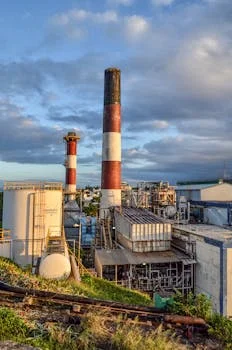
Selecting the appropriate treatment technology in Luzon depends on the balance between available land area, effluent complexity, and the specific discharge limits required by the DENR. Dissolved Air Flotation (DAF) remains the gold standard for pretreatment in food processing and textile industries due to its ability to remove up to 97% of Total Suspended Solids (TSS) and 80% of FOG. High-performance units like the DAF systems for Luzon’s food processing and textile industries are designed to handle flow rates from 4 to 300 m³/h, utilizing micro-bubble technology to float contaminants for automatic skimming, which significantly reduces the organic load on downstream biological stages.
For facilities with limited space or those requiring high-quality effluent for water reuse, Membrane Bioreactors (MBR) offer a superior alternative to conventional clarifiers. By combining biological treatment with microfiltration or ultrafiltration, MBR systems for Luzon’s electronics and pharmaceutical wastewater achieve 99% pathogen removal and BOD levels consistently below 10 mg/L. These systems, such as the DF series flat-sheet membranes, can reduce the total plant footprint by up to 60% compared to traditional activated sludge plants, making them ideal for congested industrial zones in Metro Manila and Laguna.
In larger municipal-industrial applications, such as those found in Pasig City, Sequencing Batch Reactors (SBR) are frequently employed to manage mixed effluents. While SBRs achieve high BOD removal rates (85–95%), they require sophisticated timing controls and larger land areas than MBRs. For industries dealing with heavy metals or complex dyes, PLC-controlled chemical dosing for Luzon’s textile and metalworking effluents is essential to ensure precise coagulant and flocculant delivery, preventing the over-dosing that leads to excessive sludge production and higher disposal costs.
| Technology | TSS Removal | BOD Removal | Footprint | Energy (kWh/m³) | Capex ($/m³/d) |
|---|---|---|---|---|---|
| DAF (Pretreatment) | 92–97% | 30–50% | Small | 0.2–0.5 | $400–$1,200 |
| MBR (Advanced) | >99% | >98% | Very Small | 0.8–1.5 | $1,500–$3,500 |
| SBR (Biological) | 85–90% | 85–95% | Medium | 0.5–0.9 | $1,000–$2,500 |
| Chem-Sedimentation | 70–85% | 20–40% | Medium | 0.1–0.3 | $300–$800 |
For more basic needs, integrating high-efficiency sedimentation tanks for Luzon’s pretreatment needs can provide a cost-effective way to manage primary solids before they enter more sensitive secondary treatment units.
DENR Compliance Checklist for Luzon Industrial Facilities: 2025 Requirements
Compliance with the Philippine Clean Water Act (RA 9275) and its implementing rules under DAO 2016-08 requires a rigorous monitoring and documentation framework. For most industrial sectors in Luzon, the general effluent standards mandate BOD levels below 50 mg/L, COD below 150 mg/L, and TSS below 70 mg/L. However, specific industries face tighter restrictions; for instance, food processing plants must maintain FOG levels below 20 mg/L, while textile manufacturers must ensure Chromium concentrations do not exceed 0.5 mg/L (DENR 2024 updates).
The permitting process begins with the application for an Environmental Compliance Certificate (ECC) or a Certificate of Non-Coverage (CNC) through the DENR-EMB online portal. This application must include detailed engineering designs of the wastewater treatment facility (WTF), signed and sealed by a licensed Sanitary or Chemical Engineer. Once operational, the facility is required to maintain a Discharge Permit (DP), which must be renewed annually based on the submission of quarterly Self-Monitoring Reports (SMRs) and Compliance Monitoring Reports (CMRs).
Actionable compliance steps for Luzon manufacturers include:
- Installation of Monitoring Equipment: Continuous pH meters and electromagnetic flow meters are now standard requirements for major dischargers.
- Third-Party Lab Testing: Effluent samples must be analyzed by DENR-accredited laboratories at least once per quarter for the full range of parameters listed in the facility's DP.
- Sludge Management: Industrial sludge is often classified as hazardous waste under RA 6969. Facilities must use accredited hazardous waste transporters and treaters for disposal.
- Operator Certification: Ensure that the Pollution Control Officer (PCO) is duly accredited and that plant operators have completed the required DENR training modules.
Cost Breakdown for Industrial Wastewater Treatment in Luzon: 2025 Benchmarks

Investment in wastewater infrastructure in Luzon is driven by both capital expenditure (Capex) and ongoing operational expenditure (Opex), with 2025 benchmarks reflecting global supply chain shifts and local energy costs. For a mid-sized food processing plant (200 m³/day), a DAF-based system typically requires a Capex of $80,000 to $150,000. In contrast, a high-tech MBR system for an electronics facility of the same capacity can range from $250,000 to $500,000 due to the cost of membrane modules and advanced automation.
Opex is heavily influenced by Luzon’s electricity rates, which are among the highest in Southeast Asia. MBR systems, while efficient in terms of footprint, have higher energy demands ($0.80–$2.50/m³) compared to DAF or SBR systems. However, these costs are often offset by the potential for water reuse. By treating effluent to a standard suitable for cooling towers or floor washing, facilities can save between $0.20 and $0.50 per cubic meter in raw water procurement costs. For a detailed regional comparison, see Manila’s 2025 wastewater treatment cost benchmarks.
| Technology | Capacity (m³/d) | Estimated Capex | Opex ($/m³) | Payback Period |
|---|---|---|---|---|
| DAF System | 100–300 | $80k – $200k | $0.30 – $0.80 | 2.5 – 4 Years |
| MBR System | 100–300 | $200k – $450k | $0.80 – $2.20 | 4 – 6 Years |
| SBR System | 500–1,000 | $400k – $900k | $0.50 – $1.20 | 3 – 5 Years |
The Return on Investment (ROI) for these systems is primarily realized through the avoidance of DENR fines. A single month of non-compliance at the maximum fine rate of PHP 500,000/day results in a PHP 15 million loss—more than enough to cover the Capex of a mid-sized treatment plant. utilizing DAF system best practices for Southeast Asia can help optimize chemical usage, further reducing annual Opex by 15–20%.
Selecting a Wastewater Treatment Supplier in Luzon: 2025 Checklist
Choosing a supplier for industrial wastewater equipment in the Philippines requires more than a price comparison; it necessitates a partner with local regulatory knowledge and a robust service network in Luzon. A key qualification is DENR accreditation or a history of successful projects that have passed DENR-EMB inspections. Suppliers should be able to provide localized case studies from industrial parks like the Clark Freeport Zone or the First Philippine Industrial Park (FPIP) to demonstrate their equipment's performance under local influent conditions.
When evaluating potential partners, engineering teams should use a structured matrix to score suppliers on technical capability, compliance assurance, and after-sales support. A significant red flag is the lack of a local spare parts inventory. Given the critical nature of wastewater treatment, waiting weeks for a replacement pump or membrane from overseas can lead to permit violations and costly downtime. Always ask: "What is your typical response time for on-site troubleshooting in CALABARZON?"
| Evaluation Criteria | Weight | Ideal Requirement | Score (1-5) |
|---|---|---|---|
| DENR Compliance History | 30% | 100% pass rate in last 5 Luzon projects | |
| Local Service Network | 25% | Technicians within 4 hours of facility | |
| Technical Specs/Energy | 20% | Meets 2025 efficiency benchmarks | |
| Capex/Opex Balance | 15% | Transparent 5-year TCO provided | |
| Pilot Testing Capability | 10% | On-site pilot units available |
Frequently Asked Questions
Which DENR regulation governs industrial wastewater in Luzon? The primary regulation is DAO 2016-08 (Water Quality Guidelines and General Effluent Standards of 2016), which updated the previous standards from 1990. It is enforced under the authority of RA 9275, the Philippine Clean Water Act of 2004.
Is DAF or MBR better for food processing plants in Laguna? For food processing with high FOG and TSS, DAF is usually the preferred pretreatment step because it effectively removes solids that would quickly clog MBR membranes. However, if the goal is high-grade water reuse, a combined DAF-MBR system is the most robust solution.
How often does the DENR inspect industrial wastewater plants? Inspections typically occur at least once or twice a year for facilities with valid Discharge Permits. However, the DENR-EMB may conduct unannounced inspections or "strike-team" audits if there are reports of illegal discharging or if the facility is located near a protected water body like Laguna Lake.
Can industrial wastewater be reused for irrigation in the Philippines? Yes, but it must meet the standards set by the Department of Agriculture (DA) and the DENR for "Class C" or "Class D" water, depending on the crop. This usually requires secondary and tertiary treatment to ensure the removal of pathogens and heavy metals.