
Why Textile Wastewater Treatment in Qatar Demands a Tailored Process Train
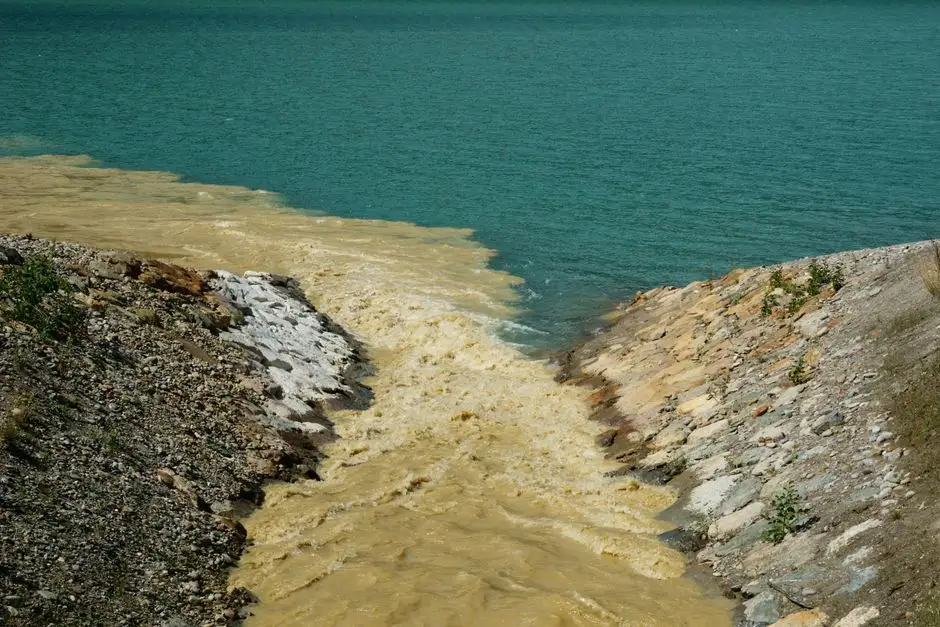
Qatar withdraws less than 200 m³ per capita per year from renewable sources — among the lowest figures in the world (per FAO AQUASTAT, 2023) — so any mill that discharges textile effluent to a sea outfall or a municipal sewer is leaving recoverable water on the table. A typical wet-processing line in Doha or Mesaieed runs at a liquor ratio of 1:6 to 1:10, meaning a 20 t/day dyehouse generates 120–200 m³/day of dye-bearing wastewater loaded with reactive, disperse, and vat dyes, sodium sulfate or sodium chloride (40–100 g/L in the dye bath), sizing agents (PVA, starch), surfactants, and trace metals such as Cr, Cu, and Zn (per Azanaw et al. 2022). Generic "textile treatment" guidance does not work here because the salt load alone will inhibit conventional activated sludge unless it is diluted, equalized, or routed around the biological stage.
Two compliance anchors govern a 2026 Qatar project. On the local side, the Ministry of Environment and Climate Change (MOECC) issues discharge permits that limit BOD, COD, TSS, pH, and residual color in any effluent sent to the environment or to a public sewer. On the brand side, the ZDHC Foundation's Manufacturing Restricted Substances List (MRSL) and Wastewater Guidelines are the de facto benchmark for any mill exporting to EU or US garment buyers, and most Qatar-laundered hotel and healthcare textile contracts now require ZDHC-aligned reporting. Local R&D also matters: a 2021 study at Qatar University by Ebrahimi & Kumar demonstrated that chemically modified diatomite reaches an adsorption capacity of 127 mg/g for methylene blue, against 72 mg/g for raw diatomite, confirming that locally available minerals can match the binding performance of commercial activated carbon for the dye fractions that biology cannot break down.
That combination — extreme water scarcity, MOECC and ZDHC compliance pressure, and a salt- and dye-rich influent — is what makes a Qatar-specific process train a four-stage design rather than a single biological reactor.
Pollutant Profile of Textile Effluent in Qatar-Based Mills
Textile effluent is not a single stream; it is the blended discharge of seven wet-process steps, each with its own load. Sizing and de-sizing contribute starches and PVA (high BOD/COD, low toxicity). Scouring adds alkalis, fats, and waxes. Bleaching pushes pH swings and carries residual H₂O₂. Dyeing is the dominant pollutant step: reactive, disperse, acid, and vat dyes at 50–2000 mg/L color, plus 40–100 g/L NaCl or Na₂SO₄ as an electrolyte. Printing adds thickeners and pigments. Finishing contributes softeners, formaldehyde-based resins, and fluorocarbons. Azanaw et al. (2022) summarize the typical envelope of these streams as pH 6–12, BOD 80–6,000 mg/L, COD 150–30,000 mg/L, TSS 50–3,500 mg/L, TDS 1,000–60,000 mg/L, and turbidity 50–3,000 NTU.
Those numbers dictate every downstream unit operation. High TDS and high sulfate from sodium sulfate push the designer toward RO polishing and away from high-recycle biological loops where salt would accumulate to inhibitory levels. Variable pH forces the equalization tank to be sized for peak flow and peak load, typically 6–12 hours of hydraulic retention, so the biological stage sees a dampened feed. The 72 → 127 mg/g diatomite jump from the Ebrahimi & Kumar (2021) study is the kind of single-variable effect that frames the design question: if a low-cost local sorbent can pull 127 mg of dye per gram, the biological stage must be sized to break down what the sorbent does not — typically the more refractory azo and anthraquinone structures — rather than to do the entire color job alone.
The table below summarizes the design envelope an engineer in Qatar should anchor a feasibility study to.
| Parameter | Typical textile effluent range | Design implication for Qatar 2026 plant |
|---|---|---|
| pH | 6 – 12 (variable by batch) | Equalization + pH correction before DAF and before biological stage |
| COD | 150 – 30,000 mg/L | Sets MBR/MBBR sizing; tertiary AOP or RO required for reuse |
| BOD | 80 – 6,000 mg/L | BOD:COD often < 0.3; refractory fraction needs AOP, not biology |
| TSS | 50 – 3,500 mg/L | Pre-screening + DAF required to protect membranes |
| TDS | 1,000 – 60,000 mg/L | Salt load pushes design toward RO polishing and brine management |
| Color | 50 – 2,000 Pt-Co (visual strong) | Biology removes 20–60%; AOP/adsorption closes the gap to reuse |
| Temperature | 30 – 70 °C (hot discharge) | Cooling/equalization required before biological stage |
| Salts (NaCl, Na₂SO₄) | 40 – 100 g/L in dye bath; 1–10 g/L in mixed effluent | Limits recycle ratio; drives RO selection |
The 2026 Process Train: From Screening to Polishing
A defensible 2026 train for a Qatar textile or laundry facility runs in four stages, with chemical dosing in front of two of them.
- Screening and grit removal. A GX-series rotary bar screen rated for 2–6 mm spacing protects the downstream DAF and MBR from rags, lint, and packaging debris that are unavoidable in a textile plant. Bar screens have no moving seals in the flow path, so they handle the 30–70 °C discharge that would damage conventional fine screens.
- Equalization and DAF. A 6–12 hour equalization tank dampens pH, flow, and temperature peaks from the batch dyehouse. A dissolved air flotation unit sized at 4–300 m³/h then removes 70–90% of suspended solids, 60–80% of fats/oils/greases, and a measurable fraction of particulate-bound color. Coagulant (typically PAC 50–200 mg/L) and a polymer flocculant are dosed in front of the DAF through a PLC-controlled chemical dosing skid to keep removal stable as the dyehouse shifts color.
- Biological treatment. The choice is between an integrated MBR system (compact, 60% smaller footprint than conventional activated sludge, near-reuse effluent) and an MBBR (lower membrane cost, more robust against hydraulic and toxic shock). For a 2026 Qatar project where land in Doha industrial zones is expensive and the influent swings with each batch, MBR is usually the right default; MBBR wins when the mill is remote and operator skill is the binding constraint.
- Polishing. AOP (Fenton, ozone, or UV/H₂O₂) is dosed for residual color and refractory organics that biology leaves behind. For mills targeting cooling-tower make-up or boiler feed, an industrial RO system (HydropureWater RO spec: up to 95% recovery) is added after the AOP to bring TDS, color, and conductivity into reuse range.
Chemical dosing is not a separate stage — it is woven through the train. Coagulant and flocculant go in before DAF; pH correction (typically NaOH for Fenton or H₂SO₄ for biology) goes in before AOP and before RO antiscalant injection. PLC-controlled dosing with online pH and ORP feedback is the difference between a working plant and one that drifts off-spec every shift.
| Stage | Primary equipment | Target removal / output | Key operating parameter |
|---|---|---|---|
| 1. Screening | GX-series rotary bar screen | > 90% of solids > 2–6 mm; protects downstream units | 2–6 mm aperture, automatic rake cycle |
| 2. Equalization + DAF | Equalization tank + DAF | 70–90% TSS; 60–80% FOG; partial color | Hydraulic retention 20–40 min in floatation; recycle ratio 20–30% |
| 3. Biological | MBR or MBBR | 85–95% BOD/COD; partial color (20–60%) | MLSS 8,000–12,000 mg/L (MBR); HRT 6–12 h |
| 4a. Polishing — AOP | Fenton / ozone / UV-H₂O₂ | 70–95% residual color; 30–60% refractory COD | H₂O₂:Fe²⁺ molar ratio 5–10:1 (Fenton); pH 3–4 |
| 4b. Polishing — RO | Industrial RO system | 95–99% TDS rejection; up to 95% water recovery | Feed pressure 10–15 bar; recovery 65–75% per pass |
For mills that discharge to a municipal sewer rather than reusing, AOP alone (no RO) is often the lowest-capex cut. For mills that reuse to a cooling tower or boiler, AOP + RO is the standard 2026 configuration.
Choosing the Right Equipment: DAF vs MBBR vs MBR vs AOP
Each of the four workhorse technologies for textile effluent has a defensible role, and the wrong pick is usually the result of matching the equipment to a generic municipal wastewater specification rather than to a dye-laden, salt-loaded, variable-pH stream. DAF is a primary clarifier with chemical enhancement: it removes 70–90% TSS and 60–80% FOG, but it does not break down dissolved dye molecules — biology or AOP must finish the color job. MBBR is the rugged biological workhorse: biofilm carriers tolerate shock loads and moderate salt better than suspended-growth systems, but effluent quality is limited by biomass carryover and downstream clarification. MBR combines a suspended-growth bioreactor with ultrafiltration membranes (typical pore size 0.1–0.4 µm), delivers near-reuse-quality effluent, and protects the downstream RO from biomass fouling — at the cost of membrane replacement and aeration energy. AOPs (Fenton, ozone, UV/H₂O₂) are the dedicated color and refractory-COD killers, with Fenton being the lowest capex and ozone/UV being the cleanest residuals.
The decision rule for 2026 Qatar projects is straightforward: if reuse to cooling tower or boiler is a hard requirement, run MBR + RO and add AOP if the residual color is still visible after the RO. If the plant is discharge-only and the local sewer accepts moderate color, MBBR + AOP is the lowest capex route that still hits ZDHC-aligned limits. DAF belongs in front of either of those, not behind them.
| Technology | COD removal | Color removal | Footprint | Relative CAPEX | Relative OPEX | Shock-load sensitivity | Reuse potential |
|---|---|---|---|---|---|---|---|
| DAF (primary) | 30–60% | 10–40% (particulate) | Small | Low | Low | Low | None alone; pre-treatment only |
| MBBR (secondary) | 70–90% | 20–50% | Medium | Medium | Medium | Medium (good) | Limited; polishing required |
| MBR (secondary) | 85–95% | 30–60% | Small (60% less than CAS) | Medium-high | Medium-high (membrane + air) | Medium | High; protects RO |
| AOP (tertiary) | 30–60% refractory | 70–95% | Small–medium | Medium | Medium (chemicals + power) | Low (steady feed needed) | Very high with RO |
For a deeper look at the membrane-side engineering, the hollow-fiber MBR engineering guide walks through pore size, air-scour rates, and the cost lines that dominate a 2026 OPEX model. For a sense of how the same four-stage logic is being specified in other arid markets, the textile wastewater treatment in Australia guide and the textile wastewater treatment in Canada guide are useful cross-reads.
Compliance, Reuse, and Cost Considerations for Qatar Projects
A 2026 Qatar project has to clear three gates at once: MOECC permit limits for BOD, COD, TSS, pH, and residual color in any discharge; the ZDHC Wastewater Guidelines for any mill that supplies to ZDHC-committed brands; and a project-level cost of water that makes reuse economic. MOECC permits are negotiated plant by plant, but the typical envelope across Gulf Cooperation Council municipal sewer discharge permits sits in the range of BOD ≤ 20–50 mg/L, COD ≤ 150–250 mg/L, TSS ≤ 30–50 mg/L, pH 6–9, and color visible at a defined dilution. The ZDHC Wastewater Guidelines set a global textile industry baseline that is broadly compatible with these limits and adds parameter coverage for heavy metals (Cu, Cr, Ni, Zn) and for the AOX group, which is the reason most brand auditors will ask for both an MOECC compliance report and a ZDHC-aligned one.
Reuse is where the economics turn. A mill that sends 60–80% of its treated effluent to the cooling tower or boiler feed reduces its fresh-water draw by a corresponding amount, and at Qatar industrial water tariffs that saving pays back the RO capex in 2–4 years (per Genesis Water Technologies reuse case data, 2025). Sludge from the DAF, biological stage, and any chemical precipitation step needs to be dewatered before offsite disposal; a small-to-medium plate-and-frame filter press handles the 0.5–2% dry solids stream and brings the cake to 25–35% DS for transport.
| Plant size (m³/day) | Dominant equipment in 2026 Qatar | Indicative CAPEX band (USD) | Indicative OPEX (USD/m³) | Reuse outcome |
|---|---|---|---|---|
| Small (≤ 100) | Bar screen + DAF + MBBR + AOP | 150,000 – 350,000 | 1.5 – 3.0 | Discharge only, or partial greywater |
| Medium (100 – 500) | Bar screen + DAF + MBR + AOP | 500,000 – 1,500,000 | 1.0 – 2.5 | 50–70% reuse to cooling tower |
| Large (> 500) | Bar screen + DAF + MBR + AOP + RO | 2,000,000 – 6,000,000+ | 0.8 – 2.0 (lower at scale) | 60–80% reuse; RO permeate to boiler feed |
A plate-and-frame filter press sized to the plant's dry-solids production should be on the equipment list from day one — it is the unit that determines whether the rest of the train is compliant, or just the liquid stream.
Frequently Asked Questions
What is the standard process train for textile wastewater treatment in a Qatar mill in 2026?
The standard train is screening → equalization → DAF → biological (MBR or MBBR) → polishing (AOP, then RO if reuse is required). This four-stage configuration meets MOECC discharge limits and aligns with ZDHC Wastewater Guidelines for textile effluent in the 100–30,000 mg/L COD range documented by Azanaw et al. (2022).
How much of treated textile effluent can realistically be reused in Qatar?
60–80% reuse is achievable when the train includes MBR + AOP + RO, with the RO permeate (up to 95% recovery) sent to cooling-tower make-up or boiler feed and the RO reject routed to brine management. Reuse of this scale typically pays back the RO capex in 2–4 years at Qatar industrial water tariffs.
Which is better for dye removal in textile wastewater — MBR or MBBR?
For dye-laden, variable-strength influent, an integrated MBR system is the better default in 2026 because it delivers near-reuse effluent (85–95% COD removal, 30–60% color), occupies about 60% less footprint than conventional activated sludge, and protects the downstream RO from biomass fouling. MBBR is preferred when shock loads are extreme and membrane replacement is the binding operating-cost concern.
What is the local Qatar research evidence for dye adsorption capacity?
A 2021 study at Qatar University (Ebrahimi & Kumar, Int. J. Environ. Sci. Dev., 12(1):23–28) reported that chemically modified diatomite reached 127 mg/g adsorption capacity for methylene blue, compared with 72 mg/g for raw diatomite — a ~76% improvement from a low-cost, locally available sorbent.
Related Equipment
- HydropureWater industrial RO system — specifications, capacity range, and technical data