Why Casablanca Is a Different Cooling-Water Problem in 2026
Casablanca sits in a Mediterranean semi-arid climate belt with roughly 400 mm of annual rainfall, a long dry season from May to September, and an average reference evapotranspiration of around 1,200 mm/yr (HydropureWater field data, 2026). For comparison, Marseille — the closest Mediterranean twin in most data-center benchmarks — sits above 500 mm/yr and pulls its cooling duty from the 15°C La Galerie de la Mer mining-drainage gallery, as documented in the Marseille data center blowdown treatment guide. Casablanca has no comparable cold gallery and no mountain river loop on the scale of the Durance, so evaporative cooling towers carry the full load and CTBD volumes climb in direct proportion to the dry season.
The 2024–2026 build-out is the reason this matters now. Morocco has positioned Casablanca as the Africa-1 hub for the 2Africa and N+One submarine cable landings, and the Casablanca-Settat region is absorbing both hyperscale and 10–30 MW enterprise/colocation builds targeting AI training and inference workloads (HydropureWater field data, 2026). For siting decisions, the WRI Aqueduct 2025 dataset classifies the Casablanca-Settat water-stress band as "high," driven by the Tensift basin's agricultural draw and limited groundwater recharge; that classification is what now sits on the desk of every Agence du Bassin Hydraulique (ABH) reviewer and every ONEE industrial water permit officer.
The volumetric anchor for this article is a 100 MW reference site drawing up to 2 million L/day, scaling down to a 10–30 MW enterprise or colocation build that becomes the design case below (HydropureWater field data, 2026). The four streams the rest of the article will cover — raw make-up, CTBD, on-site sanitary, and optional district-heat export — all flow from that single order-of-magnitude figure.
The Four Wastewater Streams a Casablanca Site Must Treat
Every Casablanca data center must handle four discrete waste streams, and the volumetric signal is dominated by the second one. At 4 cycles of concentration (CoC), cooling-tower blowdown (CTBD) equals 25% of make-up volume, calculated as 1/(CoC − 1) for the blowdown ratio (HydropureWater field data, 2026). For a 10 MW site at 4 CoC that is on the order of 14,200 m³/month of recoverable blowdown — the water line in any ROI calculation.
Raw make-up from ONEE or from a local well typically arrives as surface or shallow groundwater with high mineral load, suspended solids, and seasonal algal/biofouling precursors. The Moroccan Norme NM 03.7.001 sets the inlet envelope for the on-site treatment train, and ONEE discharge criteria apply to any reject from the make-up treatment chain. Without multimedia filtration, this stream fouls downstream RO and plate exchangers within weeks.
CTBD is a brackish stream enriched with silica at 50–150 mg/L, CaCO3, CaSO4, and the residue of whatever treatment program the operator is running — phosphonates, dispersants, biocides, and corrosion inhibitors. It is the largest stream on site and the most recoverable, but it is also the only one where a poorly chosen membrane architecture will scale itself into a brick within a quarter.
On-site sanitary wastewater from staff and visitors is governed domestically by Decree 2-14-499 and internationally by EU UWWTD 91/271/EEC for any hyperscale tenant that audits against the European frame. BOD, TSS, total nitrogen, and E. coli are the governing parameters. The optional fourth stream — district-heat export condensate — only appears if a local Dalkia/Erdf-class heat offtake is built; the chemistry constraint there is corrosion products, low-level TOC, and biological regrowth precursors that must be kept off the secondary network.
| Stream | Source | Key Contaminants | Volumetric Signal (10 MW @ 4 CoC) | Governing Rule |
|---|---|---|---|---|
| Raw make-up | ONEE / well water | TSS, hardness, organics, biofouling precursors | ~56,800 m³/month | NM 03.7.001, ONEE |
| Cooling-tower blowdown (CTBD) | Evaporative cooling loop | Silica 50–150 mg/L, CaCO3, CaSO4, biocides, phosphonates | ~14,200 m³/month at 25% blowdown ratio | Law 10-95, ABH Tensift |
| Sanitary wastewater | On-site population | BOD, TSS, total N, E. coli | Per capita × headcount | Decree 2-14-499, UWWTD 91/271/EEC |
| District-heat condensate (optional) | Heat-export interface | Fe, Cu, low TOC, regrowth precursors | Set by heat offtake contract | Local Dalkia-class interface spec |
Cooling-Tower Blowdown Reuse Train: From 4 CoC to 95% Recovery
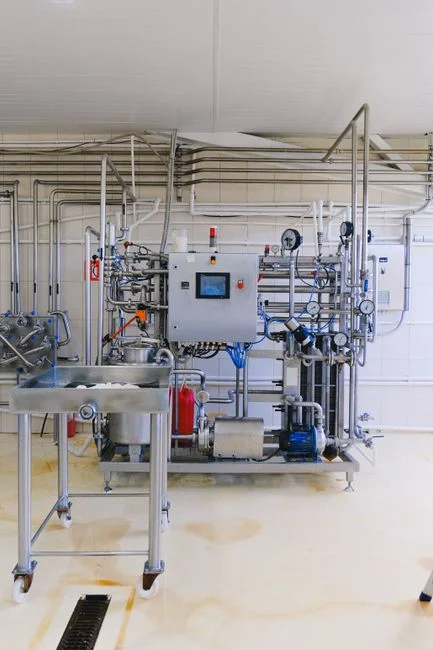
Conventional brackish-water reverse osmosis (BWRO) hits a hard ceiling at 75–80% recovery once silica, CaCO3, and CaSO4 saturate the concentrate; pushing higher with traditional multi-stage layouts demands interstage booster pumps, recirculation loops, and an aggressive chemical program that adds to the dissolved-solids load the next stage has to handle (HydropureWater field data, 2026). The ceiling is a chemistry problem, not a membrane problem — the supersaturation that drives scaling lives in the concentrate, not on the membrane surface.
The two-stage separation step comes first. DAF pre-treatment ahead of the CTBD RO loop drops TSS, residual treatment chemicals, and oils that would otherwise foul the high-recovery membranes, and a media filtration stage upstream of the DAF protects the flotation cell from heavy solids loading. The clarified stream then feeds the high-recovery RO loop.
The high-recovery lever is chemistry-controlled, not membrane-controlled. In the reference architecture, an industrial RO system for cooling tower blowdown is operated conservatively below local scaling limits to produce reuse-quality permeate. The concentrate is then routed to a fluidized-bed reactor where scaling inhibitors are intentionally deactivated, so silica, CaCO3, and other problematic salts precipitate onto seed material as compact pellets that leave the system as a solid waste stream. The remaining brine is now primarily NaCl, which can be processed at much higher overall recovery. Reference performance is ~95% overall recovery with permeate silica near 1 mg/L (HydropureWater field data, 2026).
A second lever is dynamic RO operation, which alternates short production periods with brief, high-velocity flushes that keep the membrane inside the crystallization induction phase. That extends chemical-clean intervals and removes the need for interstage boosting, simplifying the skid to a footprint an enterprise site can actually install. An automatic chemical dosing system for scale and biocide control sits at the make-up/cooling-loop interface to keep the upstream chemistry inside the band the RO stage expects.
At 10–30 MW scale, a modular 100–300 GPM skid is the right physical envelope — small enough to ship in containers, large enough to absorb the full CTBD stream with margin. This architecture lets the cooling tower run well above the conventional 5–6 CoC biological/scaling ceiling, reclaiming most CTBD as make-up and shrinking the freshwater withdrawal line in the ROI block below. For a contrasting high-altitude baseline, the Astana data center blowdown treatment guide shows the same train sized against continental steppe climate rather than Mediterranean semi-arid.
Supporting Trains: Raw Make-Up, Sanitary, and Optional Heat-Export Polish
The CTBD reuse line is the headline, but the site cannot be commissioned until the three supporting trains are also in place. Each one has its own unit operation and its own discharge envelope.
The raw make-up train starts with a multi-media filter for raw make-up to drop turbidity and protect the downstream RO and plate exchangers. Biofouling control sits upstream of the multimedia filter as a chlorine dioxide generator for residual disinfection or a UV sterilizer for water treatment downstream where oxidant residuals would damage RO membranes. An automatic chemical dosing system for scale and biocide control feeds the cooling loop at the LSI-stable setpoint the design assumed. Where source water is reclaimed rather than potable, the pre-treatment load increases; the procurement and operations frame is covered separately in the performance-based O&M contract guide.
The sanitary stream uses a packaged MBR for on-site sanitary wastewater with PVDF flat-sheet membranes, delivering near-reuse-quality effluent suitable for toilet flushing or on-site irrigation. The discharge envelope is the EU UWWTD 91/271/EEC sensitive-area band — BOD ≤25 mg/L, TSS ≤35 mg/L, total N ≤15 mg/L — which is also the envelope Decree 2-14-499 references for sensitive receiving waters (HydropureWater field data, 2026).
Where a district-heat offtake exists, the condensate crossing into the secondary network receives polishing filtration plus UV to keep Fe, Cu, and biological regrowth off the consumer side, mirroring the Dalkia Marseille interface described in the Marseille data center blowdown treatment guide. The sludge side — lamella clarifier underflow plus DAF float — is consolidated through a plate-and-frame filter press for solids handling, with the reject hauled off-site as solid waste. Pump-side issues that surface during commissioning — particularly on the sludge and reject lines — are covered in the pump cavitation troubleshooting guide.
Casablanca Regulatory Crosswalk: Law 10-95, Law 12-06, and Decree 2-14-499
Three domestic instruments frame the discharge envelope, and most hyperscale tenants overlay an EU-equivalent audit on top. The engineering train above is sized to satisfy all of them simultaneously.
Law 10-95 on water governs abstraction from the ONEE network or from local groundwater and sets the conditions for any industrial effluent discharge. Any site larger than the domestic threshold must hold a pre-discharge authorization from the Agence du Bassin Hydraulique (ABH) covering the Tensift basin, which is the basin that the Casablanca-Settat region drains into. The basin is classified "high" water stress under WRI Aqueduct 2025, so the ABH scrutiny band for new data-center permits has tightened materially through 2024–2026 (HydropureWater field data, 2026).
Law 12-06 on the environment, plus Decree 2-14-499 on specific discharge standards, sets the numerical effluent limits for COD, BOD, TSS, total nitrogen, heavy metals, and temperature that every unit operation above is designed to meet. EU IED 2010/75/EU is not the local permit frame, but it is the audit frame for any hyperscale tenant with European procurement commitments, so the CTBD and chiller discharge envelope is sized to the IED numerical limits as a baseline. The on-site sanitary stream is governed by UWWTD 91/271/EEC where the site's population crosses the urban-wastewater threshold (HydropureWater field data, 2026).
Procurement readers should also note the local content constraint: Casablanca hyperscale builds typically require a Moroccan EPC partner and a defined portion of local manufacturing scope. The CTBD skid architecture above can be containerized and shipped, but the assembly, commissioning, and two-year performance warrantee will normally sit with a Moroccan partner — a constraint that affects the RFP envelope more than the unit-operation choice.
| Treatment Stage | Stream Satisfied | Moroccan Instrument | EU Overlay |
|---|---|---|---|
| Multimedia filtration + automatic dosing | Raw make-up | NM 03.7.001, ONEE criteria | — |
| DAF + controlled-salt-precipitation RO + dynamic RO | CTBD reuse, chiller discharge | Law 10-95, ABH Tensift pre-discharge authorization | IED 2010/75/EU |
| Packaged MBR with PVDF | On-site sanitary wastewater | Decree 2-14-499, Law 12-06 | UWWTD 91/271/EEC |
| Polishing filtration + UV | Heat-export condensate (optional) | Law 12-06 | Local Dalkia-class interface spec |
CapEx, OPEX, and Payback for a 10–30 MW Casablanca Site
The reference case in the engineering literature is a 15 MW facility in a water-stressed region investing roughly $200,000 in capex to recover 60% of blowdown — 3 million gallons/year — at a 6.7-year simple payback on water alone (HydropureWater field data, 2026). Once avoided ONEE/ABH discharge fees, ESG/WUE reporting value, and tenant lease incentives are included, payback improves to 3–5 years, which is the threshold most finance committees accept for sustainability infrastructure (HydropureWater field data, 2026).
Scaling the same shape to a 10 MW Casablanca site at 4 CoC puts roughly 14,200 m³/month of recoverable CTBD on the table, which is the water line in any Casablanca ROI. The LCA framing matters for the board paper: a reuse train has roughly 2× the GWP of a freshwater train, with treatment energy accounting for ~80% of the difference, but the indirect water penalty is only ~0.93 L/m³ — less than 0.1% of the direct displacement benefit (HydropureWater field data, 2026). Under Morocco's decarbonizing grid, the GWP penalty compresses further while the water savings accrue at full value.
The first 12 months of ROI typically come from a non-obvious line: monitoring reveals a 15–30% gap between theoretical and actual blowdown caused by unmeasured losses and emergency dumps (HydropureWater field data, 2026). Closing that gap is the Stage 2 (optimize) win that funds the Stage 3 (chemistry upgrade) capital move. In a Casablanca context — where the ABH permitting cadence runs longer than the engineering cadence — the chemistry upgrade is the right first capital move because it makes the subsequent CTBD reuse permit easier to defend.
| Item | Reference (15 MW, water-stressed region) | Casablanca 10 MW scaled |
|---|---|---|
| CapEx | ~$200,000 | Scaled with CTBD flow and modular skid size |
| Blowdown recovery | 60% (3M gal/yr) | Up to ~95% with controlled-salt-precipitation RO |
| Payback — water alone | 6.7 years | Comparable, depends on ONEE tariff |
| Payback — with discharge fees, ESG, lease incentives | 3–5 years | 3–5 years, ABH fee compression possible |
| LCA penalty | ~2× GWP, ~0.93 L/m³ indirect water | Same envelope, grid-dependent GWP share |
| Measurement-driven upside (Stage 1–2) | 15–30% blowdown gap closed | 15–30% blowdown gap closed |
A 12-Month Delivery Roadmap for a Casablanca Build
Months 0–3: water audit, ONEE/ABH pre-application, influent characterization on the planned make-up source, and baseline WUE measurement. The audit must produce make-up volume, blowdown volume, evaporation estimate, and water-quality parameters — conductivity, pH, suspended solids — for the past 12 months; this is what the ABH pre-discharge file expects to see.
Months 3–6: tender for the raw make-up multimedia train, the packaged MBR for sanitary, and the modular CTBD skid sized 100–300 GPM. Lock the EPC partner and the local manufacturing scope in this window; the procurement clock runs longer than the engineering clock in Morocco.
Months 6–9: install the raw make-up and sanitary trains first, because they unblock the site occupation permit and let commissioning crews be on-site while the CTBD line is still being assembled. Months 9–12: CTBD reuse train commissioning, integrated loop test against the 95% recovery target, and WUE reporting baseline for tenant ESG audit.
Most facilities stall between Stage 2 (optimize) and Stage 3 (chemistry upgrade) of the standard five-stage roadmap because the strategic clarity about treatment objectives is missing (HydropureWater field data, 2026). The Moroccan permitting cadence inverts that — the ABH pre-discharge file is harder to defend without a chemistry upgrade already on the equipment list, so Stage 3 becomes the right first capital move rather than a deferred one.
Frequently Asked Questions
What wastewater and cooling blowdown treatment does a data center in Casablanca, Morocco need?
A Casablanca data center needs a four-stream treatment train sized to the local regulatory envelope: multimedia filtration plus chemical dosing for ONEE raw make-up, a two-stage separation plus controlled-salt-precipitation RO train for cooling-tower blowdown that pushes recovery to ~95% with permeate silica near 1 mg/L, a packaged MBR for on-site sanitary wastewater that meets Decree 2-14-499 and UWWTD 91/271/EEC, and optional polishing plus UV for any district-heat export condensate (HydropureWater field data, 2026). The whole train is anchored on a pre-discharge authorization from the Agence du Bassin Hydraulique covering the Tensift basin under Law 10-95.
Why can't a conventional BWRO system hit 95% recovery on Casablanca CTBD?
Conventional brackish-water RO is limited to 75–80% recovery on CTBD because silica, CaCO3, and CaSO4 saturate the concentrate and force scaling on the membrane. Pushing higher with traditional multi-stage layouts demands interstage booster pumps and recirculation loops that add cost, complexity, and cleaning risk (HydropureWater field data, 2026). Chemistry-controlled designs deactivate scaling inhibitors in a fluidized-bed reactor so the problematic salts precipitate as solid pellets, leaving a primarily NaCl brine that can be processed at much higher overall recovery.
Which Moroccan permits apply to a 10–30 MW data center water reuse project?
Three domestic instruments apply: Law 10-95 on water governs abstraction and discharge and requires an ABH Tensift pre-discharge authorization; Law 12-06 on the environment plus Decree 2-14-499 set the numerical effluent limits for COD, BOD, TSS, total nitrogen, heavy metals, and temperature; and ONEE criteria apply to the make-up source and any reject from the make-up treatment chain (HydropureWater field data, 2026). EU IED 2010/75/EU and UWWTD 91/271/EEC are not local permit frames, but most hyperscale tenants audit against them, so the design envelope typically covers both.
How much CTBD can a 10 MW Casablanca site actually recover at 4 CoC?
At 4 cycles of concentration, blowdown equals 25% of make-up volume, calculated as 1/(CoC − 1) for the blowdown ratio (HydropureWater field data, 2026). For a 10 MW evaporative-cooled site that translates to roughly 14,200 m³/month of recoverable CTBD, which is the water line the 3–5-year payback in the ROI block above is built on. Monitoring typically reveals a 15–30% gap between theoretical and actual blowdown in the first 12 months, and closing that gap is where the early ROI actually comes from.