Why Chennai Hotels Are Specifying Packaged MBR Over Conventional STPs
Chennai's hotels operate inside a tight envelope of water stress, CMDA building rules and TNPCB consent conditions that conventional activated sludge and SBR systems struggle to satisfy. Per the 2025–26 Tamil Nadu water-stress assessments, Chennai district sits in a water-scarce category, pushing the state to mandate treated-sewage reuse for new commercial builds above 20 KLD. Packaged Membrane Bioreactor (MBR) plants directly answer that mandate: a 0.04–0.4 micron PVDF membrane cassette replaces the secondary clarifier, so the bioreactor effluent is already BOD <10 mg/L, TSS <5 mg/L and turbidity <1 NTU — reuse-grade water without a separate tertiary stage. That is why packaged MBR is becoming the default for new-build and retrofit hotels in coastal Tamil Nadu rather than an optional upgrade.
Footprint is the second decisive factor. An integrated MBR membrane bioreactor system operating at 8,000–12,000 mg/L MLSS shrinks the aeration tank volume by roughly 60% compared to a conventional activated-sludge plant delivering the same load (HydropureWater MBR product spec, 2026). In a Chennai hotel, that delta is the difference between a 90 m² basement plant room and a 220 m² one — material when the same floor would otherwise sell as banquet or back-of-house space. The packaged format also means the unit ships factory-tested and skidded, compressing the on-site civil window from 8–12 weeks to under 3 weeks.
The market is consolidating around this view. HECS lists "Hotels, Resorts & Hospitals" as a primary segment for its HECS Amaze MBR packaged STP (hecspstp.com, 2025), and RRR Enviro Systems in Chennai explicitly markets packaged MBR for "hotels, hospitals, commercial buildings" where "treated water is intended for applications such as flushing, gardening and other suitable non-potable reuse" (rrrenvirosystems.in, 2025). Hollowbrane Membrane Technologies, a Chennai-based PVDF module manufacturer, ships packaged MBR cassettes out of its Tamil Nadu facility for the same hotel segment (hollowbranembr.com, 2025). For a hotel project manager, this means at least three credible Tamil Nadu suppliers — not just one — to invite to tender.
Sizing a Packaged MBR STP for a Chennai Hotel: The 200–250 LPCD Rule
The working sizing rule for an Indian hotel is 200–250 litres per capita per day (LPCD) against peak occupancy, not against room count alone. Resort properties should be designed at 2.5–3.0 persons per key (PPK) to absorb family occupancy and banquet load; business hotels sit closer to 1.6–1.8 PPK. Kitchen FOG contributes roughly 10–15% additional flow, and on-premise laundry can add another 5–10% for full-service properties — both should be added on top of the room-based flow, not folded into the LPCD factor.
Worked example for a 120-room resort on the ECR corridor. Assumptions: 80% peak occupancy, 2.8 PPK, 250 LPCD:
- Occupants at peak: 120 × 0.80 × 2.8 = 268 persons
- Base sewage flow: 268 × 250 L = 67,200 L/day
- Kitchen FOG loading (+12%): ~8,100 L/day
- Laundry loading (+7%): ~4,700 L/day
- Total average flow: ~80,000 L/day
- Design flow with 20% peak factor: ~96,000 L/day → round to 100 KLD packaged MBR
That 100 KLD figure is what a hotel project manager should hand to the vendor, then sanity-check against any quotation that lands at 50 KLD or 150 KLD for the same room count. A 50 KLD proposal almost certainly ignored banquet and laundry load; a 150 KLD proposal is either over-specced or assumes 100% occupancy year-round, which is unrealistic for a Chennai resort outside the December–January peak.
The other spec the buyer should validate is MLSS. Packaged hotel MBRs run in an 8,000–12,000 mg/L MLSS window (HECS MBR spec, 2025), which compresses hydraulic retention time to 4–6 hours versus 8–12 hours in conventional activated sludge. Higher MLSS gives a smaller tank but raises oxygen demand — which is why packaged MBR typically draws 0.8–1.2 kWh per m³ treated, mostly for membrane air-scour plus bioreactor aeration. Existing hotel DG backup covers that load without a separate electrical budget line.
What a Packaged MBR Unit Must Deliver: Key Parameters to Specify
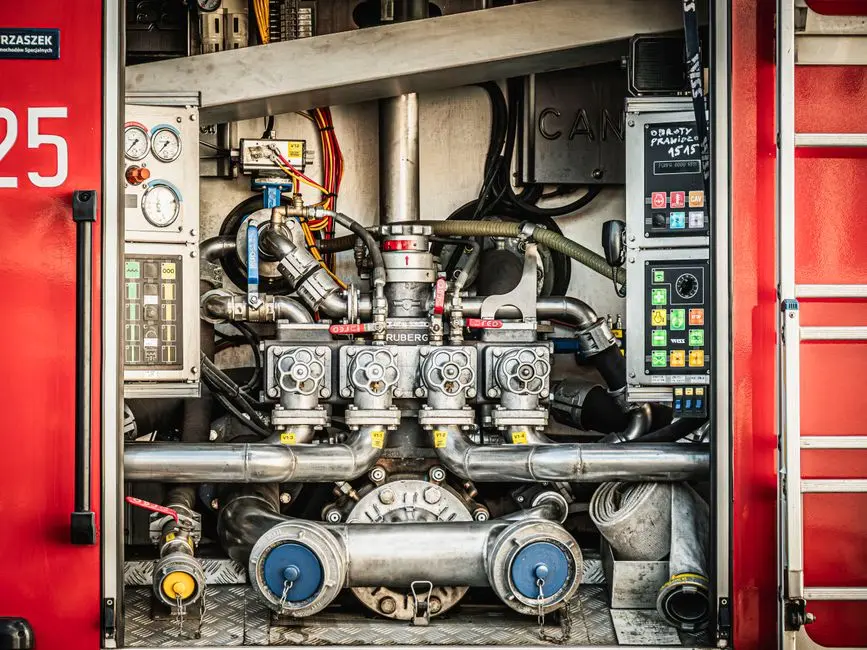
A Chennai hotel buyer should pin these parameters into the enquiry before the first quote arrives. The numbers below are the published spec bands from HECS (hecs.in, 2025), Hollowbrane Membrane Technologies (hollowbranembr.com, 2025) and HydropureWater's DF-series MBR cassette (HydropureWater MBR product spec, 2026).
| Parameter | Specification | Why it matters for a hotel |
|---|---|---|
| Membrane material & pore size | PVDF hollow-fibre or flat-sheet, 0.04–0.4 µm | PVDF resists chlorine and FOG attack; pore size determines pathogen log-removal |
| Module frame | SS304 cassette, air-scour cleaned | SS frame survives Chennai humidity and CIP chemicals over 5–8 yr life |
| DF-series flat-sheet cassette | 0.1 µm PVDF, 80–225 m², 32–135 m³/day per cassette | PVDF flat-sheet MBR membrane modules scale linearly for 50–500 KLD hotel plants |
| MLSS operating window | 8,000–12,000 mg/L | Drives tank volume and aeration sizing — request the design point, not just the range |
| Automation | PLC panel, DO + MLSS + level + TMP sensors, auto backwash, scheduled CIP | Hotel duty is unmanned overnight; automation is non-negotiable |
| Effluent quality | BOD <10 mg/L, TSS <5 mg/L, turbidity <1 NTU | Comfortably inside TNPCB sewage discharge band; reuse-ready for flushing/landscape |
| Sludge handling | Built-in sludge holding + dewatering interface | Pair with a plate-and-frame sludge dewatering press for cake handling |
| Disinfection | UV steriliser for reuse water for flushing/landscape loops | Avoids chlorine residual in cooling-tower make-up |
MBR vs SBR vs MBBR for Hotel Duty: When MBR Wins
For a hotel, the technology choice collapses to one question: do you need reuse-grade water directly from the bioreactor, or are you content with a downstream tertiary stage? MBR is the only option where the answer is "directly from the bioreactor." SBR (Sequencing Batch Reactor) and MBBR (Moving Bed Biofilm Reactor) both produce a good secondary effluent — BOD 20–30 mg/L, TSS 20–40 mg/L — but a hotel aiming for the TNPCB reuse band or an IGBC reuse credit will still need a downstream UF or activated-carbon stage, which adds footprint, capex and a second set of consumables.
| Criterion | MBR | SBR | MBBR |
|---|---|---|---|
| Effluent BOD / TSS | <10 / <5 mg/L | 20–30 / 20–40 mg/L | 20–30 / 20–40 mg/L |
| Reuse-ready directly? | Yes | No — needs UF/AC polish | No — needs UF/AC polish |
| Footprint (vs CAS baseline) | ~40% of CAS | ~70% of CAS | ~80% of CAS |
| FOG tolerance (hotel kitchens) | High — membrane barrier holds solids | Moderate — decanter scours with FOG spikes | Low–moderate — biofilm carriers foul |
| Operator skill needed | Medium (CIP, TMP trending) | Medium (cycle timing, decant) | Low (robust, fewer controls) |
| Seasonal load swings | Handles via MLSS control | Handles via cycle adjustment | Handles via carrier fill |
The honest trade-off: MBR's membrane cassette demands a periodic clean-in-place (CIP) every 3–6 months and a replacement cycle of 5–8 years in hotel sewage duty. SBR and MBBR have no cassette but require a downstream UF skid for the same reuse outcome, and their decanter/clarifier performance drops sharply when the hotel kitchen pushes a Friday-night banquet FOG spike. For a Chennai hotel with year-round banquet and laundry load, packaged MBR is the more defensible choice.
TNPCB Compliance, CMDA Building Rules and Reuse Targets
TNPCB's standard sewage discharge band for hotels and commercial establishments sits at BOD ≤30 mg/L, TSS ≤50 mg/L and COD ≤250 mg/L, with stricter limits when the outlet feeds inland surface water or a public drain. A packaged MBR hitting BOD <10 / TSS <5 / turbidity <1 NTU clears that band with 3–10× margin — the kind of headroom a consent-renewal audit rewards. CMDA's second-master-plan building rules and the Indian Green Building Council (IGBC) hotel rating both push new builds above 20 KLD towards treated-sewage reuse for flushing, landscaping and cooling-tower make-up, so the MBR permeate is not just compliant — it is an asset that earns the IGBC Water Credit.
Reuse mapping is where the spec gets interesting. For a Chennai resort, the MBR permeate alone (TDS reduction only 5–15% per HECS, 2025) can feed flushing and landscaping safely. Laundry and cooling-tower make-up, which have tighter TDS and silica limits, are better served by an industrial RO polishing system downstream of the MBR — an MBR + RO train pushes TDS removal to >95%, and the MBR permeate is clean enough to feed the RO without a separate pre-filter (HECS MBR spec, 2025). For a 100 KLD hotel STP, that reuse train typically offsets 40–60% of municipal freshwater draw, which is the metric a hotel developer should put in front of the EPC consultant.
One operational point worth flagging at enquiry stage: TNPCB treats packaged, factory-tested MBR units as a "ready-to-install" system rather than a custom-built ETP, which shortens the consent-to-establish and consent-to-operate cycle for greenfield Chennai hotel projects. That is a real schedule benefit — often 4–8 weeks shaved off the regulatory clock versus a site-built SBR.
Cost Reality: What a Packaged MBR STP Actually Costs in India (2026)
Indian cost data for packaged MBR is best treated as bands, not point figures, because membrane OEM, panel scope and civil interface move the number meaningfully. The planning bands below are consistent with 2025–26 quotations from Chennai and Tamil Nadu suppliers and should be validated with two or three local vendors before budget approval.
| Cost element | 2026 India band | Notes |
|---|---|---|
| CAPEX (packaged MBR, skid-mounted) | ₹6–12 lakh per KLD | Lower end for 100+ KLD with DF-series cassettes; upper end for <50 KLD |
| Civil works (tanks, plinth, piping) | ₹2–4 lakh per KLD | Often the larger line item in a basement retrofit |
| OPEX (power + chemical + membrane amortised) | ₹1.5–3 per litre treated | Power ~0.8–1.2 kWh/m³ dominates; membrane amortisation ~₹0.3–0.5/L |
| PVDF membrane replacement cycle | Every 5–8 years | Hotel duty with proper CIP; shorter if FOG pre-treatment is skipped |
| MBR + RO reuse train (incremental) | +₹3–5 lakh per KLD on CAPEX | Justified where laundry / cooling-tower make-up reuse is targeted |
For a 100 KLD packaged MBR, the all-in CAPEX band lands around ₹80–160 lakh (plant + civil) and annual OPEX around ₹55–110 lakh, depending on power tariff and reuse scope. Once reuse value is credited at ~₹50–80 per kL of municipal water offset, the 5-year total cost of ownership usually undercuts an SBR-plus-tertiary train delivering the same reuse outcome. The full MBR cost benchmarking for industrial wastewater exercise in our cost guide walks through the same band logic for a different duty cycle.
Selecting a Chennai Packaged MBR Supplier: 10-Point Evaluation Checklist
Paste this 10-point matrix into the enquiry email. Score each supplier 0–3 and weight the items that matter most to your site. A vendor who refuses to share membrane OEM or MLSS design point is the single most reliable predictor of long-term under-performance — drop them from the shortlist on that basis alone.
| # | Criterion | What to look for |
|---|---|---|
| 1 | Membrane OEM & pore size | Named PVDF OEM (Hollowbrane, Toray, SUEZ, Koch), 0.1–0.4 µm, with datasheet |
| 2 | MLSS design point | Specific number (e.g. 10,000 mg/L), not a vague "high MLSS" claim |
| 3 | Chennai / Tamil Nadu service team | In-house, not a third-party contractor; check RRR Enviro (Chennai) and Hollowbrane (Chennai PVDF manufacturer) as anchor TN suppliers |
| 4 | Automation scope | PLC with DO, MLSS, level, TMP sensors; auto backwash; scheduled CIP |
| 5 | PLC brand | Siemens / Allen-Bradley / Schneider — avoid unbranded PLCs |
| 6 | Panel IP rating | IP54 minimum for Chennai humidity; IP55 for basement plant rooms |
| 7 | Skid material | SS304 (standard) or SS316 (coastal/EGBC); FRP acceptable for buried units |
| 8 | Documented Tamil Nadu hotel reference | Ask for a working hotel STP site visit within 100 km of Chennai |
| 9 | AMC response SLA | Written commitment — e.g. 8 hr call-out, 24 hr on-site within Chennai city limits |
| 10 | Civil drawing turnaround | GA drawings within 7 working days of PO; P&ID within 14 days |
For cross-market context on the same checklist structure, the hotel MBR sizing and supplier checklist from another market and the European hotel MBR compliance benchmark walk through the same scoring logic against different discharge rules. For an Indian non-hotel reference, the Indian hospital STP cost and compliance reference covers a similar high-FOG, high-organic duty cycle.
Frequently Asked Questions
What size packaged MBR STP does a 100-room Chennai hotel need?
Apply 200–250 LPCD against peak occupancy, then add 10–15% for kitchen FOG and 5–10% for laundry. A 100-room business hotel at 1.8 PPK and 80% occupancy lands at roughly 40–50 KLD; a 100-room resort at 2.8 PPK lands closer to 70–90 KLD. Round up to the next standard packaged skid (50, 75, 100 KLD) and apply a 20% peak factor.
What TNPCB effluent limits apply to a hotel STP in Chennai?
TNPCB's standard sewage discharge band for hotels and commercial establishments sits at BOD ≤30 mg/L, TSS ≤50 mg/L and COD ≤250 mg/L, with site-specific tightening for surface-water outlets. A packaged MBR delivering BOD <10 / TSS <5 / turbidity <1 NTU clears that band with 3–10× margin, which is the headroom a consent-renewal audit expects.
How long do PVDF membrane cassettes last in hotel duty?
PVDF hollow-fibre and flat-sheet cassettes typically last 5–8 years in hotel sewage duty when the plant runs scheduled CIP every 3–6 months and the kitchen FOG line is pre-screened with a grease trap. Skipping the grease trap or extending the CIP interval can halve membrane life.
Can MBR permeate be reused directly for hotel flushing and landscaping?
Yes. MBR permeate at TDS reduction of only 5–15% is well within TNPCB and IGBC limits for non-potable reuse such as toilet flushing, gardening and cooling-tower make-up (subject to silica and hardness limits). Pair the MBR with a UV steriliser for reuse water to avoid chlorine residual in the cooling-tower loop.
When should a Chennai hotel add RO after the MBR?
Add an industrial RO polishing system when the reuse target includes laundry make-up or any application with a TDS or silica ceiling. The MBR + RO combination pushes TDS removal to >95%, and the MBR permeate is clean enough to feed the RO without a separate pre-filter (HECS MBR spec, 2025).