
Why Haifa is pushing domestic sewage treatment toward tertiary reuse in 2026
The Haifa regional wastewater treatment plant, originally built in 1961 as Israel's first municipal WWTP and expanded to 120,000 m³/day of activated-sludge capacity by 1994 (most of the 1994 works were completed in 2002 at a reported cost of about NIS 170 million), is now mid-upgrade to a tertiary reuse class (per haifa-wwtp.co.il). The new scope of work is explicit: coarse and fine pre-filtration, sand removal, an odor-control installation, an effluent filtration installation, an effluent disinfection installation, and an additional biological treatment module. The stated end-state is that "the effluents will conform to all quality requirements for unlimited irrigation" — a regulated reuse tier in Israel that permits unrestricted application on food crops, parks, and public-access landscapes.
For any developer, hotel operator, hospital planner, or municipal contractor specifying a decentralized plant in the Haifa catchment in 2026, that upgrade is the bar. Discharging to the regional collector or reusing effluent on-site both assume the same reuse-class quality. Practically, unlimited irrigation in Israel is defined by tightened regulations governing effluent and sludge quality: BOD and TSS typically below 10 mg/L, turbidity below 5 NTU for sprinkler compatibility, total nitrogen below 15 mg/L, and E. coli below 10 CFU/100 mL (or the equivalent fecal coliform limit). A packaged plant that only hits secondary quality is no longer a defensible specification for new builds.
The coastal geography sharpens the urgency. The Haifa WWTP association states that untreated municipal wastewater contains parasites, microbes, and viruses, and that discharge onto shorelines or into streams damages marine ecology and endangers human health — which is why Israel's Ministry of Health forbids bathing on beaches receiving wastewater discharges (per haifa-wwtp.co.il). A private system that fails to meet the same bar effectively pushes the same public-health and environmental liability onto the discharger.
What 'domestic sewage' actually means in a Haifa catchment
Domestic sewage in the Haifa metro is a mixture of residential blackwater and greywater, with hotel, hospital, and institutional flows loading in during tourism and academic-calendar peaks. Per haifa-wwtp.co.il, municipal wastewater of this type carries biohazardous substances (parasites, microbes, viruses), organic matter, suspended solids, nitrogen compounds, phosphorus compounds, and heavy metals. Designing for it means designing for that full constituent list, not just BOD.
For per-capita hydraulic loading, Mediterranean and Israeli design practice typically works in the 100–200 L/cap·day range, with hotels and hospitals running higher per-capita than residential blocks because of laundry, food service, and guest turnover. That range is the envelope a packaged plant should be checked against, not the 150 L/cap·day textbook figure that ignores seasonal and tourism swings. For a 200-room Haifa hotel at, say, two guests per room and 200 L/cap·day, design flow sits in the 80–120 m³/day band before restaurants and laundry are added — and a summer occupancy peak can push that 30–50% higher.
That peaking profile is why modular and packaged plants dominate the Haifa-area specification landscape. A single fixed-volume basin sized for average dry-weather flow will overflow or short-circuit during a July–August surge; a modular A/O, SBR, or MBR package with parallel trains or surge capacity absorbs the swing without operator intervention.
| Parameter | Typical domestic range (Israeli/Med design envelope) | Design implication for a packaged plant |
|---|---|---|
| Per-capita flow | 100–200 L/cap·day | Size basins on upper bound for hotels/hospitals; lower bound for residential |
| BOD₅ influent | 200–400 mg/L | Sets aeration tank volume and MLSS target |
| TSS influent | 200–350 mg/L | Sets primary clarification or headworks loading |
| Total nitrogen | 40–70 mg/L | Drives anoxic zone sizing for A/O, SBR, MBR |
| Total phosphorus | 6–15 mg/L | Determines whether chemical precipitation is needed for reuse |
| Peak/avg ratio (tourist sites) | 1.3–1.5 | Modular or surge-tolerant design required |
Process options that can hit Haifa's tertiary reuse class
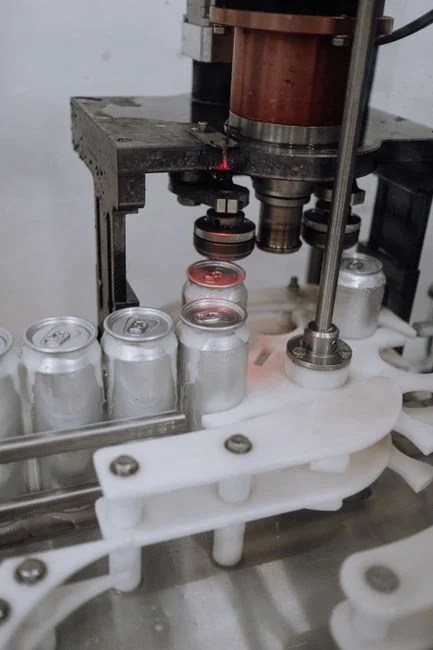
Four biological process families are credible for a Haifa-area domestic plant in 2026: A/O (anoxic + aerobic) packages, sequencing batch reactors (SBR / CASS), membrane bioreactors (MBR), and nature-based systems such as constructed wetlands and vermifiltration. Each has a defensible niche — the engineering job is matching the niche to the site.
The WSZ underground A/O package plant is the workhorse for small to mid-sized residential, hotel, hospital, and rural sites in the 1–80 m³/h range, combining anoxic/aerobic contact oxidation with sedimentation and disinfection in a single buried unit. Nitrogen removal is partial (typically 60–75% TN) and phosphorus is normally addressed by chemical precipitation downstream, so A/O alone will not always meet unlimited-irrigation TN and TP limits without polishing.
SBR / CASS is a strong fit where influent is variable — Haifa hotels and resorts with weekend and seasonal peaks. Cycle-based operation handles load swings in software rather than in concrete. Published 2026 CASS OPEX reference points sit in the $0.06–$0.18/m³ band for routine maintenance (per the HydropureWater CASS article, framed as a published data point, not a Haifa-specific guarantee). For phosphorus limits tied to unlimited irrigation, see the HydropureWater guide to best technology for total phosphorus removal in 2026.
MBR is the most direct route to reuse-class effluent. The HydropureWater MBR integrated system delivers near-reuse effluent through submerged membranes with an effective filtration cutoff below 1 μm, in roughly 60% smaller footprint than a conventional activated-sludge plant of equivalent capacity, and is offered in the 10–2,000 m³/day packaged range. Submerged PVDF flat-sheet and hollow-fiber configurations are both proven at this scale. For the head-to-head engineering case, see MBR vs SBR Wastewater Treatment: 2026 Engineering Comparison.
Constructed wetlands and vermifiltration are real and documented — IntechOpen work on earthworm-based decentralised systems in semi-arid climates (per doi.org/10.5772/intechopen.103920) shows vermifiltration can treat septic-tank effluent to meet statutory irrigation limits. For the Haifa metro, they are best framed as a polishing or low-flow community option, not as the main treatment train for a 200-room hotel. Anammox/partial-nitritation for low-strength domestic sewage remains "mainly in lab and pilot-scale research phase with few plants in operation" (per a Feb 2026 Biodegradation review, doi.org/10.5772/intechopen.75658 was inaccessible — the Biodegradation source is the verifiable Feb 2026 statement). It should not be specified as the baseline process for a 2026 Haifa project.
| Process | Typical capacity range | Effluent quality vs unlimited irrigation | Footprint | Operator skill | Best fit in Haifa |
|---|---|---|---|---|---|
| A/O package (WSZ) | 1–80 m³/h | Secondary to borderline reuse; needs chemical P removal | Small (buried) | Low (automated) | Residential, rural, hotels without reuse obligation |
| SBR / CASS | 10–500+ m³/day | Secondary to tertiary with polishing | Medium | Medium | Hotels, resorts, variable tourist loads |
| MBR (integrated) | 10–2,000 m³/day | Near-reuse; <1 μm filtration | ~60% smaller than CAS | Medium–high (membrane care) | Hotels, hospitals, sites with reuse or footprint pressure |
| Constructed wetland / vermifiltration | Low flow | Reuse achievable at low loadings | Large land area | Low | Polishing, rural communities, low-density sites |
Pretreatment, disinfection and reuse polishing — closing the gap to 'unlimited irrigation'
Biological treatment alone rarely delivers unlimited-irrigation quality straight from the aeration tank. The Haifa regional upgrade explicitly adds headworks screening, sand removal, effluent filtration, and effluent disinfection for that reason; a packaged plant needs the same unit operations, scaled to its own flow.
Headworks. A GX rotary mechanical bar screen protects downstream pumps, diffusers, and any membrane modules from rags, wipes, and solids — a non-negotiable for MBR plants, where a single bar-screen failure can take a membrane cassette out of service. Sand and grit removal, listed in the Haifa upgrade scope (per haifa-wwtp.co.il), is equally important where the influent carries beach and construction sand, which would otherwise blind filters and irrigation nozzles.
Tertiary filtration. Multi-media or ultrafiltration polishing brings turbidity low enough for both spray-irrigation reliability and any downstream RO polish. An ultrafiltration (UF) water treatment system at this scale typically targets SDI below 3 — the threshold for safe RO feed if a higher reuse grade is ever specified.
Disinfection. The site-specific choice is between residual and chemical-free disinfection. A chlorine dioxide generator delivers a measurable residual across the irrigation distribution network — useful when effluent travels through long pipe runs to fields — and is aligned with the disinfection practice referenced under the EU Drinking Water Directive 98/83/EC and WHO guidance for ClO₂. A UV sterilizer is chemical-free, has a short contact-time footprint, and is particularly effective against chlorine-resistant Cryptosporidium and Giardia — but leaves no residual, so the distribution network must be protected separately. For context on aerobic versus anaerobic framing, see Aerobic vs Anaerobic Wastewater Treatment.
Sizing and selecting a packaged domestic plant for a Haifa-area site
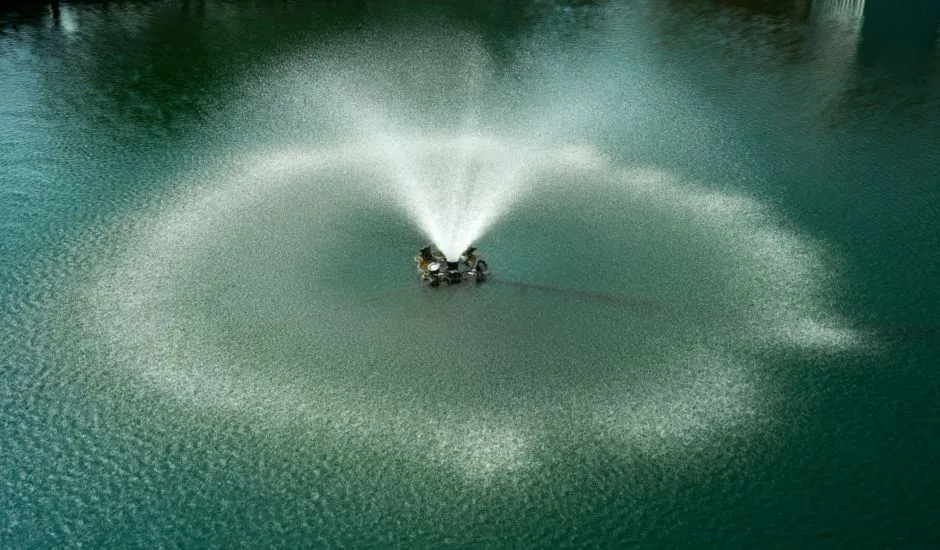
The decision logic below is what a consulting engineer or hotel/municipal buyer should be working through in 2026, against three reference product lines that cover the relevant flow bands.
Three capacity bands cover almost every decentralized domestic brief in the Haifa area: the WSZ underground A/O package plant at 1–80 m³/h (residential, small hotel, hospital, rural community); the HydropureWater MBR integrated system at 10–2,000 m³/day (mid-size hotel, hospital, kibbutz, mixed-use development with reuse); and the DF series PVDF flat-sheet MBR module in single-cluster builds of 32–135 m³/day per cluster, which scales linearly by adding cassettes for larger flows.
Choose A/O (WSZ) when footprint is flexible, reuse for irrigation is not required, and the site has limited operator cover. Choose MBR when reuse for irrigation is mandatory, footprint is constrained (a tight urban hotel or a buried hospital plant), and the operator can run membrane-cleaning cycles. Choose SBR/CASS when the influent is highly variable — Haifa-area resorts with summer peaks are the textbook case. Note: any packaged biological plant produces waste activated sludge, and a plate and frame filter press (or a lamella clarifier on the supernatant side) should be planned in parallel at the design stage, not retrofitted after the first sludge draw.
| Site type | Typical design flow | Recommended packaged process | Reason |
|---|---|---|---|
| Residential community / rural | 1–50 m³/h | WSZ underground A/O package | Buried, automated, low operator skill |
| Hotel / resort with reuse | 50–500 m³/day | HydropureWater MBR integrated system | Reuse quality, small footprint |
| Hospital | 20–200 m³/day | MBR + ClO₂ or UV | Tight effluent, pathogen control |
| Large hotel / mixed-use | 500–2,000 m³/day | MBR integrated + DF module cluster | Modular scale-up, reuse-class effluent |
| Tourist-variable resort | Highly variable | SBR / CASS + tertiary filtration | Cycle-based load handling |
Cost, compliance and next steps for a 2026 Haifa project
The 1994 Haifa regional expansion was reported at roughly NIS 170 million for a 120,000 m³/day activated-sludge upgrade (per haifa-wwtp.co.il, 2002 completion). A packaged plant in the 50–500 m³/day band is several orders of magnitude lower in absolute CAPEX, but the line items that scale with size are the same: tanks and civil works, blowers and pumps, membrane cassettes (if MBR), and disinfection. OPEX is driven primarily by aeration energy (MBR runs harder than A/O on air demand), scheduled membrane replacement (typically every 5–8 years for PVDF flat-sheet in well-run plants), chemical dosing for phosphorus precipitation, and sludge hauling — which is why a dewatering press should be sized and budgeted at the same time as the biological train.
A 2026 Haifa-area project must clear three compliance checkpoints: the unlimited-irrigation reuse class, the Ministry of Health bathing-water protection regime that effectively rules out shoreline discharge of sub-tertiary effluent (per haifa-wwtp.co.il), and any local coastal or Haifa Bay environmental constraints that may tighten nutrient limits further. The right next step before locking the process train is straightforward: run jar tests and a short-term treatability study on the actual site influent, so the design isn't relying on textbook Mediterranean averages. That data is what makes the difference between an MBR that meets the spec and one that doesn't.
Frequently Asked Questions
What is 'unlimited irrigation' reuse class in Israel, and does a packaged plant have to meet it?
Unlimited irrigation is the regulated reuse tier that permits unrestricted application on food crops, parks, and public-access landscapes, and is the explicit end-state of the Haifa regional WWTP upgrade to 120,000 m³/day with filtration and disinfection (per haifa-wwtp.co.il). For a private or decentralized plant in the catchment, meeting that tier — typically BOD and TSS below 10 mg/L, turbidity below 5 NTU, total nitrogen below 15 mg/L, and E. coli below 10 CFU/100 mL — is increasingly the only defensible specification for new builds in 2026.
Which packaged process is best for a 2026 hotel or hospital plant in the Haifa area?
For sites that need to reuse effluent or have tight footprint constraints, an MBR is the most direct route: the HydropureWater MBR integrated system delivers near-reuse effluent in the 10–2,000 m³/day range in roughly 60% smaller footprint than conventional activated sludge. For a hotel or resort with highly seasonal loadings, an SBR/CASS plant handles the surge in cycle time rather than basin volume.
How big a packaged plant do I need for a typical Haifa residential, hotel, or hospital site?
Israeli/Mediterranean design practice works at 100–200 L/cap·day. That puts a 200-room hotel at roughly 80–120 m³/day before restaurants and laundry, a 100-bed hospital at a similar order, and a 500-person residential block at 50–100 m³/day. The WSZ underground A/O package covers the 1–80 m³/h band; the MBR integrated system covers 10–2,000 m³/day; a single DF flat-sheet MBR module cluster sits at 32–135 m³/day and scales linearly.
Is anammox a realistic option for a 2026 Haifa domestic plant?
No, not as a baseline. The Feb 2026 Biodegradation review of partial nitritation/anammox for domestic wastewater concludes that the process "is still mainly in lab and pilot-scale research phase with few plants in operation," with enrichment, growth, and retention of AnAOB on low-strength sewage still unresolved. Specify it as a watch-list technology, not as the basis of design.