Why Fairbanks Mining and Metals Plants Cannot Just Copy Lower-48 Equipment Lists
Fairbanks operates on a six-month sub-freezing envelope — daily mean temperatures sit below 0 °C from roughly October through April — and ambient washwater follows the same curve. Any Dissolved Air Flotation (DAF) system sited outdoors needs saturation-vessel heat tracing, an insulated compressor enclosure, and freeze-protected recycle piping; a clarifier tolerates the same washwater with no compressed-air service and no pressure-rated plumbing. Construction windows compress to May through September, freight rates to Interior Alaska run 2–4× the Lower-48 baseline, and on-site service support is limited to a handful of rotating equipment contractors — a mis-sized skid sits idle for weeks waiting on parts. The influent itself is consistent with what the HydropureWater 40 CFR Part 440 pretreatment compliance guide documents for similar mining streams: TSS 3,000–15,000 mg/L dominated by siliceous grit, granite fines, and metal-hydroxide flocs, with FOG and emulsified oil typically below 50 mg/L unless oil-fired heaters or vehicle wash bays are on the same outfall. When sulfide-bearing ore is processed, intermittent acid rock drainage (ARD) pushes pH and dissolved metals off-spec and generates sub-13 µm precipitates that gravity settling handles poorly. The non-negotiable compliance frame is 40 CFR Part 440 effluent limitations for the ore mining and dressing point source category, overlaid by Alaska DEC Alaska Pollutant Discharge Elimination System (APDES) permit conditions for surface-water discharge or any local publicly owned treatment works (POTW) tie-in — every equipment choice has to clear those limits before cost or footprint enters the conversation.
How a DAF System Actually Separates Solids, Oil and Ultrafines
A DAF unit pressurizes a clarified side-stream — typically 15–30% of the main flow — with air at 4–6 bar, holds it in a saturation tank long enough to dissolve the air, then releases the stream to atmospheric pressure at the inlet of the flotation cell. The pressure drop nucleates 30–100 µm microbubbles (Rodrigues & Rubio, 2007, International Journal of Mineral Processing) that attach to suspended particles, oil droplets, and chemical precipitates, lifting them to the surface for skimming while clarified water exits the bottom. Documented strengths in the same review: capacities from 100–20,000 m³/h, a smaller footprint than an equivalent settling tank, thicker floated sludge (2–5% solids versus 0.5–2% underflow), rapid start-up, and four concrete mining use cases — AMD neutralization, mining-vehicle washwater reuse (CVRD Brazil, 2003), tailings water clarification, and capture of fines below 13 µm where coarse-bubble flotation fails. The documented limits are equally real: higher CapEx and OpEx than a clarifier (Ecologix, 2026), an air compressor, saturation tank, recycle pump, and pressure-rated piping as mandatory auxiliary equipment, and sensitivity to wild swings in influent TSS, FOG, or pH. On a coarse, high-TSS Fairbanks wash stream with no oil, that capital buys you little. The same DAF skid architecture earns its keep when emulsified oil, FOG above ~50 mg/L, or sub-13 µm ARD precipitates are in the stream.
How a Lamella or Circular Clarifier Actually Settles the Same Stream
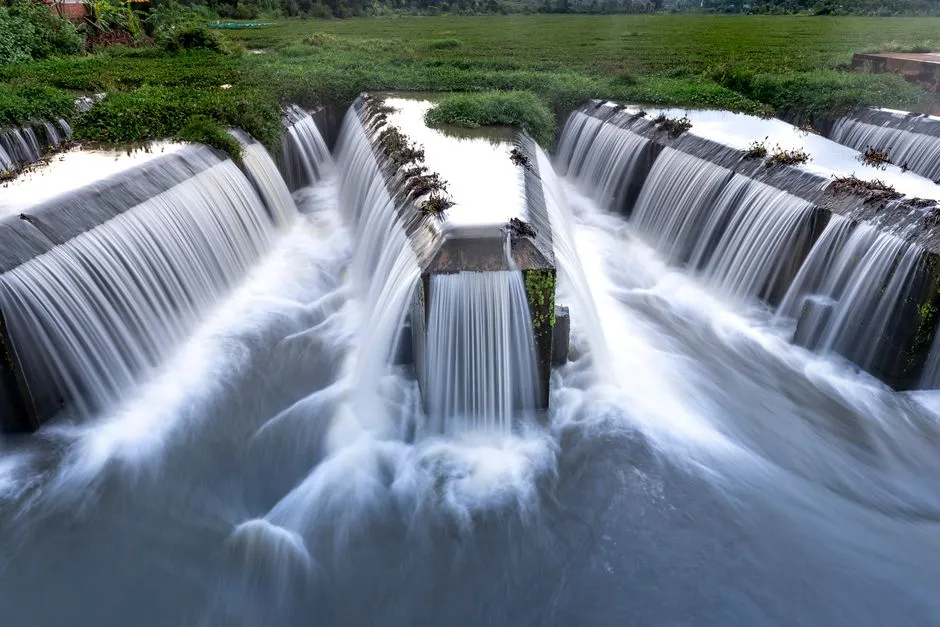
A clarifier is a gravity device. Heavier particles settle to the bottom under quiescent flow — or, in a high-efficiency lamella unit, across a stack of inclined plates that multiplies the effective settling area by a factor of 5–10 per unit footprint. Sludge is scraped or pumped from the cone or hopper; clarified overflow leaves over a peripheral weir or launder. The real performance multiplier is upstream chemistry: a PLC-controlled coagulant and floc dosing skid grows settleable flocs from the suspended load, and on a siliceous-grit plus metal-hydroxide feed a properly sized high-efficiency lamella clarifier reaches the 90% solids removal benchmark documented in the 2026 Ecologix mining case. The limits are equally specific: only ~70% removal of emulsified oil and FOG on the same oily stream where DAF hits 95% (Ecologix, 2026), weak performance on ultrafine clays below 13 µm, and dependence on adequate flocculation when dissolved organics are low. For a Fairbanks sand-and-gravel or hard-rock wash stream with FOG below 50 mg/L, the limit that matters is rarely the FOG number — it is the 40 CFR Part 440 TSS and metals envelope, which a properly flocculated clarifier clears at lower CapEx and without compressed-air service.
DAF vs Clarifier in a Fairbanks Mining Plant: 2026 Comparison
The table below is sized for a 50–200 m³/h Fairbanks wash stream and tuned to Interior Alaska operating realities. Anchor numbers come from the 2026 Ecologix selection guide (95% FOG on DAF, 70% on a clarifier; 90% solids on a mining clarifier at lower cost) and the Rodrigues & Rubio throughput figures.
| Parameter | Lamella / Circular Clarifier | Dissolved Air Flotation (DAF) |
|---|---|---|
| Separation mechanism | Gravity settling; sludge scraped from cone or hopper | 30–100 µm microbubbles float particles and oil to the surface (Rodrigues & Rubio, 2007) |
| Best-fit influent | Coarse siliceous grit, granite fines, metal-hydroxide flocs, settleable TSS | Emulsified oil, FOG, ultrafines below 13 µm, ARD precipitates |
| FOG removal efficiency | ~70% (Ecologix, 2026) | ~95% (Ecologix, 2026) |
| Solids reduction (heavy-sediment mining case) | 90% at lower cost (Ecologix, 2026) | Matches or exceeds on oily or ultrafine feeds; loses on coarse wash streams |
| FOG tiebreaker | Wins when inlet FOG stays below ~50 mg/L | Wins only above ~50 mg/L FOG; 95% vs 70% gap must pay back the skid premium |
| High-TSS tolerance (3,000–15,000 mg/L) | Strong when surface overflow rate is set correctly | Sensitive to TSS swings; recycle ratio must be re-tuned |
| Footprint | Larger plan area, especially circular units | Smaller per m³/h; capacities 100–20,000 m³/h (Rodrigues & Rubio, 2007) |
| CapEx | Lower — tank, drive, underflow pump, dosing skid (Ecologix, 2026) | Higher — air compressor, saturation tank, recycle pump, scraper, pressure-rated piping |
| OpEx | Lower — mainly pumping and polymer (Ecologix, 2026) | Higher — compressed-air energy plus recycle pumping (Ecologix, 2026) |
| Cold-climate handling (Fairbanks) | Tolerates freezing washwater; no compressed-air service; lower freeze-protection scope | Adds saturation-tank heat tracing, insulated compressor room, and recycle-line freeze protection that must be priced in |
| Default for Fairbanks 2026 | Primary unit for sand-and-gravel, hard-rock, light-metals wash | Staged upstream only on a sidestream carrying oil, FOG, or ARD-driven ultrafines |
When a Fairbanks Plant Should Pick Clarifier, DAF, or a Hybrid Train
Pick a clarifier when the stream is dominated by heavy, fast-settling solids and FOG stays below ~50 mg/L. That covers most Fairbanks sand-and-gravel washwater, granite cutting and sawing slurry, hard-rock ore-dressing wash, and tailings-thickener overflow — influent in the 3,000–15,000 mg/L TSS band, mostly coarse siliceous or metal-hydroxide flocs. Pick DAF when the stream carries emulsified oil, FOG above ~50 mg/L, sub-13 µm fines, or ARD precipitates from sulfide-bearing rock that demand fast hydraulic turnover; the 2026 selection guide treats these as the four qualifying DAF cases. Pick a hybrid DAF-then-clarifier train when both fingerprints appear in the same plant — DAF strips the floatable and ultrafine load upstream, the lamella clarifier downstream polishes settleable grit, and the configuration is explicitly valid (Ecologix, 2026). For procurement, comparable DAF skids in the 3–120 m³/h band run 1,500–10,000 kg dry weight with operating weights of 5,000–130,000 kg (vendor data, 2025), so the equipment envelope is concrete and the DAF premium only amortizes on the right influent. A side-by-side with biological polishing is laid out in this MBR vs conventional activated sludge for mining wastewater guide for plants considering a downstream biological step.
CapEx, OpEx and Sizing Envelope for a 50–200 m³/h Fairbanks Wash Stream
The 50–200 m³/h flow band covers most Fairbanks sand-and-gravel and light-metals wash streams. Directionally, a lamella clarifier package — tank, mechanical drive, underflow pump, and PLC-controlled dosing skid — sits well below a DAF package of equivalent flow (Ecologix, 2026). DAF cost drivers beyond the vessel itself are the air compressor, saturation tank, recycle pump, pressure-rated piping, and surface scraper; cold-climate add-ons for Fairbanks are saturation-tank heat tracing, an insulated compressor enclosure, and recycle-line freeze protection. Clarifier cost drivers are tankage, mechanical scraper or sludge recirculation pump, polymer dosing skid, and a flocculation stage sized to grow settleable flocs. Operating-cost line items both ways are pumping and polymer; DAF adds compressed-air energy and recycle pumping (Ecologix, 2026), so on a low-FOG Fairbanks stream the OpEx premium does not buy a corresponding removal gain. A downstream plate and frame filter press handles dewatering of the underflow or float sludge to 25–35% dry solids for off-site disposal or backhaul.
| Sizing parameter (50–200 m³/h band) | Lamella Clarifier | DAF Skid |
|---|---|---|
| Typical flow envelope | 50–200 m³/h per unit; multiple units for higher flows | 3–120 m³/h per skid; parallel skids for higher flows (Rodrigues & Rubio, 2007) |
| Dry weight range | Heavily tankage-driven; site-built concrete or FRP common at this flow | 1,500–10,000 kg dry weight (vendor data, 2025) |
| Operating weight | Water-filled tank plus sludge inventory; site-specific | 5,000–130,000 kg operating weight depending on model (vendor data, 2025) |
| Auxiliary equipment | Dosing skid, underflow pump, optional scraper drive | Air compressor, saturation tank, recycle pump, pressure piping, scraper |
| Polymer dose | 2–10 g/m³ typical for high-TSS mineral feed | 1–5 g/m³ typical; lower because floc demand is reduced by float capture |
| Compressed-air load | None | 0.3–0.6 Nm³/m³ of treated flow at standard recycle ratios |
| Cold-climate add-ons (Fairbanks) | Building heat and minor line tracing only | Saturation-tank tracing, insulated compressor room, recycle-line tracing |
| CapEx direction (per m³/h, 2026) | Lower (Ecologix, 2026) | Higher (Ecologix, 2026) |
| OpEx direction (per m³ treated, 2026) | Lower (Ecologix, 2026) | Higher — compressed-air and recycle pumping (Ecologix, 2026) |
40 CFR Part 440 and Alaska DEC Compliance: The Frame That Decides First
The primary federal frame is 40 CFR Part 440 — effluent limitations guidelines for the ore mining and dressing point source category, with subparts for sand-and-gravel, iron and steel, and metal finishing operations. The state overlay is Alaska DEC APDES permit conditions for any surface-water discharge, plus local POTW pretreatment limits where sewer discharge applies (see the US mining pretreatment compliance guide for the broader sewer-discharge logic). The implication for equipment selection is direct: even a 90% solids clarifier (Ecologix, 2026) is only the right answer if its overflow actually clears the 40 CFR Part 440 TSS and metals limits for the subpart in question. A 1–2 week jar or pilot test on real influent — covering cold and warm seasons, with and without ARD spikes — should precede any vendor shortlist. For a parallel read on a different climate envelope and stream profile, the DAF vs clarifier for plastics and rubber wastewater selection guide covers a Connecticut operating case.
Frequently Asked Questions
What is the default wastewater treatment pick for a Fairbanks mining or metals plant in 2026?
For most Interior Alaska sand-and-gravel, hard-rock, and light-metals wash streams, the default is a high-efficiency lamella clarifier first, with a Dissolved Air Flotation (DAF) system staged upstream only on a sidestream carrying emulsified oil, FOG above ~50 mg/L, or sub-13 µm acid rock drainage precipitates. The 2026 Ecologix mining case reached 90% solids reduction with a clarifier at lower total cost.
When does acid rock drainage (ARD) push the decision from clarifier toward DAF?
When sulfide-bearing ore generates sub-13 µm metal-hydroxide or elemental-sulfur precipitates that gravity settling cannot capture, microbubble flotation at 30–100 µm bubble size (Rodrigues & Rubio, 2007) reaches the fines a lamella clarifier misses. ARD also drives pH swings that complicate flocculation chemistry, so a DAF unit with rapid hydraulic turnover becomes the cleaner answer on the affected sidestream.
How much does cold-climate build-out add to a DAF skid in Fairbanks?
Directionally, a DAF package for Fairbanks must carry saturation-vessel heat tracing, an insulated compressor enclosure, and recycle-line freeze protection on top of the standard air compressor, saturation tank, recycle pump, and pressure-rated piping. Those cold-climate add-ons push the CapEx premium versus a lamella clarifier wider than the Lower-48 baseline and must be priced before any vendor commitment.
What compliance frame governs a Fairbanks mining wastewater discharge in 2026?
40 CFR Part 440 effluent limitations guidelines for the ore mining and dressing point source category set the federal floor, with subparts for sand-and-gravel, iron and steel, and metal finishing. Alaska DEC APDES permit conditions overlay for surface-water discharge, and any local POTW tie-in adds pretreatment limits. The compliance frame must clear before cost or footprint enters the equipment comparison.