
New London WPCA Pretreatment Limits Driving Technology Choice
Meeting New London Water Pollution Control Authority (WPCA) discharge requirements necessitates strict adherence to an Oil & Grease limit of 100 mg/L and a Total Suspended Solids (TSS) limit of 250 mg/L, as mandated by the CT DEEP General Permit for the Discharge of Industrial Wastewater. Facilities in the polymer and rubber sector must also manage COD levels below 1,000 mg/L and maintain effluent pH between 5.5 and 9.5. Emerging 2024 CT DEEP guidance suggests increased monitoring for styrene (limit <1 mg/L) and butadiene (limit <0.5 mg/L), which often partition into the FOG fraction. Latex coagulation in rubber compounding washwater frequently generates 200–800 mg/L of colloidal TSS that resists gravity settling, rendering standard primary clarifiers insufficient without intensive chemical pretreatment. The PLC-controlled coagulant/flocculant dosing for DAF or clarifier systems bridges the gap between process wastewater characteristics and these local discharge thresholds.
| Parameter | New London WPCA Limit | Typical Plastics/Rubber Raw Influent |
|---|---|---|
| Oil & Grease (FOG) | 100 mg/L | 150–600 mg/L |
| Total Suspended Solids (TSS) | 250 mg/L | 300–1,200 mg/L |
| COD | 1,000 mg/L | 800–3,000 mg/L |
| pH | 5.5–9.5 | 4.0–11.0 (Variable) |
Contaminant Profile: What Plastics & Rubber Wastewater Actually Contains
Plastics and rubber wastewater consists of specific fractions that dictate the separation mechanism required for effective treatment. Microplastics, ranging from 1 to 5,000 μm, are prevalent in pellet handling and molding flash, with approximately 60% of particles falling below the 100 μm threshold (source: Carr et al. 2016). Latex and rubber colloids create stable emulsions in the 0.1–10 μm range, carrying negative surface charges that prevent natural settling. FOG fractions of 150–600 mg/L, originating from mold release agents and hydraulic lubricants, act as carriers for polymer additives like antioxidants and plasticizers. While dissolved organics such as styrene monomers (5–50 mg/L) and butadiene (2–20 mg/L) contribute to the high COD, neither physical separation technology addresses this dissolved fraction without subsequent biological treatment or carbon polishing. These profiles influence the DAF vs clarifier comparison methodology for industrial wastewater.
Head-to-Head Removal Performance on Plastics/Rubber Fractions
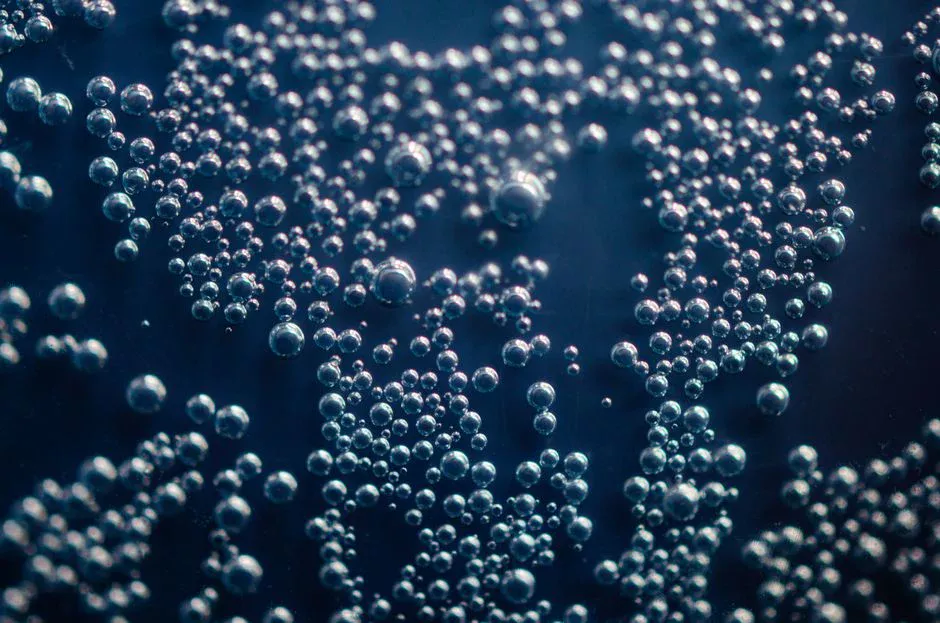
DAF systems consistently outperform lamella clarifiers in capturing the hydrophobic and low-density contaminants typical of polymer facilities. For TSS removal, the DAF for plastics/rubber wastewater (4–300 m³/h) achieves 92–97% efficiency, whereas lamella clarifiers often struggle with colloidal latex, hitting only 70–85% at loading rates of 20–40 m/h (HydropureWater spec). DAF micro-bubbles (20–50 μm) provide superior attachment to microplastic fragments, yielding an estimated 85–92% capture rate (source: Frehland 2020), compared to less than 40% in standard clarifiers. DAF captures >95% of FOG by skimming, while clarifiers typically achieve only 60–75% (source: WesTech 2026-08), frequently resulting in violations of the 100 mg/L WPCA limit. Chemical usage for DAF generally ranges from 20–50 mg/L of polymer and coagulant, compared to 30–60 mg/L for clarifiers, which require higher dosages to force the settling of stable polymer colloids.
| Contaminant Fraction | DAF Removal Efficiency | Clarifier Removal Efficiency |
|---|---|---|
| TSS (Colloidal) | 92–97% | 70–85% |
| FOG / Oil & Grease | >95% | 60–75% |
| Microplastics (1–100 μm) | 85–92% | <40% |
| Polymer Additives | High (via skimming) | Low (requires polishing) |
Sizing & Footprint for New London Industrial Parcels
Industrial sites in New London County often face space constraints, requiring compact equipment footprints that comply with 15-ft setbacks. For a typical injection molding facility with 50 m³/h flow, a DAF-50 system requires a 3.2 × 6.5 m footprint with a 3.5 m height, whereas a comparable lamella clarifier for high-flow secondary polishing requires 4.0 × 8.0 m. DAF systems are particularly effective at handling batch discharges from rubber compounding, which often exhibit 2–4× peak flow factors, by adjusting the recycle ratio to manage hydraulic surges. Clarifiers require a dedicated equalization tank, adding approximately $30,000 in additional capital costs. For phased expansions, mobile DAF units—typically 47–51 ft in length—provide a flexible, trailer-mounted solution for temporary or pilot-scale treatment requirements (source: WesTech 2026-08).
CAPEX/OPEX Model: 50 m³/h Facility 5-Year Cost Comparison
The total cost of ownership for a 50 m³/h system depends on the integration of sludge handling and polishing requirements. A DAF installation typically costs $180,000–$220,000, while a clarifier system costs $140,000–$170,000. The operational efficiency of DAF often offsets this initial delta. DAF produces a float with 3–5% solids, which can be fed directly to a plate and frame filter press, whereas clarifier sludge at 1–2% solids requires an additional $40,000 thickener. Because DAF effectively removes hydrophobic polymer additives, it avoids the $15,000–$25,000 cost of a downstream activated carbon polisher. While annual chemical costs for DAF are estimated at $18,000–$25,000 compared to $12,000–$18,000 for clarifiers, the total 5-year expenditure remains competitive when factoring in avoided auxiliary equipment.
| Cost Component | DAF (50 m³/h) | Clarifier (50 m³/h) |
|---|---|---|
| Installed CAPEX | $180K–$220K | $140K–$170K |
| Annual Chemicals | $18K–$25K | $12K–$18K |
| Maintenance (5-yr) | $40K | $25K |
| Avoided Ancillary Costs | $40K–$65K (Thickener/Carbon) | $0 |
| Total 5-Year OPEX+CAPEX | $310K–$385K | $245K–$305K |
Decision Matrix: Match Your Production Profile to the Right Technology
Selecting the appropriate technology requires aligning the facility’s specific production profile with the inherent capabilities of DAF versus sedimentation. A pretreatment compliance strategy for polymer/chemical facilities should prioritize DAF when FOG exceeds 150 mg/L or when microplastic removal is a regulatory focus. If the facility operates at flows consistently above 200 m³/h with low FOG and high settleable solids, a clarifier is the more economical choice. Many Connecticut facilities utilize a hybrid approach, employing a DAF unit for primary FOG and microplastic removal, followed by a clarifier for secondary polishing. Before finalizing a capital investment, a 30-day mobile DAF trial—which can be deployed in under 24 hours (source: WesTech 2026-08)—validates chemical dosing and performance on actual site wastewater.
| Scenario | Recommended Technology |
|---|---|
| FOG > 150 mg/L | DAF |
| Microplastic Removal Required | DAF |
| Flow > 200 m³/h (Continuous) | Clarifier |
| Batch Surges > 2× Average | DAF |
| Latex Colloids > 200 mg/L | DAF |
Frequently Asked Questions
Does CT DEEP require microplastic removal for plastics factories?
While specific numerical limits for microplastics are evolving, emerging 2024 guidance recommends monitoring. DAF systems are the most effective primary treatment, capturing 1–100 μm fragments that typically pass through conventional clarifiers.
Can a clarifier handle latex wastewater without chemicals?
No. Latex colloids (0.1–10 μm) carry a negative charge and require 50–100 mg/L of coagulant to settle in a clarifier. DAF achieves superior removal at lower chemical dosages (20–35 mg/L) by utilizing micro-bubbles to float the particles.
What is the typical DAF footprint for a 50 m³/h injection molding plant?
A standard DAF-50 unit requires approximately 3.2 × 6.5 m of floor space and has a height of 3.5 m, allowing it to fit into most industrial building bays in New London County without extensive site modifications.
Is mobile DAF viable for pilot testing in New London?
Yes. Mobile DAF units can be deployed within one day to provide a 30-day trial. This is a cost-effective way to perform jar testing and validate chemical optimization before committing to permanent infrastructure.
How does polymer additive removal differ between DAF and clarifier?
DAF systems physically skim hydrophobic polymer additives along with the FOG fraction. Clarifiers do not effectively capture these light-phase additives, often necessitating an additional $15,000–$25,000 investment in activated carbon polishing to remain compliant.