Granite Falls mining plants keep asking the same 2026 question
For Granite Falls mining and metals factories in 2026, the right pick is rarely either-or: choose a lamella or circular clarifier for high-density siliceous grit, coarse sediment, and cold washwater with low oil (90% solids removal at lower cost, per 2026 vendor benchmarks), and choose Dissolved Air Flotation only when the stream carries emulsified oils, ultrafine fines under 13 µm, or AMD loads that demand faster hydraulic turnover. Most Granite Falls plants land on a clarifier-first train, with DAF staged upstream only for FOG, oil, or acid-rock drainage spikes.
The 2026 reality in this part of the Catawba basin is a Granite Falls sand-and-gravel or light-metals wash stream that runs 3,000–15,000 mg/L TSS, low FOG, intermittent AMD when sulfide-bearing rock is present, and cold winter washwater — not a food-plant effluent where DAF's 95% FOG advantage is decisive. Yet suppliers keep leading with the food-plant pitch, and engineers end up with the wrong skid and a 2–3× CapEx miss. The non-negotiable boundary condition is 40 CFR Part 440 effluent limitations for the ore mining and dressing point source category, plus NC NPDES stormwater and pretreatment permit conditions; every DAF-vs-clarifier decision has to clear those limits first, and the rest of the comparison is second. A practical frame for the same compliance logic across the broader Southeastern mining corridor is laid out in this 40 CFR 440 pretreatment compliance guide.
How a DAF system actually treats mining wastewater
DAF dissolves air into a side-stream of clarified water under pressure, then releases that stream into the main flow at atmospheric pressure. The pressure drop nucleates a swarm of 30–100 µm microbubbles (Rodrigues & Rubio, 2007, International Journal of Mineral Processing) that attach to suspended particles, oil droplets, and chemical precipitates, lifting them to the surface where a scraper removes the float as sludge. The clarified underflow exits the bottom of the vessel.
Documented strengths make DAF attractive in the right niche. Rodrigues & Rubio (2007) report capacities of 100–20,000 m³/h, a smaller footprint than equivalent settling, thicker sludge, rapid start-up, and reliable operation across sanitary, chemical, and food applications. In the mining field the same review documents four concrete use cases: AMD neutralization, mining-vehicle washwater reuse (CVRD Brazil, 2003), tailings water clarification, and capture of fine/ultrafine particles under 13 µm where coarse-bubble flotation fails. Vendor data on comparable DAF skids in the 3–120 m³/h band shows operating weights of 5,000–130,000 kg depending on model, illustrating the physical plant a Dissolved Air Flotation (DAF) system brings to site. The documented limits are equally real: DAF carries higher upfront and operational cost than a clarifier, requires an air compressor, saturation tank, recycle pump, and pressure-rated piping, and is sensitive to wild swings in influent TSS, FOG, or pH. On a coarse, high-TSS Granite Falls wash stream with no oil, that capital buys you little.
How a clarifier actually treats mining wastewater
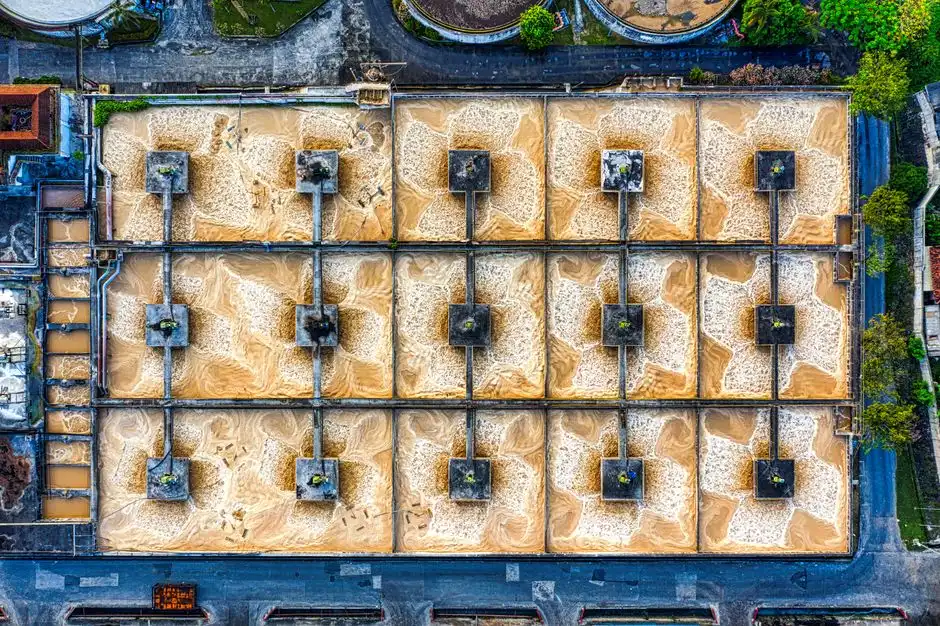
A clarifier is a gravity device. Heavier particles settle to the bottom under quiescent or lamella-assisted flow, sludge is scraped or pumped from the cone or hopper, and clarified overflow leaves over a peripheral weir or launder. Coagulant and flocculant are usually dosed upstream — a PLC-controlled chemical dosing skid is the typical pairing — to grow settleable flocs from the suspended load.
On a Granite Falls influent dominated by siliceous grit, sand, granite fines, coarse metal hydroxide flocs, and tailings-thickener overflow, a properly sized high-efficiency lamella clarifier hits the documented 90% solids removal benchmark reported in the 2026 vendor mining case (Ecologix, 2026) at materially lower CapEx and OpEx than DAF. Strengths: low mechanical complexity, tolerance of cold washwater, tolerance of high solids loadings when surface overflow rate is set correctly, and no need for compressed-air service. Limits: only ~70% removal of emulsified oil and FOG, weak performance on ultrafine clays under 13 µm, and dependence on adequate flocculation when dissolved organics are low. For most Granite Falls aggregate and stone plants, the limit that matters is the FOG number, not the fines number.
DAF vs clarifier for Granite Falls mining and metals: 7-criterion comparison
The head-to-head below is tuned to a 50–200 m³/h Granite Falls washwater or process stream. Anchor numbers come from the 2026 selection guide (Ecologix, 2026): 95% FOG removal on a DAF vs 70% on a clarifier for the same oily stream, 90% solids reduction in a mining clarifier at lower cost, and the documented higher upfront and operational cost of DAF.
| Criterion | Clarifier | DAF | Granite Falls verdict |
|---|---|---|---|
| Separation mechanism | Gravity settling, sludge scraped from bottom | 30–100 µm microbubbles float particles/oil to surface (Rodrigues & Rubio, 2007) | Match mechanism to dominant particle density and size |
| Target contaminant | Coarse siliceous grit, metal-hydroxide flocs, settleable TSS | Emulsified oil, FOG, ultrafines <13 µm, AMD precipitates | Clarifier for grit; DAF for oil and ultrafines |
| FOG removal | ~70% (Ecologix, 2026) | ~95% (Ecologix, 2026) | DAF wins only above ~50 mg/L FOG |
| High-TSS tolerance (3,000–15,000 mg/L) | Strong when properly sized; 90% removal in mining case (Ecologix, 2026) | Sensitive to TSS swings; recycle ratio must be re-tuned | Clarifier has the edge on raw wash streams |
| Hydraulic footprint | Larger plan area, especially circular units | Smaller footprint; capacities 100–20,000 m³/h (Rodrigues & Rubio, 2007) | DAF only if footprint is the binding constraint |
| CapEx | Lower; tank, drive, pump, dosing skid | Higher; air compressor, saturation tank, recycle pump, scraper (Ecologix, 2026) | Clarifier wins on coarse, low-FOG streams |
| OpEx and energy | Lower; mainly pumping and polymer | Higher; compressed air + recycle pumping (Ecologix, 2026) | Clarifier wins unless oil or ultrafines drive DAF |
Default for Granite Falls operators: clarifier first, DAF staged only on a sidestream that carries oil, FOG, or AMD-driven ultrafines. The two technologies pair cleanly as a Dissolved Air Flotation (DAF) system ahead of a high-efficiency lamella clarifier.
When Granite Falls operators should actually pick a clarifier
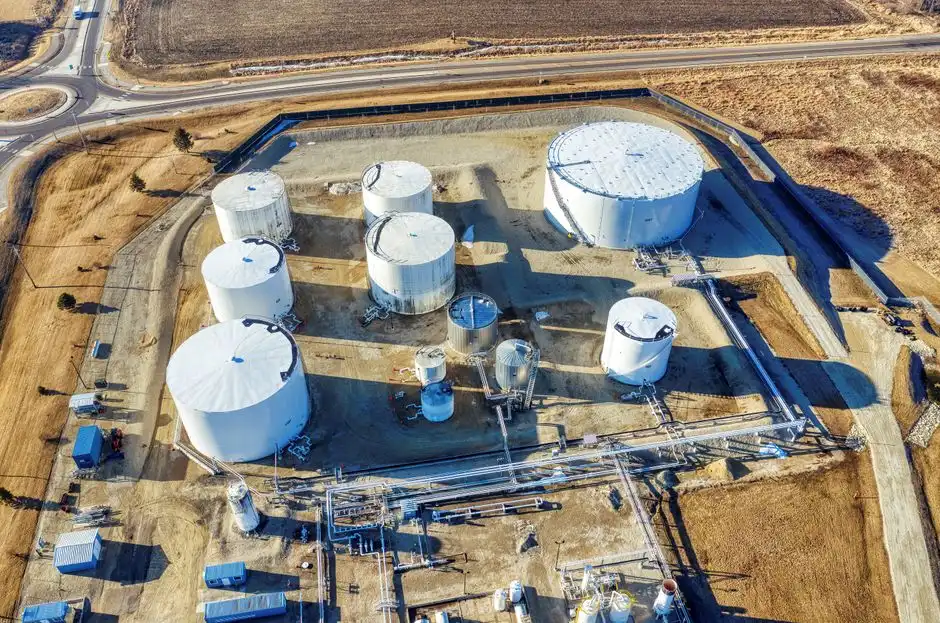
Pick a clarifier when the stream is dominated by heavy, fast-settling solids and the FOG load does not justify DAF. That covers most Granite Falls sand-and-gravel washwater, granite cutting and sawing slurry, ore-dressing wash, and tailings-thickener overflow. Specifically: influent TSS in the 3,000–15,000 mg/L band, mostly coarse siliceous or metal-hydroxide flocs, FOG and emulsified oil below ~50 mg/L, and ambient water cold enough to make compressed-air service a winter headache.
The 2026 vendor mining case (Ecologix, 2026) is the documented reference: a heavy-sediment mining facility selected a clarifier and cut solids by 90% at lower total cost than a DAF skid would have delivered on the same stream. For NPDES or 40 CFR 440 TSS limits, gravity settling is usually enough on this kind of influent, and the 70% FOG figure is not the binding constraint when the inlet oil is already low. The right plant-side additions are a properly sized flocculation stage and a high-efficiency lamella clarifier with adequate surface area and a scraper matched to the underflow solids.
When Granite Falls operators should actually pick a DAF
Pick DAF when the stream carries emulsified oil, FOG, or ultrafine particles that a clarifier cannot reach. Four Granite Falls-realistic cases:
- Oily washwater. FOG above ~50 mg/L pushes the DAF-vs-clarifier economics over the line because the documented removal jumps from ~70% on a clarifier to ~95% on a DAF for the same stream (Ecologix, 2026).
- Ultrafines and AMD. When sulfide-bearing rock generates metal-laden AMD with sub-13 µm precipitates, the 30–100 µm microbubble band reported by Rodrigues & Rubio (2007) is built for that particle size — gravity settling is too slow on its own.
- Mining-vehicle washwater reuse. High-rate, small-footprint, rapid start-up operation; the Brazilian CVRD case (Rodrigues & Rubio, 2007) is the documented reference for water reuse in vehicle-wash service.
- Polishing step in a hybrid train. DAF ahead of a clarifier when both FOG and high TSS are present (Ecologix, 2026 Q&A). The DAF strips the floatable load; the clarifier handles the settleable solids.
For Granite Falls plants sizing a DAF in the 3–120 m³/h range, comparable vendor skids in this flow band run 1,500–10,000 kg dry weight, so the equipment package is well-characterized. The honest framing is: a Dissolved Air Flotation (DAF) system is a niche, high-value tool, not a default.
2026 cost reality for Granite Falls factories
Clarifiers generally have lower operational costs; DAF systems have higher upfront and operational costs (Ecologix, 2026). The gap is not abstract — it comes from the air compressor, saturation system, recycle pump, and pressure-rated piping that a DAF skid needs and a clarifier does not. For a typical 50–200 m³/h Granite Falls wash stream, a properly sized clarifier avoids the full DAF skid package while still meeting 40 CFR 440 TSS targets when flocculation chemistry is set correctly.
Where a DAF skid does enter the picture, the equipment envelope is concrete: comparable vendor models in the 3–120 m³/h band run 1,500–10,000 kg dry weight, with operating weights of 5,000–130,000 kg depending on size (vendor data, 2025). Granite Falls plants should cross-check projected OpEx against the actual 95% vs 70% removal benefit before signing — the DAF premium only amortizes on oily, ultrafine, or AMD-loaded streams. On a coarse, low-FOG wash stream, that premium is a sunk cost. For polymer-driven performance either way, the same PLC-controlled chemical dosing skid architecture feeds both a Dissolved Air Flotation (DAF) system and a high-efficiency lamella clarifier, so the chemistry line item is comparable; the differentiator is the separation hardware.
Granite Falls 2026 selection checklist
Run this four-step sequence before committing CapEx. Each step turns the article's data into a yes/no decision.
- Pull 90 days of influent data. TSS, FOG, pH, and flow. Flag AMD spikes (low pH, elevated Fe/Al, sulfates) and ultrafine-clay events. Without this baseline, the matrix above is guesswork.
- Map the stream to the matrix. If FOG <50 mg/L and solids are coarse, default to a clarifier. If FOG >50 mg/L, fines <13 µm, or AMD is routine, stage a DAF — alone or ahead of a clarifier.
- Confirm 40 CFR 440 effluent limits and NC NPDES stormwater permit conditions. Pre-size both clarifier and DAF trains against the same TSS ceiling so the comparison is apples-to-apples. Permit risk dominates equipment preference.
- Pilot before purchase. Run jar tests for the clarifier train (coagulant/polymer dose, settleability, sludge density) and cylinder DAF tests for oily or ultrafine streams (A/S ratio, float quality, recycle ratio). Document removal, sludge density, and recycle-water quality before signing. The same logic is applied in the 40 CFR 440 pretreatment compliance guide for adjacent Granite Falls facilities.
Frequently Asked Questions
Can a DAF and a clarifier be used together?
Yes. Hybrid trains are often the right answer on Granite Falls streams that carry both oil/FOG and high settleable solids. The DAF strips the floatable load first; the clarifier downstream handles the settleable grit. The 2026 selection guide explicitly lists hybrid systems as a valid configuration for complex wastewater (Ecologix, 2026), and the decision matrix above shows the criterion splits that justify each unit.
Which is more cost-effective for Granite Falls mining?
Clarifiers generally have lower operational costs, and DAF systems have higher upfront and operational costs (Ecologix, 2026). On a coarse, low-FOG Granite Falls wash stream the documented mining case reached 90% solids reduction at lower cost with a clarifier (Ecologix, 2026). DAF becomes the cost-effective answer only when FOG is above ~50 mg/L, when fines are under 13 µm, or when AMD neutralization demands fast hydraulic turnover.
What removal rate can I expect for FOG and TSS?
On a comparable oily stream, a DAF delivers ~95% FOG removal versus ~70% on a clarifier (Ecologix, 2026). On a heavy-sediment mining stream, a clarifier reached 90% solids reduction at lower cost (Ecologix, 2026). The right metric depends on the dominant contaminant: oil favors DAF, settleable grit favors a clarifier, and the two are complementary in a hybrid train.
How does DAF perform on ultrafine or AMD-loaded mining streams?
DAF generates 30–100 µm microbubbles that attach to fine and ultrafine particles below 13 µm, the size range where coarse-bubble flotation and gravity settling both struggle (Rodrigues & Rubio, 2007). The same review documents AMD neutralization and mining-vehicle washwater reuse as real DAF applications, which is why DAF earns a place on Granite Falls streams where sulfide-bearing rock produces sub-13 µm metal precipitates.
What regulations apply to Granite Falls mines in 2026?
The primary federal frame is 40 CFR Part 440, the effluent limitations guidelines for the ore mining and dressing point source category, with subparts relevant to the specific operation (sand-and-gravel, granite, iron/steel, metal finishing). North Carolina adds NPDES stormwater and pretreatment permit conditions on top. The 2026 selection guide and the 40 CFR 440 pretreatment compliance guide both treat these limits as the non-negotiable boundary condition that any DAF-vs-clarifier decision has to clear first.