Why Petroleum Wastewater Is a Different Problem From Food or Municipal FOG
Petroleum wastewater carries three oil fractions that behave nothing like restaurant FOG. Free oil separates by gravity in 2-4 minutes and is the only fraction an API gravity separator or a lamella plate settler will capture reliably. Emulsified oil — droplets in the 1-20 µm range stabilized by surfactants, shear from pumps, or fine solids — stays suspended indefinitely without chemical demulsification or bubble attachment. Dissolved or soluble hydrocarbons, sheen-formers below about 5 mg/L, do not respond to either gravity or flotation and require biological polishing or activated carbon downstream (source: API Publication 421, 2024 update reflected in 40 CFR Part 419 refinery effluent guidelines).
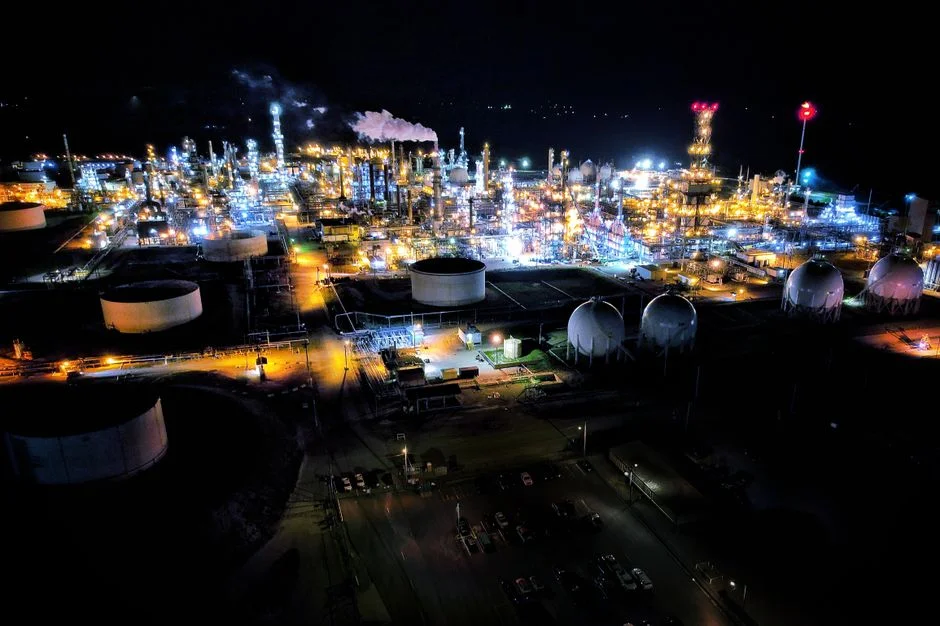
Edgewater facilities see all three at once: refinery and terminal process water, tank-farm draw-off and rainfall runoff, bilge and ballast from barge operations on the Hudson, lube-oil blending washwater, and stormwater contact water around aboveground storage tanks. The mix is rarely steady. A slug of emulsified oil from a process sump can pass straight through a clarifier and overwhelm a downstream oil-water coalescer, which is why the workhorse in oil refineries, petrochemical plants, and natural-gas processing is dissolved gas flotation, not gravity settling (source: en.wikipedia.org, S1). The procurement question is therefore not "oil removal in general" but "which fraction dominates this influent" — and the answer in 2026 for most Edgewater sites is "more than one, on the same day."
How a DAF (and DGF) Actually Removes Oil
A DAF unit saturates a recycle stream of clarified effluent with gas in a pressure vessel (the air drum), then drops that stream through a pressure-reduction valve at the head of the float tank. The pressure drop releases 30-50 µm microbubbles that nucleate on oil droplets and suspended solids, lowering their effective density until buoyancy lifts them to the surface, where a paddle or spiral skimmer removes the float blanket (source: clearwaterind.com, S4; en.wikipedia.org, S1). Coagulants such as ferric chloride or aluminum sulfate and a flocculant polymer are dosed ahead of the float tank to coagulate colloids and grow floc particles that the bubbles can attach to (source: S1). A matched automatic chemical dosing skid is the conditioning stage that determines whether the DAF actually performs to spec or just churns clarified water.
For petroleum service the flotation gas cannot be compressed air. DAF units used in the oil industry are renamed dissolved gas flotation (DGF) and run on nitrogen to eliminate the explosion risk from hydrocarbon vapor stripping into the saturator (source: S1). The hydraulic behavior is identical: circular DAF cells need about 3 minutes of residence time, rectangular cells 20-30 minutes, and lamella-pack designs such as the FPBC series reduce flow velocity inside the float tank to lift low-buoyancy particles (source: S1, S4). For Edgewater plants in Class I Division 1 zones around fuel transfer, specifying DGF-with-nitrogen rather than air-DAF is not a performance decision — it is a fire-code decision driven by NFPA 497 area classification.
How a Gravity or Lamella Clarifier Removes Oil
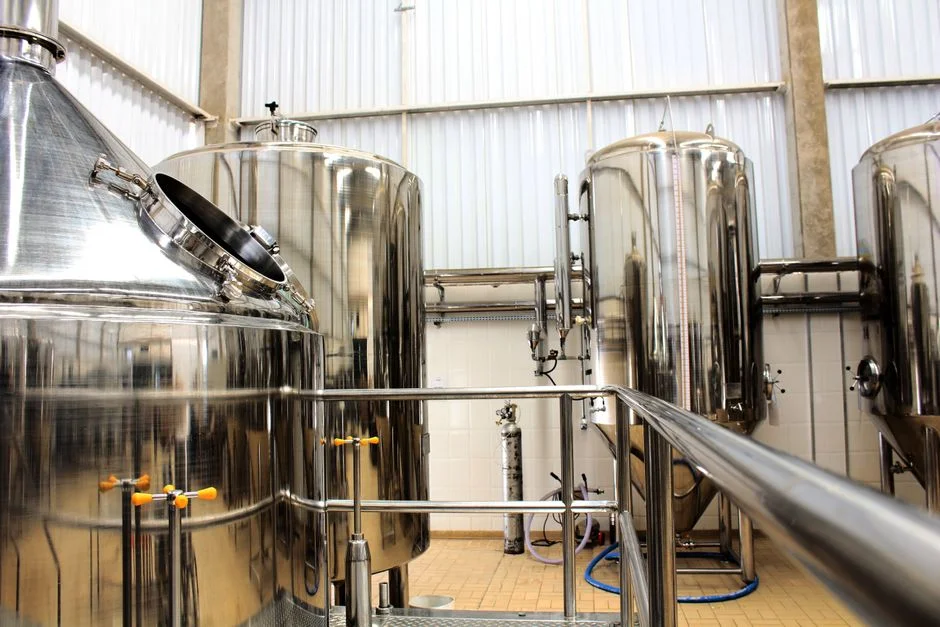
A conventional API oil-water separator is a long, shallow rectangular basin sized for 2-4 hours of residence at a horizontal velocity below about 1 m/min. Only free oil rises in that geometry; emulsified oil carries through, and any slug of surfactant-stabilized emulsion will pass the full length of the basin without separating. Skimmed oil goes to a slop tank and recovered water flows to secondary treatment. A lamella clarifier — an inclined-plate settler — is the footprint-reduction upgrade: parallel plates at 55-60° steepen the effective settling path, raising surface loading to 20-40 m³/m²·h and cutting chemical demand by up to 30% versus a conventional clarifier (source: hydropurewater.com P10, 2026 catalog). Settled sludge drops to a cone and is pumped to a plate-and-frame filter press, so the clarifier choice also fixes the downstream sludge dewatering scope.
The lamella clarifier handles free oil and TSS efficiently and tolerates high flow swings, but it does not break a stable emulsion. For Edgewater influent that draws from a process sump, a tank-farm draw-off with pump shear, or a lube-oil blender's wash pad, a clarifier is at best a pre-stage. Pairing a lamella clarifier ahead of a DGF unit is a common configuration in petroleum service — the clarifier protects the DGF from hydraulic and TSS slugs while the DGF finishes the emulsified fraction.
Side-by-Side: DAF vs. Lamella Clarifier for Petroleum Service
The table below compares the two primary units on the parameters an Edgewater plant engineer or procurement lead will defend in a spec review. All values are drawn from operating envelopes, not vendor marketing.
| Parameter | DGF (Nitrogen DAF) | Lamella / Gravity Clarifier |
|---|---|---|
| Primary removal target | Free + emulsified oil, TSS, FOG | Free oil, TSS only |
| Typical oil & grease removal | 80-95% in one stage (HydropureWater field data, 2026) | 40-60% (free oil only) |
| Residence time | 3 min (circular) or 20-30 min (rectangular, per S1) | 2-4 h (API); 20-40 m/h surface loading (lamella) |
| Microbubble / mechanism | 30-50 µm N₂ bubbles nucleate on droplets (S4) | Gravity only; plates steepen settling path |
| Footprint per m³/h | Compact; DAF line covers 4-300 m³/h (S6) | Lamella ~5-10× more compact than conventional |
| Chemical demand | Coagulant + flocculant typical (S1) | Polymer only, up to 30% lower dose (lamella) |
| Energy | Saturator pump + N₂ supply | Minimal; only sludge pump |
| Explosion-risk handling | DGF with nitrogen required for petroleum (S1) | Not applicable; no gas contact |
| Sludge / float form | Thick float blanket, ~3-5% DS | Bottom sludge, ~1-2% DS |
| CAPEX tendency | Higher (saturator, N₂ skid, controls) | Lower civil cost, larger footprint |
| OPEX tendency | N₂ supply, polymer, pump kWh | Polymer, sludge haul-off |
The headline row is "explosion-risk handling." Air-fed DAF is non-compliant for petroleum service; the engineering decision is DGF-versus-clarifier, not DAF-versus-clarifier (source: S1). Once that is settled, the rest of the table reduces to a footprint-versus-chemistry trade.
Edgewater-Specific Constraints in 2026
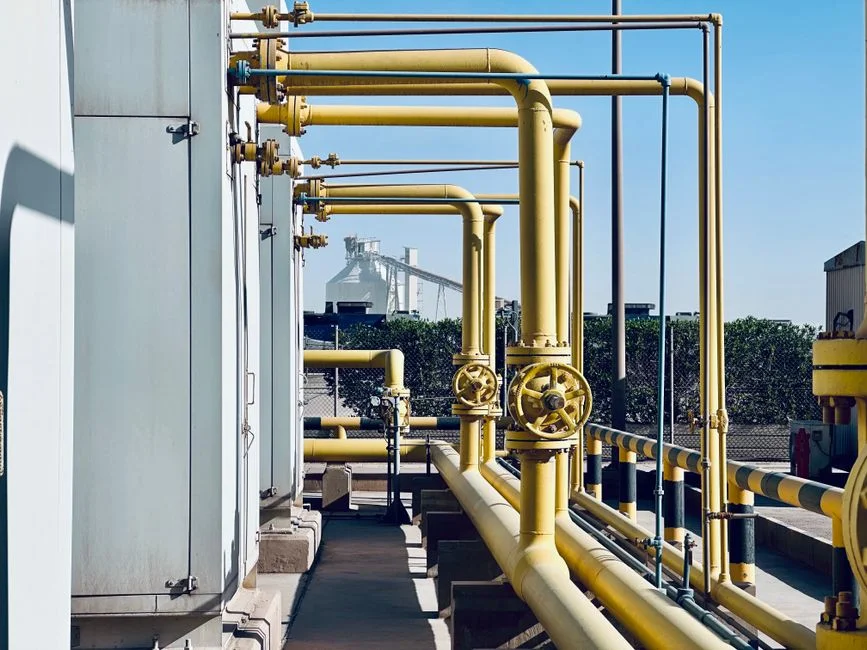
Edgewater's mixed light-industrial and Hudson waterfront zoning compresses available lot size to a fraction of what a Texas or Louisiana refinery would expect. Small lots push the choice toward compact, high-rate equipment, which favors DGF or a lamella clarifier over a long API basin. Sites handling gasoline, fuel oil, or volatile crudes around bulk-storage tanks fall under Class I Division 1 area classification per NFPA 497, which forces nitrogen as the flotation gas rather than air (source: S1, NFPA 497 2024 edition).
The discharge frame a procurement lead already knows: NJDEP petroleum bulk-storage and surface-water rules, the Hudson County Utilities Authority (HCUA) sewer-use ordinance for any flow to the trunk sewer, NJPDES industrial stormwater general permit for contact water around tank farms, and 40 CFR Part 419 petroleum refining effluent guidelines as the federal ceiling. HCUA pretreatment in 2026 still expects oil & grease below roughly 100-200 mg/L on a daily basis (verify against current HCUA limits before sign-off); a DGF hits this in one stage, while a clarifier typically does not, pushing the operator into a polishing stage such as a coalescer or an MBBR. The parallel stormwater driver means contact water from tank-farm pads and refueling islands needs the same primary separation train, often inside the same footprint.
Decision Framework: Which Unit Should an Edgewater Factory Specify in 2026?
Use the matrix below as an if-then rule on a specific influent and lot.
| If your Edgewater site has… | Then specify… | Why |
|---|---|---|
| Emulsified oil in the influent, flow 4-300 m³/h, small lot, Class I Div 1 zoning | DAF DGF (nitrogen DAF) with auto dosing skid and plate-and-frame press | Bubble attachment breaks emulsions air cannot; N₂ satisfies fire code; single-stage meets HCUA oil & grease in ~100-200 mg/L envelope |
| Mostly free oil, API upstream already in place, flow above 300 m³/h, chemical use must stay minimal | Lamella clarifier (P10) | 20-40 m/h surface loading is ~5-10× more compact than conventional; polymer dose up to 30% lower |
| Variable flow with batch peaks carrying emulsions, operator wants surge protection | Lamella clarifier → DGF train | Clarifier buffers TSS and free-oil slugs; DGF finishes emulsified fraction to discharge spec |
| Stormwater contact water only, no process emulsions | Lamella clarifier + coalescer polishing | Lowest CAPEX; meets NJPDES contact-water oil & grease without nitrogen skid |
Across all four paths, the same two peripherals are non-negotiable: chemical conditioning ahead of the separator and sludge dewatering downstream. The choice of clarifier or DGF fixes the surrounding scope, not just the unit itself.
2026 Sizing and Cost Reference for Edgewater Plants
Size the comparison by footprint per unit flow. A lamella clarifier at 20-40 m³/m²·h occupies roughly 5-10× less plan area than a conventional API clarifier running at about 1 m³/m²·h — a decisive difference on a Hudson waterfront lot where civil excavation is expensive and zoning setbacks are tight. A DAF system covers 4-300 m³/h across 13 standard models with cross-flow or lamella-pack internals (source: hydropurewater.com, S6), so most Edgewater plants fit inside a single skid or a small two-skid arrangement.
For DGF service, add the nitrogen skid: nitrogen supply (cylinder manifold, PSA, or liquid N₂ depending on duty cycle), nitrogen-saturated saturator, and a vented enclosure to keep the area inert. This raises both CAPEX and OPEX versus an air-fed DAF but is unavoidable in a Class I Div 1 zone. The four OPEX axes any 2026 budget must carry for petroleum primary treatment are polymer dose, saturator pump energy, nitrogen supply, and sludge haul-off. A jar test on actual Edgewater influent remains the cheapest sizing step before any vendor quotation — coagulant and flocculant selection shift floc density, which shifts rise rate, which shifts the float-tank size and the air-to-solids ratio. A peer-reviewed DAF system sizing and cost guide for 2026 walks through the same envelope in more detail; for a cross-jurisdictional comparison the Ashland 2026 petroleum DAF-vs-clarifier guide and the 2026 Fort Wright petroleum wastewater DAF-vs-clarifier guide cover similar plants in different regulatory frames.
Frequently Asked Questions
Should an Edgewater petroleum plant choose DAF or a clarifier in 2026?
Choose DGF (nitrogen DAF) when emulsified oil is present, the lot is small, and the site is Class I Div 1 around fuel handling; choose a lamella clarifier when influent is mostly free oil, flows exceed about 300 m³/h, and chemical use must stay minimal (source: S1, S6). Mixed streams usually need a clarifier-then-DGF train.
Why does the oil industry use nitrogen instead of air in DAF units?
Compressed air strips hydrocarbon vapor into the saturator and float tank, creating an explosive atmosphere; DGF units replace air with nitrogen so the gas blanket is inert, satisfying NFPA 497 area classification around fuel transfer (source: S1).
Can a lamella clarifier remove emulsified oil on its own?
No. Inclined plates steepen the settling path for free oil and TSS but do not break a stable emulsion; droplet size, surfactant stabilization, and residence time all work against gravity. A DGF stage is required to finish emulsified oil to HCUA discharge limits.
What handles the float or sludge from a petroleum DAF or clarifier?
The float blanket from a DGF or the bottom sludge from a clarifier is pumped to a plate-and-frame filter press for dewatering to roughly 25-30% dry solids before disposal, which is the standard downstream step in petroleum primary treatment (source: S1).
What 2026 regulatory driver most forces a DGF choice in Edgewater?
The combined pressure of NJDEP petroleum bulk-storage rules, the HCUA sewer-use ordinance oil & grease limit of roughly 100-200 mg/L for discharge to the trunk sewer, and NFPA 497 Class I Div 1 zoning around fuel transfer pushes operators toward a single-stage DGF over a clarifier-plus-polisher train (source: 40 CFR Part 419, 2024 update).