What Counts as Domestic Sewage in the Leeds Regulatory Frame
Domestic sewage in the Leeds regulatory frame is foul-only flow from toilets, bathrooms, kitchens, and laundry — and that single distinction drives the entire consent pathway. Yorkshire Water applies the same definition on its wastewater services page: combined systems take rainwater plus foul water, separate systems split them, and combined catchments in older Leeds districts inherit much higher storm loads that must be attenuated before they reach biological treatment (per Yorkshire Water, 2025).
The Water Framework Directive's "good ecological status" target is now driving the Environment Agency to write tighter ammonia and phosphorus limits into Leeds-area discharge consents, and Yorkshire Water's own network is being upgraded to the same standard. The utility runs around 20,000 miles of sewer and 631 WwTWs across the region, and any private discharge is policed against the same envelope as the utility's own works (per Yorkshire Water, 2025). In practice that means a small developer or facilities manager who plans to discharge to a Yorkshire Water foul sewer needs a Section 106A trade effluent consent, while anyone discharging directly to a watercourse needs an Environment Agency environmental permit — and in the Aire and Calder catchments, the EA is increasingly unwilling to grant a direct discharge unless the effluent matches the consent limits Yorkshire Water's own works are now hitting.
Leeds Domestic Sewage Characteristics You Must Design For
UK domestic sewage carries roughly 42 mg Cu, 24 mg Zn, 1 mg Pb, 0.7 mg Ni, 0.5 mg Cr and 0.1 mg Cd per person per day (Comber and Gunn 1996, cited in Springer 2023). These numbers matter because over 70% of those metals partition into sludge during conventional treatment, so primary design choices directly drive downstream sludge volume and disposal cost. Conventional primary settling removes 50–70% of suspended solids before biological stages even begin, and that is also where the majority of metal loading is captured.
Typical UK domestic sewage runs 250–400 mg/L BOD, 250–450 mg/L COD, 50–100 mg/L TSS, 20–40 mg/L ammoniacal nitrogen, and 5–15 mg/L total phosphorus — and Leeds sites with hotels, hospitals, or food service will push FOG and ammonia well above these bands. Add at least a 20% safety factor on both hydraulic and organic load before sizing a packaged plant, or biological capacity will be the first thing that fails when the site hits real operating conditions.
| Parameter | Typical UK domestic range | Design implication |
|---|---|---|
| BOD | 250–400 mg/L | Defines aeration tank volume in A/O and SBR |
| COD | 250–450 mg/L | Check BOD:COD ratio stays above 0.5 for biological treatability |
| TSS | 50–100 mg/L | Drives primary tank sizing and sludge yield |
| Ammoniacal nitrogen | 20–40 mg/L | Sets nitrification stage HRT and oxygen demand |
| Total phosphorus | 5–15 mg/L | Triggers chemical precipitation stage if consent ≤2 mg/L |
| Per-capita metals (Cu / Zn / Pb) | 42 / 24 / 1 mg/p/d | Over 70% partitions to sludge; specify licensed disposal route |
2026 Effluent Quality Targets in the Leeds Catchment
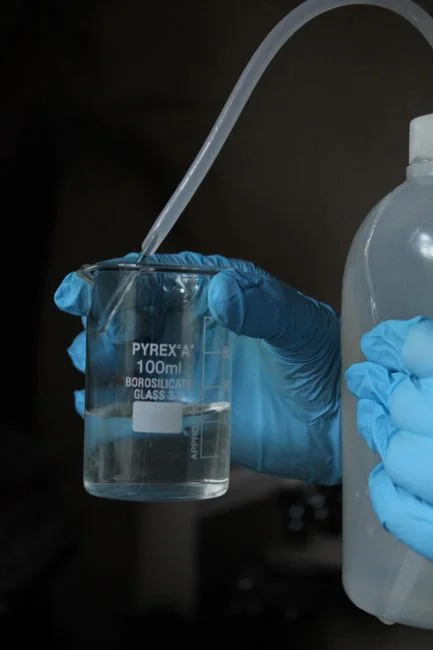
For discharge to a Yorkshire Water foul sewer, expect a Trade Effluent Consent with BOD typically capped around 200–300 mg/L, ammoniacal nitrogen 20–35 mg/L, and a pH band of 6–10 — exact limits come from the receiving WwTW's available headroom and the strength of the receiving sewer. Yorkshire Water is moving these numbers down, not up, because its own discharges are being tightened to match the Water Framework Directive.
For direct discharge to a watercourse, the Environment Agency applies consent limits near BOD ≤20 mg/L, ammoniacal nitrogen ≤5–10 mg/L, TSS ≤30 mg/L, and total phosphorus ≤1–2 mg/L, consistent with WFD "good ecological status" targets. The trajectory is visible in Yorkshire Water's own works: a £7.7m investment at Aldwarke WwTW cut ammonia discharged to the River Don from 10 mg/L to 3 mg/L (per Yorkshire Water, 2025) — that is where regional utilities are heading, and private discharges in the Aire and Calder catchment will be expected to match. UV disinfection is standard for any coastal or bathing-water discharge in Yorkshire, and chlorine dioxide or ozone is used where dechlorination is impractical.
| Discharge route | BOD | Ammoniacal N | TSS | Total P | Regulator |
|---|---|---|---|---|---|
| Yorkshire Water foul sewer (Section 106A) | 200–300 mg/L | 20–35 mg/L | 200–350 mg/L | Typically not set | Yorkshire Water |
| Direct to watercourse (EA consent) | ≤20 mg/L | ≤5–10 mg/L | ≤30 mg/L | ≤1–2 mg/L | Environment Agency |
| Coastal / bathing water (EA consent) | ≤20 mg/L | ≤10 mg/L | ≤30 mg/L | ≤1–2 mg/L | Environment Agency + UV |
Comparing the Four Practical Process Options for Leeds Sites
For a 1–500 m³/day domestic flow in Leeds, four process options cover almost every realistic brief — and the choice is driven by load variability, footprint, reuse intent, and operator availability, not by vendor preference. An underground A/O package sewage plant covers 1–80 m³/h, is fully buried with no operator needed, and delivers effluent typically BOD ≤20 mg/L and NH₃-N ≤15 mg/L — the lowest CAPEX route for residential and small commercial sites. A containerised MBR system with submerged PVDF membranes covers 10–2,000 m³/day at sub-1 µm filtration, sits on roughly 60% of the footprint of conventional activated sludge, and produces near-reuse quality — the right answer when water reuse or a tight consent applies.
Sequencing batch reactors (SBR, often the CASS variant) handle variable loads from schools or hotels well because the equalisation buffer smooths peak flows and strengths, but they need more controls and a larger site footprint. Rotating Biological Contactors are low-energy and tolerant of intermittent use, but they need a much larger footprint and are falling out of favour on new Leeds builds — most specifiers now reach for A/O or MBR unless the site is genuinely seasonal.
| Process | Flow band | Typical effluent BOD | Footprint | Best fit |
|---|---|---|---|---|
| WSZ A/O (buried package) | 1–80 m³/h | ≤20 mg/L | Smallest (buried) | Residential, small commercial, no operator |
| MBR (submerged PVDF) | 10–2,000 m³/day | ≤5 mg/L (near-reuse) | ~60% of ASP | Tight consent, reuse, water-sensitive sites |
| SBR / CASS (batch) | 50–500 m³/day | ≤20 mg/L | Larger equalisation buffer | Variable loads (schools, hotels) |
| RBC | 5–200 m³/day | ≤25 mg/L | Largest | Intermittent / seasonal sites; legacy |
Consent and Permit Pathway for a Leeds Domestic Plant
If you are discharging to a foul sewer, apply to Yorkshire Water for a Section 106A consent and pay a one-off connection charge plus an annual trade effluent tariff scaled on load and flow. Yorkshire Water's public sewer maps are viewable at its head office — Ellington House, 9 Savannah Way, Leeds Valley Park, LS10 1AB — and any adoption or easement question on a build near a WwTW starts there (per Yorkshire Water, 2025).
If you are discharging to surface water or ground, you need an Environment Agency environmental permit — either a standard rules permit (for very small, low-risk discharges under 5 m³/day) or a bespoke permit. Lead time is typically 8–16 weeks and the application fee sits in the low thousands of pounds. Have a sampling and monitoring plan ready before you submit: both the EA and Yorkshire Water will expect flow and quality data on request, and your consent will set the sampling frequency in writing. A useful cross-reference is the effluent treatment plant in London 2026 guide, which walks the same permit logic in a different catchment and reinforces the same sequence.
2026 Cost Bands and Whole-Life Economics
Packaged A/O plants in the 1–50 m³/day band sit at £25,000–£90,000 installed, with OPEX £0.15–£0.40 per m³ treated, dominated by power and sludge haulage — and that is the band an underground A/O package sewage plant typically lands in for a Leeds residential or small commercial site. Containerised MBR systems in the 10–200 m³/day band run £80,000–£350,000 with OPEX of £0.35–£0.70 per m³, partly offset by reuse potential for toilet flushing or irrigation — see a typical containerised MBR system for the envelope. Civil-built SBRs at 200–500 m³/day scale to £250,000–£900,000 CAPEX and £0.20–£0.45 per m³ OPEX, cheaper per m³ at scale but requiring operator hours.
Sludge disposal adds £30–£80 per wet tonne to landfill or to agricultural recycling routes governed by the Sludge (Use in Agriculture) Regulations, and that line item is what most CAPEX tables forget. If the brief is reuse-driven, factor in the avoided potable water cost when defending MBR OPEX to a board; the numbers typically close at any site above 50 m³/day where reuse displaces metered supply.
| Process option | Flow band | CAPEX (installed) | OPEX (£/m³) | Operator hours |
|---|---|---|---|---|
| Packaged A/O (WSZ) | 1–50 m³/day | £25,000–£90,000 | 0.15–0.40 | None |
| Containerised MBR | 10–200 m³/day | £80,000–£350,000 | 0.35–0.70 | Minimal |
| Civil-built SBR | 200–500 m³/day | £250,000–£900,000 | 0.20–0.45 | Several h/week |
| Sludge disposal (all options) | — | — | +£30–£80/wet tonne | — |
Sludge Handling, Monitoring, and Routine Operation
Yorkshire Water recycles a large share of its biosolids as soil enhancer, topsoil substitute, and even house bricks, and private operators can use the same routes via licensed hauliers under the Sludge (Use in Agriculture) Regulations (per Yorkshire Water, 2025). Specify on-site sludge storage of at least 7 days' production to ride out bank holiday collection windows, and add a plate and frame filter press if site area is tight — a lamella clarification upstream of the press typically reduces sludge volume by 20–30%, and a high-efficiency sedimentation tank delivers that thickening step. For broader context on biosolids routes and treatment trains, the municipal sewage sludge treatment 2026 guide is a useful cross-reference.
Routine monitoring for a domestic plant should include weekly BOD, ammoniacal nitrogen, TSS, and pH, plus flow-proportional composite sampling held on file as the consent record. Membrane-fouling control on MBRs is the single biggest OPEX lever — the MBR membrane fouling prevention strategies article covers the seven operational practices that keep cleaning cycles down and membrane life up.
Buyer's Checklist Before Specifying a Leeds Domestic Plant
Confirm the discharge route and obtain a Yorkshire Water connection quote or an Environment Agency permit reference before sizing anything — sizing to a consent that does not exist is the most common reason a packaged plant fails its first inspection. Match process to load profile: steady residential points to an A/O package, variable hotel or school loads to SBR or MBR, and any reuse target to MBR with a UV disinfection unit on the polish stage.
Demand a factory-tested PLC panel with a clear alarm hierarchy, automatic backwash on any membranes, and 2-year spares inclusion in the supply contract — and an automatic chemical dosing system for any site with a phosphorus consent. Plan for Yorkshire Water's Blueprint growth, which projects 855,000 extra people in the region over 25 years (per Yorkshire Water, 2025), by leaving at least 20% hydraulic capacity in the design. The same logic applies across other UK catchments — for comparison, the domestic sewage treatment in Birmingham 2026 guide uses an identical 20% headroom rule.
Frequently Asked Questions
What consent do I need to discharge treated domestic sewage to a Yorkshire Water sewer in Leeds?
You need a Section 106A trade effluent consent from Yorkshire Water. Expect BOD capped at 200–300 mg/L and ammoniacal nitrogen at 20–35 mg/L, with a pH band of 6–10; final limits depend on the receiving WwTW's available headroom (per Yorkshire Water, 2025).
How much does a packaged domestic sewage treatment plant cost in Leeds in 2026?
Packaged A/O plants in the 1–50 m³/day band run £25,000–£90,000 installed, containerised MBRs in the 10–200 m³/day band run £80,000–£350,000, and civil-built SBRs at 200–500 m³/day run £250,000–£900,000, with OPEX of £0.15–£0.70 per m³ depending on process.
Which is better for a Leeds hotel, an MBR or an SBR?
An MBR is the right answer if you need reuse-quality effluent or have a tight footprint, and it cuts site area by around 60% versus conventional activated sludge. An SBR is cheaper per m³ at scale and handles variable occupancy well, but it needs a larger equalisation buffer and more operator hours.
Do I need an Environment Agency permit for a small packaged plant?
You need an EA environmental permit for any direct discharge to surface water or ground, including a standard rules permit for sites under 5 m³/day. Discharge to a Yorkshire Water foul sewer only requires a Section 106A consent, not an EA permit.
What effluent BOD and ammonia limits apply to discharges in the Aire and Calder catchment?
Direct discharges in the Aire and Calder are being written to BOD ≤20 mg/L and ammoniacal nitrogen ≤5–10 mg/L, consistent with the Water Framework Directive's "good ecological status" target and aligned with Yorkshire Water's own consent trajectory at sites like Aldwarke (per Yorkshire Water, 2025).