
Why London effluent treatment is a dual-regulator problem in 2026
An effluent treatment plant in London in 2026 must satisfy two parallel regulators — the Environment Agency under the Environmental Permitting (England and Wales) Regulations 2016, and Thames Water under a separate trade effluent consent — before discharge to sewer is legal. Most London industrial sites now select a packaged MBR or DAF-plus-UF train, achieving COD below 250 mg/L and TSS below 30 mg/L to clear consent limits and enable water-reuse opportunities.
The split originates in statute: the Environment Agency administers permits under the Environmental Permitting (England and Wales) Regulations 2016 for discharges to surface water or groundwater, while Thames Water — as the sewerage undertaker appointed under the Water Industry Act 1991 — issues trade effluent consents for any discharge to a public sewer. A site in Greater London that holds an Environment Agency permit but discharges to sewer without a Thames Water trade effluent consent is operating illegally; the reverse is equally true. The two regimes have different application forms, different fee structures, and different enforcement officers.
Since 2021 the EU Water Framework Directive (2000/60/EC) has continued to drive tightening of UK consent limits, and academic work on direct nanofiltration of WWTP effluent (University of Twente, Schrader 2024) confirms that membrane polishing can meet WFD reuse targets. For 2026 applications, Thames Water now requires MCERTS-aligned self-monitoring with continuous flow-proportional sampling, not a single compliance grab. Plant engineers building or recertifying a London ETP in 2026 should plan for both regulators from day one of the design — a sequential application almost always costs more time and money than a parallel one.
Typical London industrial influent profiles and consent targets
London's industrial estate mix — food and beverage around Park Royal and Borough, pharma and cosmetics in Wembley and Croydon, metal finishing in Hackney and Hounslow, light manufacturing across the Lea Valley — produces four distinct influent envelopes. Knowing which band your site falls in dictates the process train and the consent target.
| Sector | Influent COD (mg/L) | Key parameters | Thames Water sewer consent ceiling (2026) |
|---|---|---|---|
| Food & beverage | 1,500–8,000 | FOG 200–1,500 mg/L; TSS 500–3,000 mg/L; TKN 50–200 mg/L | COD ≤ 1,000 mg/L; TSS ≤ 400 mg/L; pH 6–10; FOG ≤ 200 mg/L |
| Pharma & cosmetics | 2,000–10,000 | Variable BOD; solvent spikes; occasional high salinity | COD ≤ 1,000 mg/L; TSS ≤ 400 mg/L; pH 6–10; solvent restrictions per case |
| Metal finishing | 200–2,000 | Heavy metals (Ni, Cr, Cu, Zn); pH swings 1–12; cyanide-bearing | Per-metal limits (Ni ≤ 1 mg/L; Cr ≤ 1 mg/L; Cu ≤ 2 mg/L); pH 6–10 |
| Light manufacturing | 500–3,000 | TSS 200–1,000 mg/L; low FOG; occasional surfactants | COD ≤ 1,000 mg/L; TSS ≤ 400 mg/L; pH 6–10; temperature ≤ 38 °C |
For sites targeting direct discharge to a surface watercourse rather than sewer, the Environment Agency permit band is materially tighter — typically BOD ≤ 20 mg/L, TSS ≤ 30 mg/L, and ammoniacal nitrogen ≤ 5 mg/L — which is why most London ETPs route to sewer instead. Wageningen research (Lei, Wageningen University thesis 8189) demonstrates that constructed-wetland and UF polishing can consistently reach those reuse-quality envelopes from a secondary biological stage, provided hydraulic and organic loads are stable.
Process train options for a London effluent treatment plant
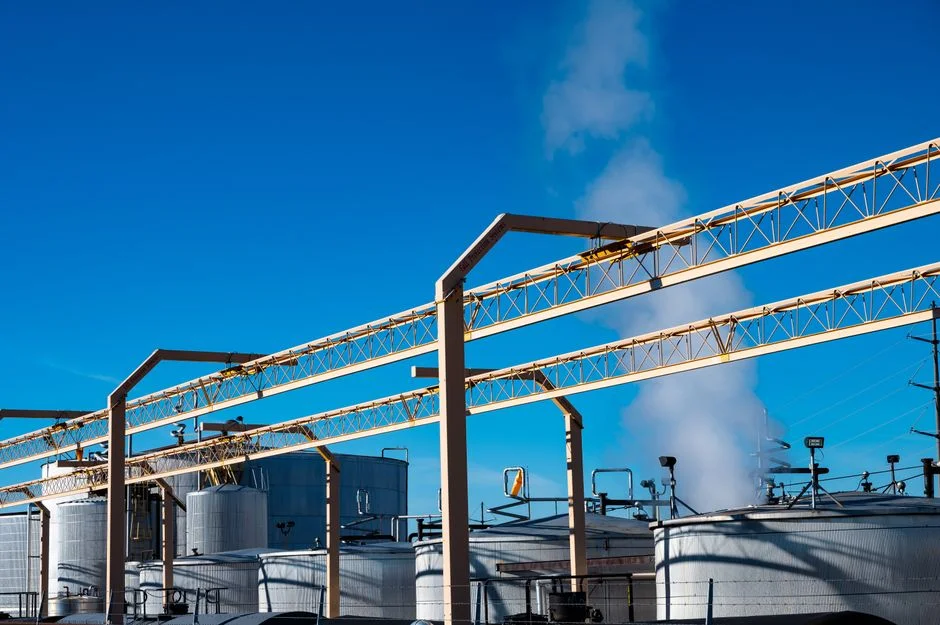
Four trains dominate the 2026 London shortlist. The choice comes down to influent type, footprint, and whether the buyer wants reuse-quality water or simply consent compliance.
| Process train | Best-fit sector | Footprint (relative) | Typical effluent | Operator skill |
|---|---|---|---|---|
| DAF + activated sludge | Food & beverage (FOG-heavy) | Large | COD 300–500 mg/L; TSS 50–100 mg/L | Moderate |
| Physico-chemical DAF + sand filter | Metal finishing; short-chain chemistry | Compact | COD 200–400 mg/L; metals within consent | Low–moderate |
| Submerged MBR (PVDF) | Space-constrained sites; pharma; reuse | ~60% smaller than CAS | COD < 50 mg/L; TSS < 1 mg/L (sub-1 μm filtration) | Moderate–high |
| MBR + UF/NF polishing | Reuse / direct discharge | Compact | Reuse-grade; matches WFD effluent quality | High |
DAF alone removes 92–97% of TSS and FOG in food-sector trials, sharply cutting downstream biological and membrane loading. For a typical London best-fit — a packaged train that handles FOG, organics, and reuse on a constrained site — the working sequence is: a rotary mechanical bar screen for solids removal, equalisation for hydraulic buffering, an industrial DAF system for FOG and TSS reduction, a submerged MBR membrane bioreactor for organics and suspended solids, and a pipeline UV steriliser for disinfection before reuse or discharge. Sludge is handled separately on a filter press. Academic work on direct nanofiltration confirms that membrane polishing is the route to consistently hit WFD reuse standards from a WWTP secondary effluent.
Equipment sizing and London site constraints
London SMEs typically fall into three hydraulic bands: 5–25 m³/day for a single food line or microbrewery, 25–100 m³/day for a pharma or cosmetics batch plant, and 100–500 m³/day for an industrial-estate shared CETP. Hydraulic peak-to-average ratios of 2.5–3× are normal in London catchments because of shift wash-downs and batch discharges, so equalisation volume should be sized at 0.5–1.0× daily flow.
Site constraints shape the equipment choice as much as the influent does. Most London plots are tight, basement-loaded, or sandwiched between residential properties and a TfL red route. Containerised or skid-mounted packaged ETPs dominate because they can be craned into a service yard in a single TfL-managed lift and commissioned off-site. The underground WSZ A/O package handles 1–80 m³/h with no dedicated operator and is suited to basements where headroom and noise are constrained, while an underground integrated sewage treatment envelope keeps the visual profile flat. An automatic chemical dosing system with bunded storage handles pH correction and coagulant feed without manual handling.
Planning constraints to price in early: the GLA's noise and odour guidance typically requires ETP enclosures to hold noise below 35 dB(A) at 1 m from the nearest residential receptor; basement flood-risk rules under EA standing advice push you toward pumped-sumps and dual-contained tanks; and TfL construction-logistics plans add 4–8 weeks to any civils programme. The pragmatic answer is to spec a packaged train with acoustic enclosure, integrated dosing, and a small footprint — then negotiate planning as an equipment-replacement notice rather than a full new-build application.
2026 CAPEX, OPEX and consent cost envelope for London
Budget envelopes below are typical-engineering estimates for packaged industrial ETPs in Greater London, drawing on equipment-supplier and installer data; site-specific quotes vary with civils, consents, and flow variability. Treat the figures as a defensible pre-procurement range rather than a fixed bid.
| Design flow | Indicative CAPEX (2026 GBP, packaged) | Indicative OPEX (per m³ treated) | Largest OPEX line |
|---|---|---|---|
| 10 m³/day | £90,000–£160,000 | £2.50–£4.50 | Power (aeration) + sludge haulage |
| 25 m³/day | £180,000–£320,000 | £1.80–£3.20 | Power (MBR aeration) |
| 50 m³/day | £320,000–£550,000 | £1.20–£2.40 | Power + membrane CIP chemicals |
| 100 m³/day | £550,000–£950,000 | £0.90–£1.80 | Power + sludge haulage |
OPEX drivers in priority order: power (MBR aeration is the single largest line for biological trains, typically 0.8–1.4 kWh/m³), chemical dosing for pH correction and coagulant, membrane replacement every 5–8 years, and sludge haulage. An automatic plate and frame filter press cuts sludge volume by 75–85% before haul-off, and pre-treating with a DAF to remove 92–97% of TSS and FOG (per the DAF catalogue data) directly reduces membrane cleaning frequency and chemical use downstream — see the DAF unit engineering guide for the cost arithmetic. Buyers routinely forget the consent and compliance lines: Thames Water trade effluent consent application fees, Environment Agency permit application fees, MCERTS-certified sampler hire (typically £350–£600/month for a flow-proportional unit), and operator training. None of these are large individually, but together they add 6–10% to the five-year cost of ownership. The conductivity sensor pricing guide is a useful benchmark for the MCERTS instrumentation budget.
Procurement and supplier evaluation framework for a London ETP
A six-step framework reduces the buyer-side risk of paying for a process train that fails consent.
- Characterisation study. Two weeks of composite sampling across all shift patterns; COD, BOD, TSS, FOG, pH, temperature, and any sector-specific parameters (metals, solvents, salinity). No supplier quote is meaningful without this.
- Consent pre-application meeting with Thames Water. Free, and gives you a written indication of consent ceilings before you commit to a process train. The Environment Agency pre-application advice is similarly free under the 2016 Regulations.
- Pilot or bench test. For novel wastewaters (high-strength pharma, variable metal streams), insist on a 4–6 week bench or pilot trial with the proposed equipment. Membrane-based systems especially need piloting — see the AAO process retrofit guide for retrofit-specific piloting expectations.
- RFQ with a fixed performance guarantee. Tender on a guaranteed effluent quality (e.g. COD ≤ 250 mg/L, TSS ≤ 30 mg/L) with liquidated damages for non-compliance. Avoid suppliers that quote on flow alone.
- Factory Acceptance Test (FAT). Witness the skidded train on the factory floor before shipment. The standard contractual position from UK ETP service providers includes a 24-hour rapid-response service contract post-handover, with 12-month cover as the norm.
- Reference site check. Visit at least one operating site under an active Environment Agency permit. Suppliers without a working reference under permit are a red flag.
Supplier scorecard — weight each line: MCERTS accreditation of their instrumentation partner; in-house process engineering (not just equipment resale); Thames Water consent track record over the last 36 months; post-installation service radius (London-based engineers within 2 hours); and willingness to put a performance bond behind the guarantee. Two red flags that consistently appear in failed London ETP projects: a price quoted without a characterisation report, and a supplier that cannot name a single reference site under an active permit.
Frequently Asked Questions
How much does an effluent treatment plant cost in London in 2026?
A packaged industrial ETP in Greater London in 2026 typically costs £90,000–£160,000 for a 10 m³/day train and £550,000–£950,000 for a 100 m³/day train, including equipment, installation, and commissioning. Site-specific civils, Thames Water consent fees, and Environment Agency permit fees can add 15–25% to the total project cost.
Do I need a Thames Water trade effluent consent if I already have an Environment Agency permit?
Yes. The Environment Agency permit covers direct discharges to surface water or groundwater under the Environmental Permitting (England and Wales) Regulations 2016, while a Thames Water trade effluent consent is a separate legal requirement under the Water Industry Act 1991 for any discharge to public sewer. Holding one does not exempt you from the other, and a 2026 application must include MCERTS-aligned self-monitoring.
What is the typical Thames Water consent limit for COD and TSS in 2026?
Thames Water's standard 2026 trade effluent consent ceilings for discharge to sewer are COD ≤ 1,000 mg/L, TSS ≤ 400 mg/L, pH 6–10, and temperature ≤ 38 °C, with sector-specific metal limits (Ni ≤ 1 mg/L, Cr ≤ 1 mg/L, Cu ≤ 2 mg/L) for metal-finishing sites. A packaged MBR train typically delivers COD < 50 mg/L and TSS < 1 mg/L, comfortably below these ceilings.
Can a packaged effluent treatment plant be installed in a London basement?
Yes. Underground integrated A/O packages handle 1–80 m³/h with no dedicated operator, are designed for basement deployment, and avoid the visual and acoustic impact of surface installations. Installation still requires compliance with EA flood-risk standing advice and the GLA's noise and odour guidance for nearby residential receptors.