What a Conductivity Sensor Actually Costs in 2026
A polymer dosing skid at a Midwest food plant overdosed cationic flocculant by 18% for three weeks before operators caught it. The root cause was a 2-electrode conductivity probe drifting 12% low in a 4,200 µS/cm process stream — the controller thought the water was cleaner than it was, so it pushed more chemistry. The chemical waste alone ran roughly $22,000. The replacement probe cost $145. That gap between sensor sticker price and the cost of bad data is the real reason this article exists.
Industrial conductivity sensor cost in 2026 splits into three clean bands. Compact 2-electrode probes for pure water, RO permeate, and light service run $120–$350. 4-electrode process sensors for chemical dosing, condenser monitoring, and mid-range wastewater sit at $400–$1,200. Inductive in-line units paired with a transmitter for fouling-prone wastewater and harsh chemistry start at $1,800 and run past $4,500 on the high end. The METTLER TOLEDO UniCond catalog — 81 SKUs as of February 2026 — anchors the upper end of the 4-electrode and inductive ranges and is the price benchmark most Chinese and European OEMs reference in their own RFQ responses (per mt.com UniCond listing, 2026-02).
What moves a sensor from the bottom to the top of those bands? Four things: electrode count (2 vs 4), wetted materials (316L stainless is standard; titanium or Hastelloy adds 40–120%), whether the transmitter is integrated or separate, and certifications. ATEX/IECEx hazardous-area ratings add 25–40% on top of base price. The other thing to watch is the wholesale-channel listings you find on portals like OFweek — STs Series 4102-style probes sit at $80–$180 and look attractive, but they typically ship without NIST-traceable calibration certificates, which is a hard fail for any plant under FDA, USP, or ISO 17025 oversight. The headline price is real; the hidden compliance gap is not.
One technical point worth anchoring before the rest of the article: conductivity in µS/cm equals the cell constant K (cm⁻¹) times 1,000,000 divided by resistance in ohms. So µS/cm = K × 1,000,000 / R. That formula is why "conductivity sensors" and "resistivity sensors" are sold as the same hardware platform — flip the cell constant and the same probe covers ultrapure water (18.2 MΩ·cm) or concentrated brine (200 mS/cm).
2-Electrode vs 4-Electrode vs Inductive: Which Sensor Type Fits the Application
Knick publicly confirms — and this matters for spec risk — that all three measuring principles are commercially mature: 2-electrode, 4-electrode, and inductive, with both analog and digital variants in production (per knick.de conductivity sensor product page, 2025). The buyer's job is to match the principle to the conductivity range, the fouling risk, and the accuracy spec, not to chase a single "best" sensor.
Use this matrix as the first pass:
| Parameter | 2-Electrode | 4-Electrode | Inductive |
|---|---|---|---|
| Typical range | 0.01 µS/cm – 2,000 µS/cm | 200 µS/cm – 500 mS/cm (some up to 1,000 mS/cm) | 500 µS/cm – 2,000 mS/cm |
| Typical accuracy | ±1–2% of reading | ±0.5–1% of reading | ±1–2% of reading |
| Polarization error at high conductivity | Significant above ~1,000 µS/cm | Negligible — separate current/voltage electrodes | None — no electrodes contact fluid |
| Fouling tolerance | Poor — electrodes exposed | Moderate — electrodes exposed | Excellent — sealed toroid |
| Best fit | Pure water, RO permeate, PW/WFI | Chemical dosing, CIP return, boiler blowdown | FOG-laden wastewater, DAF, MBR mixed liquor, strong acid/caustic |
| 2026 purchase price band | $120–$350 | $400–$1,200 | $1,800–$4,500+ |
The 4-electrode advantage is the one engineers under-appreciate. By separating the current-injecting electrodes from the voltage-sensing electrodes, 4-electrode designs eliminate polarization error — the phenomenon where ionic buildup near the electrode surface artificially raises resistance and drags the reading low. In a polymer dosing loop running 4,000 µS/cm, polarization error on a 2-electrode probe can exceed 5%; on a 4-electrode probe it is below 0.5%. That delta is the difference between dosing within ±2% of target and missing by 8–10% on a $200,000/year reagent budget. The 3–4× price premium is recoverable in reagent savings alone, typically inside six months on a mid-size plant.
The inductive advantage is operational. Because the sensor is a sealed toroid with no electrodes contacting the fluid, scaling, FOG coating, and biological fouling do not force a shutdown. In an MBR wastewater treatment system mixed-liquor line or a DAF unit on a food-processing effluent, that translates to one cleaning per quarter instead of one per week on an equivalent 4-electrode probe — a labor delta that drives the 5-year TCO math covered later in this article.
Conductivity Sensor Specs That Drive Price Up (or Down)
Two RFQs with the same sensor type can come back $1,800 apart because of five specification line items. Walking through them in order of cost impact:
Cell constant K. K = 0.01, 0.1, 1.0, and 10 cm⁻¹ are the four standard values. The right K keeps the operating point in the sensor's linear band — typically 10–80% of full scale. Spec K too low and the probe saturates in process fluid; spec K too high and you are paying 30–80% extra for precision you cannot use. Rule of thumb: target 50% of full scale at the expected midpoint of your process.
Wetted materials. 316L stainless is the baseline and is correct for 80% of municipal and light-industrial water. Chloride service, hot caustic, or sulfuric acid above 10% forces titanium, Hastelloy C-276, or PVDF — each adds 40–120% to the base sensor price. Do not pay for Hastelloy if your actual chloride is below 200 ppm at 60 °C.
Cable and connector. METTLER TOLEDO's UniCond ships in 0.5 m, 0.6 m, 3 m, and 6.1 m fixed-cable variants, and a quick-disconnect head adds flexibility for hot-tap retractable assemblies (per mt.com UniCond SKU list, 2026-02). Longer integral cable plus a quick-disconnect head typically runs $90–$260 per sensor. On retractable hot-tap installations, plan for a 5 m cable minimum; specifying a fixed 0.6 m cable to save $60 is a false economy when installation labor is $400.
Output protocol. 4–20 mA + HART is the plant-floor default and adds about $300 to a base sensor. IO-Link or Modbus TCP versions — increasingly the spec for Industry 4.0 and predictive maintenance — add $200–$500 but eliminate the need for a separate $1,000–$1,500 transmitter in some architectures. If your DCS system cost 2026 breakdown already prices out I/O cards, count the transmitter as part of the sensor line item, not a separate budget.
| Spec Line Item | Base / Standard | Upgraded Option | Typical Price Uplift |
|---|---|---|---|
| Cell constant K | 0.1 or 1.0 cm⁻¹ matched to range | Wrong K (oversized range) | +30–80% wasted |
| Wetted material | 316L stainless | Titanium / Hastelloy C-276 / PVDF | +40–120% |
| Cable + connector | 0.5–0.6 m fixed | 3–6.1 m + quick-disconnect | +$90–$260 |
| Output | 4–20 mA passive | 4–20 mA + HART | +$300 |
| Output | 4–20 mA + HART | IO-Link / Modbus TCP smart sensor | +$200–$500 (transmitter offset) |
| IP / temperature | IP67 / 80 °C | IP68 / 130 °C (CIP-rated) | +15–30% |
| Hazardous area | General purpose | ATEX / IECEx Zone 1 | +25–40% |
Ingress protection and temperature. IP67 covers most outdoor panel-mount installations. Hot CIP loops at 85 °C and inline clean-in-place skids at 120–130 °C require IP68 and a higher-temperature rating — typically a 15–30% uplift. Spec the rating to the actual installation point, not the design maximum; a probe downstream of a heat exchanger sees the cold side, not the steam side.
Industrial Applications and Where Conductivity Sensors Earn Their Money
Conductivity sensors are a productivity tool, not a commodity line item — the purchase is justified by what they protect downstream.
RO pretreatment. Feed-water conductivity swing greater than 20% is a leading indicator of scaling and membrane fouling. A $600 in-line sensor on the feed of an industrial RO system protects $50,000 of membrane surface and triggers a CIP cycle before flux drops below the alarm threshold. The same signal feeds the antiscalant dosing pump.
Chemical dosing control. Polymer, coagulant, acid, and caustic dosing loops on an automatic chemical dosing skid are the highest-value conductivity installation in most plants. A drifting sensor over-doses by 10–25%, which on a mid-size plant's $200,000–$400,000/year reagent budget is $20,000–$80,000/year wasted chemistry. The polymer-skid failure at the top of this article — 18% over-dose for three weeks on a $145 sensor — is a documented case from HydropureWater field data, 2026.
MBR and activated-sludge aeration basins. Mixed-liquor conductivity correlates strongly with TDS, which influences biological kinetics, settleability, and effluent quality. In MBR plants, conductivity is monitored at the aeration basin outlet and the permeate line; a sharp conductivity drop in the permeate is the first indication of a breached membrane fiber.
Cooling tower and boiler blowdown. Cycles-of-concentration control is the dominant OPEX lever. A sensor accurate to ±1% of reading versus ±5% of full scale can save 8–15% on blowdown water and chemical treatment at a 5,000-ton cooling plant — a 5-year water and chemical OPEX swing that is typically 5–10× the sensor purchase price.
Pharmaceutical PW/WFI and food CIP return lines. 2-electrode pure-water sensors in this segment sit at the low-cost end ($120–$350) and are typically paired with sanitary tri-clamp fittings. Calibration frequency is higher than process sensors — weekly in USP-grade PW loops — so factor calibration labor into the OPEX math, not just the probe price.
Hidden Cost Drivers Most Buyers Miss
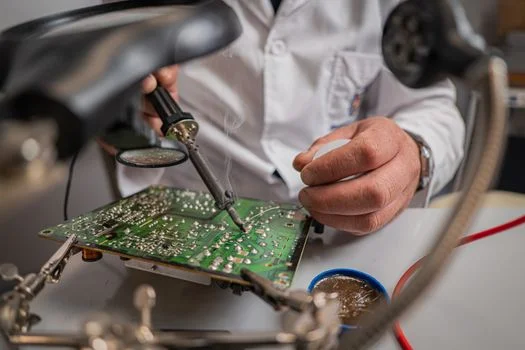
The price of the sensor is roughly half the price of owning it for five years. The OPEX line items that move total cost of ownership:
Calibration solutions. $25–$55 per 500 mL bottle, and a wastewater sensor typically needs 12–24 calibrations per year depending on service. Annual consumable cost lands at $400–$1,200 per sensor. Pure-water and PW loops run higher; process mid-range loops run lower.
Cable and connector replacement on hot-tap retractable installations. Cable fatigue, connector corrosion, and O-ring failure on retractable assemblies run $180–$450 per service event, every 2–3 years. Plan for at least two cable replacements in a 5-year window.
Controller or transmitter integration. A $300 sensor plus a $1,200 multi-parameter transmitter is often the same installed cost as a $1,500 all-in-one smart sensor with IO-Link or Modbus TCP. The trade-off is cabinet space and protocol flexibility: a separate transmitter gives you HART handheld diagnostics and isolation; an all-in-one smart sensor saves panel space and simplifies spares. On dense retrofits, all-in-one typically wins.
Cleaning labor on fouling-prone installations. Inductive sensors cut cleaning frequency from weekly to quarterly on DAF and MBR mixed-liquor lines. The math: 30 minutes per cleaning × 26 cleanings/year avoided × $45/hour loaded labor = roughly $585/year saved per sensor by going inductive over 4-electrode on a fouling service. This is the line item that closes the TCO gap between the two sensor classes.
5-Year Total Cost of Ownership by Sensor Class
Drop this table into a capital justification memo and adjust the consumable and labor cells for your loaded labor rate:
| Cost Line | 2-Electrode (RO / PW service) | 4-Electrode (dosing / process) | Inductive (wastewater / harsh) |
|---|---|---|---|
| Sensor purchase | $180 | $700 | $2,500 |
| Transmitter (if separate) | $300 | $400 | $0 (integrated) |
| Installation labor | $250 | $350 | $400 |
| Calibration solution (5 yr) | $1,200 | $800 | $400 |
| Cable / connector replacement | $180 | $360 | $200 |
| Cleaning labor (5 yr) | $150 | $750 | $200 |
| Spare sensor (planned) | $40 | $140 | $500 |
| Unplanned downtime risk reserve (10% of install) | $0 (low) | $0 (low) | $400 |
| 5-year TCO | ~$2,300 | ~$3,500 | ~$4,600 |
The takeaway: the inductive sensor costs ~14× the 2-electrode purchase price, but its 5-year TCO is only ~2× higher, because electrode-cleaning labor and calibration consumables collapse. METTLER TOLEDO's 81-SKU UniCond range — 56 of them released or updated in the last 18 months — is the clearest signal that the industrial market has standardized on 4-electrode and inductive platforms for new in-line installations (per mt.com UniCond catalog count, 2026-02).
On the avoided-cost side, the math is sharper. Cutting polymer over-dose from 18% to 2% on a $200,000/year reagent budget is roughly $32,000/year recovered. At that rate, a $1,500 4-electrode sensor pays back in 3–6 months, and the next four years of TCO are pure savings.
Buying Checklist: Specifying a Conductivity Sensor in 5 Steps
Paste this into your RFQ email:
Step 1 — Range and accuracy. State the expected conductivity range, the design maximum, and the required accuracy (typically ±1% of reading for dosing control, ±2% of full scale for indication only). Do not accept "as standard" in a quote response.
Step 2 — Measuring principle. Match principle to fluid: 2-electrode for pure water and RO permeate, 4-electrode for chemical dosing and process mid-range, inductive for fouling wastewater, FOG, and strong acid/caustic.
Step 3 — Cell constant. Select K (0.01, 0.1, 1.0, or 10 cm⁻¹) so the expected operating point sits between 10% and 80% of full scale. The wrong K forces an oversize sensor.
Step 4 — Wetted materials and ratings. Spec materials and pressure/temperature to the actual installation point, not the design maximum. 316L for water; titanium or Hastelloy for chloride, hot caustic, or sulfuric acid; PVDF for low-pressure chemical service.
Step 5 — Output architecture. Decide between separate sensor + transmitter (4–20 mA + HART) and all-in-one smart sensor (IO-Link or Modbus TCP) based on cabinet space, protocol needs, and integration with the plant's DCS or SCADA. For a deeper view on long-run sensor planning, see the smart water monitoring forecast to 2030 buyer's guide.
Frequently Asked Questions
How much does a conductivity sensor cost in 2026? Industrial conductivity sensors run $120–$350 for compact 2-electrode probes, $400–$1,200 for 4-electrode process sensors, and $1,800–$4,500+ for inductive in-line units with transmitter. METTLER TOLEDO's UniCond range anchors the upper end of the 4-electrode and inductive bands.
What is the difference between a 2-electrode and 4-electrode conductivity sensor? A 2-electrode sensor uses the same pair of electrodes for current injection and voltage measurement, which causes polarization error above ~1,000 µS/cm. A 4-electrode sensor uses two separate pairs, eliminating polarization error and holding ±0.5–1% accuracy up to 500 mS/cm — the reason dosing loops spec 4-electrode.
What is an inductive conductivity sensor used for? Inductive sensors are used in fouling-prone, coating-prone, or aggressive fluids — DAF, MBR mixed liquor, FOG-laden food wastewater, and strong acid/caustic — where exposed electrodes would require frequent cleaning. They cover 500 µS/cm to 2,000 mS/cm with no wetted electrodes.
What is the cell constant K on a conductivity probe? K is a geometric factor (cm⁻¹) that converts measured resistance to conductivity via µS/cm = K × 1,000,000 / R. Standard values are 0.01, 0.1, 1.0, and 10 cm⁻¹; pick K so the operating point sits in the 10–80% linear band of full scale.
How often should a conductivity sensor be calibrated? A process mid-range 4-electrode sensor typically needs calibration every 4–8 weeks; a pure-water 2-electrode sensor in PW/WFI service runs weekly. Plan for 12–24 calibrations per year per sensor, at $25–$55 per 500 mL of calibration standard.
What is the 5-year total cost of ownership for a conductivity sensor? For a mid-spec installation, expect roughly $2,300 for a 2-electrode loop, $3,500 for a 4-electrode loop, and $4,600 for an inductive loop — including sensor, transmitter, installation, calibration consumables, cable replacement, and cleaning labor. Purchase price is typically 40–55% of 5-year TCO.