What dashboard KPIs should a wastewater plant track?
Twelve core dashboard KPIs cover influent flow (±5% accuracy), COD removal ≥92%, turbidity <1 NTU, specific energy ≤0.47 kWh/m³, sludge solids ≥20% DS, and compliance ≥98%. They also track predictive maintenance, chemical dose, biogas yield, recycle ratio, alarm rate, and cost per m³, typically cutting OPEX 8–15% inside permit limits.
Dashboard KPIs turn SCADA trends into decisions operators and managers can act on the same shift. This guide gives numeric targets, cost-of-deviation formulas, PLC tag names, and the sensors that feed each metric.
Why the right KPIs save €75k a year
One untreated discharge event can trigger large Clean Water Act penalties. Earlier commentary cited a $45,000 median civil penalty figure for Clean Water Act violations in 2024. Under 40 CFR 19.4, the CWA §309(d) judicial civil penalty maximum is $68,445 per day for assessments on or after January 8, 2025 (eCFR / EPA). That statutory ceiling often exceeds the cost of a basic SCADA sensor package by an order of magnitude. A turbidity probe plus integration typically costs €3,000–€5,000, yet it can prevent multi-day non-compliance and resampling work.
Energy waste compounds the same risk. A typical 1 MGD (3,785 m³/day) plant running at 1,800 kWh per million gallons—about 0.47 kWh/m³—can save about €75,000 per year by moving toward 1,000 kWh per million gallons (0.26 kWh/m³) at €0.12/kWh. The arithmetic is ((1800 − 1000) kWh/MG × 3.785 MG/day × 365 days × €0.12/kWh). According to EPA ENERGY STAR DataTrends for Portfolio Manager plants, energy use intensity still spans roughly 3–36 kBtu/GPD at the 5th–95th percentiles, so each site needs its own baseline before chasing a peer target.
What cost savings can treatment KPIs deliver?
Treatment KPI programs typically return 8–15% of annual OPEX when energy, chemicals, sludge hauling, and avoided fines are counted together. Most of that gain comes from aeration trim, polymer control, and cake dryness, not from software alone. Sensor accuracy and alarm discipline decide whether the savings stick after the first year.
Water-quality KPIs that regulators watch first

Effluent water quality is the first screen every inspector opens, so turbidity and pH sit at the top of the dashboard. Effluent turbidity below 1 NTU is a common tertiary target in discharge permits and reuse schemes. Continuous monitoring usually uses a 90° optical nephelometer with a 4–20 mA feed into SCADA. Effluent pH between 6.5 and 8.5 is the usual band; a 5-minute alarm delay cuts false trips from CIP spikes. COD removal efficiency tracks biological performance, with many permits expecting ≥92% removal using (COD_influent − COD_effluent) / COD_influent × 100%.
| KPI | Target | Red-line | Cost of Deviation (per incident) | Sensor/Method | PLC Tag Example |
|---|---|---|---|---|---|
| Turbidity | <1 NTU | >2 NTU (15 min avg) | €500 (fine potential) | Optical Nephelometer (4-20 mA) | AT_TURBIDITY_EFF_NTU |
| pH | 6.5-8.5 | <6.0 or >9.0 (5 min avg) | €750 (re-sample, process upset) | Glass Electrode (4-20 mA) | AT_PH_EFF_VAL |
| COD Removal | ≥92% | <85% (24 hr avg) | €1,500 (permit violation risk) | Online COD Analyzer/Lab Test | AT_COD_REMOVAL_PCT |
| Influent Flow | ±5% accuracy | ±10% deviation from expected | €200 (inaccurate billing/loading) | Ultrasonic/Magnetic Flow Meter | FT_INFLUENT_TOTAL_M3HR |
Energy and cost KPIs managers approve budgets for
Energy often consumes 25–40% of wastewater plant OPEX, so specific energy and cost per cubic meter are the metrics finance teams fund. Specific energy in kWh/m³ lets plants of different sizes compare on one scale. A well-tuned extended aeration train should target ≤0.45 kWh/m³ overall (HydropureWater field data, 2025). Cost per m³ equals (energy + chemical + labour) / m³ treated; a common municipal benchmark sits near €0.08/m³. Aeration efficiency in kg O₂/kWh should trend at ≥1.8 kg O₂/kWh with modern fine-bubble diffusers. A PLC-controlled chemical dosing skid that auto-adjusts coagulant flow keeps the cost-per-m³ KPI from drifting when influent load swings.

| KPI | Target | Red-line | Cost of Deviation (per m³) | Calculation | PLC Tag Example |
|---|---|---|---|---|---|
| Specific Energy | ≤0.45 kWh/m³ | >0.55 kWh/m³ | €0.012/m³ (at €0.12/kWh) | Total Plant kWh / Total Influent m³ | AT_SPEC_ENERGY_KWH_M3 |
| Cost per m³ | ≤€0.08/m³ | >€0.10/m³ | €0.02/m³ (increased OPEX) | (Energy + Chemical + Labour) / m³ | AT_COST_PER_M3_EUR |
| Aeration Efficiency | ≥1.8 kg O₂/kWh | <1.5 kg O₂/kWh | €0.005/m³ (extra energy) | (DO setpoint * Influent Flow) / Blower kWh | AT_AERATION_EFF_KGKWHR |
| Chemical Dosage | 3-5 g/m³ | >6 g/m³ | €0.003/m³ (wasted chemical) | Total Chemical kg / Total Influent m³ | AT_CHEM_DOSAGE_G_M3 |
How do design decisions affect long-term cost savings?
Design decisions on diffuser type, DO setpoints, dewatering hardware, and sensor placement lock in most of the long-term cost savings before the first dashboard screen is built. Choosing fine-bubble aeration and reliable online COD/TSS feeds usually beats later software tweaks. Document those choices with the KPI formula, red-line, and PLC tag so operators inherit the same control intent years later.
Sludge KPIs that cut hauling costs 18%
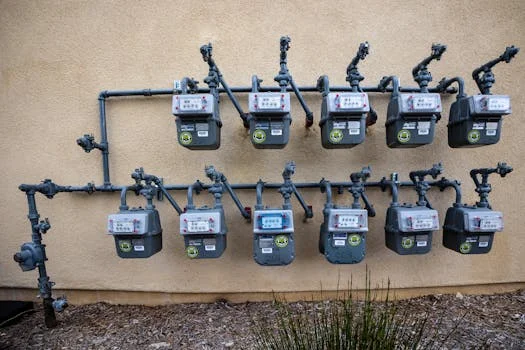
Sludge handling often takes 20–30% of plant OPEX through dewatering and hauling, so cake dryness is a direct cash KPI. Hitting ≥20% dry solids (DS) is a common landfill acceptance target and shrinks truck volumes. A microwave TSS sensor on the press feed line supports real-time polymer and press tuning. For every 1% rise in cake solids from 18% to 20% DS, hauling cost often falls about 10–12% (HydropureWater internal analysis, 2025). Polymer dose of 4–6 g/kg DS is a practical band; overdosing by 2 g/kg DS can add about €0.004/m³. SVI between 80–120 mL/g signals good settleability. A plate-frame filter press proven to hit ≥20% DS sludge KPI and cut hauling costs is one hardware path to those solids targets.
| KPI | Target | Red-line | Cost of Deviation (per m³ sludge) | Sensor/Method | PLC Tag Example |
|---|---|---|---|---|---|
| Sludge Solids | ≥20% DS | <18% DS | €5 (extra hauling per m³ sludge) | Microwave TSS Sensor (press feed) | AT_SLUDGE_CAKE_DS_PCT |
| Polymer Dosage | 4-6 g/kg DS | >8 g/kg DS | €0.004 (wasted polymer per m³ treated) | Flow meter & chemical pump speed | AT_POLYMER_DOSAGE_G_KGDS |
| Sludge Volume Index (SVI) | 80-120 mL/g | >150 mL/g | €0.002 (effluent quality risk, re-treatment) | Lab Test (30-min settleability) | AT_SVI_ML_G |
| Dewatering Throughput | ≥15 m³/hr | <10 m³/hr | €0.001 (increased labor, energy) | Sludge pump flow meter | FT_DEWATERING_THRUPUT_M3HR |
Equipment-health KPIs for predictive maintenance
Equipment-health monitoring can prevent up to 70% of unplanned downtime and avoid outages that last 48 hours or more on critical assets. Vibration RMS velocity in mm/s flags rotating machines; according to ISO 10816-3, Zone A (<2.8 mm/s) is good condition, while Zone B (2.8–7.1 mm/s) warrants inspection. Run-time hours versus OEM service intervals can auto-raise work orders at 90% of the interval. Seal-leak conductivity on submersible pumps, alarmed at +5% above baseline, warns of water ingress. For membrane plants, TMP slope above 0.05 bar/day marks accelerated fouling. An MBR with integrated membrane that reports TMP for predictive KPI keeps that fouling signal on the same screen as flow and turbidity.
PLC tag list and scaling cheat-sheet

Real-time KPI math needs consistent PLC tags and 4–20 mA scaling. Prefixes such as AT_ for analogs, FT_ for flows, and CALC_ for derived values keep SCADA maps readable. A turbidity transmitter scaled 0–100 NTU maps 4 mA to 0 NTU and 20 mA to 100 NTU on a 0–4095 count ADC. COD removal is calculated from influent and effluent tags, with a zero-flow guard to avoid division errors.
| KPI Name | PLC Tag | 4-20 mA Scaling (Range) | Units | Alarm Low (Setpoint) | Alarm High (Setpoint) |
|---|---|---|---|---|---|
| Influent Flow | FT_INFLUENT_TOTAL_M3HR | 0-1000 m³/hr | m³/hr | 100 | 900 |
| COD Removal | AT_COD_REMOVAL_PCT | N/A (Calculated) | % | 85 | N/A |
| Turbidity Effluent | AT_TURBIDITY_EFF_NTU | 0-10 NTU | NTU | N/A | 2.0 |
| Specific Energy | AT_SPEC_ENERGY_KWH_M3 | N/A (Calculated) | kWh/m³ | N/A | 0.55 |
| Sludge Solids | AT_SLUDGE_CAKE_DS_PCT | 0-30% DS | % DS | 18 | N/A |
| Compliance Ratio | CALC_COMPLIANCE_RATIO_PCT | N/A (Calculated) | % | 95 | N/A |
| Predictive Maint. Index | CALC_PRED_MAINT_INDEX | N/A (Calculated) | Index | N/A | 5 |
| Chemical Dosage | AT_CHEM_DOSAGE_G_M3 | N/A (Calculated) | g/m³ | 2 | 6 |
| Biogas Yield | AT_BIOGAS_YIELD_NM3_TCOD | N/A (Calculated) | Nm³/tCOD | 300 | N/A |
| Recycle Ratio | CALC_RECYCLE_RATIO_PCT | N/A (Calculated) | % | 100 | 300 |
| Alarm Frequency | CALC_ALARM_FREQ_HR | N/A (Calculated) | Alarms/1000h | N/A | 10 |
| Cost per m³ | AT_COST_PER_M3_EUR | N/A (Calculated) | €/m³ | N/A | 0.10 |
Example Ladder Logic Rung for COD Removal Calculation:
        IF (AT_COD_INFLUENT_MG_L > 0 AND AT_COD_EFFLUENT_MG_L >= 0)

            CALC_COD_REMOVAL_PCT = ((AT_COD_INFLUENT_MG_L - AT_COD_EFFLUENT_MG_L) / AT_COD_INFLUENT_MG_L) * 100;

        ELSE

            CALC_COD_REMOVAL_PCT = 0; // Handle division by zero or invalid data
Modbus Register Map Example (Conceptual):
Holding Register 40001: FT_INFLUENT_TOTAL_M3HR (Float, Read Only)
Holding Register 40003: AT_COD_REMOVAL_PCT (Float, Read Only)
Holding Register 40005: AT_TURBIDITY_EFF_NTU (Float, Read Only)
... (Each KPI mapped to a unique register address for SCADA integration)
Selection checklist before you build the screen
Plant engineers and EPC teams should confirm these items before locking dashboard KPIs into SCADA:
- Permit limits and averaging periods for turbidity, pH, COD/BOD, and flow
- Online sensors already installed versus lab-only parameters
- Energy meter boundaries (whole plant vs aeration only)
- Sludge cake %DS method and hauling contract basis
- Alarm delays that match CIP and storm-flow behavior
- PLC tag naming and Modbus/OPC map ownership
- Who acknowledges red-line alarms on nights and weekends
Who this is for: operators, process engineers, and procurement leads at municipal or industrial plants that already run SCADA and need cost-linked KPIs. Who should look elsewhere: sites seeking only laboratory SOP templates with no live instrumentation. Next step: map your existing tags to the twelve metrics above, then request a quote if dosing, dewatering, or MBR hardware is the missing piece.
Frequently Asked Questions
What is the typical payback period for a KPI dashboard?
Payback for sensors plus SCADA integration usually falls between 12 and 24 months at municipal and industrial plants. Energy, chemical, and sludge-hauling cuts plus avoided compliance penalties commonly save 8–15% of annual OPEX when red-lines are enforced. Plants that start with turbidity, specific energy, and cake solids usually see the fastest cash return within the first operating year.
How can I keep turbidity and pH sensors accurate?
Sensor accuracy for turbidity and pH holds when you follow the manufacturer calibration interval, often weekly or bi-weekly, with certified standards. Cross-check online readings against laboratory grab samples at least monthly and after major process upsets. Clean probes on a fixed schedule so biofilm or grease fouling does not invent false compliance or nuisance alarms on the dashboard.
What if my plant lacks online sensors for every KPI?
Plants without a full online sensor set should begin with compliance and major cost drivers: specific energy, COD removal, and sludge solids. Use laboratory results for secondary metrics while you phase in analyzers ranked by payback. A staged sensor plan tied to PLC tags beats waiting for a perfect instrument list before any KPI tiles go live.
Can these KPIs integrate with existing SCADA systems?
These KPIs integrate with existing SCADA systems that already poll PLCs and historians. Modern platforms ingest PLC, smart-sensor, and LIMS data over Modbus TCP/IP, OPC UA, or Ethernet/IP without replacing the whole control layer. Calculated tags for removal percent, cost per m³, and compliance ratio then sit beside raw process values on one operator screen.
How do I set realistic targets and red-lines for my plant?
Realistic KPI targets start from permit limits and the benchmarks in this article, then get refined with at least twelve months of plant history. Set improvement targets above that baseline once seasonality is visible in the data. Place red-lines where immediate action is required to avoid permit violations or sharp OPEX spikes, and review them after major process upgrades.