Why Remote Monitoring Is Essential for Modern Wastewater Plants
Remote monitoring wastewater plant systems can cut unplanned downtime by up to 40% and lower OPEX by 25–30% through real‑time IoT sensors that detect overflow, power loss, and aerator failures. Unmonitored lift‑station failures routinely trigger EPA fines exceeding $50,000 per incident (EPA Enforcement Annual Report 2023). In rural and decentralized facilities, 70 % of unplanned downtime stems from delayed alarm detection (Water Environment Federation, 2022). By delivering alerts via SMS, email, and cloud dashboards, remote monitoring reduces mean time to repair (MTTR) from an average of 4 hours to under 30 minutes. Continuous 24/7 visibility also satisfies regulatory mandates such as the EU Urban Waste Water Directive 91/271/EEC and China’s GB 8978‑1996, which require documented, real‑time reporting of key process parameters.
The operational resilience gained through remote monitoring is a critical defense against increasingly common environmental challenges. For instance, during periods of heavy rainfall, plants can experience rapid inflow and infiltration (I&I), leading to potential overflows. Real-time level and flow data allow operators to proactively adjust pumping schedules and divert flows, mitigating these risks. Furthermore, the granular data collected supports long-term capital planning by identifying trends in equipment performance and process efficiency, ensuring that investments are targeted where they will have the greatest impact on reliability and compliance.
How Remote Monitoring Systems Work: Sensors, Connectivity, and Control
A typical remote monitoring architecture relies on a hierarchy of field sensors, edge gateways, and cloud‑based SCADA interfaces. Level sensors—ultrasonic (±1 % accuracy) or radar (±0.5 % accuracy)—provide continuous tank‑level data, while current transducers (4‑20 mA) monitor aerator motor draw and flag a fault within 5 seconds of an abnormal condition. Dissolved‑oxygen, pH, and turbidity probes are wired to PLC analog inputs and can be sampled at 1 Hz for rapid trend analysis.
For data transport, low‑power cellular standards such as LTE‑M and NB‑IoT dominate remote sites because they offer >10 years of battery life and built‑in redundancy. Edge routers support dual‑SIM failover, guaranteeing 99.9 % network uptime. Data is packaged either as MQTT messages (lightweight, publish/subscribe) for cloud platforms or as Modbus TCP frames for on‑premise SCADA servers, depending on the plant’s IT policy.
Beyond the core sensors, additional monitoring points are often integrated to create a comprehensive picture of plant health. Pressure transducers on force mains can detect blockages or leaks before they cause a failure. Vibration sensors on rotating equipment like pumps and blowers provide early warning of bearing wear or misalignment. For water quality, advanced multi-parameter sondes can measure not just pH and dissolved oxygen, but also ORP (Oxidation-Reduction Potential), conductivity, and ammonium, providing a richer dataset for process control and regulatory reporting.
| Component | Typical Specification | Key Benefit | Integration Example |
|---|---|---|---|
| Ultrasonic Level Sensor | ±1 % full‑scale, 0‑10 m range | Non‑contact, suitable for corrosive media | Feeds 4‑20 mA to PLC analog input |
| Radar Level Sensor | ±0.5 % full‑scale, 0‑15 m range | High accuracy, works with foam | Direct Modbus TCP to edge gateway |
| Current Transducer (Aerator) | 0‑20 mA, response <5 s | Detects motor stall or overload instantly | Mapped to PLC digital alarm |
| Edge Gateway (Industrial Router) | Dual‑SIM LTE‑M/NB‑IoT, MQTT & Modbus | 99.9 % network reliability, OTA firmware | Connects to cloud SCADA via MQTT |
| SCADA Cloud Platform | Web‑based dashboard, REST API | Remote visualization, role‑based alerts | Integrates with existing PLC via OPC UA |
Integrated vs. Standalone: Choosing the Right Monitoring Architecture
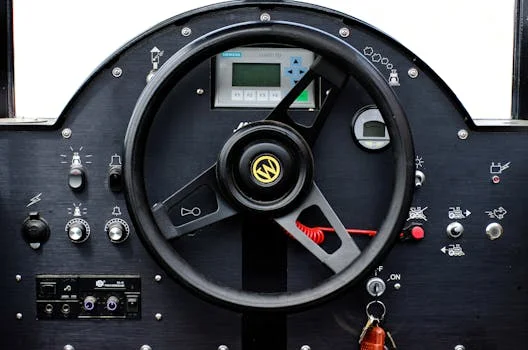
Standalone remote units and equipment‑integrated monitoring platforms differ markedly in cost, scalability, and installation effort. A typical off‑the‑shelf unit such as the Sensaphone 400 retails for $2,500–$5,000 per site and supports up to ten I/O points, but requires custom wiring, separate PLC programming, and a dedicated cloud subscription. In contrast, an MBR system with built‑in PLC and 4G remote monitoring bundles sensor interfaces, edge communication, and auto‑diagnostics, cutting installation time by roughly 60 % and allowing 50+ I/O points without extra hardware.
The decision between these architectures often hinges on the specific application and site requirements. Standalone systems offer a flexible, point-solution approach ideal for monitoring a single, critical asset like a remote lift station. Their modular nature allows for a phased rollout. Conversely, integrated systems are the superior choice for new construction or comprehensive plant-wide upgrades where the goal is a unified, seamless control and monitoring environment from the outset, minimizing long-term integration headaches.
| Attribute | Standalone Unit | Integrated Equipment |
|---|---|---|
| Capital Cost (per site) | $2,500–$5,000 (hardware only) | $8,000–$12,000 (includes PLC, sensors, 4G modem) |
| Installation Time | 3–5 days (wiring, programming) | 1–2 days (plug‑and‑play) |
| Scalability | Maximum 10 I/O points | 50+ I/O points, modular expansion |
| Compatibility | Custom integration required | Native support for Allen‑Bradley, Siemens S7, Delta PLCs |
| Maintenance Overhead | Separate firmware updates, separate alarm management | Unified firmware, auto‑diagnostics via PLC‑controlled chemical dosing with remote status access |
For brownfield upgrades, the integrated route is especially attractive because the built‑in PLC can be linked to existing control loops via standard fieldbus modules, eliminating the need for a parallel control system.
Real-World Impact: Downtime Reduction and OPEX Savings
Field data from multiple deployments show an average OPEX reduction of 27 % after installing real‑time monitoring and predictive alerts. A food‑processing facility that added IoT tank‑level monitoring cut spill incidents by 90 % and avoided three EPA fines in the first year (Timbergrove case, 2023). Remote diagnostics across a network of ten racoman‑type lift stations eliminated 50 % of scheduled maintenance visits, saving roughly $18,000 per site annually (Racoman customer data, 2024). An analysis of PLC‑based automation revealed that linking remote sensors to the dosing controller reduced coagulant consumption by 22 % in a municipal plant (HydropureWater case, 2024). Predictive‑maintenance alerts—generated when motor current deviates by >15 % from baseline—have extended pump service life by 3–5 years, translating to a capital‑expenditure deferral of $45,000 per pump on average.
When these savings are aggregated, the typical ROI period for a mid‑size plant (10,000 m³/day) is 18–24 months, with a net present value (NPV) of 1.8× over a five‑year horizon. The financial model incorporates reduced labor, lower chemical costs, avoided fines, and extended equipment life.
The benefits extend beyond direct financial metrics. The enhanced operational visibility empowers a smaller, more skilled workforce to manage a larger network of assets effectively. Operators transition from a reactive, fire-fighting mode to a proactive, strategic role, focusing on process optimization rather than emergency response. This not only improves job satisfaction but also enhances the overall safety and environmental stewardship of the facility.
Frequently Asked Questions
- What is remote monitoring in wastewater treatment? It is the use of IoT sensors and cellular or satellite networks to track tank levels, equipment status, and water‑quality parameters in real time, delivering automated alerts for any deviation from set points.
- How much does a remote monitoring system cost for a small wastewater plant? A basic standalone package ranges from $2,500 to $7,000 depending on sensor count and connectivity. Integrated solutions add roughly 10–15 % to equipment CAPEX but typically reduce lifetime OPEX enough to pay back within two years. Ongoing costs include cellular data plans (typically $10-$25/month per device) and potential cloud software licensing fees.
- Can remote monitoring work without internet? Yes. LTE‑M/NB‑IoT, dual‑SIM routers, or satellite backhaul provide connectivity where broadband is unavailable. Systems also buffer data locally and synchronize when the link is restored. For ultimate reliability in critical applications, some systems can be configured to trigger local audible alarms or relay outputs if communication is lost for an extended period.
- Is remote monitoring compliant with environmental regulations? When configured to log parameters such as pH, dissolved‑oxygen, flow, and turbidity at the frequencies required by GB 8978‑1996, EPA NPDES, or EU directives, the data meets audit and reporting standards. Most platforms include features for generating compliance reports automatically, saving significant administrative time and reducing the risk of human error in manual reporting.
- How fast are alerts delivered in a remote monitoring system? Alerts are typically generated within 15–30 seconds of event detection and dispatched via SMS, email, or push notification to designated operators. Systems can be configured with escalating alert protocols; if a primary operator does not acknowledge an alert within a set time frame (e.g., 5 minutes), the system automatically notifies a secondary or manager-on-duty.
Further Reading
Explore these in-depth articles on related wastewater treatment topics: