
Why Lawrence Mining and Metals Plants Discharge to the POTW Under 40 CFR Part 437, Not Just NPDES
Industrial wastewater discharges from mining and metals operations to Publicly Owned Treatment Works (POTWs) in the U.S., including those near Lawrence, are primarily governed by 40 CFR Part 437 (Ore Mining and Dressing Point Source Category) and 40 CFR Part 403 (General Pretreatment Regulations), not solely NPDES permits. A National Pollutant Discharge Elimination System (NPDES) permit is required for any U.S. mine discharging wastewater directly to surface waters (per EPA 19january2017snapshot.epa.gov), but sewer discharge falls under a different regulatory framework. This framework establishes a three-layered compliance stack: federal categorical limits (40 CFR Part 437), federal general pretreatment standards (40 CFR Part 403), and the specific local sewer-use ordinance enforced by the Lawrence POTW. The most restrictive limits among these three layers dictate the actual discharge parameters for a given facility. Specifically, 40 CFR Part 437 sets technology-based effluent limitations for various subcategories within the ore mining and dressing industry, encompassing parameters like Total Suspended Solids (TSS), pH, and specific heavy metals (e.g., copper, lead, zinc, cadmium, mercury). Lawrence-area facilities must verify their compliance against the current 40 CFR Part 437 tables, which provide numeric limits for these pollutants. Beyond federal regulations, Massachusetts Department of Environmental Protection (DEP) requirements and any local limits imposed by the Lawrence POTW further define acceptable discharge criteria. While Part 437 provides federal floors, the Lawrence POTW can impose stricter local limits for parameters like TSS or specific metals if necessary to protect its collection system or treatment processes.What Mining and Metals Wastewater Actually Looks Like Going In
Mining and metals wastewater typically exhibits high levels of suspended solids, often acidic pH, and significant concentrations of heavy metals and metalloids such as iron, arsenic, and manganese (source: Genesis Water Technologies, Fluence Corp). These characteristics are common in processes like ore extraction, washing, and mineral processing (source: Genesis Water Technologies). Depending on the specific ore and process, streams can also be highly brackish or have elevated Total Dissolved Solids (TDS), particularly in coal and certain mineral operations (source: Fluence Corp). Although 40 CFR Part 437 does not always cap TDS, Lawrence-area plants should screen for it as high salinity can impact downstream membrane processes or local POTW operations. Influent flow rates and pollutant concentrations in mining and metals operations are often highly variable due to batch processes, rainfall events, or operational shifts (source: Fluence Corp). This variability necessitates upstream equalization to stabilize the feed to chemical and membrane treatment steps, ensuring consistent performance and preventing system upsets. For accurate system sizing and design, facilities should conduct comprehensive wastewater characterization, including 24-hour composite sampling across at least three distinct operating conditions. This data is critical for developing a robust and compliant pretreatment system.The Four-Stage Pretreatment Train That Gets Plants Under Their Limits
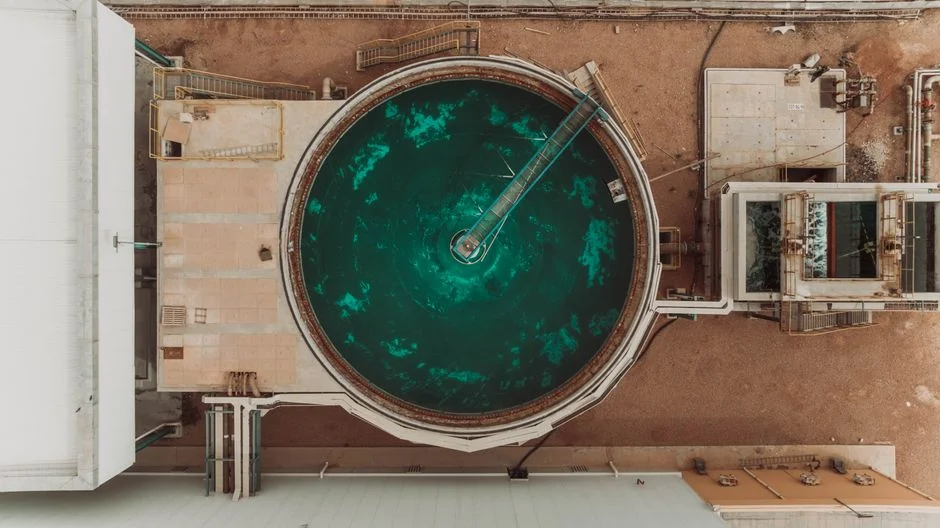
- Stage 1 — pH Adjustment with Metal Precipitation: The initial step involves adjusting the wastewater pH to a target range, typically between pH 6 and 9, using chemicals such as lime, caustic soda (sodium hydroxide), or sulfuric acid (source: Genesis Water Technologies). This pH modification drives dissolved heavy metals to precipitate out of solution as insoluble metal hydroxides, making them amenable to subsequent removal.
- Stage 2 — Coagulation and Flocculation: Following pH adjustment, coagulants (e.g., ferric chloride, aluminum sulfate) and flocculants (e.g., anionic polymers) are introduced to the wastewater. These chemicals destabilize suspended solids and agglomerate the newly precipitated metal hydroxides into larger, more settleable or flotable flocs (source: Genesis Water Technologies). Proper chemical selection and dosing are critical for efficient solids separation. A PLC-controlled chemical dosing skid can maintain stable feed rates as influent conditions drift.
- Stage 3 — Clarification: The aggregated flocs are then removed in a clarification step, typically employing a DAF system for mining pretreatment or a lamella clarifier for high-solids mining wastewater. DAF systems are effective for a wide range of flows, handling capacities from 4–300 m³/h, and are proven in metalworking and mining pretreatment applications. Lamella clarifiers, known for their compact footprint, can achieve surface loading rates of 20–40 m/h and may offer up to a 30% reduction in chemical consumption compared to conventional clarifiers due to enhanced settling efficiency.
- Stage 4 — Polishing: For stringent effluent limits, a polishing step is essential to remove residual TSS, colloidal metals, and other fine particulates that bypass clarification. This stage often utilizes advanced membrane technologies such as ultrafiltration polishing step (UF) or an MBR integrated system. UF systems, typically employing 0.03 micron PVDF membranes, can accept feed turbidity up to 300 ppm and feature automatic backwash for sustained operation. MBR systems, with their sub-1 micron filtration capability, provide exceptional effluent quality and often require a 60% smaller footprint than conventional activated sludge systems for similar treatment capacity.
For extremely tight metals limits, an optional advanced step like ion exchange or sulfide precipitation may be considered, although their specific application depends on the target metals and regulatory requirements.
| Process Stage | Key Function | Target Effluent Parameter Ranges |
|---|---|---|
| 1. pH Adjustment / Precipitation | Convert dissolved metals to insoluble hydroxides | pH 6.0–9.0 |
| 2. Coagulation / Flocculation | Agglomerate solids and precipitates into larger flocs | Improved settleability/flotability |
| 3. Clarification (DAF or Lamella) | Bulk removal of suspended solids and metal flocs | TSS reduction by 70–95%, significant heavy metal reduction |
| 4. Polishing (UF or MBR) | Fine particulate, colloidal metal, and residual TSS removal | TSS < 5-10 mg/L, heavy metals to sub-mg/L range |
Choosing Between DAF, Lamella, MBR, and UF for the Lawrence Plant
Selecting the optimal clarification and polishing technology for a Lawrence-area mining or metals plant depends on influent characteristics, target effluent quality, and operational constraints. The decision framework should consider factors like influent Total Suspended Solids (TSS), flow rate, target effluent quality, and available footprint. For an in-depth comparison of DAF vs. clarifiers in mining wastewater, refer to our DAF vs clarifier decision for mining wastewater guide.A DAF system for mining pretreatment often proves advantageous when influent TSS is moderate to high (e.g., 100-500 mg/L) and the primary goal is rapid load reduction before subsequent biological or membrane treatment. DAF technology is well-proven in metalworking and mining pretreatment, effectively handling flow rates typically ranging from 4 to 300 m³/h. Conversely, a lamella clarifier for high-solids mining wastewater excels when plant footprint is a significant constraint and the influent solids are readily settleable or have been pre-treated. These units achieve high settling efficiency with surface loading rates between 20–40 m/h and can reduce chemical consumption by up to 30% compared to conventional sedimentation tanks.
For plants targeting near-reuse-quality effluent in a compact, integrated system, an MBR integrated system is a strong contender. MBR technology provides sub-1 micron filtration, achieving exceptional effluent quality, and typically requires a 60% smaller footprint than conventional activated sludge systems. MBR systems are suitable for flows in the 10–2,000 m³/day range, making them versatile for various industrial scales. Finally, an ultrafiltration polishing step is ideal when the plant requires robust pretreatment for reverse osmosis (RO) or is directly integrating into a water reuse loop. UF systems, commonly using 0.03 micron PVDF membranes, can accept feed turbidity up to 300 ppm and benefit from automatic backwash and air scour for reliable operation.
| Technology | Key Application Scenario | Typical Performance Metrics | Footprint / Operational Notes |
|---|---|---|---|
| DAF System | Moderate-to-high TSS influent (100-500 mg/L), rapid load reduction | Flows 4–300 m³/h; high TSS & oil/grease removal | Effective for high solids and fats/oils/grease; proven in metalworking/mining |
| Lamella Clarifier | Space-constrained sites, settleable solids, pre-treated influent | Surface loading 20–40 m/h; up to 30% chemical reduction | Compact design, often lower chemical use than conventional clarifiers |
| MBR System | Near-reuse quality effluent, integrated biological/membrane treatment | <1 micron filtration; flows 10–2,000 m³/day; low TSS/BOD | 60% smaller footprint than conventional activated sludge; high effluent quality |
| UF System | RO pretreatment, direct water reuse, high-clarity effluent | 0.03 micron PVDF; accepts up to 300 ppm turbidity; low SDI | Robust barrier for particulates and colloids; automatic backwash/air scour |
Monitoring, Sludge Handling, and Keeping the Permit
Frequently Asked Questions
What federal regulations apply to mining wastewater discharge to a POTW?
Mining and metals wastewater discharged to a Publicly Owned Treatment Work (POTW) in the U.S. is regulated by 40 CFR Part 403 (General Pretreatment Regulations) and the categorical standard 40 CFR Part 437 (Ore Mining and Dressing Point Source Category). These federal standards, along with local POTW ordinances, set the discharge limits.What are typical effluent targets for mining and metals wastewater before sewer discharge in the Lawrence area?
Lawrence-area mining and metals plants typically aim for an effluent pH between 6 and 9, Total SuspendedFrequently Asked Questions
What permit does a mining plant near Lawrence need to discharge to the sewer?
A mining or metals processing facility in the Lawrence, Kansas region must obtain an Industrial Wastewater Discharge Permit issued by the City of Lawrence Utilities Department. This permit is mandated under the city’s Industrial Pretreatment Program, which operates in accordance with federal EPA National Pollutant Discharge Elimination System (NPDES) requirements to ensure that industrial influent does not interfere with the Publicly Owned Treatment Works (POTW) operations or pass through to the Kansas River.
What are the typical pH and TSS limits for mining wastewater discharged to a POTW?
While specific limits are determined by the individual facility's permit, Lawrence typically requires industrial discharges to maintain a pH range between 5.0 and 11.0 standard units to prevent corrosion of sewer infrastructure. Total Suspended Solids (TSS) limits are generally capped at 300 mg/L to prevent excessive sludge accumulation in the municipal treatment process; concentrations exceeding this threshold often trigger a surcharge or require additional onsite solids removal.
Is DAF or a lamella clarifier better for mining pretreatment?
The selection depends on the particle density and oil/grease content of the wastewater. Dissolved Air Flotation (DAF) is typically superior for mining operations where light, non-settleable particles or emulsified oils are present, as it uses micro-bubbles to float contaminants to the surface for skimming. Conversely, a lamella clarifier is more efficient for heavy mineral fines and high-density metal precipitates, utilizing inclined plates to increase the effective settling area within a smaller physical footprint.
When does a mining plant need ultrafiltration or MBR before sewer discharge?
Ultrafiltration (UF) or Membrane Bioreactors (MBR) are required when the facility must meet stringent local limits for heavy metals, colloidal silica, or specific organic compounds that cannot be removed by physical settling or chemical precipitation alone. These technologies are often necessary if the plant is processing complex ore bodies that result in high turbidity or dissolved metal concentrations that would otherwise violate the city’s categorical pretreatment standards or cause toxicity issues in the biological treatment stages of the municipal plant.
How often does a Lawrence POTW sample industrial pretreatment discharge?
The frequency of sampling is dictated by the facility’s Significant Industrial User (SIU) status as defined in the pretreatment permit. Most industrial dischargers in the Lawrence jurisdiction are subject to at least quarterly self-monitoring and reporting, supplemented by unannounced compliance inspections and grab or composite sampling conducted by city pretreatment inspectors at least twice per year to verify the accuracy of the facility’s data.