Why Gold Mining Sludge Is a Different Problem from Municipal Sludge
Global mining generates roughly 10 billion tonnes of tailings per year, and the mineral-processing stage alone accounts for 60–79% of mining's environmental footprint (MDPI Sustainability, 2024-12). That figure frames every sludge conversation in a gold operation: the liability is not the litre of treated water, it is the thousand-tonne pile of dewatered cake that must be moved, stored, or reused under a hazardous-waste or circular-economy permit. Two anchors define the risk. The abandoned Karamken gold complex in Magadan, Russia, accumulated about 340,000 tonnes of tailings before the storage pond overflowed and contaminated groundwater and surrounding ecosystems (MDPI Sustainability, 2024-12). The 2015 Gold King Mine release near Silverton, Colorado, spilled almost 3 million gallons of acid mine drainage into the San Juan River and triggered a multi-agency cleanup that ran into hundreds of millions of dollars (MDPI Sustainability, 2024-12). Both failures involve sludge and water simultaneously, because the two streams are coupled in a gold circuit.
Municipal treatment plants provide a useful — and uncomfortable — benchmark. Eastern Cape WWTPs removed only 34.7–86.6% of Fe and showed very poor Cu and Zn removal, with 80–90% of influent metals transferring to the sewage sludge (Water 2020, 12, 2746). Multiply that accumulation by the contaminants specific to a gold circuit — As from the ore, residual CN⁻ from leaching, Hg from neighbouring artisanal operations, plus Cu, Pb, Zn, and Fe — and the result is a sludge that no municipal-spec line can handle. CRETIB characterization (Corrosivity, Reactivity, Explosiveness, Toxicity, Ignitability, Biological-infectious) is the standardized test battery used to classify whether the resulting cake is hazardous, inert, or a candidate for beneficial reuse (MDPI Sustainability, 2024-12). Any 2026 sludge train that does not produce a CRETIB-compliant cake is, by definition, only halfway designed.
The 2026 Process Train for Gold Mining Wastewater Sludge
A defensible 2026 sludge train runs in six ordered steps. Skip source segregation and the downstream chemistry is uncontrollable; skip cyanide destruction and the cake will fail toxicity testing; skip thickening and the press will not close its cycle. The sequence below can be copied into a PFD or P&ID without further interpretation.
- Source segregation. Keep process water (high As, residual CN⁻) isolated from run-off and pit dewatering so the sludge chemistry stays predictable for reagent dosing and CRETIB sampling.
- Cyanide destruction and pH/ORP conditioning. Alkaline chlorination or SO₂/air oxidation, controlled through an automatic chemical dosing skid sized for the WAD-CN⁻ load. Typical target: WAD cyanide <50 mg/L, pH 8–10, ORP 300–400 mV.
- Metals precipitation and coagulation. Raise pH into the 9–10 band to drop As, Cu, Zn, and Pb; dose ferric or ferrous sulphate (50–300 mg/L as a typical envelope) followed by an anionic polymer flocculant. Reagent delivery is managed through the same automatic chemical dosing system, ideally with redundant pumps for WAD-CN⁻ failure modes.
- Thickening. A high-efficiency lamella clarifier or DAF unit takes sludge from 0.5–2% dry solids up to 3–5% DS. Lamella surface loading typically runs 20–40 m/h; DAF air-to-solids ratio 0.005–0.02.
- Mechanical dewatering. A plate-and-frame filter press drives the cake to 55–65% DS for transport or reuse. Filter area rule of thumb: 0.5–2 m² per m³/h of feed sludge; chamber depth 25–40 mm.
- CRETIB characterization and routing. Lab test determines whether the cake is sent to secure landfill, bricks, geopolymer concrete, or fiber cement.
| Stage | Typical target | Reagent / equipment |
|---|---|---|
| Cyanide destruction | WAD-CN⁻ <50 mg/L; pH 8–10; ORP 300–400 mV | Cl₂/NaOCl or SO₂/air via dosing skid |
| Metals precipitation | pH 9–10; Fe/Pb/Cu/Zn/As to permit limits | Ferric/ferrous sulphate 50–300 mg/L; anionic polymer |
| Thickening | 3–5% DS from 0.5–2% DS | Lamella clarifier 20–40 m/h or DAF A/S 0.005–0.02 |
| Filter press | 55–65% DS cake | Plate-and-frame, 0.5–2 m² per m³/h feed |
| CRETIB + routing | Class A → reuse; non-Class A → secure landfill | ISO 17025 lab, EPA-validated methods |
Dewatering Options: Filter Press, Belt Press, Centrifuge, Drying Bed
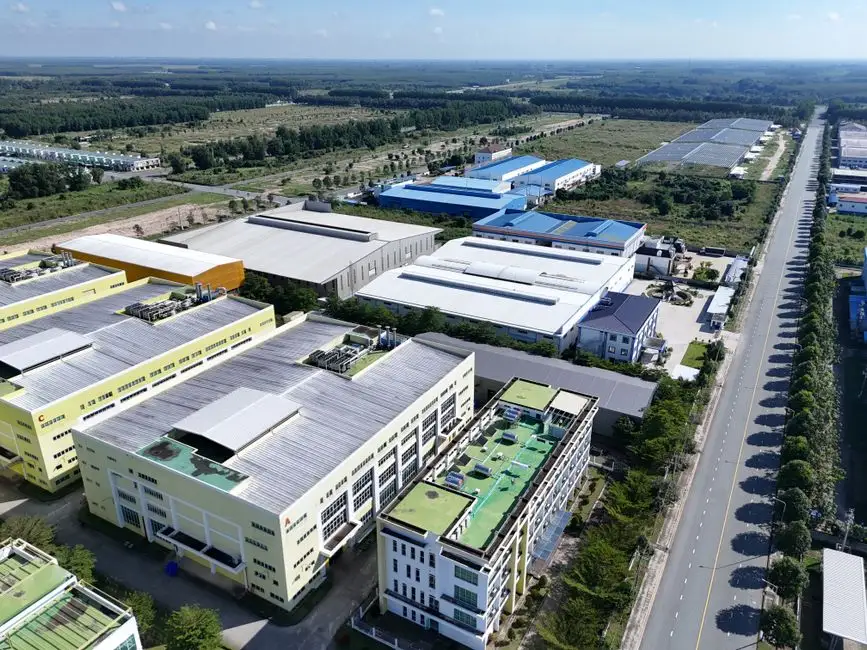
The dewatering choice for metal-laden, abrasive, and often remote-site sludge depends on cake dryness, footprint, and grit tolerance. A plate-and-frame filter press is the workhorse for gold operations, providing 55–65% DS cake, batch operation, 1–500 m² filter area, and the lowest transport cost per dry tonne. The trade-off includes higher CAPEX, a larger building footprint, and a batch cycle that must match shift patterns. A belt press offers continuous operation and lower CAPEX, but stops at 20–35% DS and wears down filter cloth on abrasive tailings; cloth replacement is a significant OPEX line. A decanter centrifuge provides 25–35% DS in a compact, continuous envelope, but is sensitive to feed-solids swings and requires hard-faced rotors to survive mining duty; grit accelerates wear on the conveyor scroll. Drying beds and geotextile tubes achieve 30–50% DS with very low OPEX, but require a large footprint, dry weather, and a multi-week cycle — viable only for small tonnage in arid climates.
| Technology | Cake DS | Operation | CAPEX band | Best fit |
|---|---|---|---|---|
| Plate-and-frame filter press | 55–65% | Batch | Low five-figure (1–50 m²) to mid/high six-figure (100–500 m²) | CRETIB-toxic cake, long transport, remote sites |
| Belt press | 20–35% | Continuous | Lower than filter press | Consistent feed, CAPEX-constrained, shorter haul |
| Decanter centrifuge | 25–35% | Continuous | Mid five-figure to low six-figure | Compact sites, low abrasive load, hard-faced rotor needed |
| Drying bed / geotextile tube | 30–50% | Passive | Very low | Small tonnage, arid climate, cheap land |
Selecting the right equipment ensures regulatory compliance and operational efficiency. Choose the filter press when the cake is CRETIB-toxic, when transport distance is high, or when the site is remote; choose belt or centrifuge when feed is consistent and CAPEX is the binding constraint; reserve drying beds for small tonnage and favourable climates.
CRETIB Hazard Class and What It Means for Disposal vs Reuse
CRETIB is the six-axis test battery — corrosivity, reactivity, explosiveness, toxicity, ignitability, biological-infectious — that decides whether a mining sludge is hazardous waste, inert waste, or a candidate for beneficial reuse (MDPI Sustainability, 2024-12). The 2024 Ecuadorian gold-plant study is the most directly relevant published result: tailings sampled at surface and at 2 m depth were non-corrosive, non-reactive, non-explosive, non-toxic, non-ignitable, and non-infectious, earning a Class A "Excellent" classification. This classification enables the circular-economy path: a reuse certificate, a downstream offtaker, and no landfill levy. The same study noted that trace mercury in the Ecuadorian cake was attributable to nearby artisanal mining using Hg in gold amalgamation; such cross-contamination can flip a Class A cake into a non-Class A cake in other jurisdictions (MDPI Sustainability, 2024-12). When that happens, the cake must go to a secure lined landfill with leachate management, and the OPEX for transport and tipping replaces the reuse revenue. The lab workflow is non-negotiable: representative sampling at surface and 2 m depth, ISO 17025 accredited analysis, EPA-validated methods, and a documented chain of custody before any reuse claim is filed.
Equipment Selection and CAPEX Buckets for a 2026 Gold Sludge Train
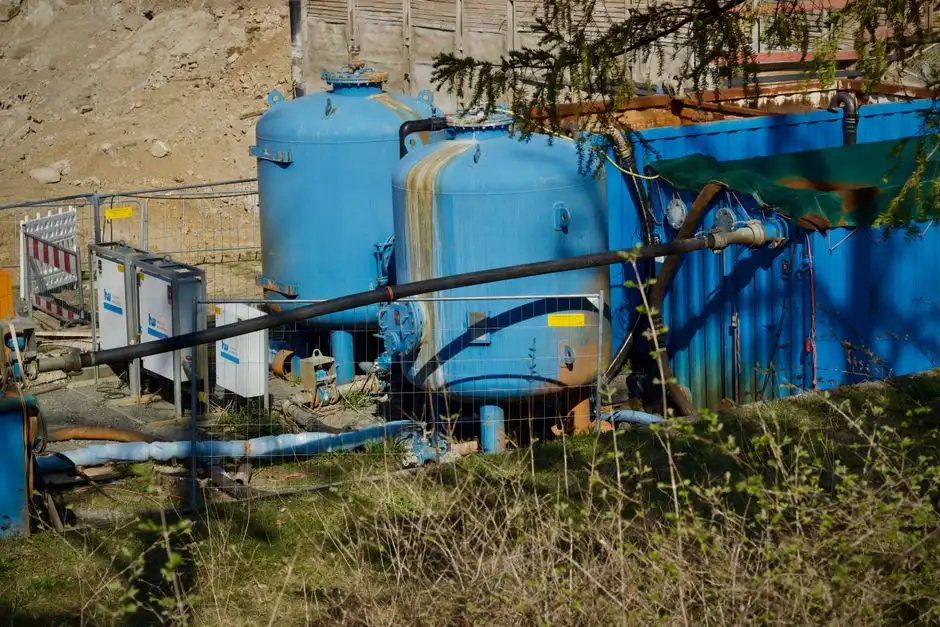
Capital requirements for a sludge train fall into four main bands. The automatic chemical dosing skid for cyanide destruction, precipitation, and polymer conditioning typically sits in the low five-figure USD range, scaling with pump count and redundancy. The clarifier stage — typically a high-efficiency lamella clarifier or an integrated water purification system for compact sites — ranges from mid five-figure to low six-figure USD for the 10–200 m³/h envelope common in gold operations. The plate-and-frame filter press is the primary CAPEX line: 1–50 m² units fall in the low five-figure range, while 100–500 m² units sit in the mid-to-high six figures, with PLC controls and automatic plate shifting adding 10–20%. Buyers often under-budget filter-cloth replacement and polymer consumption, which scale with abrasive grit and feed-solids variability. Proper investment in these systems prevents the high costs associated with Karamken-style overflow remediation, Gold King-style spill cleanup, and local landfill levies.
Frequently Asked Questions
What dry-solids target should a 2026 gold-mine sludge train hit before disposal or reuse?
A plate-and-frame filter press should drive the cake to 55–65% DS to minimize transport cost per dry tonne and meet the moisture limits specified by reuse offtakers. Anything below 50% DS often fails the CRETIB leaching test for As and Hg, even when the chemistry is sound.
How is CRETIB status decided, and which axis most often fails for gold sludge?
CRETIB is the six-axis battery (corrosivity, reactivity, explosiveness, toxicity, ignitability, biological-infectious) run on representative samples at an ISO 17025 accredited lab using EPA-validated methods. For gold operations, toxicity is the most frequent failure, driven by As from the ore and Hg from neighbouring artisanal activity.
Why not just send gold-mine sludge to a municipal WWTP?
Municipal plants concentrate 80–90% of influent metals into their sludge and struggle to remove Cu and Zn (Water 2020, 12, 2746). Adding a gold-circuit feed containing As, residual CN⁻, and Hg pushes the municipal plant past its permit envelope and creates a hazardous-waste liability. The 2026 industry standard is on-site treatment, CRETIB testing, and either Class A reuse or secure lined landfill.