Why Petroleum Wastewater Breaks a Conventional Clarifier
Refinery and petroleum-handling streams are dominated by free oils, emulsified oils, FOG, and fine suspended solids with specific gravity at or just below 1.0—contaminants that physically refuse to sink on a useful timescale. HydropureWater 2025 field data shows a properly tuned DAF system routinely achieves up to 95% FOG removal on these streams, while a parallel gravity clarifier on the same feed struggles to clear 60–70% without aggressive polymer dosing. The reason is physics, not equipment quality: a particle with a specific gravity of 0.95 needs many hours in a quiescent basin before Stokes' Law can drag it downward, and most refinery operators cannot afford to wait that long.
A conventional clarifier typically operates at a 2–4 hour hydraulic retention time and depends on heavy inorganic solids—grit, sand, metal shavings—to drag lighter organics out as co-settling floc. Petroleum wastewater carries the opposite load: light organics with very little dense carrier material. The result is cloudy effluent, a buoyant scum layer that re-entrains during peak flow, and a polymer bill that climbs every time the operator pushes for clearer water. Footprint compounds the problem; a clarifier train sized for 100 m³/h routinely needs 4–5× the floor area of an equivalent flotation unit.
Dissolved air flotation reverses the physics. A 4–6 bar saturation loop dissolves air into a 10–30% recycle stream, and when that stream re-enters the flotation cell at atmospheric pressure it releases 20–100 μm micro-bubbles—roughly 85–95% saturation efficiency. Those bubbles attach to flocculated oil and FOG particles and lift them to the surface in minutes rather than hours. The mechanism is documented in 2025 commercial DAF engineering guides as removing 92–97% TSS and up to 95% oil and grease at surface loading rates of 5–15 m/h, outperforming conventional clarifiers by 20–30% on light solids and emulsified contaminants. This efficiency gap is the difference between forcing contaminants to do something unnatural (sink when they want to float) and letting them do what their density already dictates.
DAF vs Clarifier: Head-to-Head Parameter Comparison
A single side-by-side table provides the fastest way to defend a technology choice in a 2026 CAPEX meeting. The numbers below come from HydropureWater 2025 field data and 2025 DAF engineering references, and they reflect typical operating ranges for industrial units in the 4–300 m³/h class.
| Parameter | DAF System | Conventional Clarifier |
|---|---|---|
| Removal mechanism | Micro-bubble flotation (20–100 μm bubbles, 4–6 bar) | Gravity sedimentation |
| TSS removal | 92–97% | 50–70% on light/emulsified streams; higher on grit |
| O&G removal | Up to 95% | 40–65% on emulsified oil without heavy polymer |
| Surface loading / retention | 5–15 m/h | 2–4 h retention |
| Footprint ratio (same flow) | 1.0× baseline | 4–5× baseline |
| Sludge / float solids | 3–5% float solids | 1–2% underflow solids |
| Energy use | 0.2–0.5 kWh/m³ | 0.05–0.15 kWh/m³ (no aeration) |
| Chemical use (polymer) | 0.5–5 mg/L | Often higher to force settling of light solids |
| 2026 CAPEX range (4–300 m³/h) | $50,000–$500,000 (SS304/SS316, automation-dependent) | Lower CAPEX for simple concrete basin; rises with scrapers, drives, controls |
| Best-fit influent | Emulsified oil, FOG, fine/light solids, refinery desalter effluent | Heavy grit, sand, metal shavings, inorganic slurries |
DAF is the correct primary oil-removal step for petroleum wastewater, while a clarifier belongs in the train only as an upstream pre-settler when the influent carries heavy inorganic solids. HydropureWater 2025 guidance is direct on this point: when influent is dominated by FOG or emulsified hydrocarbons, a clarifier relies on the wrong physics rather than being a slower option.
Carlisle and PA Regulatory Reality in 2026
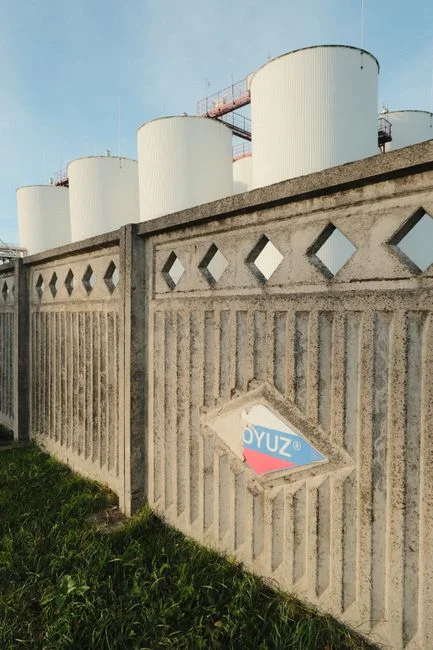
Carlisle, PA sits inside a mixed refining, food-processing, and light-industrial corridor that all discharge to local POTWs operating under PA DEP and 40 CFR Part 403 pretreatment programs. Oil and grease, FOG, and TSS are the recurring pain points across the region's industrial users—and the limits in 25 PA Code Chapter 92 and individual POTW permits are not negotiated after a slug load. A refinery or petroleum-handling plant in Carlisle that lets O&G slip above its local limit faces surcharges, consent orders, or shutoff risk on its industrial discharge permit.
Conventional clarifiers fail this test under flow surges because they are passive vessels: when influent O&G spikes, the clarifier simply passes the spike downstream. DAF units, by contrast, use active aeration and continuous skimming, so they absorb slug loads and hold treated water inside the discharge envelope. For a Carlisle facility that has already had a pretreatment violation, that resilience is often the deciding factor—not the headline removal percentage, but the ability to stay in compliance at 2 a.m. when a process upset hits.
Exact local limits vary by POTW and current permit, so a final specification must be cross-checked against the active permit. Treat the figures in this article as a framework for equipment sizing and CAPEX planning, not as a substitute for the permit itself.
2026 CAPEX, OPEX, and ROI for a Carlisle Refinery
The 2026 capital band for a DAF system in the 4–300 m³/h class runs $50,000–$500,000, with the spread driven by SS304 versus SS316 construction, automation level, and tank volume (HydropureWater 2025). A 50 m³/h refinery application typically lands in the $120,000–$220,000 band once SS316 wetted parts, an automatic polymer skid, and a PLC panel are added.
| 2026 Cost Driver | DAF System | Conventional Clarifier |
|---|---|---|
| 2026 CAPEX (50 m³/h, SS316, automated) | ~$120,000–$220,000 | ~$80,000–$150,000 (basin + scraper) |
| Energy | 0.2–0.5 kWh/m³ | 0.05–0.15 kWh/m³ |
| Polymer | 0.5–5 mg/L | Often higher, less stable |
| Sludge hauled off-site | 3–5% float solids → 50–70% less volume | 1–2% underflow solids → more frequent hauling |
| Annual disposal savings (medium plant benchmark) | ~$40,000/yr (refineries often higher) | Baseline |
| Typical ROI on high-FOG stream | 1.5–3 years | n/a (no offsetting savings) |
OPEX breaks into three line items. Energy sits at 0.2–0.5 kWh/m³ for the recycle pump and air compressor. Polymer runs 0.5–5 mg/L of cationic or anionic flocculant. Maintenance—skimmer blades, nozzle cleaning, pressure-sensor calibration—is the third and is roughly 2–4% of CAPEX per year on a well-run unit. The offsetting number is sludge: 3–5% DAF float solids means 50–70% less volume hauled than a clarifier's 1–2% underflow. Based on wastewater treatment engineering budget data from 2025, that volume reduction saves a medium food plant over $40,000/yr in disposal fees—refineries with higher O&G loads typically see equal or larger savings. Add the avoided surcharges and consent-order risk from a pretreatment excursion, and the ROI formula lands at 1.5–3 years for high-FOG streams. Soft benefits—avoiding permit-driven shutdowns and enabling treated-water reuse—push the financial case further into clear territory.
Sizing, Pretreatment, and Sludge Handling for a Carlisle DAF
The classic Carlisle under-sizing failure mode is skipping upstream screening. HydropureWater 2025 maintenance guidance is explicit: a rotary bar screen ahead of the DAF protects the air-injection nozzles and recycle pump from rags, grit, and plastics that would otherwise score the pressure vessel and erode bubble-size distribution. On a 50 m³/h refinery stream, a 2–3 mm aperture bar screen is the typical minimum.
The chemistry envelope is well documented. Cationic or anionic polymer at 0.5–5 mg/L bridges emulsified oil and FOG into "buoyant aggregates" that the micro-bubbles can lift. pH must sit in the 6.5–8.5 window for most commercial polymers; outside that band, floc strength collapses and the float turns cloudy. Saturation pressure of 4–6 bar and a 10–30% recycle ratio are the operating window, and both must be confirmed by jar testing on the actual refinery feed before the unit ships. A wrong polymer charge is the single most common cause of a DAF that "looks right" but ships a hazy effluent.
Downstream, a plate-frame filter press on the DAF float reaches 25–35% cake solids and 98% total solids removal (HydropureWater 2025 field data), which is the difference between paying to haul water and paying to haul cake. For a Carlisle refinery, that step usually pays for itself inside 18 months on disposal savings alone. The full mechanical train—screen, equalization, DAF, sludge dewatering—should be specified together so that the polymer program, the float pump, and the press capacity line up at the design flow.
Decision Framework: Pick the Right System by Influent Profile
Use the influent numbers, not the equipment brochure, to pick the technology. The decision collapses to three rules that work for any petroleum-handling plant in the Carlisle corridor:
- If influent O&G is >50 mg/L with emulsified or fine light solids, specify DAF as the primary oil-removal step. Below that threshold, the chemistry changes; above it, a clarifier cannot meet discharge limits without punishing polymer doses.
- If the influent is dominated by heavy grit, sand, or metal shavings, keep a conventional clarifier as a pre-settler in front of the DAF. This is the one configuration where a clarifier earns its place in a petroleum train—as an upstream guard, not as the oil-removal step.
- For tight Carlisle brownfield sites, DAF's 20–25% footprint is the deciding factor; for greenfield builds, use DAF plus downstream filtration rather than a clarifier train. The space saving alone often justifies DAF on land cost.
Always tie the final choice to current PA DEP permit limits and a jar-tested polymer program. Do not skip pilot work, and verify sizing against the methodology in the DAF sizing engineering guide or a comparable site-specific mass balance before issuing a PO. For broader discharge-train context, the 2026 effluent treatment plant buyer's guide walks through downstream polishing options.
Frequently Asked Questions
For petroleum wastewater, should I choose DAF or
Frequently Asked Questions
DAF or clarifier for petroleum wastewater—which removes more oil and grease?
Dissolved Air Flotation (DAF) systems are significantly more effective at removing free and emulsified oil and grease than conventional clarifiers. While a gravity clarifier typically achieves 50% to 70% removal efficiency for oil, a properly operated DAF system with chemical coagulation and flocculation can reach removal efficiencies of 90% to 99%.
DAF technology utilizes micro-bubbles to float hydrophobic oil droplets to the surface, making it superior for petroleum streams where oil density is close to that of water, which often prevents effective separation in standard gravity clarifiers.
What is the 2026 CAPEX range for a DAF system at a small refinery?
For a small refinery application in 2026, the estimated capital expenditure (CAPEX) for a complete DAF package—including the pressurization system, saturation tank, and sludge skimming mechanism—typically ranges between $150,000 and $450,000. This variance depends primarily on flow capacity, stainless steel grade requirements for corrosion resistance, and integrated PLC automation levels.
Costs may escalate beyond this range if the system requires complex pre-treatment skids for pH adjustment or advanced polymer dosing stations to meet stringent downstream discharge requirements.
Can a clarifier and a DAF be used together in an oily wastewater treatment train?
Yes, a clarifier and a DAF are frequently used in series to optimize treatment efficiency. In this configuration, the clarifier acts as a primary settler to remove heavy suspended solids and bulk free oil, reducing the hydraulic and solids loading on the DAF unit.
By utilizing the clarifier for primary separation, the DAF can be sized for a smaller footprint and function as a polishing step to remove the remaining fine emulsified oils and light suspended solids, ensuring the final effluent meets discharge compliance.
How much sludge does a DAF produce versus a clarifier?
A DAF unit typically produces a lower volume of sludge than a clarifier but with higher solids concentration. DAF sludge, often referred to as "float," can reach dry solids concentrations of 3% to 6%, whereas clarifier underflow typically ranges from 0.5% to 2% solids.
While the DAF produces a more concentrated product that reduces dewatering costs, the total mass of sludge generated in a DAF is generally higher because the process captures a greater percentage of total suspended solids (TSS) and emulsified oil that would otherwise remain in the clarifier effluent.
What PA DEP or 40 CFR limits apply to oil and grease discharge in Carlisle?
Facilities in Carlisle must comply with 40 CFR Part 419 (Petroleum Refining Point Source Category) and specific Pennsylvania Department of Environmental Protection (PA DEP) NPDES permit conditions. Federal guidelines under 40 CFR 419 typically set Oil and Grease (O&G) daily maximums near 20 mg/L to 25 mg/L, depending on the specific subcategory of the refinery.
PA DEP may impose more stringent local limits based on the receiving stream's water quality standards. Operators are advised to review their specific NPDES permit, as discharge limits in the Cumberland County region often require effluent O&G levels to be maintained below 15 mg/L to ensure protection of local aquatic life.