What Counts as an Effluent Treatment Plant in Saskatoon in 2026
An effluent treatment plant in Saskatoon in 2026 is a staged facility combining preliminary screening and grit removal, primary sedimentation, secondary biological treatment, and tertiary polishing with disinfection, all engineered to operate reliably under Prairie winter conditions and to meet the requirements of the Saskatchewan Environmental Code (Chapter E-10.2) and SaskWater discharge guidance. The standard unit train follows a well-established sequence: bar screen (2-inch spacing per S5), grit chamber (10 m × 2 m × 1 m, ~1 min detention), equalization tank (250 m³, 6 h HRT), neutralization (50 m³, 30 min, target pH 8.0), coagulation–flocculation (100 m³, 60 min, jar-test-dosed), primary clarifier (Ø10 m, surface loading 10 m³/m²·h), activated sludge reactor (500 m³, 12 h HRT, DO 2.0–2.5 mg/L, MLSS 3,600 mg/L), secondary clarifier (Ø15 m, SLR 8 m³/m²·h), pressure sand filter, activated carbon filter, and a chlorine contact tank (50 m³, 30 min, 0.5 mg/L residual) or UV reactor. That design envelope is the starting point for any 2026 Saskatoon tender, but the local regulatory layer is what differentiates a Saskatchewan-compliant plant from a generic global design.
The Saskatchewan Environmental Code sets the binding discharge and monitoring obligations, SaskWater provides the operational discharge targets for provincially regulated systems, and the South Saskatchewan River Project (SSRP) downstream context defines the value of every additional log of contaminant removal — the cleaner the effluent, the higher the reuse potential for the South Saskatchewan River basin, which supports municipal supply, irrigation, and industrial intake. The dominant influent streams in the Saskatoon economy are municipal sewage from the City of Saskatoon's branded treatment plants, plus industrial wastewater from food processing, potash and mining services, agribusiness, and cold-climate manufacturing. With roughly 40% of treatment plants in comparable North American jurisdictions reporting challenges meeting regulatory requirements (per waterandwastewater.com 2025-08), and U.S. municipal systems handling on the order of 34 billion gallons per day (EPA, per S4), the case for engineered, packaged 2026 solutions rather than legacy infrastructure is straightforward.
How Saskatoon's Climate Changes the Engineering Spec
Saskatoon record winter lows approach -40 °C, and that single number cascades into most equipment, civil, and process decisions on a 2026 project. Exposed process tanks must be HDPE-lined concrete with polyurethane insulation and heat-traced piping; buried or semi-buried process trains are the default for biological reactors and equalization basins because the ground column provides a stable thermal buffer. Headworks buildings must be designed for the local ground-snow load, and the screening step itself must run continuously through freezing conditions — a GX series rotary bar screen with enclosed housing is the practical headworks choice for cold-climate duty. The upstream screening and grit train is also where a compact underground integrated sewage treatment package pays off: burying the equalization and primary zones removes them from the worst of the winter wind-chill envelope and protects downstream biological kinetics from temperature shock.
Cold wastewater changes aeration design. Viscosity-corrected blower sizing and oversized fine-bubble diffusers are needed to maintain the DO setpoint of 2.0–2.5 mg/L (per S5) at near-zero mixed-liquor temperatures, and cold mixed liquor also reduces floc settling velocity, which penalizes open secondary clarifiers. This is the operational reason Membrane Bioreactor (MBR) outperforms Conventional Activated Sludge (CAS) on the Prairies: the enclosed reactor and submerged membranes retain both heat and biomass far better than an open aeration basin followed by a separate clarifier, with the secondary benefit of producing a reusable effluent stream on the same footprint. For any new ETP in Saskatoon that is sized for cold-climate duty, the winter design temperature line on the P&ID should be the first thing a reviewer checks, not the last.
Choosing the Process Train: MBR vs CAS vs DAF vs Constructed Wetlands
Process selection in Saskatoon is driven by three local variables: reuse intent, footprint, and the FOG/TSS load of the influent. The four credible options each have a defensible use case.
Conventional Activated Sludge (CAS) has the lowest CAPEX and is robust at municipal scale, but it carries the largest footprint, a separate secondary clarifier, and the highest winter heat loss. Operating parameters are well documented — MLSS 3,600 mg/L, HRT 12 h, DO 2.0–2.5 mg/L, secondary clarifier SLR 8 m³/m²·h (per S5) — but every one of those numbers drifts in cold weather, and the clarifier is exposed. CAS is the right answer when CAPEX dominates the decision and reuse is not on the table.
Membrane Bioreactor (MBR) combines activated sludge with submerged PVDF ultrafiltration membranes, achieving up to 99% pathogen removal (per American Water Works Association, cited in S4) and an effluent below 1 µm. Footprint is roughly 60% smaller than CAS at equivalent load. A packaged integrated MBR system typically covers 10–2,000 m³/day in skid form, and larger plants scale with DF series PVDF flat-sheet MBR modules at 32–135 m³/day per skid. MBR is the default for any reuse or tight-footprint duty in Saskatchewan.
Dissolved Air Flotation (DAF) is not a standalone ETP — it is a high-rate pre-treatment for streams with high FOG, high TSS, or both: food processing, rendering, oil & gas, and dairy. A DAF unit typically covers 4–300 m³/h across 13 standard models, and a 2026 DAF OPEX breakdown shows polymer and energy as the dominant operating lines. DAF is always paired with biological polishing downstream.
Constructed wetlands are a tertiary polishing step, not a primary treatment. Wageningen University research (S3) demonstrates effective removal of micropollutants from WWTP effluent through constructed wetlands, making them relevant for low-risk agribusiness reuse where land is available and a passive polish is acceptable.
| Process | Typical use | Footprint | CAPEX | Reuse-ready | Cold-climate fit |
|---|---|---|---|---|---|
| CAS | Municipal, low-CAPEX | Large | Lowest | No (separate polish needed) | Weak (heat loss) |
| MBR | Industrial reuse, tight sites | ~60% of CAS | Higher than CAS | Yes (UF-quality effluent) | Strong (enclosed) |
| DAF (pre-treatment) | High FOG/TSS streams | Compact | Moderate | No (paired with bio) | Moderate (enclosed units) |
| Constructed wetlands | Tertiary polish, rural reuse | Very large | Lowest per m³ | Polish only | Strong (passive) |
Decision rule for 2026: MBR for reuse or tight footprint; CAS for low-CAPEX municipal duty; DAF always as pre-treatment when FOG or TSS are high; constructed wetlands as polish or low-cost rural option. For mining and metals duty specifically, the MBR vs CAS engineering comparison and the SMBR selection guide walk through the trade-offs in detail.
Tertiary Polishing, Disinfection, and Reuse Readiness
Tertiary polishing is where a Saskatoon ETP converts biological effluent into a discharge- or reuse-ready stream, and it is the actual compliance test under SSRP. Pressure sand filtration followed by activated carbon adsorption is the workhorse polish train for industrial reuse, with downstream UF (0.03 µm PVDF, 2,000–40,000 L/h per module) as a barrier against colloidal carryover and pathogens. Where the reuse target is agricultural or indirect potable, the University of Twente (S1) demonstrates direct nanofiltration of WWTP effluent as a single-step polish to standards suitable for (in)direct potable augmentation, subject to site-specific authorization.
Disinfection trade-offs matter in cold water. UV transmittance drops as water cools, so UV reactor sizing must include a winter UVT derate (a UV sterilizer sized for the worst-case UVT is the only safe approach for chlorine-resistant Cryptosporidium and Giardia). Free chlorine demand rises in cold water, so the standard 50 m³ / 30 min / 0.5 mg/L residual contact tank (per S5) often needs a longer contact time or higher dose in winter. Chlorine dioxide (50 g/h to 20,000 g/h) and ozone remain credible alternatives for sites with biofilm control or taste/odor issues. Advanced Oxidation Processes (AOPs) are cited at up to 90% removal of stubborn organic pollutants (per Journal of Environmental Management, S4) and are worth specifying for trace-contaminant control before reuse or before a final RO polish for boiler feed. The reuse end-uses relevant to Saskatoon are cooling tower make-up, irrigation for agribusiness and parks, boiler feed after RO, and, where authorized, indirect potable augmentation aligned with the SSRP framework.
Sludge Handling: The 20–50% of OPEX You Cannot Ignore
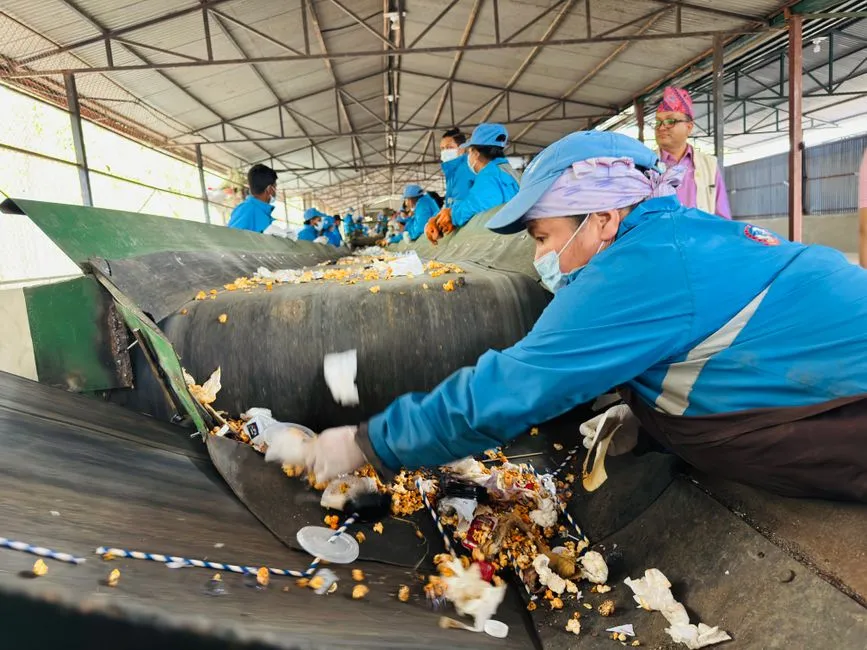
Sludge treatment accounts for 20–50% of total operating cost in wastewater treatment plants (per U.S. National Library of Medicine, S4), making it the single largest controllable OPEX line after energy. On Saskatoon tenders, the dewatering train is routinely under-sized because biosolids logistics in the province are constrained and disposal routes are limited.
Thickening precedes dewatering: gravity thickening for primary sludge, and DAF or gravity belt thickening for biological sludge. Dewatering on Saskatchewan industrial duty is dominated by the plate-and-frame filter press, with 1–500 m² filtration area available from manual to fully automatic PLC configurations and a typical cake at ~20% solids (per S5). For high-flow plants a high-efficiency sedimentation tank upstream of the press improves capture and reduces polymer consumption. Resource recovery is no longer optional: anaerobic digestion produces biogas for combined heat and power, and treated biosolids can be land-applied under Saskatchewan nutrient management rules — the EPA, cited in S4, frames resource recovery as necessity rather than trend. The sizing discipline that prevents the dewatering unit from becoming the bottleneck is simple: size the dewatering train to the biological MLSS yield, approximately 0.4–0.6 kg TSS per kg BOD removed for CAS, and lower for MBR because the longer SRT converts more substrate into cell maintenance and lower net yield.
2026 CAPEX, OPEX, and Vendor Selection for Saskatoon
The 2026 budget envelope below is expressed as an indicative turnkey installed range in Canadian dollars for a Saskatoon-located, cold-climate-rated facility, with OPEX as an indicative range per cubic metre of treated effluent. Treat these as envelope numbers for early-stage planning; a binding Class 3 estimate requires site-specific influent characterization, geotech, and a Process Guarantee Letter from the shortlisted vendor.
| Flow band | Train | Indicative 2026 turnkey CAPEX (CAD) | Indicative 2026 OPEX (CAD per m³) | Notes |
|---|---|---|---|---|
| 10 m³/day | Packaged MBR | Low six figures | Mid–high single-digit dollars | Skid MBR + chlorine; food/agribusiness default |
| 50 m³/day | Packaged MBR + DAF pre-treatment | Low-to-mid seven figures | Single-digit dollars | Food, rendering, light industrial; reuse-ready |
| 200 m³/day | CAS + DAF (no reuse) | Mid-to-high seven figures | Low single-digit dollars | Lowest CAPEX at this scale, no reuse |
| 200 m³/day | MBR + DAF + UF polish | High seven figures | Mid single-digit dollars | Reuse-ready; cold-climate premium 10–20% |
The published IWRM framework reports up to 30% OPEX reduction through improved resource efficiency and stakeholder collaboration (per S2); that is the upside target any competent vendor should be challenged to defend in proposal. On the procurement side, the 2026 Saskatchewan-specific items to verify are: documented cold-climate engineering (heat-traced, insulated, buried where feasible), ASME/CSA pressure vessel compliance, factory acceptance testing (FAT) at the supplier's facility, and a Canadian service radius for membrane replacement and instrument calibration. Vendor shortlist checklist: (1) published reference plants in cold climates with names you can call; (2) in-house PLC automation with remote monitoring; (3) membrane supply continuity with documented stocking; (4) demonstrable SaskWater / Saskatchewan Environmental Code experience; (5) ability to integrate DAF pre-treatment, UF polishing, and an automatic chemical dosing system from the same vendor, paired with a multi-media filter upstream of the polish train. Next steps for a defensible 2026 procurement are influent characterization, jar testing on DAF supernatant and biological sludge, and a 30–90 day pilot trial on the MBR skid at the actual site — not a vendor demo on a synthetic feed.
Frequently Asked Questions
Do I need a Saskatchewan-specific ETP design, or can I use a generic Canadian template?
Yes, you need a Saskatchewan-specific design. The Saskatchewan Environmental Code (Chapter E-10.2) sets the binding discharge and monitoring obligations, SaskWater defines operational targets, and the SSRP downstream context values every additional log of contaminant removal. On top of the regulatory layer, Saskatoon winter design temperatures approaching -40 °C require insulated or buried tanks, heat-traced piping, snow-load headworks, and viscosity-corrected aeration sizing that no generic template covers by default.
MBR vs conventional activated sludge for a Saskatoon industrial plant — which wins?
MBR wins on cold-climate duty, footprint, and reuse readiness. An enclosed MBR reactor with submerged PVDF membranes retains heat and biomass far better than an open activated-sludge tank, achieves up to 99% pathogen removal (per AWWA, S4), and delivers an effluent below 1 µm that is reuse-ready without a separate clarifier. CAS is the lower-CAPEX choice for municipal duty where reuse is not on the table and footprint is not constrained, but it carries the secondary clarifier, weather-exposed biology, and a winter heat-loss penalty that a Saskatoon buyer should price explicitly.
What is the typical 2026 CAPEX for a packaged MBR in Saskatchewan?
Indicative 2026 turnkey CAPEX in CAD is in the low six figures for a 10 m³/day packaged MBR skid, the low-to-mid seven figures for a 50 m³/day MBR + DAF pre-treatment train suitable for food or light industrial duty, and the high seven figures for a 200 m³/day MBR + DAF + UF polish train that is reuse-ready. The cold-climate premium versus a generic Canadian install runs 10–20% on civil and insulation, and these figures should be confirmed with a Class 3 estimate after influent characterization.
Is DAF a standalone effluent treatment plant?
No. A Dissolved Air Flotation unit (4–300 m³/h) is a high-rate pre-treatment step that removes FOG, oils, and suspended solids, and it must always be paired with downstream biological treatment and a disinfection step. DAF on its own does not produce a discharge- or reuse-compliant effluent.
What discharge limits apply to a Saskatoon effluent treatment plant in 2026?
Limits are set by the Saskatchewan Environmental Code and refined through site-specific permits issued by the Saskatchewan Ministry of Environment, with SaskWater operational targets applied to provincially regulated systems. The actual numerical limits are site-specific — they depend on discharge location, SSRP context, receiving water use, and any on-site reuse plan — so a defensible 2026 specification starts with influent characterization and an early conversation with the regulator, not with a generic limits table.