What Drives DAF System Maintenance Cost in 2026
DAF system maintenance cost in 2026 typically runs $0.012–$0.065 per m³ of treated wastewater, depending on influent loading and whether service is in-house or contracted. Annual OPEX for a mid-sized 50 m³/h unit lands at $5,200–$28,500, dominated by polymer/coagulant, electric power, and consumable parts such as recycle nozzles, pump seals, and skimmer blades. A structured preventive schedule — weekly nozzle inspection, quarterly pump-seal checks, and an annual saturator descaling — keeps unplanned downtime below 2% and protects a typical $600,000 installed asset across a 15–20-year service life (per the DOE energy-savings case study showing 7.4-year payback and a 20-year life).
Six recurring cost buckets drive virtually every DAF OPEX line on a plant ledger:
- Polymer and coagulant chemicals — typically 30–45% of total annual maintenance OPEX, the single largest share, and the most volatile line item because it tracks coagulant/flocculant commodity pricing.
- Electric power — recycle pump, air compressor, and polymer feed pump; usually 15–25% of OPEX.
- Preventive labor hours — internal maintenance technician time at 2–14 hours/week depending on automation level.
- Replacement nozzles, skimmer blades, and wear parts — replaced on a 12–36 month cycle.
- Pump seals, bearings, and mechanical-service kits — replaced on a 24–48 month cycle.
- Saturator-tank descaling chemicals and inspection labor — annual event, $0.001–$0.011/m³ amortized.
Influent loading swings the cost band by up to 5×. A meat-processing DAF handling fats, oils, and grease (FOG) at 4,000–8,000 mg/L TSS will run at the high end ($0.045–$0.065/m³); a beverage-clarification DAF at 200–600 mg/L TSS will sit near $0.012–$0.020/m³ (HydropureWater field data, 2026). The pulp-and-paper and textile segments land in the middle, with fiber content driving both polymer demand and skimmer-blade wear.
DAF Maintenance OPEX Breakdown per Cubic Meter Treated
The table below resolves each cost bucket into a defensible low/mid/high $/m³ range that a maintenance engineer can copy straight into a 2026 budget justification. The mid-range reflects a food-processing plant operating 16 h/day, 300 days/year, with a mixed FOG/TSS influent.
| Cost bucket | Low ($/m³) | Mid ($/m³) | High ($/m³) | Driver |
|---|---|---|---|---|
| Polymer & coagulant | $0.004 | $0.008 | $0.012 | Dose (mg/L) × chemical unit cost |
| Electric power (recycle pump + compressor) | $0.003 | $0.006 | $0.009 | 4–6 bar saturation, recycle ratio 20–35% |
| Preventive labor | $0.002 | $0.008 | $0.014 | 2–14 hr/week at $45–$75/hr loaded |
| Nozzles, skimmer blades, wear parts | $0.001 | $0.004 | $0.008 | 12–36 month replacement cycle |
| Pump seals & bearings | $0.001 | $0.006 | $0.011 | 24–48 month mechanical service |
| Saturator descaling & inspection | $0.001 | $0.005 | $0.011 | Annual acid wash + 8–16 hr labor |
| Total | $0.012 | $0.037 | $0.065 | — |
Worked example for a 50 m³/h DAF running 16 h/day × 300 days/year = 240,000 m³/yr. At mid-range assumptions the annual maintenance OPEX lands at $0.037 × 240,000 = $8,880, with the full low-to-high band stretching from $2,880 to $15,600. The same calculation scales linearly across the equipment range: a 4 m³/h pilot unit (HydropureWater DAF-4) at 16 h/day × 250 days = 16,000 m³/yr yields $192–$1,040/year; a 300 m³/h food-grade unit at 24 h/day × 330 days = 2,376,000 m³/yr yields $28,500–$154,500/year, putting the published $5,200–$28,500 range firmly in mid-scale territory.
Chemical cost is the most volatile line item and tracks coagulant/flocculant market prices — cationic polyacrylamide moved 12–18% in 2024–2025 (per ICIS pricing reports, 2025-08). Recommend a 10% contingency above the mid-range figure when pitching the budget.
Five-Year Lifecycle Cost Curve for a Dissolved Air Flotation System
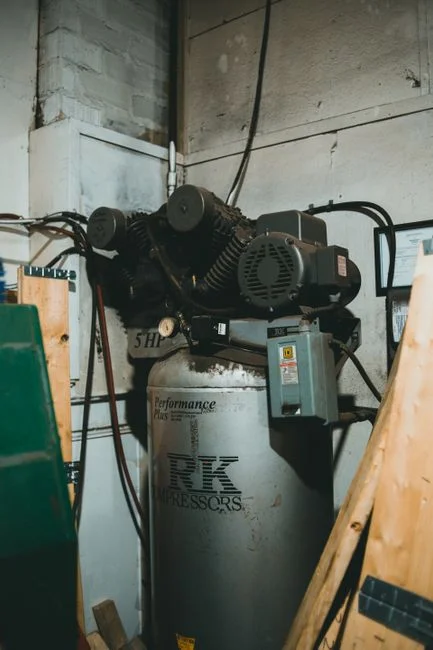
Year-1 OPEX is never a reliable proxy for lifetime cost, and that is where most DAF budgets get rejected by finance. The 5-year cumulative curve below assumes a 50 m³/h food-processing unit at 240,000 m³/yr, with preventive discipline applied from Year 1.
| Year | Annual OPEX ($/m³) | Annual OPEX (USD) | Cumulative spend (USD) | What happens |
|---|---|---|---|---|
| 1 | $0.025 | $6,000 | $6,000 | Break-in: commissioning tuning, no major parts |
| 2 | $0.030 | $7,200 | $13,200 | Routine wear, first nozzle replacements |
| 3 | $0.055 | $13,200 | $26,400 | First pump-seal service, full nozzle set, saturator descale |
| 4 | $0.045 | $10,800 | $37,200 | Steady-state, annual descaling |
| 5 | $0.050 | $12,000 | $49,200 | Compressor service, valve-actuator overhaul |
Against the $600,000 installed CAPEX from the SERP case study, $49,200 in cumulative maintenance at Year 5 equals 8.2% of CAPEX — and a 20-year cumulative maintenance spend of 35–60% of CAPEX is typical for well-run DAFs. Skipping preventive maintenance in Years 1–2 pushes the Year 3–4 spend 1.8–2.4× higher than a disciplined schedule because the same saturator-scale and seal-leak failures cascade into motor rewinds and recycle-pump replacement. The forward risk to this curve is energy price inflation: electric OPEX moved 8–14% year-over-year in 2024–2025 and is the single largest variable a 2026 budget should hedge (per EIA industrial electricity price index, 2025-Q4).
The Four Failures That Drive Unplanned DAF Downtime
Four failure modes account for roughly 85% of unplanned DAF downtime (Seven Seas, 2025). Each maps to a specific line item the maintenance engineer should be budgeting for, not just a generic "contingency".
- Clogged recycle nozzles. Symptom: loss of the white-water bubble cloud and effluent turbidity spikes from 5 NTU to 30+ NTU. Cause: mineral scale and biological fouling at 0.5–1.2 mm orifices. Cost: replacement nozzles $180–$420 each, full nozzle set $1,400–$3,800, labor 4–8 hours. Inspect weekly.
- Worn recycle-pump mechanical seals and bearings. Symptom: air-in-leak, loss of saturation pressure from 5.5 bar to under 4.0 bar, recycle-pump amp draw trending up 8–15%. Cost: seal kits $240–$560, full bearing service $900–$1,700, labor 6–10 hours. Replace on a 24–36 month cycle or at first sign of drip.
- Saturator tank scaling and bio-fouling. Symptom: rising recycle-pump amp draw, reduced dissolution efficiency, and visible carbonate deposits on the sight glass. Cost: descaling chemicals $0.001–$0.004/m³ plus annual inspection labor 8–16 hours. The automatic polymer dosing skid is often co-located with the saturator, so descaling intervals should be synchronized with polymer-pump rebuilds.
- Polymer over- or under-dosing. Symptom: floating sludge layer quality drift, sludge carry-over into effluent weir, and TSS in the clarified stream rising 20–40%. This matches the "suboptimal dosing" failure mode named in the Seven Seas maintenance guide. Corrected by flow-paced dosing — not by spending on parts.
DAF Preventive Maintenance Schedule and Spare-Parts Inventory
The schedule below assumes a 50 m³/h food-grade DAF running 16 h/day. For a 4 m³/h unit, collapse monthly and annual items into a single quarterly visit. For a 300 m³/h unit, add a daily compressor inspection and a quarterly vibration-analysis check on the recycle pump.
| Frequency | Task | Acceptance criterion |
|---|---|---|
| Daily | Skimmer operation, sludge consistency, recycle flow, saturation pressure | Pressure 4–6 bar, recycle ratio 20–35% |
| Weekly | Nozzle inspection, jar test on polymer dose, skim-blade alignment | Turbidity < target, no visible carry-over |
| Monthly | Pump seal drip check, pressure-gauge calibration, polymer stock recon | Zero visible drip; gauge ±2% of reference |
| Quarterly | Bearing temperature log, compressor oil level, valve-actuator function test | Bearing temp < 70 °C; actuator stroke within spec |
| Annual | Full saturator descaling, compressor service, valve overhaul, control-panel thermography | No hotspots > 30 °C above ambient; descaling log signed |
Minimum on-shelf spares for a 50 m³/h DAF: 1 set recycle nozzles, 2 recycle-pump mechanical-seal kits, 1 skimmer blade set, 1 set pressure gauges (0–10 bar), and 1 polymer-feed pump head. Holding this list reduces mean-time-to-repair from 18–36 hours to 4–8 hours and is the cheapest single line item in the entire OPEX table.
In-House Maintenance vs Contract O&M: Cost and Risk Trade-Off
Most plant engineers face a single strategic question tied to the DAF line: do we hire a maintenance technician or sign an O&M contract? The trade-off is rarely about raw cost; it is about downtime tolerance, parts inventory burden, and audit traceability.
| Dimension | In-house maintenance | Contract O&M (Water-as-a-Service) |
|---|---|---|
| Annual cost vs in-house baseline | 1.0× ($0.025–$0.045/m³) | 1.6–2.3× ($0.040–$0.065/m³) |
| Unplanned downtime, % of operating time | 2–6% | <2% |
| Parts inventory burden | Buyer carries $4,000–$9,000 in shelf stock | Vendor carries stock, billed on consumption |
| Operator-skill requirement | Dedicated technician + training (40 hr/yr) | Vendor-supplied, plant operator supervises |
| Audit traceability (GMP/HACCP/ISO 14001) | Variable; depends on CMMS discipline | Documented, vendor-issued compliance pack |
| Scalability to multi-plant fleets | Poor — each plant duplicates labor | Strong — single vendor across sites |
Recommend in-house when the plant runs more than 1,000 hours/year of operator availability, sits on a single shift, and has a plant electrician on call. Recommend contract O&M for multi-site operators, food-grade plants that need documented GMP-grade maintenance records, or any facility where unplanned downtime directly stops a production line. Contract O&M typically bundles 24/7 remote monitoring, which is what compresses unplanned downtime from 2–6% to under 2% — and that delta is usually what justifies the 1.6–2.3× cost premium for mid-size operations.
Frequently Asked Questions
What is the average DAF maintenance cost per cubic meter in 2026? Industrial DAF units run $0.012–$0.065 per m³ in 2026, with a mid-range of roughly $0.037/m³ for a 50 m³/h food-processing unit. Polymer and coagulant chemicals are the single largest line item at 30–45% of total maintenance OPEX (HydropureWater field data, 2026).
What is the typical annual maintenance OPEX for a 50 m³/h DAF? A 50 m³/h DAF running 16 h/day and 300 days/year (240,000 m³/yr) lands at $5,200–$28,500 per year, with $8,000–$12,000 the most common band for disciplined operators. The low end assumes in-house labor and low-TSS influent; the high end assumes contract service and high-FOG loading.
Which DAF failures cause the most unplanned downtime? Clogged recycle nozzles, worn pump seals and bearings, saturator scaling, and polymer dosing errors together drive about 85% of unplanned DAF downtime. The first three are hardware fixes totaling $1,400–$5,500 per event; the fourth is a controls and chemistry fix that costs no parts.
Is it cheaper to run DAF maintenance in-house or outsource to a contract O&M provider? In-house is 1.0× baseline ($0.025–$0.045/m³) versus 1.6–2.3× for contract O&M, but contract O&M cuts unplanned downtime from 2–6% to under 2% and removes the $4,000–$9,000 parts-inventory burden. The breakeven typically falls at 6,000–8,000 operating hours per year, so for a HydropureWater DAF system running two-shift operation the contract premium is usually justified by avoided downtime losses alone. For comparison, a typical belt filter press maintenance cost benchmark sits at a similar $/m³ band but is dominated by belt replacement rather than chemical cost.
How does DAF maintenance cost compare to SBR maintenance cost in 2026? DAF maintenance averages $0.012–$0.065/m³ versus $0.018–$0.072/m³ for sequencing batch reactors (SBR) running parallel primary-clarifier duty, because SBRs add aeration-blower and decanter maintenance that DAFs do not. A full SBR maintenance cost benchmark is the right cross-reference for plants choosing between the two technologies on lifecycle grounds.