What is multiple effect evaporator operating cost in 2026?
Operating a multiple effect evaporator (MEE) in 2026 typically costs $0.42–$2.80 per cubic meter of feed, with a project-grade band of $0.95–$1.65/m³ for most mid-TDS chemical and pharma duties (HydropureWater field data, 2026). That headline number bundles seven line items: saturated steam, electrical power for pumps and vacuum, cooling water, anti-scaling and cleaning chemicals, maintenance parts, direct labor, and a plant overhead allowance. It explicitly excludes capital depreciation, feed pre-treatment (clarifier, softening, RO upstream of the evaporator), and concentrate disposal. A buyer who plugs this number into a project model should still carry capex at 1.8–2.5× the annual OPEX for a 3-effect falling-film MEE in 2026.
Steam drives 55–70% of the bill, which is why effect count matters more than any other design decision. Steam economy — kilograms of water evaporated per kilogram of live steam — climbs from roughly 0.91 in a single-effect unit to ~1.76 at 2-effect, ~2.5 at 3-effect, ~3.33 at 4-effect, and ~4.0 at 5-effect (per the Huagong Yuanli capacity/economy reference, 2023). The trade-off is a real capacity penalty at fixed heat-transfer area: every additional effect costs roughly 8–12% of throughput. Above 5-effect the classical configuration almost never pays back; from 6-effect onward the temperature differential across each effect collapses below 8–10 °C and the heat-transfer area balloons out of proportion. That is the line where MVR-hybrid configurations take over.
Line-item OPEX breakdown: what you actually pay per m³
The line items below are the seven cost drivers a CFO will see on the P&L. Stated 2026 unit prices let the reader swap in their own tariff and re-derive the per-m³ figure in five minutes.
Steam. A 3-effect MEE consumes 0.22–0.35 kg of saturated steam per kg of water evaporated; a 4-effect drops to 0.18–0.28 kg, and a 5-effect to 0.15–0.22 kg. At a 2026 industrial steam price of $12–18 per 1,000 kg in coastal China and $18–26 in inland Southeast Asia, that translates to $0.26–$0.63 per m³ water evaporated for a 3-effect unit, and $0.21–$0.57 for a 5-effect. The kg-steam-per-kg-water conversion follows directly from the steam-economy number — a 3-effect at economy 2.5 needs 1/2.5 = 0.40 kg steam per kg water, with the lower end of the 0.22–0.35 range reflecting heat recovery from vapor bleeding and feed preheating.
Electricity. Feed pump, vacuum pump, condensate pump, and the DCS/control loop together draw 8–18 kWh per m³ water evaporated depending on effect count and vacuum depth. At an industrial tariff of $0.06–$0.09/kWh (2026 China grid average for >1 MVA users) the electrical cost lands at $0.05–$0.16 per m³ water. A 5-effect with a deeper vacuum sits at the high end; a 2-effect at 0.6 bar absolute sits at the low end.
Cooling water. The vacuum condenser and the last-effect vapor condenser dominate. Typical demand is 1.2–1.8 m³ of treated cooling water per m³ evaporated at $0.10–$0.40 per m³ for once-through treated water, or $0.05–$0.18 per m³ for closed-loop cooling-tower makeup. That is $0.06–$0.72 per m³ evaporated, with a planning value of ~$0.20/m³ in most Chinese industrial parks.
Anti-scaling and cleaning chemicals. Acid CIP (typically 2–4% HCl or sulfamic for CaCO₃, plus NaOH for organic fouling) and an automatic anti-scaling dosing skid for continuous antiscalant feed (HEDP, ATMP, or polymaleic acid at 5–25 ppm) run $0.05–$0.18 per m³ feed in a well-run plant. High-silica or high-calcium brines push this to $0.30+/m³.
Maintenance, spares, instrumentation, and labor. Annual maintenance typically runs 1.5–3% of MEE capex (titanium tubes, gasket replacement, vacuum pump overhaul, instrument calibration). For a 10,000 t/y feed plant this works out to $0.04–$0.10 per m³ for spares and direct labor combined. The full annual maintenance picture, including tube-replacement intervals and CIP cycle scheduling, is mapped in detail in the companion MEE maintenance cost guide.
| Line item | Unit consumption (per m³ water evaporated) | 2026 unit price | Cost ($/m³ evaporated) | % of OPEX (typical 3-effect) |
|---|---|---|---|---|
| Saturated steam | 0.22–0.35 kg/kg | $12–18 / 1,000 kg | $0.26–$0.63 | 55–65% |
| Electricity | 8–18 kWh | $0.06–$0.09 / kWh | $0.05–$0.16 | 10–18% |
| Cooling water | 1.2–1.8 m³ | $0.10–$0.40 / m³ | $0.06–$0.72 (typ. $0.20) | 5–10% |
| Anti-scaling / CIP chemicals | 5–25 ppm antiscalant + 2–4% acid CIP | $1.20–$2.40 / kg | $0.05–$0.18 | 5–10% |
| Maintenance, spares, labor | 1.5–3% of capex/yr | — | $0.04–$0.10 | 5–8% |
| Overhead, insurance, lab | — | — | $0.02–$0.06 | 2–4% |
| Total | — | — | $0.46–$1.85 / m³ | 100% |
For a 3-effect MEE on a 50,000 mg/L chemical mother liquor at typical 2026 unit prices, the planning value is ~$1.10–$1.30/m³ feed.
Effect count vs steam economy vs capacity: choosing the right MEE configuration
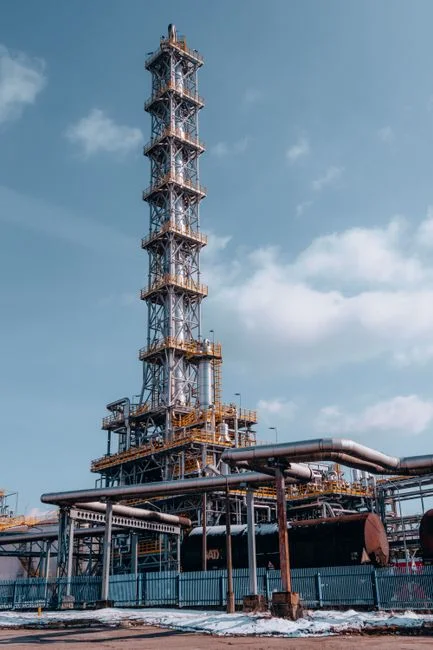
Effect count is a four-way trade-off: steam economy goes up, capex goes up, capacity per square meter of heat-transfer area goes down, and footprint grows. The classical relationship — captured in the Huagong Yuanli reference, 2023 — is that for a fixed heat-transfer area, capacity decreases as effect count rises because the available ΔT shrinks from ~50–60 °C in a 2-effect to ~30–35 °C in a 5-effect. Buyers who compare 2-effect vs 5-effect on steam alone miss this.
| Configuration | Steam economy (kg water / kg steam) | Capex multiplier (vs 2-effect) | $/m³ OPEX range (2026) | Suitable feed TDS | Typical application |
|---|---|---|---|---|---|
| 1-effect | ~0.91 | 0.7× | $1.80–$2.80 | <30,000 mg/L | Small volume, low-TDS, simple duty |
| 2-effect | ~1.76 | 1.0× | $0.85–$1.55 | <50,000 mg/L | Pharma solvent recovery, low-scaling feed |
| 3-effect | ~2.5 | 1.4–1.6× | $0.95–$1.65 | 30,000–80,000 mg/L | Chemical mother liquor, mixed pharma wastewater |
| 4-effect | ~3.33 | 1.8–2.1× | $1.05–$1.85 | 50,000–120,000 mg/L | High-salt brine, capacity-constrained plants |
| 5-effect | ~4.0 | 2.3–2.7× | $1.20–$2.10 | 80,000–180,000 mg/L | Steam-constrained sites, ZLD pre-concentrate |
| 6-effect (rare) | ~4.5 | 2.9–3.4× | $1.35–$2.30 | — | Almost never economic; MVR-hybrid preferred |
| MVR-hybrid (MEE + mechanical vapor recompression) | 8–12 effective | 2.5–3.5× | $0.42–$1.10 (electricity-dominated) | 30,000–250,000 mg/L | Coal-chemical ZLD, landfill leachate, salt recovery |
For 30,000–80,000 mg/L chemical or pharma wastewater the cost-optimum in 2026 is a 3-effect falling-film MEE at $0.95–$1.65/m³ feed. 4-effect and 5-effect become economic only when saturated steam exceeds ~$20/1,000 kg, when site steam is constrained, or when an existing 3-effect needs a debottleneck without additional boiler capacity. Where electricity is cheap (<$0.06/kWh) and the feed TDS is high enough to justify capex, an MVR-hybrid MEE breaks the classical economy-capacity trade-off by recompressing secondary vapor, reaching an effective 8–12 kg water per kg equivalent steam and pushing OPEX toward $0.42–$1.10/m³ with electricity replacing steam as the dominant line. Operating-cost tuning for that envelope is covered in the MEE maintenance cost guide.
How feed chemistry drives operating cost: TDS, viscosity and scaling risk
Two MEE plants at the same effect count can have 2–3× different operating costs purely on feed chemistry. Three bands carry the buyer from low to high OPEX.
Low-TDS (<30,000 mg/L) effluent, low scaling tendency: $0.42–$0.85/m³ feed. Steam still dominates, but at lower absolute duty because boiling-point elevation is small (≤3 °C) and CIP cycles stretch to 30–60 days. Falling-film MEE handles this band cleanly, and OPEX is largely a function of local steam tariff.
Mid-TDS chemical mother liquor (30,000–80,000 mg/L, calcium and sulfate scaling risk): $0.95–$1.65/m³ feed. Boiling-point elevation climbs to 5–12 °C, which steals ΔT and forces a 3-effect rather than 2-effect selection. Anti-scaling chemicals add $0.05–$0.18/m³, and CIP frequency rises to weekly or twice-weekly. Forced circulation or falling-film with online antiscalant dosing is the standard design.
High-TDS ZLD brine (80,000–250,000 mg/L, silica + hardness): $1.80–$2.80/m³ feed. The operating cost is driven up by frequent CIP cycles (sometimes daily), titanium or duplex heat-exchanger tubes to resist chloride pitting (capex up 25–40%), and pre-concentration upstream of the MEE to keep the MEE from becoming a crystallizer. An RO pre-concentration system ahead of the thermal step is a recognized route (Springer review, 2023) to lift feed TDS and reduce thermal MEE load by 30–50%, which is typically the single largest OPEX lever in a ZLD train.
Three real-industry OPEX benchmarks for 2026
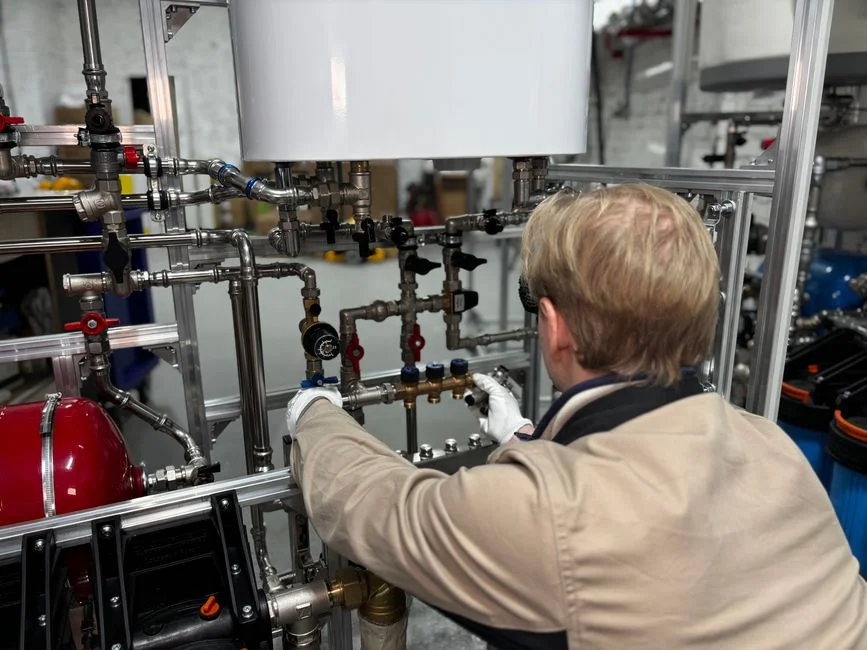
These three benchmarks are taken from HydropureWater field projects commissioned or re-benchmarked in 2025–2026. All assume saturated steam at $14/1,000 kg, electricity at $0.075/kWh, treated cooling water at $0.18/m³, and a 6,000–8,500 operating-hour year.
Chemical mother liquor (NaCl + organics, 60,000 mg/L, 3-effect falling-film MEE, 8 t/h feed): $1.20–$1.55/m³ feed. Steam at $0.42/m³, electricity at $0.11/m³, chemicals at $0.12/m³, maintenance and labor at $0.08/m³. Annual OPEX for a 50,000 t/y plant lands at $60,000–$77,500.
Pharma solvent-recovery MEE (mixed glycols/water, <5,000 mg/L TDS, 2-effect + MVR hybrid, 4 t/h feed): $0.55–$0.85/m³ feed. Electricity at $0.32/m³ replaces most of the steam line because MVR does the heavy lifting. Annual OPEX for a 30,000 t/y plant lands at $16,500–$25,500. How this benchmark compares against a whole-plant OPEX is mapped in the whole-plant OPEX benchmark.
High-salt ZLD on coal-chemical or landfill leachate (180,000 mg/L, 4-effect + MVR, 6 t/h feed): $1.95–$2.65/m³ feed. Steam at $0.31/m³, electricity at $0.45/m³, chemicals at $0.31/m³ (high silica + CaSO₄), titanium tube maintenance at $0.18/m³. Annual OPEX for a 45,000 t/y plant lands at $87,750–$119,250.
How to reduce multiple effect evaporator operating cost: 7 actionable levers
The breakdown above points directly at where to attack the bill.
- Add RO pre-concentration upstream. A RO pre-concentration system at 60–75% recovery typically drops the thermal MEE load by 30–50%, and because steam is 55–70% of OPEX that translates into a 15–35% reduction in the per-m³ figure.
- Recover condenser and barometric hot-well heat. Plate heat exchangers on the condensate and vacuum-condenser outlet pre-heat feed from ambient to 60–75 °C, cutting live-steam demand by 8–12%.
- Switch the first effect to MVR where electricity is cheap. An MVR first effect at $0.05/kWh cuts steam to 0.10–0.18 kg/kg water and pushes total OPEX into the $0.42–$1.10/m³ range.
- Install online TDS and conductivity sensors. Avoid over-evaporating clean distillate. A 5% reduction in average evaporation duty on a $1.20/m³ plant is $72,000/yr at 120,000 t/y feed — easy money.
- Use falling-film or forced-circulation designs for scaling-prone feeds. Short residence time and high tube velocity extend CIP cycles 2–3×, dropping chemical and labor OPEX by $0.04–$0.09/m³.
- Run effects at deeper vacuum (lower absolute pressure). Each 100 mbar reduction in last-effect pressure cuts boiling temperature by 4–6 °C, reduces CaSO₄ scaling rate by roughly 30%, and stretches CIP intervals.
- Negotiate interruptible or off-peak steam tariff. Where grid policy allows, shifting evaporator load to off-peak steam at $8–10/1,000 kg instead of $14–18/1,000 kg cuts the steam line 30–40%.
Tracking and verifying these levers is the job of a digital KPI dashboard for evaporators, which closes the loop between OPEX planning and live plant data.
Frequently Asked Questions
What is the typical multiple effect evaporator operating cost per m³ in 2026? A multiple effect evaporator operating cost in 2026 typically runs $0.42–$2.80 per m³ of feed, with a planning value of $0.95–$1.65/m³ for a 3-effect MEE on mid-TDS chemical or pharma wastewater. Steam drives 55–70% of the bill, electricity 10–18%, and the balance is cooling water, anti-scaling chemicals, maintenance, and labor. The full line-item split is in the table above, and the effect-count driver is mapped in the companion MEE maintenance cost guide.
How much steam does an MEE use per ton of water evaporated? A 3-effect MEE uses 0.22–0.35 tons of saturated steam per ton of water evaporated, equivalent to a steam economy of 2.5–3.3 kg water per kg steam. A 4-effect drops the figure to 0.18–0.28 t/t, and a 5-effect to 0.15–0.22 t/t. At $14/1,000 kg steam that is $3.08–$4.90 of steam per ton of water for a 3-effect unit, which is the single largest cost line in any MEE P&L.
Is MEE or MVR cheaper to operate in 2026? MVR becomes cheaper than a classical MEE when electricity falls below ~$0.06/kWh and steam exceeds ~$20/1,000 kg, or when feed TDS is high enough to justify the higher capex. MVR OPEX runs $0.42–$1.10/m³ with electricity replacing steam as the dominant line; classical 3-effect MEE OPEX runs $0.95–$1.65/m³. Many 2026 ZLD trains use a hybrid: MVR first effect + 2 or 3 classical effects, capturing the best of both.
How does feed TDS change MEE operating cost? Feed TDS is the second-largest OPEX lever after effect count. Moving from a 20,000 mg/L effluent to a 180,000 mg/L high-salt brine roughly triples OPEX, from $0.55–$0.85/m³ to $1.80–$2.80/m³, because of higher boiling-point elevation, more frequent CIP, and the need for titanium or duplex metallurgy. RO pre-concentration upstream is the standard mitigation.
How do I choose between a 3-effect and 4-effect MEE? A 3-effect is the cost-optimum for 30,000–80,000 mg/L chemical or pharma wastewater at steam tariffs below $20/1,000 kg. Step up to 4-effect only when saturated steam exceeds $20/1,000 kg, when site steam is capacity-constrained, or when the existing 3-effect needs debottlenecking without a new boiler. The trade-off matrix above quantifies the capex-to-OPEX crossover. Whole-plant context is provided in the whole-plant OPEX benchmark.