What Makes Hotel Wastewater in Belo Horizonte Different
Hotel wastewater in Belo Horizonte runs at a higher organic strength than typical domestic sewage, with BOD often in the 250-400 mg/L range and COD 1.8-2.2× BOD when kitchen FOG and laundry surfactants are not pre-separated (industry-typical range, 2026). The diurnal curve is sharp: breakfast peak (07:00-10:00), check-in/cleaning peak (14:00-17:00), and a second bathing peak (20:00-23:00) produce instantaneous factors of 2.5-3.0× the daily average. Seasonal occupancy swings in resort districts add another 20-40% above the design average, which is why equalisation upstream of the membranes is non-negotiable.
Belo Horizonte sits at roughly 850 m altitude with an annual mean of about 21 °C and mild winters rarely below 13 °C (per INMET climatological normals for Belo Horizonte/Sete Lagoas station). That temperature band sits inside the mesophilic optimum for activated sludge (15-30 °C) without enclosure heating, which simplifies the plant room and removes one line item from the CAPEX. It also keeps MLSS viscosity manageable, so submerged PVDF cassettes can run at the upper end of their flux envelope without cold-water derating that high-altitude projects in La Paz or Bogotá have to budget for.
The canonical sizing anchor for this asset class is the 200-bed, 5-star hotel reference plant described in industry case literature, which runs at 250 m³/d, or 1.25 m³ per bed-day, with effluent that meets the wastewater reuse standard for non-potable end uses (per imemflo hotel MBR reference plant, 2026). The Minas Gerais water-stress picture sharpens the case for reuse: the São Paulo/Southeast basin that supplies much of the state's imported power and supply-chain demand holds less than 2% of Brazil's water while supporting nearly a quarter of the population (per WaterWorld coverage of the Aquapolo project, 2024). A hotel that treats and reuses 60-70% of its wastewater for toilet flushing, irrigation and cooling-tower make-up pulls 80-120 m³/d off the municipal grid for a mid-sized property, which is the number that justifies MBR over a conventional activated-sludge package.
Regulatory Envelope: CONAMA 430/2011 and COPAM/CERH-MG 01/2008
CONAMA Resolução 430/2011 is the federal effluent quality baseline for sewage discharge in Brazil. It sets BOD at ≤ 120 mg/L or ≥ 60% removal, COD typically ≤ 200 mg/L, pH 5-9, temperature < 40 °C, and oils and greases < 50 mg/L for discharge to water bodies. A correctly specified submerged MBR comfortably beats these numbers — typical MBR permeate sits at BOD < 5 mg/L, COD < 30 mg/L, TSS < 1 mg/L (per imemflo MBR performance data, 2026) — so the federal limit is rarely the binding constraint for an MBR project in Minas Gerais.
The Minas Gerais state overlay is COPAM Deliberação Normativa Conjunta COPAM/CERH-MG n.º 01/2008, which tightens discharge quality for receiving water bodies and adds explicit parameters for water reuse — turbidity, faecal coliforms, residual chlorine, and end-use restrictions. For a hotel targeting on-site reuse, COPAM/CERH 01/2008 is the document the regulator will quote when reviewing the project, and it is the reason a packaged MBR is specified in the first place: a conventional activated-sludge package discharging to sewer can be approved under CONAMA 430 alone, but the moment toilet flushing, irrigation or cooling-tower make-up is in scope, the tighter state parameters and reuse clauses kick in.
Define the term an engineer will see on the datasheet: the wastewater reuse standard referenced in the 200-bed reference case is the quality envelope (BOD < 10 mg/L, TSS < 5 mg/L, turbidity < 2 NTU, faecal coliforms < 200 CFU/100 mL or per COPAM clause) that makes non-potable reuse defensible to a CONAMA/COPAM reviewer. Packaged MBR is the simplest technology that hits this envelope without a tertiary polishing stage — and it is the technology the reference plant uses to meet the wastewater reuse standard the regulator is auditing against (per imemflo hotel MBR reference, 2026).
Hollow-Fiber vs Flat-Sheet MBR: Which Module Fits a BH Hotel
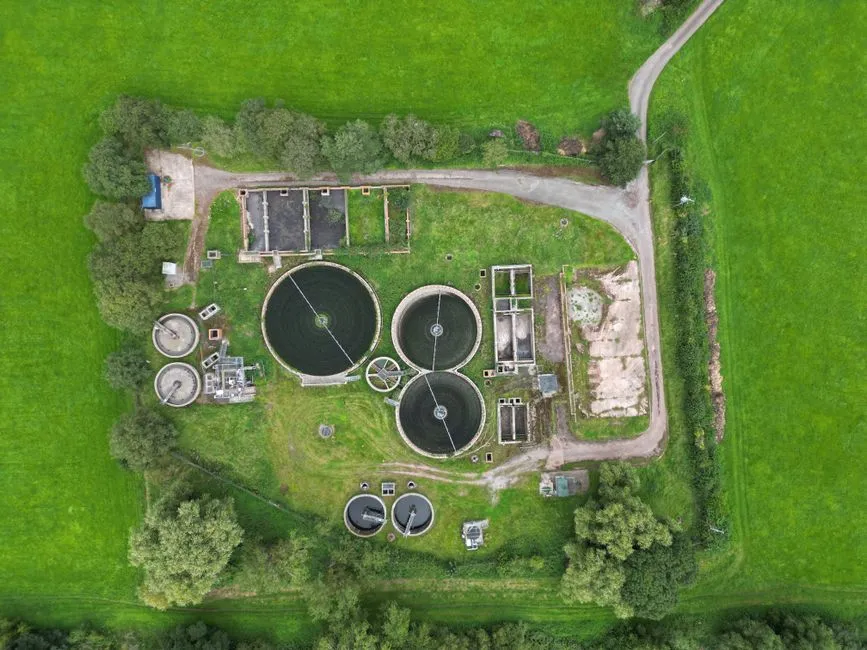
Both submerged MBR formats can be specified for a Belo Horizonte hotel, and the choice is driven by influent risk profile and footprint, not by effluent quality. A side-by-side view helps the EPC consultant defend the selection in front of the hotel owner.
| Parameter | Hollow-Fiber (HF) MBR | Flat-Sheet (FS) MBR — DF series |
|---|---|---|
| Membrane material | PVDF, 0.1-0.4 µm nominal pore | PVDF, 0.1 µm nominal pore |
| Packing density | High (small cassette footprint) | Moderate (larger cassette footprint) |
| Air-scour energy | Intermittent, lower continuous duty | Continuous via integrated aeration box, 10-20× lower than external cross-flow |
| Flow per cassette | Up to ~50-80 m³/d depending on supplier (Suez, Dow, DuPont, Mitsubishi) | 32-135 m³/day per cassette |
| Membrane area per cassette | 25-40 m² typical | 80-225 m² |
| Replaceable elements | Cassette-level replacement | Individual sheet replacement, no crane needed |
| FOG/laundry tolerance | Moderate; sensitive to fouling slugs | High; integrated aeration scour handles FOG spikes |
| Best fit in BH hotel | New-build with footprint-constrained basement and moderate FOG | Retrofit with on-site laundry or kitchen FOG > 50 mg/L |
The HF format wins on packing density and membrane-area cost, which is why it dominates new-build hotel basements in tight urban sites. The FS format — illustrated by the DF series flat-sheet MBR module — wins on operational tolerance: the integrated aeration box continuously scours the membrane surface, so a 30-minute slug of laundry surfactant that would force a CIP on an HF cassette is handled in normal operation. For a 200-room BH hotel with on-site laundry, FS is the lower-risk choice; for a 100-room business hotel with no laundry and a tight plant room, HF is the lower-cost choice. Both formats are available as a factory-tested packaged MBR wastewater treatment system on a single skid for BH retrofits.
Packaged, Skid-Mounted or Containerised: Picking the Form Factor
A packaged MBR STP is a pre-assembled, factory-tested, PLC-automated unit delivered on a skid or inside an ISO 20/40 ft container for plug-and-play installation on site. The biological tank, membrane cassette, aeration blowers, permeate pump, CIP dosing and control panel are integrated and wet-tested before shipping, so site work reduces to a concrete base, an inlet pipe, an outlet pipe and a power drop. For a Belo Horizonte hotel basement with limited crane access and a tight construction window, that factory-test step is the difference between a 6-week and a 16-week install.
For flows below roughly 5 m³/h (≤ 120 m³/d), a WSZ underground A/O package plant covering 1-80 m³/h is the lower-cost alternative — but only when reuse is not targeted. WSZ delivers conventional activated-sludge effluent and still requires a separate clarifier and tertiary polishing if the project targets non-potable reuse. The decision rule is straightforward: if the datasheet says "sewer discharge only," WSZ is the answer; if it says "reuse for toilet flushing or irrigation," the MBR's elimination of the secondary clarifier is the structural reason the plant fits a hotel basement at all (per imemflo MBR space-efficiency note, 2026), and packaged MBR is the answer.
Typical BH urban hotel constraints — basement plant rooms, no odorous unit above ground, restricted crane windows, tight commissioning schedules — all favour a skid or ISO-container MBR over a stick-built concrete tank. The containerised form factor also keeps the membrane cassettes indoors and out of direct UV, which is the single biggest cause of accelerated PVDF ageing in tropical sites.
Sizing a Packaged MBR STP for a Belo Horizonte Hotel
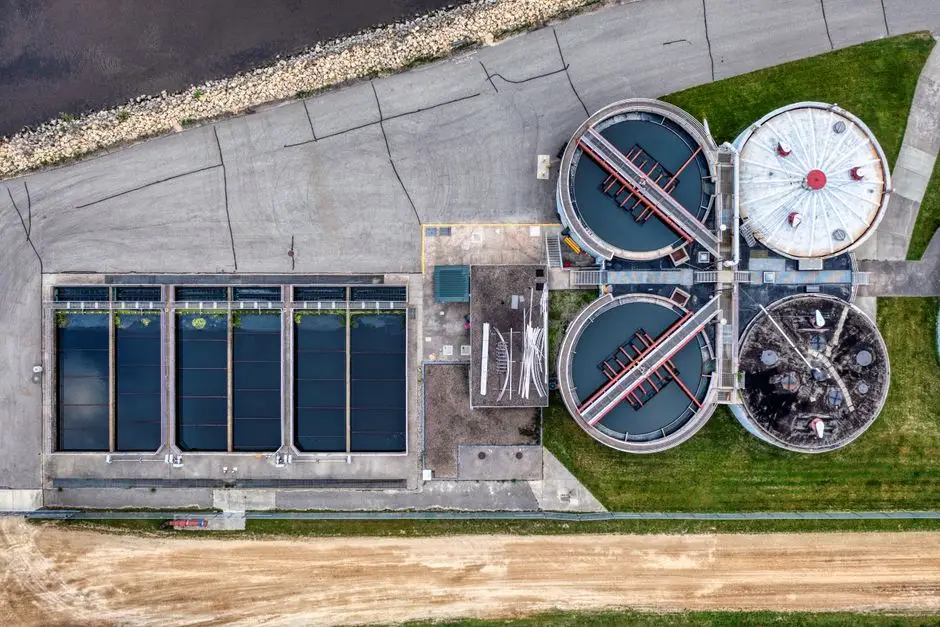
The sizing rule of thumb for an urban hotel is 0.25-0.40 m³ per guest-night of average flow, plus a kitchen allowance of 0.02-0.04 m³ per cover and a laundry allowance of 0.05-0.10 m³ per kg of laundry processed. Apply a peak factor of 2.0-2.5× the daily average to size the upstream equalisation buffer so the membrane cassettes see a dampened load and the permeate pump does not cycle on the morning peak.
| Hotel size | Rooms (assumed 1.8 beds avg.) | Avg. daily flow (m³/d) | Peak flow with 2.25× factor (m³/d) | Recommended MBR cassettes (DF series @ 80 m³/d net) |
|---|---|---|---|---|
| Boutique | 50 | 30-45 | 70-100 | 2 |
| Mid-scale business | 100 | 60-90 | 135-200 | 2-3 |
| 5-star reference (S1) | 200 | 200-250 | 450-560 | 3-4 |
| Resort / conference | 500 | 500-700 | 1,125-1,575 | 8-10 |
The 200-bed 5-star hotel at 250 m³/d checks the 200-room row at 1.25 m³/bed-day, which sits at the upper end of the 0.25-0.40 m³/guest-night × 2.0-3.0 beds-per-room band once kitchen and laundry are added. If the hotel runs on-site laundry, push the per-bed allocation to the 1.0-1.3 m³/bed-day range; if laundry is outsourced and kitchen flow is segregated, the 0.8-1.0 m³/bed-day figure is defensible. Always size the equalisation tank to hold at least one full peak shift (8-12 hours of average flow) so the membranes see a steady load.
Pre-Treatment, Disinfection and Reuse Polishing
MBR is the core, not the whole plant. A GX rotary mechanical bar screen with 2-3 mm aperture must protect the biological stage from wipes, hair and linen fibres — these are the single most common cause of membrane fouling in hotel MBRs and the cheapest item to prevent. For kitchen and laundry FOG above 50-80 mg/L, a dissolved air flotation system rated 4-300 m³/h should sit ahead of the equalisation tank to strip FOG before it coats the membranes. Note the industry pattern: many hoteliers install a separate grey-water treatment plant for laundry waste specifically to drop the FOG and surfactant load on the MBR (per imemflo hotel MBR note, 2026) — this is the standard workaround when the laundry is in-house and the surfactant load is high.
For the polishing/disinfection step, match the technology to the reuse end use. UV is the right choice for irrigation reuse because it is effective against chlorine-resistant Cryptosporidium and Giardia without leaving a residual that damages downstream soils; a UV sterilizer for reuse water at 40 mJ/cm² is the typical spec. Chlorine dioxide is the right choice for toilet-flushing reuse, where a residual of 0.2-0.5 mg/L is required to keep the reuse loop biologically stable in the distribution piping. If the project targets unrestricted reuse, add RO downstream of the MBR with a automatic chemical dosing skid for antiscalant and pH conditioning — the MBR permeate protects the RO from fouling, which is the same architecture used at the Aquapolo Ambiental project in São Paulo (per WaterWorld, 2024).
CAPEX and OPEX Bands for a 2026 Packaged MBR STP in Minas Gerais
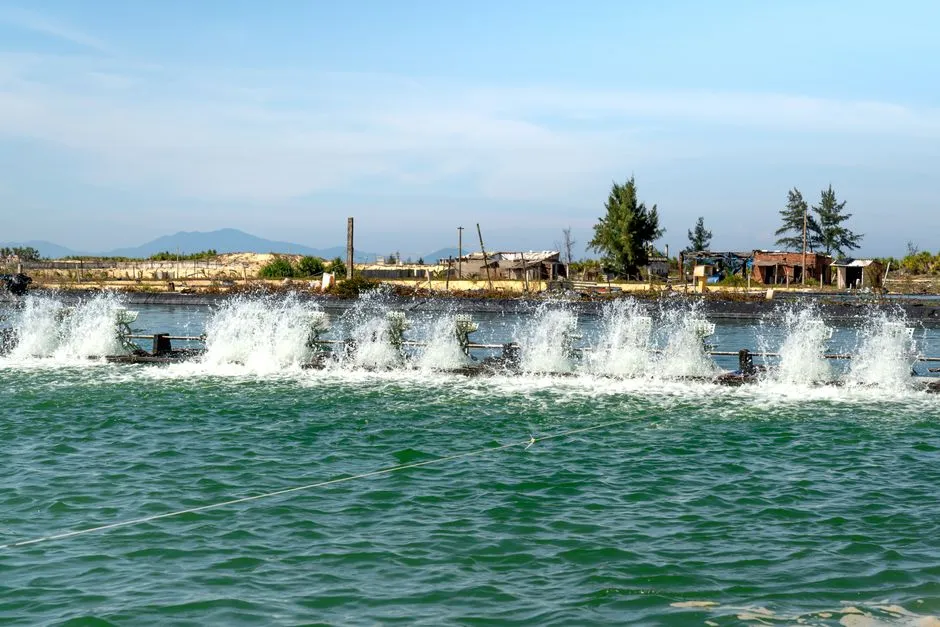
For a 50-500 m³/d packaged MBR STP in Minas Gerais in 2026, the turnkey CAPEX band is approximately R$ 18,000-35,000 per m³/d of installed capacity, all-in for equipment, freight, installation and commissioning (indicative 2026 range, no single public source confirms a BRL figure at time of writing). A 200 m³/d plant — the size of the reference hotel — therefore lands in a R$ 3.6-7.0 million envelope, with the lower end achievable on a greenfield site and the upper end reflecting basement retrofit and acoustic enclosure costs. Add 15-25% for RO polishing if the reuse target is unrestricted.
OPEX for a packaged MBR STP in 2026 sits in the R$ 2.5-4.5 per m³ treated band, dominated by energy for membrane aeration (typically 0.4-0.8 kWh/m³) and periodic chemical CIP (clean-in-place) every 2-4 weeks with sodium hypochlorite and citric acid. Membrane replacement is a deferred cost of roughly 8-12% of CAPEX amortised over a 7-10 year membrane life (per imemflo MBR low-power-consumption note, 2026). The trade-off against a conventional activated-sludge package is straightforward: MBR carries a 30-60% CAPEX premium and similar OPEX, but it returns a built-in reuse stream worth R$ 8-15 per m³ in offset municipal water and sewer charges — a payback of 4-6 years for a 200 m³/d hotel that reuses 60% of its effluent.
Frequently Asked Questions
What flow rate should I size a packaged MBR STP for in a Belo Horizonte hotel?
Use 0.25-0.40 m³ per guest-night of average flow, plus 0.02-0.04 m³ per kitchen cover and 0.05-0.10 m³ per kg of on-site laundry, with a 2.0-2.5× peak factor for the upstream equalisation buffer. A 200-bed hotel typically lands at 200-250 m³/d, matching the published 5-star reference plant at 1.25 m³/bed-day.
Hollow-fiber or flat-sheet MBR for a 200-room BH hotel with on-site laundry?
Specify flat-sheet (FS) PVDF MBR. The integrated aeration box continuously scours the membrane, tolerates the FOG and surfactant spikes that an on-site laundry produces, and allows individual sheet replacement without a crane. Hollow-fiber is the lower-cost option only when the hotel has no on-site laundry and a tight plant-room footprint.
Which CONAMA or COPAM limit drives the MBR design?
For a sewer-discharge-only project, CONAMA Resolução 430/2011 (BOD ≤ 120 mg/L or ≥ 60% removal, pH 5-9, O&G < 50 mg/L) is the binding federal baseline. The moment non-potable reuse is in scope, COPAM Deliberação Normativa Conjunta COPAM/CERH-MG n.º 01/2008 tightens the envelope — turbidity, faecal coliforms and end-use restrictions — and is the document the Minas Gerais regulator will enforce.
How long does delivery and install take for a packaged MBR STP in Minas Gerais?
Factory lead time for a 50-500 m³/d packaged MBR STP is typically 10-14 weeks ex-works, plus 2-3 weeks for inland freight to Minas Gerais and 3-5 weeks for site installation, commissioning and the COPAM discharge/reuse permit. A 20-foot ISO containerised MBR for a sub-100 m³/d hotel can compress the on-site window to 2-3 weeks.
When do I need to add RO polishing downstream of the MBR?
Add RO polishing when the reuse target is unrestricted (food crops, cooling-tower make-up, or any human-contact end use) or when the regulatory authority requires it. For toilet flushing and landscape irrigation, MBR permeate plus UV or chlorine dioxide is typically sufficient and avoids the RO energy and antiscalant OPEX. The MBR+RO architecture is well established in Brazil at the Aquapolo Ambiental scale (per WaterWorld, 2024).