Why Transportation Equipment Wastewater Is a Hard Problem for CAS
An auto parts stamping plant in Rutland County that runs parts washers, a small E-coat line, and a phosphating rinse will routinely push a CAS clarifier past its breaking point — emulsified oil breaks through the weir, surfactant foam carries over into the next basin, and the plant starts receiving surcharge notices from the local POTW. The problem is that transportation equipment manufacturing produces a stream chemistry almost the opposite of what CAS was designed to settle: low-to-moderate COD (500–2,000 mg/L) with intermittent oil and grease spikes of 100–500 mg/L, pH swinging between 4 and 11 as alkaline cleaners and acid pickling cycle, and steady surfactant and phosphate loading from paint detackification overflow and parts-washer chemistry. The compliance floor underneath all of this is EPA 40 CFR 433 (metal finishing categorical pretreatment) — daily maximum oil and grease of 104 mg/L, total metals 2.13 mg/L, and TSS 86 mg/L — and Vermont ANR delegates day-to-day enforcement to the receiving POTW's sewer-use ordinance, which is usually tighter than the federal categorical limits. When the local ordinance sets TSS at 30 mg/L or oil and grease at 50 mg/L, a clarifier that bulks during the morning emulsion dump is a permit liability, not a unit process. This is the practical reason plant managers in North Clarendon start searching for a more robust biological train: the existing CAS works for 70% of the operating week, but the other 30% is what triggers the violation letter.
How MBR and CAS Actually Work — The Engineering Difference
Conventional activated sludge is a two-stage system: an aeration tank where heterotrophic bacteria oxidize BOD into biomass and CO₂, followed by a secondary clarifier where gravity settling — governed by sludge volume index and hindered settling behavior — separates biomass from clarified effluent. The clarifier is the single point of failure. Rising sludge, bulking filaments, and hydraulic overload all collapse the system at the same weak link. Membrane bioreactor technology replaces that clarifier with submerged MF/UF membranes at 0.1–0.4 μm pore size, almost always PVDF in modern installations. The biological step is identical to CAS, but the membrane performs absolute physical separation of biomass instead of relying on floc settling, so the reactor can run at 8,000–12,000 mg/L MLSS versus 2,000–5,000 mg/L for CAS, and at a 30–60 day SRT versus 5–15 days. The engineering consequence is the MBR decouples hydraulic retention time from solids retention time, operates at F/M ratios of 0.05–0.15 d⁻¹, and absorbs shock loads that would wash a clarifier over the weir (per HydropureWater 2026 engineering comparison). The Montpellier membrane bioreactor thesis (Grasmick, Heran, Sarrafzadeh, 2009–2014) confirms the physical mechanism: with membranes cut off in the 0.04–0.2 μm range, bacteria and most viruses are practically completely retained, which is the citable reason MBR effluent is hygienically superior and RO-compatible.
Parameter Table: MBR vs CAS for a Transportation Equipment Plant
The table below consolidates the design basis a North Clarendon engineer needs for a side-by-side evaluation. All values are 2026 industry-typical ranges for light-industrial service; high-strength streams shift MBR toward the upper MLSS and SRT limits (HydropureWater field data, 2026).
| Parameter | MBR | CAS |
|---|---|---|
| MLSS (mg/L) | 8,000–12,000 | 2,000–5,000 |
| SRT (days) | 30–60 | 5–15 |
| F/M ratio (d⁻¹) | 0.05–0.15 | 0.2–0.5 |
| HRT (hours) | 4–8 | 6–12 |
| Effluent TSS (mg/L) | < 5 | 10–30 |
| Effluent BOD (mg/L) | < 5 | 10–25 |
| Effluent turbidity (NTU) | < 1 | 2–10 |
| Footprint factor | 0.4–0.6× CAS baseline | 1.0 (reference) |
| Membrane pore size (μm) | 0.1–0.4 (MF/UF) | n/a (clarifier) |
| CIP cycle | 1–4 weeks, NaOCl 300–500 mg/L + citric/oxalic | n/a |
| CAPEX (USD per m³/d, 2026) | $180–$420 | $80–$220 |
| OPEX (USD per m³, 2026) | $0.18–$0.42 | $0.10–$0.22 |
Two footnotes matter for a transportation equipment plant. First, roughly 30–50% of MBR energy is membrane scouring air, separate from the biological oxygen demand delivered to the mixed liquor — designers should not double-count blower capacity. Second, Banu et al. (2009) ran a high-MLSS A2O-MBR at 77 LMH designed flux for 270 days, which is the proof point that industrial-scale high-MLSS operation is stable across more than a single season of operation.
Mapping Each Plant Stream to the Right Biological Train
The decision matrix below matches the five most common unit operations at a transportation equipment plant to a recommended biological train, with the upstream and downstream unit processes required for permit compliance. Streams are listed in approximate order of FOG and surfactant load, which is what determines whether CAS can settle or MBR is required.
| Unit process stream | Typical pollutants | Recommended train | Why |
|---|---|---|---|
| Alkaline parts washing | FOG 100–500 mg/L intermittent, pH 9–11, surfactant | DAF → MBR → RO (reuse) or chlorination (discharge) | DAF strips emulsified oil to < 50 mg/L before the membrane; MBR finishes the COD and TSS; RO polishing if cooling-tower make-up is the destination. A dissolved air flotation system is the standard front end for this stream. |
| Phosphate / nickel metal-finishing rinse | Nickel, zinc, phosphate, low FOG, neutral pH | Precipitative softening → MBR → RO | MBR effluent at SDI < 3 lets RO run on a 30–50% longer CIP interval than CAS-fed RO (HydropureWater field data, 2025-Q4); metal recovery from the RO concentrate is a side benefit. |
| E-coat / paint detackification overflow | Surfactant, phosphate, low-to-moderate COD, color | Equalization → MBR → carbon polish | Long MBR SRT (30–60 d) is needed to biodegrade slowly degradable surfactants; CAS at 5–15 day SRT passes them through. |
| Machining coolant emulsion | Emulsified oil 200–800 mg/L, COD 1,500–2,000 mg/L | DAF → MBR (chemically enhanced) | Emulsion is the hardest case for any clarifier; MBR is essentially required once the parts-washer stream is included. |
| Boiler blowdown / general wash water | Low FOG, low COD, softener brine | CAS + cloth-media disc filter | Lowest-CAPEX compliant option when no reuse duty exists. |
The matrix matches the broader engineering guidance in our DAF vs clarifier decision guide for transportation equipment factories and the parallel MBR vs CAS for fabricated metals wastewater comparison; the rule of thumb is that any stream with sustained FOG above 100 mg/L pushes the design toward DAF plus MBR.
5-Year Cost Example for a 500 m³/d North Clarendon Plant
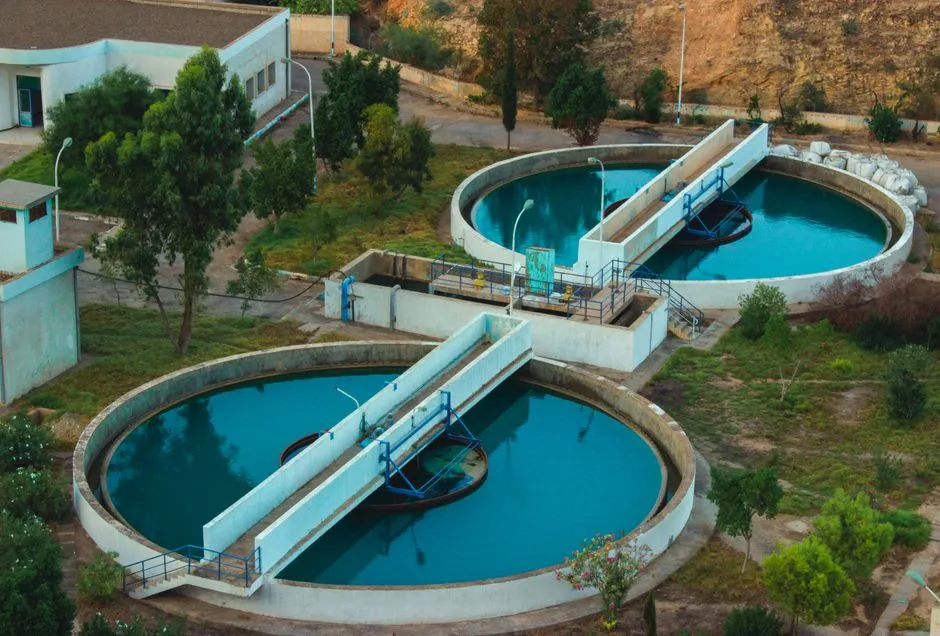
Worked example for a 500 m³/d (≈ 2.1 MGD) design flow, the size of a mid-scale truck body fabrication or rail-car assembly plant. Using 2026 turnkey ranges from the HydropureWater engineering comparison: CAS turnkey $80–$220 per m³/d lands at roughly $100,000–$350,000 installed, while MBR turnkey at $180–$420 per m³/d lands at $250,000–$700,000. OPEX for CAS at $0.10–$0.22 per m³ works out to $18,000–$40,000 per year, and MBR OPEX at $0.18–$0.42 per m³ works out to $33,000–$77,000 per year. Over a 5-year window, MBR carries a $200,000–$400,000 CAPEX premium and a $75,000–$185,000 OPEX premium. Three offsetting savings flip that math: 20–40% lower waste activated sludge hauling cost for MBR (Banu et al. 2009), 30–50% longer RO CIP interval when MBR feeds RO (HydropureWater field data, 2025-Q4), and avoided tertiary filtration CAPEX of $40,000–$90,000 that CAS would need to meet a TSS consent below 10 mg/L. The HydropureWater analysis puts the resulting payback at 3–6 years whenever any of three triggers apply: reuse duty, land cost, or a discharge consent below 10 mg/L TSS. For most Rutland County sites, at least one of the three applies. Brownfield parcels inside existing factory sheds cannot fit a CAS aeration basin plus a clarifier plus a tertiary filter pad; on those constrained sites, MBR is selected on land economics before OPEX is even calculated, and an integrated MBR membrane bioreactor system using a DF series PVDF flat sheet membrane module is the default skid configuration. The CAPEX-vs-OPEX trade-off plays out the same way for petroleum and food streams — see the parallel MBR vs CAS for petroleum wastewater engineering guide — but the trigger conditions are different in each industry.
North Clarendon Permitting and EPA Pretreatment Reality
For most transportation equipment plants in the North Clarendon area discharging to a municipal POTW, the controlling categorical standard is EPA 40 CFR 433 (metal finishing), with daily maximum limits of 104 mg/L oil and grease, 2.13 mg/L total metals, and 86 mg/L TSS (per EPA 40 CFR 433). Vermont ANR delegates day-to-day pretreatment implementation to the receiving POTW, so the binding permit in practice is the local sewer-use ordinance, which is typically tighter than the federal categorical ceiling — most Rutland County POTWs run a 50 mg/L oil and grease limit and a 30 mg/L TSS limit, with surcharges above those levels. An MBR producing less than 5 mg/L TSS and less than 1 NTU turbidity has meaningful headroom under any local limit, while CAS at 10–30 mg/L TSS often triggers a third-party cloth-media or sand filter requirement to stay compliant. The longer MBR SRT also improves removal of slowly biodegradable surfactants and oil emulsions — directly relevant to the parts-washer stream that drives most North Clarendon violation risk. The EHS sign-off package for either train should include a local sewer-use ordinance excerpt, a 40 CFR 433 compliance calculation, and a 12-month influent sampling program (pH, COD, oil and grease, total metals) covering both production and non-production days.
Frequently Asked Questions
Can an MBR handle oil and grease above 100 mg/L without pretreatment?
Yes, but with a front end. The MBR itself is rated for intermittent oil and grease, but sustained FOG above 100 mg/L fouls the membrane and shortens the CIP interval from monthly to weekly. A DAF ahead of the MBR, sized to bring FOG below 50 mg/L, is the standard configuration for parts-washer and machining coolant streams at transportation equipment plants.
What is the membrane replacement cost and interval?
PVDF flat-sheet or hollow-fiber modules for industrial MBR service typically amortize across 5–8 years of operation, depending on feedwater FOG, SRT, and CIP discipline. HydropureWater field data from 2025-Q4 shows modules on well-run MBRs at light-industrial sites reaching the upper end of that range when SRT is held at 40–60 days and CIP frequency is monthly.
Can an existing CAS basin be retrofitted to MBR?
Yes, by adding submerged membrane cassettes and removing the secondary clarifier. The retrofit is mechanically straightforward but does require redesigning the RAS piping, scum removal, and mixed-liquor distribution to match the higher MLSS and cross-flow demand of MBR operation. For sites with constrained footprints, retrofit is usually the only feasible path to a reuse-grade effluent.
Is MBR permeate safe for cooling-tower make-up at a transportation equipment plant?
Yes, after polishing through RO and corrosion-inhibitor dosing. MBR effluent at SDI below 3 is a direct RO feed, and the RO permeate typically meets the conductivity, silica, and hardness targets for cooling-tower make-up without further treatment beyond scale-inhibitor dosing and biocide control on the loop.
Will an MBR work through a Vermont winter?
Yes, with a heated and enclosed MBR skid and SRT kept at the upper end of the 40–60 day range. Cold mixed-liquor temperatures slow biological kinetics and raise mixed-liquor viscosity, so most North Clarendon installations are built inside insulated containerized skids with heat tracing on the permeate and aeration lines, and operators push SRT to 50–60 days from November through March to maintain stable flux.