
Why Port Angeles Transportation Equipment Plants Are Revisiting Solids Removal in 2026
Port Angeles transportation equipment manufacturing sits at the intersection of three water-intensive operations: aerospace component machining, marine hardware fabrication, and heavy-vehicle or rail-car assembly. Each shop floor pushes wastewater through parts washers, coolant sumps, hydraulic test stands, and coating rinse lines that collectively discharge a mix of free oil, emulsified lubricant tramp oils, metal fines, and periodic grit from shot-blast cabinets. The result is a wastewater signature that rarely fits a textbook "one contaminant" profile — it shifts hour by hour as a CNC cell dumps coolant or a weld shop flushes its floor.
Regulatory gravity has tightened around that signature. Most Clallam County facilities in this sector fall under NAICS 336 / SIC 37 and discharge to the City of Port Angeles POTW, which enforces 40 CFR Part 433 metal-finishing categorical pretreatment standards in addition to its local sewer use ordinance. Federal categorical daily-maximum limits sit at 52 mg/L oil & grease and 2.13–4.48 mg/L for total metals depending on the regulated analyte (per 40 CFR 433.102). Legacy API separators and open-top settling tanks that were acceptable a decade ago no longer reliably hit those numbers, especially with the 2026 enforcement push to (a) tighten local limits and (b) push plants toward closed-loop rinse-water reuse. That combination is forcing most Port Angeles plants to formally evaluate a packaged DAF vs clarifier selection guide for fabricated metals plants in Sharon, PA for the first time.
DAF vs Clarifier: How Each Technology Actually Works on Transportation Wastewater
A dissolved air flotation (DAF) unit saturates a side stream of clarified effluent with air at 4–6 bar, then releases it through needle valves into the flotation tank. The resulting micro-bubbles — typically 20–80 µm in diameter — attach to oil droplets and fine suspended solids and lift them to the surface in 3–5 minutes, where a rotating scoop skims a 3–8% solids float. On transportation equipment streams, this mechanism is what makes DAF the workhorse for free oils, tramp oils from machining coolant, and emulsified lubricants with droplet sizes down to roughly 10–20 µm. Ecologix's published comparison data shows DAF systems achieving 95% oil and grease removal on a high-oil food-processing stream versus roughly 70% for an equivalently sized clarifier on the same feed (Ecologix, DAF vs Clarifier Selection Guide).
A lamella clarifier, also called an inclined plate settler, does the opposite job: it lets gravity pull heavier particles down across a stack of plates inclined at 55–60°, giving each square metre of footprint the equivalent of 20–40 m³/m²/h of projected settling area. Plates are typically spaced at 50–80 mm centres, and the sludge slides down to a hopper while clarified water rises through effluent launders. This geometry is ideal for inorganic grit, weld-shop sweep, paint overspray solids, and precipitated metal hydroxides — but it is poor for emulsified oils below roughly 50 µm droplet size, which simply do not settle fast enough regardless of plate area. Ecologix's mining-sector benchmark of 90% settleable-solids reduction for clarifiers on heavy sediment streams is the right reference point for grit-dominated Port Angeles loads.
Scale matters as much as mechanism. AECOM's CHS refinery upgrade replaced aging API + DAF equipment with two 1,000 gpm (≈227 m³/h) treatment trains sized for a five-year continuous-duty design life, demonstrating that DAF is fully proven at the flow range a mid-size Port Angeles plant actually needs. For plants that need temporary capacity or a pilot, the rental market now offers DAF units up to 2,000 GPM with sub-3-week delivery (World Water Works rental fleet) — useful for a 60- to 90-day in-plant trial before committing to a permanent install.
Matching the Wastewater Profile to the Right Primary Unit
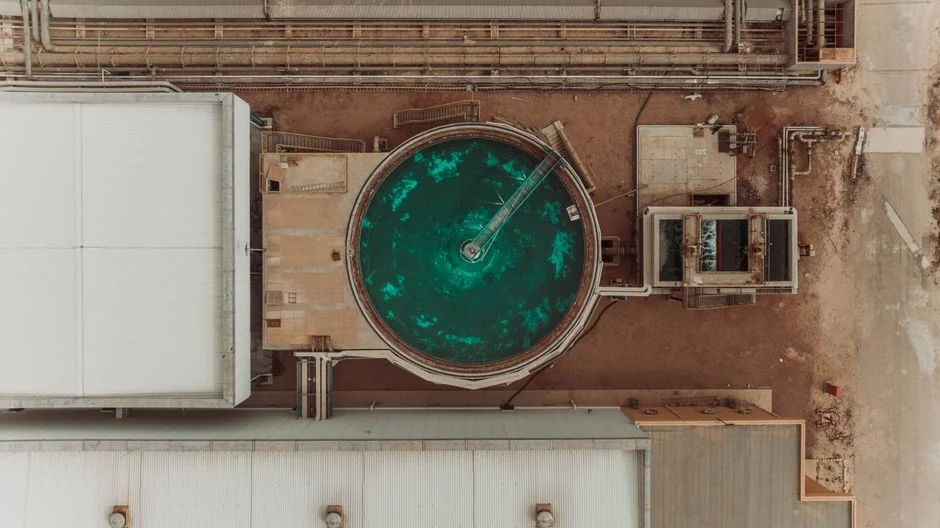
Engineers should resist the temptation to pick a unit operation before characterising the influent. The four profiles below cover what we see on Port Angeles plant surveys in 2026 and map directly to a unit-operation recommendation. Use a 7-day composite sample pulled across all shifts, with grabs during the worst-case coolant-dump or shot-blast cycle, before locking the choice.
| Profile | Typical Sources | Dominant Contaminants | Recommended Primary Unit | Secondary / Polishing |
|---|---|---|---|---|
| A — Oil-dominant | Parts washers, hydraulic test stands, coolant dumps, stamping lubrication | Free & emulsified oil 200–2,000 mg/L; TSS 100–500 mg/L | DAF | Lamella polish if post-DAF TSS > 30 mg/L |
| B — Grit-dominant | Shot blasting, weld-shop floor sweep, grinding dust, paint overspray | Inert grit & paint solids 500–3,000 mg/L; oil < 100 mg/L | Lamella clarifier | Add DAF downstream only if residual oil > ~200 mg/L |
| C — Mixed oil + heavy metals | Coating line rinses, chem-milling, alkaline cleaner dumps | Oil 100–800 mg/L; TSS 200–800 mg/L; dissolved metals | DAF first, then pH adjust + precipitation | Lamella or sludge thickener after precipitation |
| D — Low-flow / intermittent | Small job shops, R&D pilot lines, batch coating operations | Variable; < 10 m³/h peak | Skid or rental DAF in the 4–25 m³/h range | Bag or cartridge filter for reuse |
Profile C deserves special attention because it is the trap that catches the most Port Angeles plants. If a stream carries both oil and dissolved metals, putting a lamella first will quickly blind the plates with floating oil and destroy settleability; the correct train is DAF → pH adjustment/precipitation → lamella or sludge thickener, mirroring the API + DAF series arrangement AECOM specified for the CHS refinery upgrade.
2026 Parameter Comparison: DAF vs HydropureWater Lamella Clarifier
The table below is the working spec most procurement managers will want to print and bring into a vendor meeting. It pairs the DAF system against a typical HydropureWater lamella clarifier at overlapping flow points so an engineer can match it to a 10–80 m³/h Port Angeles plant line.
| Parameter | DAF System | HydropureWater Lamella Clarifier |
|---|---|---|
| Standard flow envelope | 4–300 m³/h across 13 models | Custom-engineered, typical 10–200 m³/h |
| Oil & grease removal | 90–95% | 70–80% |
| TSS / settleable solids removal | 85–92% | 85–90% |
| Surface loading rate | N/A (floatation-based) | 20–40 m³/m²/h (effective) |
| Coagulant / polymer demand | Baseline | Up to 30% lower (per HydropureWater lamella spec) |
| Footprint at 50 m³/h | ~14–18 m² single skid (incl. compressor) | ~9–12 m² tank footprint (60–70% of DAF) |
| Major auxiliaries | Air compressor, saturator, skim conveyor, sludge pump | Sludge pump, plate-wash system |
| OPEX drivers | Compressed air (moderate), polymer, float hauling | Polymer, sludge hauling (low) |
| Best fit | Oil-, coolant-, and emulsion-laden streams; variable loads | Grit, paint solids, metal hydroxide sludge, post-DAF polishing |
The 60–70% footprint advantage of the lamella is real but is partly offset by tank height (typically 4–5 m) and the civil cost of a concrete basin. DAF, by contrast, ships as a single packaged skid with a much lower height profile, which simplifies retrofit into existing shops with low overhead clearance.
Pretreatment Limits That Drive the Decision in Port Angeles

Equipment selection in 2026 is fundamentally a compliance problem before it is a hydraulics problem. 40 CFR Part 433 sets the federal categorical ceiling for metal-finishing discharges, with a daily-maximum oil & grease limit of 52 mg/L and daily-maximum total metals limits in the 2.13–4.48 mg/L band depending on the analyte (e.g., 2.13 mg/L for total chromium, 4.48 mg/L for total copper) — see 40 CFR 433.102. A primary solids-removal unit alone will not get a plant under those numbers; chemical precipitation for metals and usually multimedia filtration or ion exchange for trace metals are required downstream. The same compliance framework is laid out in the transportation equipment pretreatment compliance guide for Mobile, AL, and the engineering logic ports directly to Clallam County.
Two practical points follow. First, the City of Port Angeles POTW may impose local limits tighter than the federal floor — check the current sewer use ordinance before finalising the spec. Second, if the plant plans any reuse (rinse-water make-up, cooling-tower bleed, or a future ZLD-lite loop), target a post-primary residual oil & grease of roughly 25–30 mg/L so that downstream multimedia filtration or RO has any chance of staying clean. That residual is only consistently achievable with a DAF upstream of the polish step; lamella alone will not get there on oil-dominant streams.
A 4-Step Decision Framework for Specifying the Right Unit
- Pull a representative influent dataset. Compile 7-day composite data for oil & grease, TSS, total metals, pH, temperature, and peak hourly flow from each shift. If no data exists, instrument the discharge manhole for two weeks before specifying.
- Apply the profile matrix. Match the dataset to Profile A, B, C, or D from Section 3. The matrix gives a defensible primary-unit selection that you can document for the City of Port Angeles POTW pretreatment coordinator.
- Size at 1.2–1.5× peak hourly flow. For DAF, select the nearest DAF system in the 4–300 m³/h range. For lamella, derive plate area from the 20–40 m³/m²/h surface-loading rate at peak flow and verify plate spacing against the 50–80 mm norm in this inclined plate settler engineering and selection guide.
- Verify with jar tests and, if needed, a rental pilot. Jar tests confirm coagulant and polymer dose. For flows above 50 m³/h or variable influent, run a 60- to 90-day rental DAF pilot — World Water Works notes 2,000 GPM rental units deployable in under three weeks — before committing capital.
2026 Cost and Footprint Outlook for Port Angeles Plants
For budgetary purposes, a packaged 10–50 m³/h DAF system typically lands in the low-to-mid six figures USD before civil works and installation; a comparably sized HydropureWater lamella clarifier is roughly 20–30% lower on equipment cost but needs more tank volume and a concrete basin, which often erases the equipment-only saving once civil is added. DAF ships as a single compact skid; lamella is taller and wider but is easier to retrofit into an existing concrete tank with a simple drop-in plate pack.
On the operating side, budget for compressed-air power (DAF only, typically 0.5–1.0 kWh per m³ treated), polymer consumption (both, with lamella using up to 30% less per the HydropureWater spec), and float or sludge hauling at roughly 5–10% solids. Pair either unit with an automatic chemical dosing skid to keep polymer use and TSS variance under control — the dosing skid pays for itself inside 12 months on most 20+ m³/h Port Angeles lines. For plants sizing for reuse rather than just POTW discharge, plan downstream multimedia filtration and an RO polish step; targeting a post-DAF residual oil & grease of 25–30 mg/L is the threshold that makes ZLD-lite reuse technically and economically viable.
Frequently Asked Questions
What flow range of DAF does a Port Angeles transportation equipment plant typically need?
Most NAICS 336 plants in the 50–250 employee range size a DAF between 10 and 80 m³/h. The DAF series covers 4–300 m³/h in 13 standard models, so the common Port Angeles size point lands squarely in the middle of the standard envelope with no custom engineering premium.
Can a lamella clarifier hit the 40 CFR 433 oil and grease limit of 52 mg/L on its own?
Rarely. Lamella typically delivers 70–80% oil and grease removal, which leaves most oil-dominant streams above 52 mg/L. A DAF upstream, delivering 90–95% removal and bringing residuals into the 25–30 mg/L range, is the more defensible primary unit when the POTW enforces the federal categorical daily maximum.
How fast can a rental DAF be deployed for a pilot or emergency capacity?
World Water Works advertises delivery of rental DAF units in under three weeks, with flow capacities up to 2,000 GPM (≈454 m³/h). That is fast enough to cover a 60- to 90-day in-plant pilot, a tank-failure emergency, or a peak production surge without committing to a permanent install.