Why Brussels Hotels Default to Packaged MBR in 2026
A packaged MBR STP for a Brussels hotel combines activated-sludge biology with submerged PVDF ultrafiltration in a single skid, sized at 150–250 L per guest-night (peak 350–450 L). For a 200-room business hotel the design flow is ~58 m³/day average and 115 m³/day peak. Brussels projects must meet EU UWWTD 91/271/EEC and Aquafin discharge limits, with optional reuse at 60–70% for toilet flush, irrigation, and cooling-tower makeup. The 2015 Brussels municipal ZeeWeed 500D upgrade confirms MBR is the regional default.
The Brussels-South municipal WWTP installed GE ZeeWeed 500D UF MBR cassettes in 2015 to treat roughly one-third of the city's wastewater, serving 400,000+ residents (ScienceDirect, 2015). That single procurement decision made submerged PVDF UF the de-facto reference technology in the Brussels-Capital Region — and hotel developers, who have to satisfy the same Aquafin sewer-connection rules, ride the same compliance wave. An integrated MBR membrane bioreactor system sized for 10–200 m³/day sits cleanly inside a hotel plant room or buried envelope.
EU UWWTD 91/271/EEC sets the baseline discharge expectations for any Brussels site connected to a municipal sewer. Hotel developers must design for COD ≤125 mg/L, BOD ≤25 mg/L, and TSS ≤35 mg/L at the connection. A flat-sheet MBR permeate delivers COD ≤30, BOD ≤5, and TSS ≤5 (HydropureWater 2026) — comfortably overshooting compliance without tertiary polishing. On a tight urban Brussels site (Brussels-City, Ixelles, Saint-Gilles, Etterbeek), the MBR footprint runs ~60% smaller than conventional activated sludge at the same daily flow, which is often the deciding factor in a basement or courtyard siting. Reuse pressure is rising in parallel: EU Water Reuse Regulation 2020/741 sets reclaimed-water quality classes for irrigation, and MBR permeate plus ClO₂ or UV polishing qualifies for Class A reuse without further treatment.
Sizing the MBR: Guest-Night Flow Math for a Brussels Hotel
Hotel MBR sizing starts from guest-nights, not population equivalent, because per-guest water use and occupancy are the dominant variables. The 2026 design band is 150–250 L per guest-night average and 350–450 L per guest-night peak; Brussels business hotels cluster near 200 L, while Ardennes-region resort hotels with spa, pool, and on-site laundry trend toward 350 L (HydropureWater 2026).
Occupancy inputs differ by segment. Business hotels in the EU quarter, Schuman, and around Brussels Airport run 0.85–1.0 annual occupancy; Ardennes and Wallonia-border resorts drop to 0.6–0.85. Guests per occupied room sit in the 1.5–2.0 band — a 200-room business hotel averaging 1.7 guests is a defensible midpoint. The worked example: 200 rooms × 0.85 occupancy × 1.7 guests × 200 L = 57.8 m³/day average, with a peaking factor of ~2.0 → 115 m³/day design flow. A 100-room property on the same assumptions lands at ~29 m³/day average, ~58 m³/day peak — a single DF-series flat-sheet module of 80 m² operating at 20 LMH covers that flow with redundancy.
| Parameter | Brussels business hotel | Ardennes resort | Luxury 5-star (Brussels) |
|---|---|---|---|
| Per-guest-night use (L) | 200 | 300–350 | 350–450 |
| Annual occupancy | 0.85–1.0 | 0.6–0.85 | 0.75–0.90 |
| Guests per occupied room | 1.5–1.8 | 1.8–2.0 | 1.8–2.0 |
| Peaking factor | 2.0 | 2.5 | 2.5 |
| Design SRT (days) | 30–40 (winter) | 25–35 | 30–40 |
| MLSS (mg/L) | 8,000–12,000 | 8,000–12,000 | 8,000–12,000 |
One Brussels-specific adjustment matters: winter sewage temperature drops to ~8–12 °C between December and March, well below the 18–28 °C design range that 2026 generic hotel MBR guides assume (HydropureWater 2026). Specify SRT at the upper end of 30–40 days to protect nitrification in cold months; an undersized SRT in January is the most common cause of NH₃-N exceedance at the Aquafin connection. Banquet and event venues add a second peak layer: a Saturday-evening banquet surge can drive instantaneous flow to 2.5× average for 4–6 hours. MBR's high MLSS tolerance (8,000–12,000 mg/L) absorbs these swings far better than a clarifier-based CAS train.
Influent Characteristics: What Brussels Hotel Sewage Actually Carries
Hotel sewage is medium-strength, not dilute municipal sewage, and Brussels hotel sewers trend toward the higher end because the city concentrates 4- and 5-star properties with full banquet kitchens. Typical 2026 influent bands: COD 400–800 mg/L, BOD 200–400 mg/L, TSS 200–350 mg/L, oil and grease (FOG) 40–80 mg/L, NH₃-N 20–50 mg/L (HydropureWater field data, 2026). Surfactant load from on-site laundry — common in 4–5-star Brussels hotels — adds a variable that municipal averages do not capture.
FOG is the parameter that decides whether a hotel MBR lives eight years or fails in eight months. Brussels banquet kitchens running brasserie service, conference catering, and room service drive FOG toward the 60–80 mg/L upper band. That load must be cut to <30 mg/L before the membrane tank; otherwise emulsified oil coats the PVDF surface and flux decay becomes irreversible within weeks (HydropureWater 2026). NH₃-N is the second design driver: Aquafin's discharge expectations and any reuse target require full nitrification, which the 30–40 day SRT delivers even at Brussels winter sewage temperatures.
Hair, lint, and fibrous cleaning wipes from guest rooms and housekeeping are the third risk vector. These do not break down in the bioreactor and wrap around membrane elements, hollow-fiber capillaries especially. Specify a GX series rotary mechanical bar screen at headworks with 3–5 mm aperture to protect downstream membranes and DAF equipment.
Pre-Treatment: Why Every Brussels Hotel MBR Needs a DAF Up Front
Skipping dissolved air flotation is the most common cause of premature membrane failure in hotel MBRs. A dissolved air flotation (DAF) pre-treatment unit strips FOG to <30 mg/L in a single pass and is non-negotiable for hotel flows with on-site kitchens and laundry. DAF capacity runs 4–300 m³/h, so a small packaged unit covers the full 100–200 m³/day peak range of a typical Brussels hotel without parallel trains.
Without DAF, hotel kitchen and laundry spikes foul the membrane tank within weeks; with DAF, PVDF flat-sheet membrane life stretches to 8–10 years (HydropureWater 2026). That difference is the single largest OPEX variable in a hotel MBR — membrane replacement is the biggest line item in a $0.18–$0.32/m³ OPEX, and DAF is what keeps it amortized across the full design horizon. Belt-screen FOG capture is a frequent but inadequate substitute: emulsified oil from commercial dishwashers, combi-ovens, and laundry detergents passes straight through a 0.5 mm screen and reaches the membrane tank intact.
DAF also stabilizes the bioreactor. Sudden FOG spikes depress dissolved oxygen, trigger foaming, and slow nitrification; a DAF buffer absorbs those swings and keeps MLSS biology on a steady state. The combined headworks train — rotary bar screen → DAF → equalization → MBR — is the standard 2026 specification for any Brussels hotel STP, and it dovetails with the engineering detail in the DAF system design for hotel wastewater guide.
Flat-Sheet vs Hollow-Fiber: The Brussels Decision
For the 10–200 m³/day band that covers the majority of Brussels hotels — from a 30-room boutique in the Marolles to a 250-room mid-scale in the EU quarter — the 2026 decision is flat-sheet submerged MBR. The DF-series PVDF flat-sheet MBR membrane module runs 0.1 µm pore size, 80–225 m² per stack, and 32–135 m³/day per unit, with an integrated aeration-box scour that keeps the membrane surface clear. Operating flux is 15–25 LMH with a 30 LMH short-term peak allowance for banquet and event surges.
| Parameter | DF-series flat-sheet (PVDF) | Hollow-fiber (PVDF) |
|---|---|---|
| Pore size | 0.1 µm | 0.03–0.1 µm |
| Operating flux | 15–25 LMH (30 LMH peak) | 15–25 LMH |
| Scour air demand | 0.2–0.3 m³/m³ permeate | Cross-flow or backflush air |
| Hair/fiber tolerance | High (rigid flat panels) | Low (fiber wrapping) |
| CIP frequency | 6–12 months | Monthly NaOCl + citric acid |
| Element replacement | Individual panels, minutes | Module swap, hours |
| Plan-area packing density | Moderate | Higher |
| Indicative flow band | 10–200 m³/day (most Brussels hotels) | >500 m³/day (resort clusters) |
Hollow-fiber delivers higher packing density per m² of plan area, but it is more sensitive to the hair, lint, and fibrous cleaning wipes that Brussels guest rooms produce in volume, and it typically demands monthly CIP with sodium hypochlorite and citric acid. Flat-sheet runs weekly in-place relax + backwash with 6–12 months between recovery cleans, and operators swap individual panels in minutes rather than hoisting whole modules. Energy also favors flat-sheet: 0.3–0.5 m³ air per m³ permeate for biological oxygen transfer plus 0.2–0.3 m³/m³ for membrane scouring, roughly 10–20× lower than external cross-flow hollow-fiber (HydropureWater 2026). Spec rule for 2026: flat-sheet for 10–200 m³/day, hollow-fiber only above 500 m³/day resort clusters where packing density outweighs fouling tolerance. The full MBR for hotel wastewater design 2026 reference expands on this comparison.
Compliance Map: EU UWWTD, Aquafin, and Belgian Reuse Rules
Three regulatory layers stack over a Brussels hotel STP. At the top sits EU UWWTD 91/271/EEC, which sets baseline discharge standards — COD ≤125, BOD ≤25, TSS ≤35 mg/L — and MBR permeate meets all three with margin. The regional layer is the Aquafin sewer operator plus SEBCO (Société d'Exploitation de la Station de Bruxelles-Centre) for central Brussels treatment, with new hotel connections requiring an environmental permit (permis d'environnement) from IBGE-BIM in the Brussels-Capital Region. Walloon hotels follow SPGE/AIVE; Flemish-border projects follow VMM. Confirm the regional authority before locking the design basis — the discharge band, the sampling protocol, and the reuse rules all shift at the language-community boundary.
For reuse, EU Water Reuse Regulation 2020/741 classes reclaimed water for irrigation, with Class A and Class B thresholds. MBR permeate plus ClO₂ at 1.5–2.5 mg/L with a 30-minute CT, or UV at 40 mJ/cm², hits Class A or B without further polishing (HydropureWater 2026). A chlorine dioxide generator (50–20,000 g/h) is the standard train. For toilet-flush and cooling-tower makeup, the Belgian federal reference is EU 98/83/EC (drinking water directive applied as the potable-equivalent benchmark for non-potable reuse), and MBR permeate plus ClO₂ polishing is the standard 2026 package.
The permit pathway itself runs on a typical 8–14 week timeline: pre-consultation with Aquafin on connection capacity, filing the permis d'environnement class 1B or 2 dossier with IBGE-BIM, technical review, and discharge-compliance sign-off before commissioning. Developers who file without pre-consultation typically lose 4–6 weeks to permit rework.
Brussels CAPEX, OPEX, and Reuse Payback for 2026
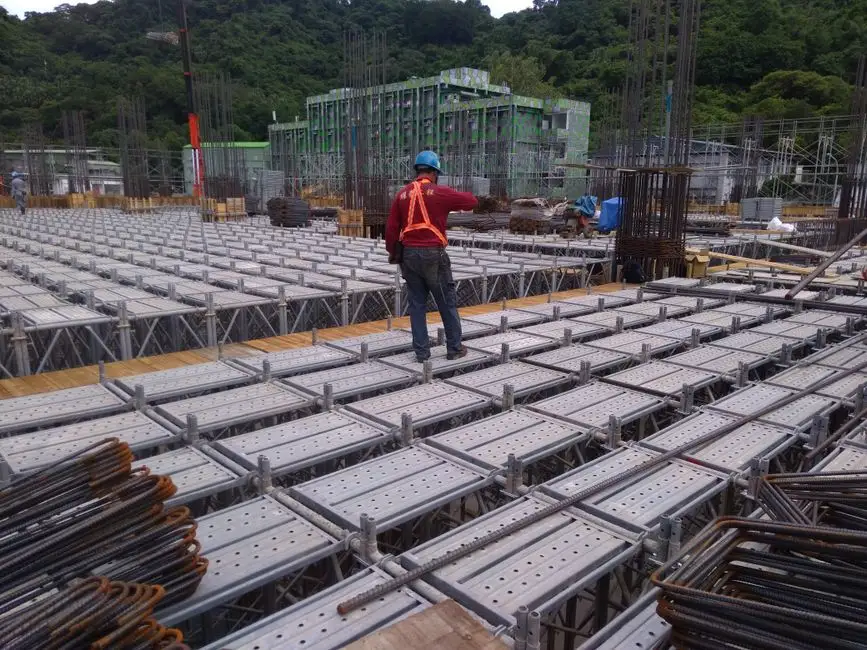
For a 2026 Brussels hotel, turnkey CAPEX (USD, including civil works, tanks, MBR modules, blowers, controls, and ClO₂ skid) breaks out by room count: boutique ≤80 rooms at $80K–$220K; mid-scale 80–250 rooms at $220K–$650K; resort 250–500 rooms at $650K–$1.8M; mixed-use >500 rooms at $1.8M–$4.5M. The flat benchmark for a developer's pro forma is $35–$75 per guest-night — a number that travels cleanly through board approval (HydropureWater 2026).
| Hotel size (rooms) | 2026 CAPEX band (USD) | Indicative OPEX ($/m³) | Reuse payback at Brussels tariffs |
|---|---|---|---|
| ≤80 (boutique) | $80K–$220K | $0.22–$0.32 | 4–6 years |
| 80–250 (mid-scale) | $220K–$650K | $0.18–$0.28 | 3–5 years |
| 250–500 (resort) | $650K–$1.8M | $0.18–$0.25 | 3–5 years |
| >500 (mixed-use) | $1.8M–$4.5M | $0.18–$0.22 | 2–4 years |
OPEX runs $0.18–$0.32 per m³ treated, with energy at 45%, membrane replacement amortized over 8–10 years at 25%, chemicals at 12%, and labor at 18% (HydropureWater 2026). At Brussels potable tariffs of €3.5–€5.5/m³ (HydropureWater 2026 market check, equivalent to $3.8–$6.0/m³), 60% reuse on 100 m³/day saves €77K–€120K per year — a 3–5 year payback on the reuse-capable CAPEX premium, comfortably inside a hotel development's 7–10 year hold period. The Belgian tariff premium over the $2–$4/m³ global range quoted in generic MBR guides is what tips reuse from "nice to have" to "board-mandated" in Brussels specifically.
The single largest OPEX line is PVDF flat-sheet membrane replacement at the 8–10 year horizon, which is why geometry choice and DAF pre-treatment are not engineering niceties — they are financial line items. Sludge dewatering on a plate-and-frame filter press takes wasted MLVSS directly to 18–22% DS without a thickener, cutting sludge-haul costs another 20–30%. For a regional cost cross-check, the packaged MBR STP for hotels benchmark in Córdoba illustrates how Brussels compares to other 2026 hospitality markets.
Frequently Asked Questions
What size MBR handles a 100-room Brussels hotel?
A 100-room business hotel at 85% occupancy × 1.7 guests × 200 L = 29 m³/day average and ~58 m³/day peak. One DF-series flat-sheet module of 80 m² operating at 20 LMH covers this with redundancy; a 100 m² module adds margin for banquet-event surges (HydropureWater 2026).
Which Brussels authority approves hotel STP discharge?
Brussels-Capital Region: an environmental permit (permis d'environnement) from IBGE-BIM plus an Aquafin connection agreement. Wallonia: SPGE/AIVE. Flanders-border projects: VMM. Always confirm the regional authority before sizing — the discharge bands and reuse rules differ.
How often does the membrane need cleaning?
Flat-sheet submerged MBR runs weekly in-place relax + backwash, with 6–12 months between recovery cleans. Hollow-fiber typically needs monthly CIP with sodium hypochlorite and citric acid. A DAF upstream keeps the flat-sheet cleaning interval at the long end (HydropureWater 2026).
Can a packaged MBR replace a septic tank at a heritage Brussels hotel?
Yes. A packaged MBR is a complete biological + membrane train that replaces the septic tank, clarifier, sand filter, and tertiary disinfection in one skid or buried envelope. Heritage sites in the Brussels-Capital Region often use it to avoid the spatial and visual impact of conventional concrete-tank layouts.
Is reuse water safe for hotel toilet flushing and irrigation in Belgium?
Yes. MBR permeate plus ClO₂ polishing at 1.5–2.5 mg/L with a 30-minute CT meets the EU 98/83/EC potable-equivalent benchmark for non-potable reuse and EU 2020/741 for irrigation reuse. UV at 40 mJ/cm² is an accepted alternative for sites avoiding chlorine residual (HydropureWater 2026).