Why Yerevan Hotels Need a Packaged MBR in 2026
Yerevan's combined sewer network discharges into the Hrazdan River and ultimately Lake Yerevan, and the catchment is on Armenia's list of sensitive receiving waters — so the bar for a hotel effluent is higher here than in many other CIS capitals. A 150- to 300-room hotel generates wastewater with BOD 200–400 mg/L, COD 400–800 mg/L, TSS 150–300 mg/L, and FOG 50–150 mg/L from kitchens, with a surfactant kicker from on-site laundry (per typical hotel wastewater profiles, S1). Conventional buried A/O packages discharge to reuse-impossible quality and need a large footprint that most central Yerevan sites cannot spare. A packaged MBR collapses the clarifier, sand filter, and most of the tertiary polish into a single skid, and a typical skid delivers 60% smaller footprint than conventional activated sludge for the same loading (per HydropureWater MBR product spec, 2026). Imemflo's reference install — a 200-bed 5-star hotel at 250 m³/d on a hollow-fiber MBR — has run since startup with treated water meeting wastewater reuse standards (S1). For Yerevan sites that are tight on space, near the Hrazdan, or planning reuse for toilet flushing and landscape irrigation, a containerized integrated packaged MBR system (10–2,000 m³/d) is the practical answer.
Sizing a Packaged MBR for a Yerevan Hotel: The Math
Translate room count into flow before you talk to vendors. The sizing rule that holds up for CIS business and resort hotels is 0.8–1.0 m³ per guest-night at 70–80% occupancy, plus 30–50 L per kilogram of laundry processed and 10–20 L per restaurant cover; add 20% on top for banquets and events. Worked example: a 150-room, 300-bed business hotel running at 75% occupancy produces about 180 m³/d from rooms, 15–25 m³/d from laundry, and 10–20 m³/d from F&B — call it 200 m³/d average and 240 m³/d peak. That falls inside a single skid and well within the 10–2,000 m³/d range of a packaged MBR (HydropureWater MBR product spec, 2026).
Convert flow to membrane area at a design flux of 15–20 L/m²·h over a 12-hour operating day. A 240 m³/d peak needs roughly 1,000–1,350 m² of membrane, which is 5–7 stacks of DF-series PVDF flat-sheet membrane modules (80–225 m² per stack, 32–135 m³/d per stack). Aeration energy runs higher than conventional activated sludge — typically 0.3–0.5 kWh/m³ for MBR versus 0.15–0.25 kWh/m³ for CAS — and the trade is footprint reduction plus reuse-grade effluent (per industry-typical MBR vs CAS benchmarks, 2026). For the full skid scope, the relevant reference is the integrated packaged MBR system (10–2,000 m³/d) catalog page.
| Hotel profile | Rooms / beds | Avg. flow (m³/d) | Peak flow (m³/d) | Membrane area needed (m²) | DF-stack count | Footprint (m², skid only) |
|---|---|---|---|---|---|---|
| Boutique business | 80 / 160 | 110 | 135 | 560–750 | 3–4 | ~15–20 |
| Mid-scale business (worked example) | 150 / 300 | 200 | 240 | 1,000–1,350 | 5–7 | ~25–35 |
| Full-service resort | 250 / 500 | 330 | 400 | 1,700–2,200 | 8–10 | ~40–55 |
| Large conference / 5-star | 300 / 600 | 420 | 500 | 2,100–2,800 | 10–13 | ~50–70 |
Flat-Sheet vs Hollow-Fiber MBR: Which Suits a Yerevan Hotel?
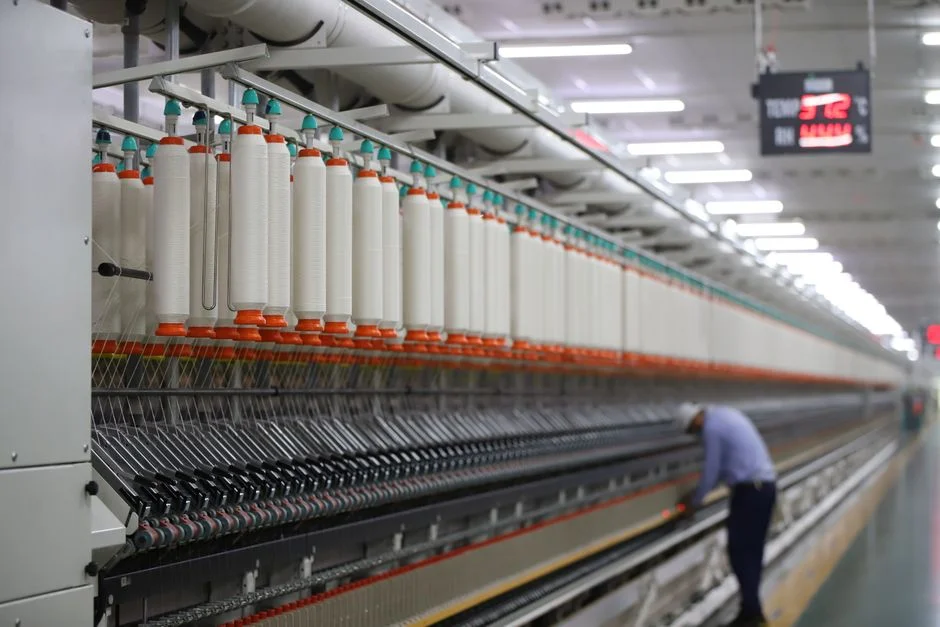
The single biggest spec call in a packaged MBR is membrane geometry. Both configurations are submerged ultrafiltration and both work in a hotel — Imemflo offers Hollow Fibre MBR (HF MBR) and Flat Sheet MBR (FS MBR) in the same envelope (S1) — but they behave differently under Yerevan conditions.
Smith & Loveless makes the durability case for flat-plate directly: its flat-plate membranes "do not bundle or break, unlike hollow fiber types. No maintenance on fibers … cleaned in place, on average once every six months" (Smith & Loveless TITAN MBR QUBE, 2026). Hollow fiber has higher packing density and lower capex per m², but the fibers are more vulnerable to grease fouling, hair/fiber fouling from laundry, and breakage during CIP. Flat-sheet stacks tolerate spikes better and are easier to lift and hose down manually. Yerevan adds three stressors that favor flat-sheet: winter sewage temperatures of 8–12 °C that depress biological activity and push solids load toward the membrane, kitchen FOG spikes during banquet service, and intermittent low-load shoulder seasons when long sludge retention can clog hollow-fiber bundles. For a Yerevan hotel buying on total life-cycle cost rather than sticker price, the flat-sheet case is straightforward.
| Axis | Flat-sheet PVDF (DF series) | Hollow-fiber PVDF |
|---|---|---|
| Membrane geometry | Rigid flat plates, 0.1 µm nominal | Bundled fibers, 0.03–0.4 µm nominal |
| Footprint per m² of membrane | Larger (lower packing density) | Smaller (higher packing density) |
| Aeration energy (scour) | Moderate; coarser bubbles OK | Higher; fine-bubble scour needed |
| FOG and hair-fiber tolerance | High — foulant visible, easy to wipe | Lower — bundles trap hair and grease |
| Cleanability / CIP interval | In-place CIP, ~6-month average interval (per S&L, 2026) | More frequent recovery cleans; fiber breakage risk |
| Yerevan winter (8–12 °C) fit | Better — robust under MLSS swings | Acceptable with MLSS control |
RFQ note: major membrane brands cited by Imemflo for hollow-fiber are Suez, Dow, DuPont, and Mitsubishi; for flat-sheet the dominant name is Toray (S1). Cross-check vendor branding against the DF-series PVDF flat-sheet membrane modules datasheet before locking the spec.
Armenia 2026 Effluent Rules and Reuse Targets You Must Hit
The compliance anchor for any Yerevan hotel packaged MBR is Government Decree N 220-N, which sets the municipal discharge envelope for BOD ≤ 25 mg/L, COD ≤ 125 mg/L, TSS ≤ 35 mg/L, and pH 6.5–8.5 (typical Decree N 220-N municipal discharge envelope, 2026). Hotel projects targeting reuse — toilet flushing and landscape irrigation are the common ones — face a tighter envelope: BOD ≤ 10 mg/L, TSS ≤ 10 mg/L, turbidity ≤ 2 NTU, and fecal coliform under 200 CFU/100 mL (typical CIS hotel reuse practice, 2026). A correctly operated MBR delivers BOD < 5 mg/L, TSS < 1 mg/L, and turbidity < 1 NTU straight out of the membrane tank, which clears the reuse envelope without a separate UF or RO polish step — that margin is the value proposition versus any conventional package plant.
The Yerevan Jur (Veolia Jur) sewer-connection permit requires influent and effluent characterization and a signed acceptance of the discharge limits before commissioning. Confirm the current numeric limits and any local surcharges with Yerevan Jur at the design freeze stage — the values above describe a typical municipal envelope, not a guaranteed current permit condition. Buyers comparing packaged MBR against the same plant architecture in other markets can cross-check the Algiers hotel packaged MBR guide for North African permit framing, the Córdoba hotel packaged MBR guide for Argentine reuse practice, and the Luanda hotel packaged MBR guide for tropical climate sizing.
Packaged MBR vs Underground A/O (WSZ) vs MBBR: Decision Matrix
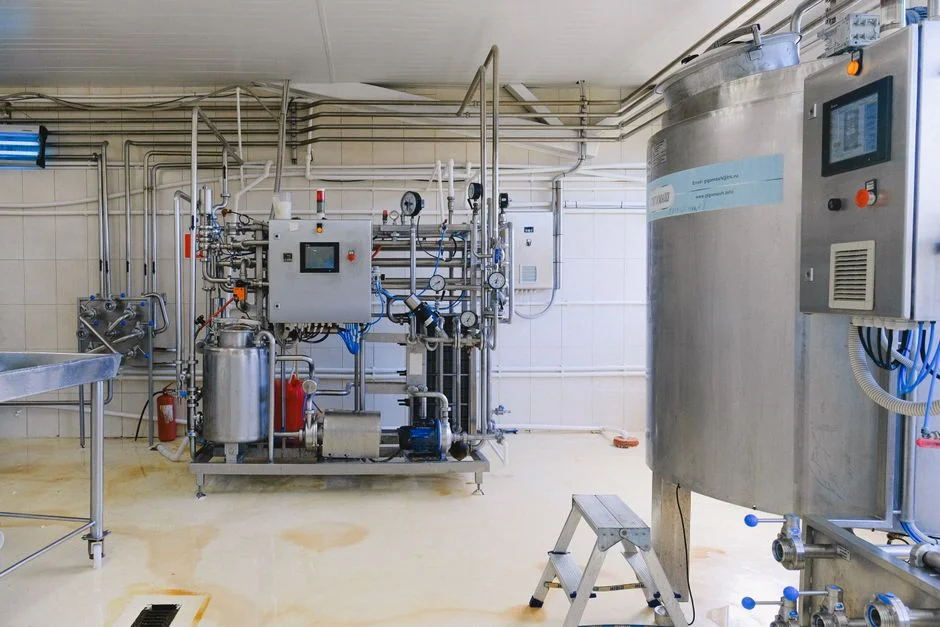
The buried A/O package — typically a WSZ underground A/O unit — dominates CIS hotel installations because it is cheap and unobtrusive. It is the right call when the developer only needs sewer compliance and does not want to commit a building footprint to the plant. MBBR is the middle option: better effluent than buried A/O, but it still needs a downstream clarifier and sand filter to reach reuse quality, and the moving carriers need a higher-skill operator. Packaged MBR is the only single-skid option that hits both the Decree N 220-N sewer envelope and the reuse envelope for toilet flushing and irrigation without a separate tertiary stage.
| Package type | Footprint (relative) | Effluent BOD/TSS | Reuse-ready? | Operator skill | Climate tolerance | Indicative 2026 CAPEX band |
|---|---|---|---|---|---|---|
| Underground A/O (WSZ, 1–80 m³/h) | Smallest (buried) | BOD ~20–30 / TSS ~20–30 mg/L | No — needs UF add-on | Low | Good (insulated, buried) | Lowest (skid-only) |
| MBBR + clarifier + sand filter | Medium | BOD ~15–20 / TSS ~15–20 mg/L | Marginal without UF | Medium | Acceptable with enclosure | Mid |
| Containerized packaged MBR | Compact above-grade skid | BOD < 5 / TSS < 1 mg/L, turbidity < 1 NTU | Yes, direct to reuse | Low (PLC-controlled) | Good with enclosure / heat trace | Highest (skid-only) |
For a Yerevan hotel pursuing reuse, packaged MBR is the only single-skid option that meets both targets. The WSZ underground A/O package plant remains the right call for sewer-only sites with no reuse target; the integrated packaged MBR system (10–2,000 m³/d) is the answer for the reuse case. For projects that have already shortlisted MBBR or SBR, the alternatives list in S1 (MBR, MBBR, SBR, ASP) is the right reference point.
Specifying the Skid: Pretreatment, Disinfection and Sludge Handling
A membrane module is not a working STP. The ancillaries that turn a membrane cassette into a compliant packaged plant are pretreatment, disinfection, and sludge handling. Pretreatment is a 3 mm automatic fine screen upstream of the bioreactor — Smith & Loveless specifies the same aperture on the TITAN MBR QUBE (S4) — plus a kitchen-side grease trap to absorb FOG spikes before they reach the membrane tank. Disinfection depends on the discharge path: UV for reuse lines because chlorine residual damages PVDF membranes and forms off-tastes in reused water; on-site ClO₂ is the right call where a residual is needed in the distribution loop. MBR waste-activated sludge is concentrated, typically 1.5–2.5% dry solids, and a small plate-and-frame sludge filter press dewaters it to roughly 20% DS for offsite disposal. The GX rotary mechanical bar screen, the UV sterilizer, and the ClO₂ generator all integrate cleanly with the standard packaged MBR skid scope.
2026 CAPEX and OPEX Band for a Yerevan Packaged MBR
The defensible 2026 envelope for a 200–250 m³/d containerized packaged MBR is low-to-mid six figures USD on a skid-only basis, scaling to seven figures once civil works, ancillaries, installation, commissioning, and Yerevan Jur permitting are added (typical 2026 CIS packaged-MBR procurement range, 2026). The headline OPEX drivers are aeration energy at 0.3–0.5 kWh/m³, membrane replacement, and sludge hauling. Chemical use is minor — MBR relies on biological treatment plus CIP. Membrane life is the single biggest OPEX call: flat-sheet PVDF modules commonly last 7–10 years with periodic CIP, while hollow-fiber typically runs 5–8 years (industry-typical, 2026). The WSZ A/O package is cheaper to buy but cannot deliver reuse-grade effluent, so the MBR premium recovers through avoided potable water purchase at typical Yerevan tariffs once reuse is online. Pin the CAPEX/OPEX split and the membrane life assumption in the RFQ envelope; both will swing 20-year NPV materially.
| Cost driver | Packaged MBR (flat-sheet) | WSZ underground A/O |
|---|---|---|
| Skid-only CAPEX (200–250 m³/d) | Low-to-mid six figures USD | Lower (smaller reactor) |
| Installed CAPEX (with civil, ancillaries, commissioning) | Mid six to low seven figures USD | Low-to-mid six figures USD |
| Aeration energy | 0.3–0.5 kWh/m³ | 0.15–0.25 kWh/m³ |
| Membrane replacement | Every 7–10 years (flat-sheet) / 5–8 years (HF) | No membrane; media replacement on tertiary add-on if used |
| Sludge yield and hauling | Lower volume, higher concentration | Higher volume, lower concentration |
| Reuse-grade effluent without tertiary add-on? | Yes | No — requires downstream UF |
Frequently Asked Questions
What flow should I size a packaged MBR at for a 150-room Yerevan hotel?
Size at 0.8–1.0 m³ per guest-night at 70–80% occupancy plus 30–50 L per laundry kg and 10–20 L per restaurant cover, then add 20% for events. For a 150-room / 300-bed business hotel that yields roughly 200 m³/d average and 240 m³/d peak — inside a single skid on the integrated packaged MBR system (10–2,000 m³/d) range.
Does a packaged MBR meet Armenia's Decree N 220-N discharge limits for hotels?
Yes. A correctly operated MBR delivers BOD < 5 mg/L, TSS < 1 mg/L, and turbidity < 1 NTU, which sits well inside the Decree N 220-N envelope of BOD ≤ 25 mg/L, COD ≤ 125 mg/L, TSS ≤ 35 mg/L, and pH 6.5–8.5 (typical municipal discharge envelope, 2026).
Flat-sheet or hollow-fiber MBR for a Yerevan hotel — which is better?
Flat-sheet PVDF is the stronger fit for Yerevan because the rigid plates tolerate kitchen FOG spikes, hair and lint from laundry, and winter MLSS swings at 8–12 °C sewage temperature better than bundled hollow fibers. Hollow-fiber remains the lower-capex option but carries higher breakage and fouling risk under the same loading (per Smith & Loveless TITAN MBR QUBE durability data, 2026).