
Why Algiers Hotels Need a Packaged MBR, Not a Conventional STP
Mediterranean tourism drives 60–90% seasonal occupancy swings in Algiers hotels, and a packaged MBR absorbs that swing better than SBR or conventional ASP because its short hydraulic retention time (typically 4–8 hours versus 12–24 hours for ASP) and high mixed-liquor suspended solids (8,000–12,000 mg/L versus 2,000–4,000 mg/L) decouple effluent quality from hydraulic shock. A check-in surge at a 200-room 5-star site can push instantaneous flow to 25–30 m³/h; a packaged MBR skid rides through that without a clarifier failing.
MBR technology removes 90–95% of harmful substances from hotel wastewater, and treated water meets the stringent reuse and discharge standards that conventional activated sludge cannot reliably hit (per imemflo commercial data). On a dense Algiers site — where the building footprint is already taken by guest rooms, kitchens, and back-of-house — the deciding constraint is civil space: packaged MBR removes the secondary clarifier and thickener, delivering roughly 60% footprint reduction versus a conventional activated-sludge plant of the same daily capacity (HydropureWater MBR product data, 2026). For very small lodges under 30 rooms with discharge-to-sewer duty, an underground underground package sewage treatment plant may still be cheaper; that trade-off is closed later in this article. The default for any hotel above ~80 m³/day with reuse or tight discharge limits is a packaged MBR membrane bioreactor system.
Hotel Wastewater Characteristics You Must Design For
Hotel wastewater composition varies depending on size, facilities, and local regulations (per imemflo), so the table below is a design envelope, not a substitute for site-specific sampling at the Algiers site. FOG from kitchens and surfactants from on-site laundry are the design-limiting parameters — they drive DAF pre-treatment and membrane choice, not just BOD.
| Parameter | Typical hotel influent range | utp 60-PE coastal-restaurant benchmark (outlet) |
|---|---|---|
| BOD₅ | 150–400 mg/L | ≤15 mg/L |
| COD | 300–800 mg/L | — |
| TSS | 100–350 mg/L | ≤25 mg/L |
| FOG | 50–200 mg/L | — |
| NH₄-N | 10–40 mg/L | ≤2 mg/L |
| PO₄-P | 5–15 mg/L | ≤2 mg/L |
| pH | 6.5–8.0 | — |
| Temperature | 20–35 °C (Mediterranean) | — |
The utp 60-PE seasonal restaurant in Ireland (BOD₅ 15 mg/L, SS 25 mg/L, NH₄-N 2 mg/L, PO₄-P 2 mg/L) is a defensible outlet target because the site faces the same duty an Algiers hotel faces: fluctuating inflow, seasonal operation, and discharge to a sensitive receiving environment (per utp umwelttechnik reference plant, 2024). Mediterranean summer influent temperatures of 28–35 °C push nitrification kinetics in your favour but also accelerate membrane fouling if FOG slips past pre-treatment. Sample over a 7-day window covering weekday and weekend peaks before freezing the MBR sizing.
Sizing a Packaged MBR STP for an Algiers Hotel
The sizing flow that a consulting engineer can defend in an RFQ comes out of four steps, not a vendor's catalogue curve.
Step 1 — Convert rooms to population equivalent (PE). Use 1.5–2.0 PE per occupied room for a 3–4-star Algiers hotel, and 2.0–2.5 PE/room for 5-star with spa, conference, and multiple F&B outlets. A 200-room 3-star site therefore sits at 300–400 PE; a 200-room 5-star with spa and conference sits at 400–500 PE.
Step 2 — Convert PE to average daily flow. Apply 1.0–1.3 m³/day per occupied room (or 200 L/PE·d). A 200-room 3-star site lands at 200–260 m³/d; a 200-room 5-star site lands at 200–260 m³/d at full occupancy. The imemflo reference — a 200-bed 5-star hotel with a 250 m³/d MBR — sits inside that envelope and confirms the 1.0–1.3 m³/day-per-room rule against a real operating plant (per imemflo, installed reference).
Step 3 — Apply a peak factor of 1.5–2.0× for meal periods and check-in surges. A 250 m³/d average becomes a 375–500 m³/d hydraulic peak, so the packaged MBR skid must be rated at 1.5× average daily flow as a minimum. The biological volume is sized on the average; the hydraulic peak is handled by the equalisation tank and the membrane's instantaneous flow window.
Step 4 — Size membrane area. Using a PVDF flat-sheet MBR module at 0.1 μm pore size delivering 32–135 m³/day per module (HydropureWater DF series spec, 2026), a 250 m³/d plant needs 2–8 modules depending on flux selection. Operating at 15–20 LMH with 80–225 m² of membrane area per module, the math lands at 2 cassettes at the high-flux end or 6–8 at conservative flux with redundancy for cassette swap-out during cleaning cycles. Build in one standby cassette: membrane maintenance on a hotel is a 24/7 operation, not a planned shutdown.
Hollow-Fibre vs Flat-Sheet MBR Membranes for Hotels
The single biggest equipment choice a buyer faces is the membrane format. Both are ultrafiltration-grade submerged modules that replace the secondary clarifier; both are quoted for hotel duty; both are sold under the same "MBR" label. They are not interchangeable on an Algiers hotel site.
| Criterion | Hollow-fibre (Suez / Dow/DuPont / Mitsubishi) | Flat-sheet (Toray / HydropureWater DF) |
|---|---|---|
| Pore size | 0.03–0.1 μm | 0.1 μm |
| Packing density | High (large area per cassette) | Moderate (80–225 m² per module) |
| Per-module flow | Typically 20–100 m³/day per cassette | 32–135 m³/day per module |
| FOG tolerance | Lower — fibres clog, recovery by backwash is limited | Higher — flat geometry tolerates air-scour and backwash recovery |
| Cleaning tolerance | Moderate — chemical CIP risks fibre breakage | High — CIP and air-scour recovery are routine |
| Module swap | Cassette-level, heavier handling | Individual element replaceable inside cassette |
| Energy use | Standard submerged aeration | 10–20× lower than external cross-flow; submerged aeration |
| Capex per m² | Lower at very high flows | Higher per m² but lower per installed m³/d for hotel duty |
For Algiers hotel duty — kitchen FOG in the 50–200 mg/L range, intermittent high solids from kitchen pot-wash and laundry lint, and membrane maintenance done by hotel engineering staff rather than a specialist contractor — the flat-sheet PVDF format is the default. The flat geometry tolerates backwash and air-scour recovery better than hollow-fibre, and individual element replacement inside a cassette means a fouled panel is a 30-minute swap rather than a cassette pull. Reserve hollow-fibre for sites where flow exceeds 500 m³/day and capital cost per m² dominates the RFQ evaluation, citing the Suez, Dow/DuPont, and Mitsubishi product lines that imemflo lists for that duty.
The Hotel MBR Front-End: Screening, FOG, and Laundry Streams
The most common packaged-MBR failure mode in hotel service is not the membrane — it is inadequately pre-treated kitchen and laundry waste arriving at the membrane cassette. Specify the front-end before you specify the MBR.
Install a rotary mechanical bar screen at 3 mm aperture or finer ahead of the bioreactor to capture food scraps, cotton lint, and packaging debris that would otherwise blind the membrane. For hotels with on-site kitchens producing more than 50 meals per peak sitting, a dissolved air flotation unit ahead of the MBR drops FOG by 70–90% and protects the membrane cassette from oil-fouling that no recovery clean will fully reverse.
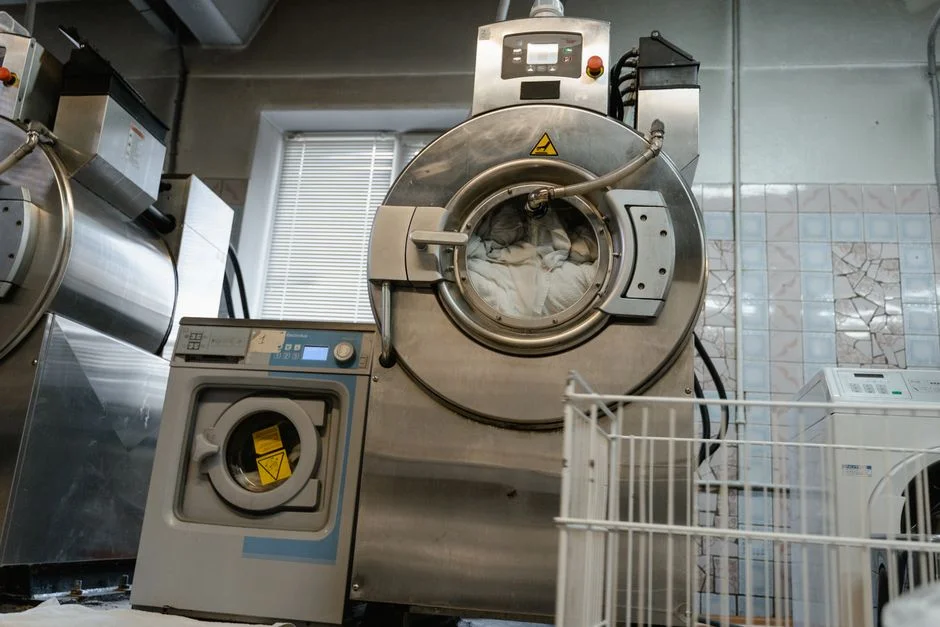
For on-site laundry — common in 4- and 5-star Algiers properties — many operators install a separate grey water treatment plant for laundry waste rather than sending surfactant-laden streams into the main MBR (per imemflo). A parallel MBBR or sidestream MBR treating 10–20% of total flow for laundry effluent is cheaper than replacement cleans on a fouled main MBR. Add an automatic chemical dosing skid for pH correction (target 7.0–7.5) and anti-foam control — the latter is non-optional during peak meal service when surfactant shock drives foam carryover into the membrane tank.
Algerian Compliance, Reuse, and What Effluent You Must Hit
Two discharge paths exist for an Algiers hotel, and they dictate the disinfection stage. The first is discharge to the municipal sewer under ONAS (Office National de l'Assainissement) — conventional secondary limits apply, but ONAS will reject effluent that exceeds TSS or BOD at the connection. The second is on-site reuse for landscape irrigation, toilet flushing, or cooling-tower make-up — and that path carries tighter limits on turbidity, E. coli, and residual chlorine.
Defensible specification for either path: BOD₅ ≤15 mg/L, SS ≤25 mg/L, NH₄-N ≤2 mg/L, PO₄-P ≤2 mg/L — the utp 60-PE coastal-restaurant benchmark (per utp umwelttechnik reference plant, 2024). The exact Algerian figures for ONAS discharge and reuse should be confirmed against the current Journal Officiel and ONAS technical requirements before procurement, because the limits sit in a moving regulatory frame as Algeria's water-stress policies tighten. For reuse duty, the MBR's <1 μm filtration output forms the basis for meeting turbidity and TSS targets without tertiary sand filtration — and disinfection is then sized for the reuse endpoint: a UV sterilizer for reuse duty where chemical-free pathogen control is required (irrigation, toilet flush), and chlorine dioxide where a residual is needed in the distribution loop.
Packaged MBR vs Underground WSZ: When to Pick Which
The trade-off a buyer in Algiers actually weighs is buried low-maintenance unit versus above-grade packaged MBR for higher flows or reuse duty. The decision is straightforward once the flow and discharge path are fixed.
Use the underground package sewage treatment plant range (HydropureWater WSZ, 1–80 m³/h, fully automated, no operator, can be buried with landscaping above) for small lodges, staff housing, or resorts where the discharge goes to sewer and the footprint must be invisible to guests. Use a packaged MBR skid (10–2,000 m³/day, ~60% smaller footprint than conventional) when flow exceeds ~80 m³/h, reuse is required, or TSS/BOD targets are tighter than secondary limits. Both are factory-built and containerised, so installation in Algiers is largely a civils and interconnect scope — useful for the EPC schedule argument because the on-site programme compresses to tank placement, pipework, and electrical, not reactor fabrication.
For a 200-room 5-star Algiers hotel at 250 m³/d with on-site irrigation reuse, the RFQ should evaluate both ranges side-by-side: the WSZ for the staff housing and the packaged MBR for the main hotel — not as substitutes, but as complementary packages in the same procurement lot.
Frequently Asked Questions
How do I size a packaged MBR STP for a 200-room hotel in Algiers?
Apply 1.0–1.3 m³/day per occupied room, so a 200-room site lands at 200–260 m³/d. This matches the imemflo 200-bed 5-star reference plant operating at 250 m³/d. Add a 1.5–2.0× peak factor for meal and check-in surges, and size the packaged MBR skid at 1.5× the daily average to ride through the peak. See the packaged MBR membrane bioreactor system range for skid ratings.
What is the difference between hollow-fibre and flat-sheet MBR for hotels?
Flat-sheet PVDF (0.1 μm, 32–135 m³/day per module, 80–225 m² per cassette) tolerates FOG and air-scour recovery better than hollow-fibre, with individual element replacement — the right default for hotel duty. Hollow-fibre (Suez, Dow/DuPont, Mitsubishi) wins on cost per m² above 500 m³/day. The PVDF flat-sheet MBR module spec is the side-by-side reference.
Can a packaged MBR treat kitchen and laundry waste together?
Yes, but only with a DAF in front. A dissolved air flotation unit drops FOG by 70–90% and protects the membrane. Many operators run laundry effluent through a parallel grey water stream to keep surfactants out of the main MBR. A rotary mechanical bar screen at 3 mm finishes the headworks.
What effluent quality must an Algiers hotel MBR hit for reuse?
Target BOD₅ ≤15 mg/L, SS ≤25 mg/L, NH₄-N ≤2 mg/L, PO₄-P ≤2 mg/L — the utp coastal benchmark. Add a UV sterilizer for reuse duty for irrigation and toilet flushing, and confirm exact ONAS and Journal Officiel figures before procurement. The MBR's sub-1 μm output meets reuse turbidity without tertiary filtration.