Why Luanda Hotels Need Packaged MBR Instead of Conventional Sewage Treatment
Luanda operates under three binding constraints that eliminate most conventional sewage-treatment options for hotels: intermittent grid power (outages of 4-12 hours are common in peri-urban districts), coastal water stress that pushes any new build toward reuse, and a limited pool of trained wastewater operators. A packaged MBR sidesteps all three. It combines activated-sludge biology and membrane filtration in a single tank, removing the secondary clarifier and cutting plant footprint by roughly 60% versus a conventional activated-sludge plant of equivalent capacity. With 0.03-0.1 μm membrane pore size, MBR delivers 90-95% contaminant removal and produces reuse-grade effluent suitable for toilet flushing, landscape irrigation, or cooling-tower make-up without a tertiary RO stage. Because a packaged, containerized packaged MBR STP system ships factory-tested, on-site installation drops from months to days, and PLC automation means a single facility engineer can run the plant. For a Luanda developer, that translates into a smaller building pad, lower civil cost, and a plant that keeps running through a power dip if paired with a small UPS or generator buffer on the control panel. The Luanda wastewater treatment context for high-demand users such as data centres shows the same packaged-MBR logic already in commercial use locally.
Hotel Wastewater Characteristics You Must Quantify Before Sizing
Hotel sewage is not domestic sewage plus a kitchen; it is a diurnally peaking, chemically variable stream. The defensible starting numbers for a Luanda 3- to 5-star property are 0.25-0.35 m³ per bed-day including kitchen, laundry, and guest-room flow, scaled up 15-20% for tropical coastal climate and tourism peaks. Influent concentrations typically fall in BOD₅ 250-400 mg/L, COD 500-800 mg/L, TSS 200-350 mg/L, and FOG 80-150 mg/L from kitchen drain lines. Laundry cycles add surfactant loading and short pH swings that can dip the aeration tank below pH 6 if not buffered. Breakfast, lunch, and dinner service can spike FOG 2-3× above the daily average; without upstream equalization those peaks translate directly into membrane fouling. Apply a peaking factor of 1.5-2.0× average daily flow to size for short-duration hotel surges, otherwise the biological stage will wash out and recovery takes days. FOG must be removed upstream of the membranes: oil coats PVDF fibers, and irreversible fouling collapses cleaning intervals from months to weeks.
| Parameter | Typical hotel range | Design value for Luanda |
|---|---|---|
| Flow per bed-day (incl. kitchen + laundry) | 0.25-0.35 m³ | 0.30 m³ plus 15-20% climate uplift |
| BOD₅ | 250-400 mg/L | 350 mg/L |
| COD | 500-800 mg/L | 700 mg/L |
| TSS | 200-350 mg/L | 300 mg/L |
| FOG (kitchen) | 80-150 mg/L | ≤50 mg/L after grease trap |
| Peaking factor (short-duration) | 1.5-2.0× ADF | 1.8× |
Sources for the parameter ranges: hotel wastewater description from membrane supplier Imemflo (per packaged MBR system sizing reference) and standard municipal design texts.
Sizing Your Packaged MBR STP: A Step-by-Step Calculation
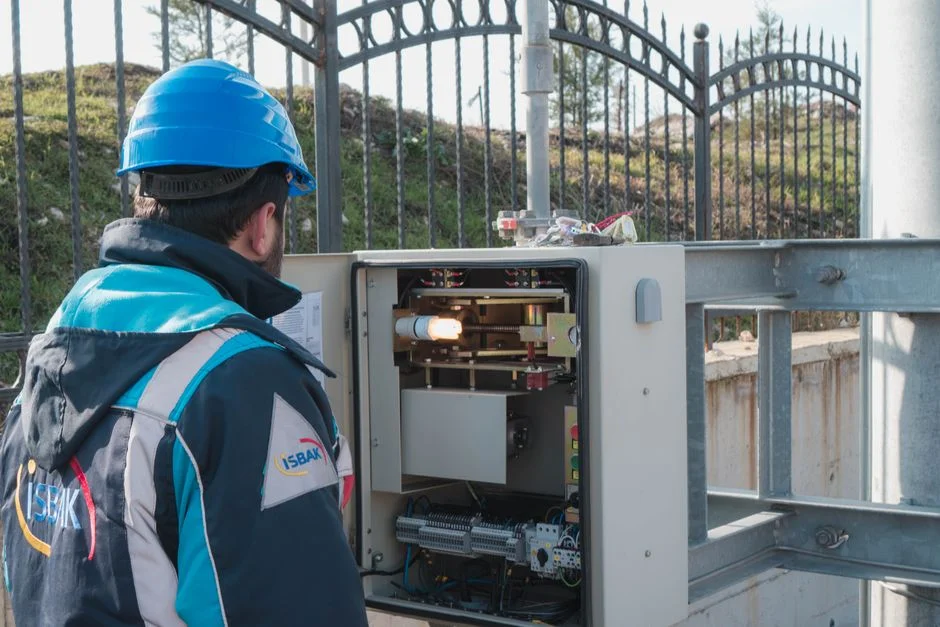
Use this four-step method for any Luanda hotel and you can hand the result to procurement as a defensible basis of design.
- Step 1 — Daily flow. Multiply bed count by 0.30 m³/bed-day (mid-point of 0.25-0.35), then add 15-20% for tropical climate and tourism peaks. A 200-bed 5-star property lands at roughly 200 × 0.30 × 1.18 = 71 m³/d from guest rooms; add kitchen and laundry contribution to reach the 250 m³/d benchmark reported for the Imemflo 5-star reference installation.
- Step 2 — Peak flow and equalization. Apply a peaking factor of 1.5-2.0× to get peak hourly flow. Size the equalization tank for at least 6-8 hours of average flow so that a banquet-night surge does not hit the membranes in one slug.
- Step 3 — Membrane area. Convert average flow to membrane area using design flux. For hollow fiber use 15-25 L/m²·h; for flat sheet use 10-20 L/m²·h. For 250 m³/d at 18 L/m²·h and 24-h operation, the required area is roughly 580 m² — typically delivered by three to four DF-series flat-sheet cassettes (80-225 m² per unit, per flat-sheet MBR membrane module spec).
- Step 4 — Package selection. Most Luanda 3- to 5-star hotels fit inside the 50-300 m³/d packaged range, which lines up with the skid sizes most containerized MBR vendors ship pre-assembled.
| Hotel size | Beds | Design flow (m³/d) | Suggested package |
|---|---|---|---|
| Boutique 3-star | 40-80 | 15-30 | Single skid, 1-2 cassettes |
| Mid-scale 4-star | 100-150 | 40-65 | Single skid + equalization |
| 5-star resort / business | 180-250 | 80-110 | 2-3 skids in parallel |
| 5-star reference (Imemflo) | 200 | 250 | 4 cassettes, containerized |
Hollow-Fiber vs Flat-Sheet MBR: Which Membrane Format Fits a Luanda Hotel?
Both formats use PVDF and deliver reuse-grade effluent; they differ in how they tolerate FOG, how they are serviced, and what they cost over a 10-year horizon. Hollow-fiber modules offer higher packing density and lower cost per square metre, but the bundled fibers are more sensitive to FOG carry-over and require consistent coarse-bubble aeration scouring to keep solids from matting between the strands. Flat-sheet modules (DF series, 0.1 μm pore size, 80-225 m² per cassette, 32-135 m³/d per unit, per flat-sheet MBR membrane module spec) expose each sheet to the mixed liquor on both faces, use 10-20× less energy than external cross-flow systems, and let a technician pull and replace a single element in minutes without draining the tank. For Luanda hotels the trade is clear: FOG from kitchens is unavoidable, trained operators are scarce, and downtime during peak season is unacceptable. Specify flat-sheet with a documented membrane supplier, a 5+ year membrane-life warranty, and Angola-region spares availability. Membrane brands already in commercial hotel service include SUEZ, DuPont, Toray, Mitsubishi, and Scinor.
| Criterion | Hollow fiber | Flat sheet (DF series) |
|---|---|---|
| Pore size | 0.03-0.1 μm | 0.1 μm |
| Design flux | 15-25 L/m²·h | 10-20 L/m²·h |
| FOG tolerance | Lower; needs strict pre-treatment | Higher; open channel between sheets |
| Element replaceability | Module-level swap | Individual sheet replacement |
| Energy vs cross-flow | Low (suction only) | 10-20× lower than external cross-flow |
| Operator skill needed | Moderate | Low to moderate |
Upstream Pre-Treatment: Grease Trap, Screening, and Equalization
A packaged MBR is only as reliable as the three units feeding it. Start with a gravity grease trap sized for 2-3 minutes retention at peak kitchen flow; this single step removes 60-90% of FOG before it reaches the biological stage and is the cheapest insurance you can buy. Add a rotary mechanical bar screen with 1-3 mm aperture immediately downstream of the grease trap to capture rags, plastics, and fibrous laundry lint that will blind a membrane module faster than any other contaminant. Size the equalization/buffer tank for 6-8 hours of average flow to dampen the banquet-night surge and to give the PLC a controllable feed rate. Deploy an automatic chemical dosing system only as needed for pH correction and anti-foam; over-dosing is itself a fouling risk. For sites with chronic emulsified-oil loading (large banquet kitchens, in-house laundry with detergent residuals), place a dissolved air flotation pre-treatment unit between the grease trap and the equalization tank to polish FOG down to the 30-50 mg/L range the membranes can tolerate. Skipping any of these steps is the single most common cause of premature membrane fouling in hotel MBR installations.
Angola Effluent Targets, Reuse Options, and Compliance for Luanda Hotels
MBR effluent typically tests at BOD₅ ≤ 30 mg/L, COD ≤ 50-100 mg/L, TSS ≤ 10 mg/L, with near-complete coliform reduction when paired with UV or chlorine dioxide disinfection. That profile is comfortably below the limits most Luanda hotel project specifications set, which draw on the World Bank/IFC effluent guidelines and the EU Urban Waste Water Treatment Directive (91/271/EEC) as reference benchmarks. The three reuse pathways that make economic sense for a coastal, water-stressed city are toilet flushing, landscape irrigation, and cooling-tower make-up; MBR effluent supports all three without a tertiary RO stage, which is the difference between a 5-year and a 12-year membrane payback. For guest-area reuse loops specify UV disinfection for reuse water as the chemical-free default; for longer residual in the distribution loop add a chlorine dioxide generator sized for 0.5-1.0 mg/L residual. Angola is tightening coastal discharge rules as the Luanda bay reclamation programme progresses; design for the strictest realistic target now to avoid a forced retrofit during the next licence renewal cycle.
CAPEX and OPEX Bands, and a Supplier Evaluation Checklist
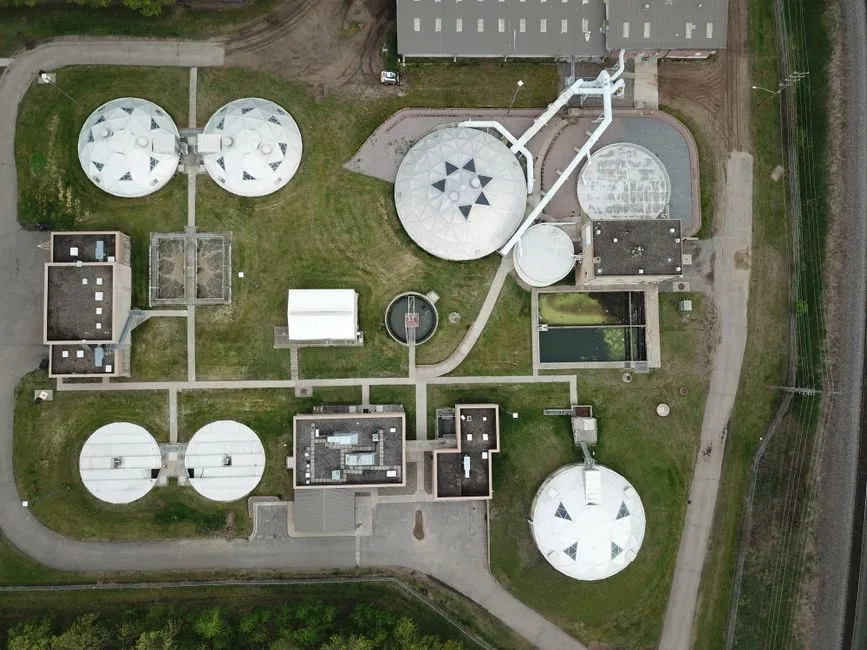
Order-of-magnitude CAPEX for a packaged MBR STP in the 50-300 m³/d range lands between US$1,500-3,500 per m³/d installed for a hotel-grade system; containerized skid units sit at the lower end of that band, while underground or architectural-finish packages sit at the upper end. OPEX is dominated by power — target 1-2 kWh/m³ treated — followed by membrane cleaning chemicals (typically 2-4% of OPEX), periodic membrane replacement on a 5-8 year cycle, and sludge hauling, which is materially lower than for conventional ASP because MBR operates at higher MLSS and produces a thicker, less frequent waste stream. For space-constrained urban sites with lower loadings, an integrated underground packaged plant (1-80 m³/h range) is a viable alternative, but it is generally limited to 3-star or smaller 4-star categories due to access constraints for membrane service. Confirm logistics before signing: the supplier must deliver factory-tested skids rated for Luanda port handling and on-site crane placement.
| Checklist item | Pass / fail test |
|---|---|
| Documented hotel reference of similar size | At least one ≥100 m³/d hotel installation in tropical climate |
| Membrane warranty | ≥5 years on membrane integrity, prorated replacement |
| Local service | Trained Angolan technician or local partner; spares stocked in Luanda |
| Automation | PLC with remote monitoring, data logging, and alarm dialling |
| Performance warranty | 2-year process guarantee covering BOD, TSS, and flux |
| Pre-treatment package | Grease trap, screen, and equalization supplied or specified as a kit |
| Logistics | Skid dimensions and weight compatible with Luanda port handling and site crane |
For sites with underground-layout constraints, also evaluate the underground integrated sewage treatment option as an alternative form factor.
Frequently Asked Questions
What does a packaged MBR STP for a 200-bed Luanda hotel cost in 2026?
Budget US$1,500-3,500 per m³/d installed CAPEX for a 50-300 m³/d hotel-grade packaged MBR system. A 200-bed 5-star property at roughly 250 m³/d (the Imemflo reference installation) therefore sits in the US$375,000-875,000 equipment band, with civil works and pre-treatment on top. OPEX is dominated by power at 1-2 kWh/m³ treated.
How do I handle FOG from the hotel kitchen without killing the membranes?
Specify a gravity grease trap with 2-3 minutes retention at peak flow upstream of the MBR; this single step removes 60-90% of FOG. For banquet-scale kitchens with emulsified oil, add a DAF unit between the grease trap and the equalization tank, and target ≤50 mg/L FOG into the membranes. Skipping this step is the most common cause of premature membrane fouling in hotel MBR plants.
Which membrane format is better for a Luanda hotel — hollow fiber or flat sheet?
For Luanda hotels, flat sheet is the safer default. Hotel kitchens inevitably leak some FOG, trained operators are scarce, and downtime during high season is expensive. Flat-sheet modules (DF series) tolerate FOG better, use 10-20× less energy than external cross-flow systems, and let a technician replace a single element in minutes rather than swapping a whole hollow-fiber module.
How often will the membranes need replacement?
With proper upstream grease removal, screen protection, and equalization, expect a 5-8 year membrane life in hotel service. Specify a supplier with a documented 5+ year membrane-life warranty and Angola-region spares availability before signing.
What is the right next step to get a sized proposal for my hotel project?
Send your bed count, star rating, kitchen and laundry scope, and site footprint to a packaged MBR supplier and request a sizing worksheet plus a site-specific CAPEX/OPEX proposal; cross-check the result against the Luanda wastewater treatment context for comparable high-demand users, and review the Kigali hotel MBR guide for a parallel sizing methodology in a similar water-stressed context.