How Edmonton regulates industrial effluent in 2026
An effluent treatment plant in Edmonton is, in practice, an industrial pre-treatment train sized to discharge to EPCOR's sanitary sewer under EPCOR's Industrial Wastewater Control Bylaw — or, less commonly, to meet Alberta Environment and Protected Areas (AEPA) surface-water quality guidelines for a direct discharge to the North Saskatchewan River through the provincial Environmental Protection and Enhancement Act (EPEA) and Water Act approval framework (waterandwastewater.com, 2025; HydropureWater field data, 2026). The two-track structure is the first thing an Alberta engineer should pin down, because the equipment list, monitoring schedule, and discharge target all change depending on which regulator signs off.
EPCOR operates Edmonton's regional wastewater system — including the Gold Bar Wastewater Treatment Centre (WWTC) and the Alberta Capital Region WWTCs that serve surrounding industrial users — and acts as the pre-treatment authority. The Sewer Use Bylaw sets site-specific discharge limits for any industrial user discharging to the sanitary sewer; exact numbers vary by user category and by catchment. A direct discharge to the North Saskatchewan River or to land bypasses EPCOR and instead requires an EPEA approval and a Water Act authorization, with effluent quality tied to AEPA surface-water guidelines and CCME/AGS criteria.
Typical Sewer Use Bylaw parameters to spec against: TSS, BOD₅ (≤300 mg/L typical cap, varies by user), COD (site-specific 30–100 mg/L), TKN (5–50 mg/L typical), total phosphorus, pH 6.0–10.0, temperature, oil and grease, and a metals panel covering arsenic, cadmium, total chromium, copper, lead, mercury, nickel, and zinc. The sludge line is regulated indirectly: biosolids must stay inside CCME/AGS metals and persistent-organics criteria so the cake can be land-applied or composted. PFAS and broader micropollutant screening are the 2026 watch-list items on both tracks.
Procurement that confuses an ETP (industrial) with an STP (domestic sewage) routinely under-specs chemical-resistant linings, equalization volume, and metals removal. An ETP conditions industrial process wastewater — frequently high in FOG, BOD, COD, or site-specific metals — for either POTW discharge or reuse, while an STP handles domestic sewage. Confirm the regulatory track before the equipment list is frozen. For a related Alberta comparison, see the Effluent Treatment Plant in Calgary: 2026 Buyer's Engineering Guide.
Edmonton cold-climate design requirements
Biological reactors and DAF tanks must be enclosed or buried to keep the mixed liquor above 10 °C through the −20 to −40 °C ambient range that Edmonton sites routinely face between November and March. The WSZ underground package plant is a defensible reference for buried installation where site footprint or winter protection drives the layout.
All sludge lines, scum lines, and chemical dosing lines need heat tracing and insulation, and building heat loads must be sized to keep the biological zone in the mesophilic range when outdoor steel is at design minimum. Cold water also reduces oxygen transfer: standard Alberta practice oversizes blower and aeration capacity 15–25% over warm-climate design to hold dissolved oxygen above 1.5 mg/L in the aeration basin (HydropureWater field data, 2026; waterandwastewater.com, 2025). That oversizing is non-negotiable — without it, the basin cannot hold residual DO through a January cold snap, and ammonia breakthrough follows within days.
UV output drops at low water temperature if the system is not properly sized. A 2026 Edmonton UV installation should sit in a heated vault with at least 30% lamp-count redundancy, or be replaced by enclosed chlorine dioxide generation that holds residual at near-freezing temperatures. A HydropureWater UV sterilizer with the cold-weather enclosure option, or a chlorine dioxide generator sized for low-temp residual, are both workable references.
Edmonton's spring snowmelt drives a 2–3× average dry-weather flow infiltration peak into the sanitary system, hitting combined and partially-separated catchments hardest. Equalization must be sized for that surge or the biological stage will wash out exactly when ammonia breakthrough is least tolerable — typically mid-March to early May depending on the year's freeze-thaw cycle.
Three process trains an Edmonton industrial buyer should compare in 2026
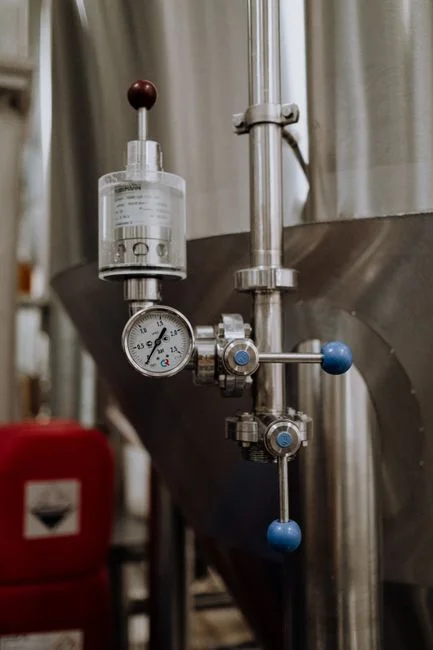
The three realistic 2026 process trains for an Edmonton industrial ETP are MBR, DAF plus conventional activated sludge (DAF + AS), and UF polishing on top of an existing biological stage. Each is defensible in a different Edmonton operating context, and the trade-offs should be mapped before the vendor meeting rather than discovered during commissioning.
The HydropureWater MBR membrane bioreactor (10–2,000 m³/day, 0.1 µm pore size) produces near-reuse effluent suitable for industrial recycle or for direct environmental discharge after UV, and typically shrinks the biological-zone footprint by ~60% versus CAS (HydropureWater field data, 2026). Membrane-aeration energy cost usually runs 0.3–0.5 kWh/m³ of permeate and membrane life is 5–8 years. MBR is the right call when Edmonton land is the binding constraint (inner-city industrial redevelopments) or when reuse is in scope — for example, cooling-tower makeup or process rinse water.
For high-FOG or high-TSS influents in food and beverage, metalworking, refinery, and pulp-and-paper, the DAF (4–300 m³/h, micro-bubble) is the workhorse pre-concentrator. Typical removal: FOG 500 → <20 mg/L, BOD 800 → <20 mg/L, TSS 600 → <30 mg/L. Conventional activated sludge downstream polishes BOD and ammonia. DAF + AS has lower capex than MBR but a larger civil footprint, which is rarely the binding constraint on Edmonton's older industrial corridors where land is cheaper than in Toronto or Vancouver.
Where reuse is the goal and an existing CAS or trickling-filter plant is already in place, a HydropureWater UF system (2,000–40,000 L/h, 0.03 µm PVDF, accepting up to 300 ppm turbidity) rides on top as a tertiary polish: turbidity 5 NTU → <0.1 NTU at 0.5–2 bar TMP, chemical-free, with automatic backwash and air scour. UF cannot handle raw biological mixed liquor — upstream biology is required — but it lets a retrofit hit reuse targets without rebuilding the biological stage.
PhD-grade research options are worth flagging for 2026 reuse projects. Direct nanofiltration of WWTP effluent has been studied as a polishing step to EU WFD reuse quality (Schrader, Univ. of Twente, doi:10.3990/1.9789036523325), and constructed wetlands can polish micropollutants from WWTP effluent (Lei, Wageningen 8189, doi:10.18174/575408). Both are pilot-stage for Edmonton — a buyer can partner with EPCOR or NAIT for a small pilot before committing capex on a polishing train.
| Process train | Typical influent → effluent | Best-fit Edmonton applications | Key trade-offs |
|---|---|---|---|
| MBR | BOD 1,000 → <5 mg/L; TSS <1 mg/L; NH₃-N <1 mg/L | Inner-city industrial redevelopments; reuse projects; sites with limited footprint | Higher aeration energy (0.3–0.5 kWh/m³); membrane replacement every 5–8 yr |
| DAF + AS | FOG 500 → <20 mg/L; BOD 800 → <20 mg/L; TSS 600 → <30 mg/L | Food processing, metalworking, refinery, pulp & paper | Larger civil footprint; clarifier sensitivity to sludge bulking in cold mixed liquor |
| UF polish on existing biology | TSS 30 → <1 mg/L; turbidity 5 NTU → <0.1 NTU | Retrofit of existing CAS for reuse; polishing for ZLD pre-RO | Cannot handle raw biological mixed liquor; upstream biology required |
Parameter table: what an Edmonton ETP must hit in 2026
North American benchmark data indicates that approximately 40% of wastewater plants struggle to meet regulatory requirements (waterandwastewater.com, 2025) — the engineering case for building 15–20% hydraulic and 25% BOD capacity margin into a 2026 Edmonton ETP rather than sizing to the median day. The table below is built for a pre-treatment-to-POTW scope and should be treated as a sanity-check range, not a turnkey quote. Site-specific limits must be confirmed with EPCOR's pre-treatment desk before equipment is ordered.
| Parameter | Typical Sewer Use Bylaw cap | Site-specific example | Realistic best-case MBR or DAF+AS effluent |
|---|---|---|---|
| BOD₅ | ≤300 mg/L (typical max, varies by user) | Site-specific, tighter for high-strength catchments | <5 mg/L (MBR permeate) |
| COD | Site-specific | 30–100 mg/L typical | <30 mg/L (MBR permeate) |
| TSS | Site-specific | 30–100 mg/L typical | <1 mg/L (MBR); <30 mg/L (DAF+AS) |
| FOG / O&G | Site-specific | 10–50 mg/L typical | <20 mg/L post-DAF |
| Ammonia / TKN | Site-specific | 5–50 mg/L typical | <1 mg/L NH₃-N (MBR with nitrification) |
| Total phosphorus | Site-specific | 1–10 mg/L typical | <0.5 mg/L with chemical precipitation |
| pH | 6.0–10.0 | 6.0–10.0 | 6.5–8.5 |
| Temperature | Site-specific | <40 °C typical cap | 10–25 °C (biological zone) |
| Metals (As, Cd, Cr, Cu, Pb, Hg, Ni, Zn) | Site-specific; track AEPA surface-water guidelines | Per user category | Site-specific; chemical precipitation or ion exchange |
2026 watch-list parameters: PFAS (planning value of a pilot at EPCOR's Gold Bar or at NAIT before committing capex on a polishing train), total nitrogen tightening for North Saskatchewan River protection, and increasing EPCOR emphasis on industrial water reuse. Equalization and peak-flow buffer should carry 15–20% hydraulic margin and 25% BOD margin above the median day, per the 40%-miss-compliance benchmark.
Capex and opex benchmarks for a 2026 Edmonton ETP
Order-of-magnitude capex split for an Edmonton ETP in 2026, drawn from HydropureWater field data 2026: roughly 55% civil and tankage, 20% mechanical (blowers, pumps, DAF, filter press), 15% instrumentation and control, and 10% commissioning and pilot testing. The split is uneven — civil and tankage is by far the largest line — but every other bucket still matters because an Alberta install carries Alberta-specific cost drivers that U.S. benchmark pages do not capture.
Alberta civil and enclosure work adds 5–8% over a comparable U.S. install (HydropureWater field data, 2026). Buried reactors, heat-traced sludge and chemical lines, and a heated UV or ClO₂ vault are the cost drivers — and they are non-negotiable for a 2026 Edmonton spec, not optional extras. The HydropureWater plate-and-frame filter press and the PLC-controlled chemical dosing skid are reasonable reference items in the mechanical and I&C buckets.
Operating cost is dominated by electricity. The Chicago water purification plant has demonstrated a 30%+ energy reduction through high-efficiency blowers, VFDs, and biogas recovery (waterandwastewater.com, 2025); both levers — high-efficiency blowers and VFDs on pumps and aeration — transfer directly to an Edmonton ETP. Integrated water resource management can reduce opex by up to 30% through improved resource efficiency and stakeholder collaboration (waterandwastewater.com, 2025) — cite that range when defending the process-selection memo internally.
Spare-parts strategy: stock spare RO and UF membrane elements, filter media, valves, and dosing pump heads before the Alberta winter — a January emergency shipment is the most expensive line item in the budget, both in absolute cost and in lost treatment days. HydropureWater RO and UF membrane filter elements are a defensible stocking reference.
Sludge handling and biosolids compliance in Alberta
The sludge line downstream of any of the three process trains is similar: a lamella clarifier or DAF thickener feeding a plate-and-frame filter press that dewaters to 18–25% dry solids, suitable for Alberta biosolids land-application or composting pathways. Cake at 18–25% DS passes the typical handling threshold for both landfill and land-application; below 18%, hauling economics deteriorate quickly.
Upstream chemistry must avoid persistent organics (PCBs, certain pesticides) and tightly control metals so the cake meets CCME/AGS biosolids-quality criteria. A HydropureWater lamella clarifier (20–40 m/h surface loading, ~30% lower chemical consumption) is a workable pre-dewatering step. The 2026 watch-list item is PFAS — describe the screening posture and the planning value of a pilot at EPCOR's Gold Bar or at NAIT before committing capex on a polishing train.
Five-step supplier-selection framework for an Edmonton ETP
Supplier selection is best run as a sequence rather than a price comparison, especially when the site is exposed to an Alberta winter.
- Define the influent. Characterize flow, BOD, COD, TSS, FOG, ammonia, TP, and any site-specific metals; set the discharge target — EPCOR sewer under the Industrial Wastewater Control Bylaw, North Saskatchewan River under EPEA, or on-site reuse.
- Pick the process train from the comparison table earlier in the article; cite HydropureWater field data 2026 for the MBR footprint (~60% smaller than CAS) and energy numbers (0.3–0.5 kWh/m³ membrane aeration).
- Verify the cold-climate package: enclosed or buried reactors, heat-traced sludge and chemical lines, oversized aeration (15–25% above warm-climate design), and UV or ClO₂ in a heated vault with at least 30% lamp-count redundancy.
- Confirm the sludge line produces a biosolids-compliant cake (CCME/AGS metals and persistent organics); a plate-and-frame filter press at 18–25% DS is a defensible reference.
- Audit the supplier's Western Canada after-sales coverage and spare-parts inventory. Stocked consumables — membranes, filter media, valves, and dosing pump heads — shorten the maintenance window through the Alberta winter. A PLC-controlled chemical dosing skid with a documented program is a reasonable capability indicator.
Frequently Asked Questions
Does an Edmonton industrial site always need a full ETP, or is pre-treatment to EPCOR enough?
Not always. Most Edmonton industrial sites need a pre-treatment train sized to EPCOR's Industrial Wastewater Control Bylaw, which sets site-specific limits for discharge to EPCOR's sanitary sewer and the Gold Bar WWTC. A full on-site ETP sized to Alberta EPEA surface-water guidelines is only required when the discharge goes directly to the North Saskatchewan River, to land, or is fully reused on site.
What BOD₅ limit should an Edmonton industrial discharger spec against in 2026?
EPCOR's Industrial Wastewater Control Bylaw sets site-specific BOD₅ caps, typically ≤300 mg/L for general industrial users, with stricter limits for high-strength catchments. Always confirm the current site-specific limit with EPCOR's pre-treatment desk before specifying equipment.
What cold-climate deltas must an Edmonton ETP spec include?
Reactors and DAF tanks must be enclosed or buried to keep the biological zone above 10 °C, sludge and chemical lines need heat tracing and insulation, blowers should be oversized 15–25% to compensate for reduced oxygen transfer in cold water, and UV or ClO₂ disinfection should be housed in a heated vault to hold output across −20 to −40 °C ambient conditions.
Which process train is most cost-effective for an Edmonton food-processing site in 2026?
For a high-FOG influent (typically FOG 500 mg/L, BOD 800 mg/L, TSS 600 mg/L), DAF plus conventional activated sludge is the workhorse — the DAF front-end cuts FOG to <20 mg/L and BOD to <20 mg/L, with conventional AS polishing ammonia. MBR is the right call only if land is constrained or reuse is in scope.