How Queensland Regulates Industrial Wastewater in 2026
Industrial wastewater treatment in Queensland, Australia is regulated under the Environmental Protection Act 1994, with discharge standards set by the Environmental Protection (Water and Wetland Biodiversity) Policy 2019. Operators treat trade waste from manufacturing, food processing and metal refining through four stages — primary screening, secondary biological treatment, nutrient removal and disinfection — before licensed release to sewer or waterways.
The Environmental Protection Act 1994 is the primary statute, administered by the Queensland Department of Environment, Tourism, Science and Innovation (DETSI) (source: qld.gov.au, 2026). The Act is the legal basis for licensing all discharges of treated wastewater. Sitting under it, the Environmental Protection (Water and Wetland Biodiversity) Policy 2019 (EPP) sets the water-quality goals and requires every local government to prepare and implement a sewage management plan, so that municipal and industrial releases meet defined environmental objectives (source: qld.gov.au, 2026).
The pathway an operator follows depends on the scale of impact. Local governments administer approvals and licences for environmentally relevant activities (ERAs) whose wastewater releases are judged to have a local impact; DETSI administers approvals and licences for ERAs with a regional or statewide impact (source: qld.gov.au, 2026). Getting this split wrong at the application stage is one of the most common causes of project delay, so it is worth confirming with DETSI before scoping equipment.
The Act also defines what you are discharging. Trade waste is industrial or commercial wastewater from manufacturing, cooling or cleaning — distinct from domestic sewage, and treated under a different set of acceptance limits by the receiving sewer (source: qld.gov.au, 2026). Operators are required to self-test, monitor and report discharge quality; DETSI runs random compliance checks, and licence holders can be ordered to carry out remedial works or face prosecution (source: qld.gov.au, 2026).
| Licence trigger | Administering authority | Key standard |
|---|---|---|
| Local-impact ERA discharge | Local government (council) | Council trade-waste acceptance limits + EP Act 1994 |
| Regional/statewide-impact ERA discharge | DETSI (Queensland) | EP Act 1994 + EPP (Water and Wetland Biodiversity) Policy 2019 |
| Release to sewer | Local government (with concurrence of utility) | Local trade-waste consent + EP Act 1994 |
| Release to waterway or ocean | DETSI | EP Act 1994 + EPP 2019 + Receiving environment limits |
The Four Treatment Stages Queensland Plants Use
Queensland's regulator describes wastewater treatment as a four-stage train, and that same sequence is the framework most industrial tenders, supplier proposals and licence assessments are written against (source: qld.gov.au, 2026). Mapping your site to these four stages is the fastest way to find the gap between what you have and what your licence assumes.
Stage 1 — Primary treatment. Mechanical screening removes plastics, rags and large debris; grit traps strip sand; primary clarifiers settle suspended solids as sludge; scum and free grease are skimmed from the surface (source: qld.gov.au, 2026). For an industrial plant this stage also has to deal with production debris — fruit matter, metal swarf, fibre, packaging fragments — that domestic screens never see.
Stage 2 — Secondary treatment. Micro-organisms (typically activated sludge or a biofilm carrier) oxidise dissolved organics; the biomass produced is wasted as waste-activated sludge (source: qld.gov.au, 2026). For high-strength or variable industrial influent this stage is where the bulk of the BOD/COD load is removed, and where the largest footprint and energy cost sits in a conventional activated-sludge (CAS) layout.
Stage 3 — Nutrient removal. Nitrification/denitrification trains strip ammonia and total nitrogen, while biological or chemical phosphorus precipitation drives total phosphorus below trigger values that prevent algal blooms in receiving waters (source: qld.gov.au, 2026). DETSI flags that nutrient removal is not available at every plant because it requires expensive specialised equipment, but it is becoming more common in Queensland (source: qld.gov.au, 2026) — a 2026 specification that omits nutrient removal for a discharge to a sensitive catchment is a tender risk.
Stage 4 — Disinfection. Chemical dosing (chlorine) or UV irradiation; extended lagoon retention is acceptable in less populated areas where several weeks of residence time are available (source: qld.gov.au, 2026).
A Queensland-specific risk sits across all four stages: DETSI's random checks test for oils, heavy metals and pesticides, on top of the conventional BOD/COD/TSS envelope (source: qld.gov.au, 2026). If your process generates any of these — metal finishing baths, agrochemical cleaning, refinery washwater — your plant must be able to characterise and treat them, not just meet the standard municipal parameters. For context on the chemistry side, see our guide to ammonia removal methods.
Matching Equipment to Each Stage for Industrial Trade Waste
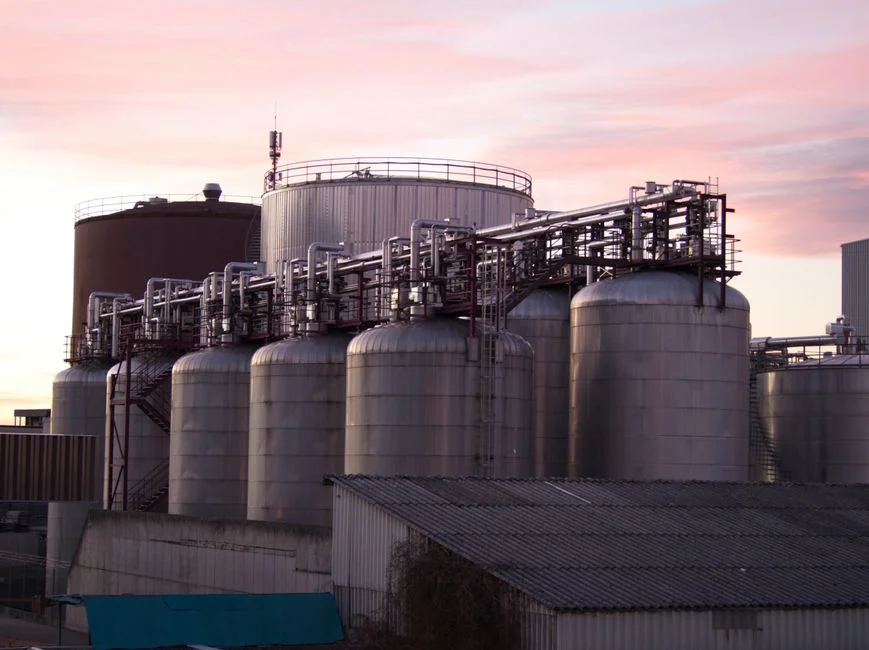
The four-stage model tells you what the regulator expects; equipment selection is how you meet that expectation on an industrial loading. The list below maps the canonical stages to specific unit operations sized for trade waste, not domestic sewage. Cross-reference any supplier proposal against this table before you sign a purchase order.
Headworks / Stage 1. A rotary mechanical bar screen with stainless-steel rake teeth gives continuous removal of rags, plastics and fibrous debris from industrial inflows — a non-negotiable first unit on any food, textile or pulp-and-paper site. Free oil and high TSS are then handled with a DAF system for FOG and suspended solids; the typical industrial envelope is 4–300 m³/h, which strips emulsified oil, grease and floatable solids before they reach the biological stage.
Stage 2 — biological duty. A conventional activated-sludge tank is the default, but for variable flow and tight footprint the upgrade is a MBR membrane bioreactor pairing activated sludge with submerged 0.1 μm PVDF membranes. MBR units in the industrial range treat 10–2,000 m³/day and typically shrink the biological-stage footprint by 60% versus CAS at equivalent loading, with a sharper effluent quality that often removes the need for a separate clarifier.
Remote or smaller sites. For 1–80 m³/h sites — rural factories, mining camps, resorts, hospital laundries — a buried WSZ package sewage plant runs an anoxic/aerobic biological cycle fully automated with no on-site operator. It is a defensible answer where staffing, civil works or visual impact rule out an open-tank layout.
Chemical support / nutrient polish. A PLC-controlled chemical dosing system handles coagulant, flocculant and pH adjustment to hit licence limits for metals, phosphorus and alkalinity. For reuse polishing, an ultrafiltration system at 0.03 μm is the standard RO pre-treatment step.
Sludge handling. The biological and chemical sludge produced by the train has to go somewhere; a plate and frame filter press drops sludge moisture to a cake that can be hauled to landfill or off-site disposal, rather than paying liquid-haulage rates forever. Comparable practice in the battery sector is described in battery plant wastewater treatment reference projects.
| Stage | Function | Equipment | Typical industrial capacity |
|---|---|---|---|
| Headworks | Screen debris, rags, plastics | Rotary mechanical bar screen (GX) | Continuous, site-specific |
| Primary (FOG/high-TSS) | Float off oil, grease, suspended solids | DAF micro-bubble flotation | 4–300 m³/h |
| Secondary | Biological oxidation of dissolved organics | MBR (0.1 μm PVDF submerged) | 10–2,000 m³/day |
| Secondary (packaged) | Anoxic/aerobic biological duty, buried | WSZ package sewage plant | 1–80 m³/h |
| Chemical / nutrient | Coagulant, flocculant, pH correction | PLC-controlled dosing skid | Matched to flow & target |
| Polishing / reuse | TSS and turbidity cut for RO feed | UF system | 0.03 μm cutoff |
| Solids | Sludge dewatering to cake | Plate and frame filter press | Site-specific |
Disinfection Options Allowed Under Queensland Practice
Chemical disinfection with chlorine is the most common city-scale method, but generates chlorinated by-products that are a concern for sensitive receiving waters (source: qld.gov.au, 2026). For a 2026 Queensland plant the choice is rarely "chlorine yes/no" — it is "which combination hits the EPP 2019 receiving-water objectives for this catchment."
UV-C. A UV-C sterilizer is chemical-free, effective against chlorine-resistant Cryptosporidium and Giardia, and produces no taste or odour change in the effluent. It is the default pick where the receiving water is reused for irrigation or stock, or where the operator wants to avoid chlorine handling on site.
Chlorine dioxide (ClO₂). A chlorine dioxide generator provides a residual disinfectant through the outfall and oxidises phenols, cyanides and some metals at the same time, in capacities from 50 g/h to 20,000 g/h. It is the right answer when the licence requires both disinfection and an oxidising step for refractory contaminants.
Lagoon retention. Acceptable in less populated areas where several weeks of residence time are available (source: qld.gov.au, 2026). Cheap to build, expensive in land area, and rarely the right answer for an industrial site with limited footprint.
A Practical Selection Framework for Queensland Operators
Step 1 — Quantify the problem. Pull together average and peak flow (m³/h or m³/day), influent BOD/COD/TSS/FOG and the heavy-metal profile, and pin the target effluent limits straight off the ERA licence. Skipping this step is the single most common reason a 2026 specification has to be re-engineered mid-procurement.
Step 2 — Decide the discharge route. To sewer (council approval required, with pre-treatment to meet the local trade-waste consent), to a waterway (full EPP-grade treatment to the receiving-environment limits), or to a land/evaporation pond (source: qld.gov.au, 2026). Each route drives different equipment, different monitoring and a different cost base.
Step 3 — Match the train to the loading. High FOG or high TSS → DAF front-end. Variable flow with a tight footprint → MBR. Remote or low-staffing site → WSZ package. Polishing for reuse → UF at 0.03 μm as RO pre-treatment via the ultrafiltration system.
Step 4 — Plan monitoring up front. On-site testing for pH, temperature and dissolved oxygen plus laboratory analysis for metals and pesticides is the minimum that lets you prove compliance to DETSI during their random checks (source: qld.gov.au, 2026). Build the sampling plan into the same document as the equipment list — not as an afterthought.
Step 5 — Budget capital and operating together. DETSI frames wastewater treatment as expensive because of the equipment, the chemicals and the ongoing lab work it requires (source: qld.gov.au, 2026). Leave room in the budget for chemical dosing, sludge dewatering on a plate and frame filter press, and the lab monitoring contract; under-budgeting any of the three is what turns a 2026 capex line into a 2027 opex problem. For a comparable costing checklist outside Australia, see the industrial wastewater treatment compliance and cost guide.
Frequently Asked Questions
Which Act governs industrial wastewater discharge in Queensland?
The Environmental Protection Act 1994 is the governing statute, administered by DETSI. The Environmental Protection (Water and Wetland Biodiversity) Policy 2019 (EPP) is the standard-setting instrument underneath it, defining water-quality goals and triggering the requirement for local-government sewage management plans (source: qld.gov.au, 2026).
How many treatment stages does a Queensland sewage plant use?
Four: primary treatment (screening, grit removal, sedimentation, skimming), secondary treatment (biological oxidation of dissolved organics), nutrient removal (nitrification/denitrification, biological or chemical phosphorus removal), and disinfection (chlorine, UV or extended lagoon retention). Nutrient removal is not available at every plant and is becoming more common in Queensland (source: qld.gov.au, 2026).
Do I need an ERA licence to discharge?
Yes — wastewater can only be disposed of as permitted by a licence under the Environmental Protection Act 1994. The split is between local-impact ERAs, administered by your local government, and regional or statewide-impact ERAs, administered by DETSI (source: qld.gov.au, 2026). Confirm the split with DETSI before you lodge.
Which disinfection method should I specify?
Chemical dosing (chlorine) and UV irradiation are the two city-scale methods, with extended lagoon retention acceptable in less populated areas (source: qld.gov.au, 2026). Pick UV where by-products or downstream reuse are a concern; pick chlorine dioxide where you also need an oxidising step for metals or phenols; pick lagoons only if you have the land and the residence time.
What contaminants does Queensland specifically monitor for?
On top of the conventional BOD/COD/TSS envelope, the department's random checks target oils, grease, pesticides, synthetic chemicals and heavy metals (source: qld.gov.au, 2026). If your process generates any of these — metal finishing, agrochemical handling, refinery washwater — your treatment train has to remove them, and your monitoring plan has to prove it.