Understanding Ammonia in Wastewater
Ammonia in wastewater exists in a pH- and temperature-dependent equilibrium between the toxic, gaseous free ammonia (NH3) and the soluble ammonium ion (NH4+). At a pH below 9.25 and lower temperatures, the ammonium ion (NH4+) dominates, while a pH above 10.8 and higher temperatures favor the formation of volatile NH3. This chemical behavior is the fundamental principle behind most removal technologies. The primary drivers for its removal are environmental compliance and toxicity; ammonia depletes dissolved oxygen in receiving waters and is directly toxic to aquatic life. Regulatory bodies like the U.S. EPA and the EU's Urban Waste Water Directive (91/271/EEC) set typical ammonia nitrogen (NH4-N) discharge limits between 5–15 mg/L, with stricter limits applied to sensitive watersheds. For example, some ecologically sensitive areas may require technology-based limits as low as 1–3 mg/L to protect specific species like salmonids.
Biological Nitrification: The Most Common Method
Biological nitrification is the dominant method for sustainable ammonia removal, achieving 90–98% efficiency in well-controlled systems. This two-step aerobic process is performed by specialized autotrophic bacteria. First, Nitrosomonas (ammonia-oxidizing bacteria, or AOB) oxidize ammonium (NH4+) to nitrite (NO2-). Second, Nitrobacter (nitrite-oxidizing bacteria, or NOB) oxidize the nitrite to nitrate (NO3-).
Successful nitrification hinges on maintaining specific operational parameters. Dissolved oxygen (DO) must be kept above 2.0 mg/L to support the aerobic bacteria. The process consumes 7.14 mg of alkalinity (as CaCO3) per mg of NH4-N oxidized, requiring sufficient buffering (>75 mg/L as CaCO3) to prevent pH crash. Most critically, the system must maintain a sludge retention time (SRT) longer than 10 days to prevent washing out the slow-growing nitrifying organisms. Efficiency is highly temperature-dependent, peaking between 25–30°C and declining significantly below 15°C. An integrated MBR system for high-efficiency nitrification enhances this process by retaining biomass at mixed liquor suspended solids (MLSS) concentrations of 8,000–12,000 mg/L, enabling compact reactor design and consistent effluent quality of <5 mg/L NH4-N even under variable loads. A practical tip for operators is to closely monitor the Food-to-Microorganism (F/M) ratio to avoid overloading the nitrifier population.
Air Stripping: High-Efficiency Physical Removal
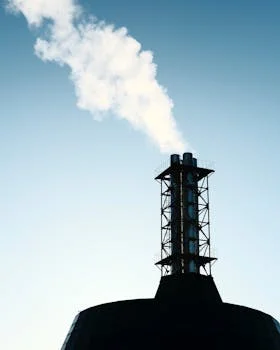
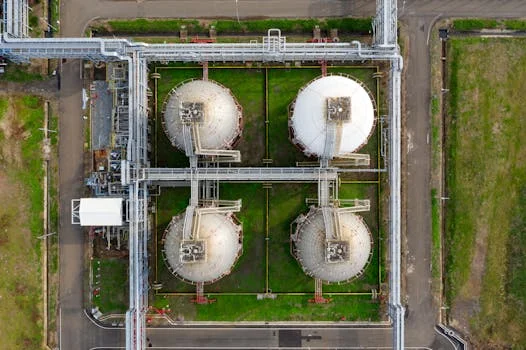
Air stripping removes ammonia from high-strength waste streams such as landfill leachate or digester supernatant with 85–95% efficiency. The process requires elevating the wastewater pH to 10.8–11.5 using lime or caustic soda (NaOH) to convert the majority of NH4+ ions into volatile NH3 gas. This high-pH water is then cascaded down a packed tower while a counter-current flow of air is blown upwards, stripping the NH3 from the liquid phase.
The efficiency is governed by the air-to-water ratio, typically 20:1 to 30:1, and packing media design. A key advantage is the potential for resource recovery: the stripped ammonia gas can be absorbed into a sulfuric acid (H2SO4) scrubber to produce a saleable 35% ammonium sulfate fertilizer. However, the operational expenses (OPEX) are significant due to the high costs of chemicals for pH adjustment and the energy required for blowers. Scaling and fouling of the packing media can also pose maintenance challenges, making it less suitable for waste streams with high hardness or suspended solids. Pre-treatment with a clarifier or multimedia filter is often necessary to remove solids and reduce scaling potential, adding to the overall system complexity.
Breakpoint Chlorination and Chemical Methods
Breakpoint chlorination rapidly oxidizes ammonia to nitrogen gas, providing reliable removal for shock loads or final polishing. The process involves adding sufficient chlorine (Cl2) to oxidize ammonia all the way to nitrogen gas (N2). The stoichiometric ratio requires 7.6 mg of Cl2 per mg of NH4-N to reach the "breakpoint," the point where all chlorine demand is satisfied and free chlorine residual appears.
Dosing below this ratio forms toxic chloramines (mono- and di-chloramine), which can create disinfectant byproducts (DBPs) and violate discharge permits. Consequently, careful control and monitoring are essential, often managed by a PLC-controlled dosing for pH adjustment in stripping or breakpoint chlorination. The major drawbacks are high chemical consumption and the formation of chlorinated DBPs. Ion exchange, using natural or synthetic zeolites, offers an alternative for low-concentration polishing. Zeolites selectively exchange sodium (Na+) ions for ammonium (NH4+) ions. While effective, its capacity is limited and the regeneration process produces a concentrated brine stream that requires further treatment or disposal. A common data point is that clinoptilolite, a natural zeolite, has an exchange capacity of approximately 0.7–2.0 meq/g.
Method Comparison: Which One Fits Your Plant?
Each ammonia removal method varies in performance, cost, and operational demands. The following table provides a data-driven comparison to inform the decision-making process.
| Method | Removal Efficiency | Key Operational Parameters | Pros | Cons | Best For |
|---|---|---|---|---|---|
| Biological Nitrification | 90–98% | DO >2 mg/L, SRT >10 d, Temp: 25–30°C, Alk >75 mg/L | Low chemical OPEX, sustainable, handles variable loads | Slow startup, sensitive to toxins/temperature shocks | Municipal, food processing, pharmaceutical wastewater |
| Air Stripping | 85–95% | pH: 10.8–11.5, Air:Water ~25:1 | Handles very high concentrations, potential for ammonia recovery | High chemical/energy OPEX, scaling/fouling issues | Landfill leachate, digester supernatant, chemical manufacturing |
| Breakpoint Chlorination | >99% | 7.6 mg Cl2 / mg NH4-N, pH 6–7 | Fast, reliable, compact footprint, unaffected by temperature | High chlorine OPEX, DBP formation, toxic chloramine risk | Polishing, emergency compliance, small flow applications |
| Ion Exchange (Zeolite) | 90–95% (polishing) | Low TSS, low BOD/COD competing ions | Selective for ammonia, simple operation | Limited capacity, brine waste from regeneration | Polishing low-ammonia, low-organic streams |
How to Choose the Right Ammonia Removal System
System selection depends on wastewater composition, regulatory requirements, and site-specific conditions. Use this decision framework to narrow your options:
For municipal or biodegradable industrial wastewater (e.g., food processing, beverage), biological nitrification in an activated sludge system is the standard. For plants facing space constraints or needing to guarantee strict limits (<5 mg/L NH4-N), an integrated MBR system is the superior choice due to its high biomass concentration and small footprint.
For high-strength, industrial ammonia streams (e.g., chemical production, landfill leachate), consider air stripping for primary treatment, especially if ammonia recovery is viable. For complex wastewaters, a combination system using stripping for the concentrated sidestream and an MBR for the main stream is often most effective.
For cold climates or highly variable loads, enclosed reactor designs with temperature control are necessary for biological systems. Modular MBR solutions are ideal for rapid deployment and include built-in temperature management. Breakpoint chlorination serves as an effective tertiary polishing step or a backup for temperature-induced upsets. Always conduct a treatability study with a representative wastewater sample before finalizing any technology selection.
Frequently Asked Questions
Will aeration remove ammonia?
Yes, but only when coupled with nitrifying bacteria. Aeration provides the dissolved oxygen required by Nitrosomonas and Nitrobacter to convert NH4+ to NO3-.
How to treat high ammonia in wastewater?
First, diagnose the biological system: check DO, alkalinity, temperature, and SRT. For immediate correction, consider supplemental nitrifier products. For long-term upgrades, evaluate an MBR or a hybrid system with chemical polishing.
What causes high ammonia levels in effluent?
Common causes include low dissolved oxygen, cold temperatures (<15°C), short sludge retention time (SRT), inhibition from toxic compounds, or insufficient alkalinity. A hydraulic overload can also wash out the slow-growing nitrifying bacteria before they can establish a stable population.
Can zeolite remove ammonia from wastewater?
Yes, natural and synthetic zeolites can remove ammonium ions (NH4+) via ion exchange. They are effective for polishing low-concentration streams but require periodic regeneration with a brine solution.
Is nitrification the same as denitrification?
No. Nitrification is an aerobic process that converts NH4+ to NO3-. Denitrification is an anoxic process where heterotrophic bacteria use organic carbon to reduce NO3- to harmless nitrogen gas (N2).