
Why a 2026 Dhaka data centre cannot copy a Taipei or Phoenix water model
Bangladesh's Department of Environment revoked or suspended Environmental Clearances for at least 12 named units across Gazipur and Savar between 2024 and 2025, and renewal under S.R.O. 229/Law/2023 now requires two years of compliant 24-hour composite sampling on file (DoE enforcement record, 2024–2025). A facility that copies a Taipei or Phoenix water model — assuming abundant surface dilution and a forgiving regulator — collides with that record inside its first audit cycle.
Bangladesh currently hosts 48 data centres (22 public, 26 private) with demand projected to exceed 500 MW by 2030 from roughly 200 MW today, while only about 2% of national power comes from renewable sources (Earth Journalism Network, 2025). The Buriganga, Shitalakshya, and Turag rivers supply municipal intakes for around 18 million Dhaka residents and exceeded Hilsa and carp recruitment thresholds in BFDC monitoring during 2024–2025 — the receiving-water buffer that a Taipei or Phoenix design assumes does not exist. The full DoE S.R.O. 229/Law/2023 inland surface-water limits therefore have to be met on every parameter, every quarter, not assumed away in a climate-comparable precedent.
Bangladesh has no mandatory environmental disclosure regime for data centres yet, so a 2026 facility that voluntarily documents its water footprint pre-empts the rule TNFD-aligned investors will require. The same logic applies to PFAS: there is no numeric cap in Bangladesh, but designing to the South Korea Water Environment Conservation Act pattern of real-time emission tracking at advanced fabs is the safer 2026 default, especially with global tightening of data-centre water-reuse discharge rules already visible at KIWW 2026.
The two streams a Dhaka facility must treat separately
Fab UPW blowdown and data-hall cooling blowdown are not interchangeable, and they cannot share a process train. Fab UPW blowdown carries COD 200–1,500 mg/L, fluoride 50–800 mg/L, copper 0.5–10 mg/L, ammonia-nitrogen 20–200 mg/L, tetramethylammonium hydroxide (TMAH) 5–50 mg/L, total suspended solids 50–300 mg/L, and arrives at 25–40 °C. Data-hall cooling blowdown is dominated by inorganic salts: TDS 500–2,500 mg/L, silica 10–80 mg/L as SiO₂, conductivity 1,000–4,000 µS/cm, residual oxidiser 0.1–1.0 mg/L as ClO₂ or Cl₂, hardness 200–800 mg/L as CaCO₃, and pH 7.5–9.0 from cycle-side chemical treatment.
A single fab draws about 14 billion litres of UPW per year, requiring 1.4–1.6 litres of municipal intake upstream for every litre of UPW produced (TNFD case study, 2025). Typical data centres draw 25 million–770 million litres per year, and hyperscale sites can exceed 2 billion litres per year — a single hyperscale hall in Kaliakoir can therefore rival the municipal demand of a small Bangladeshi upazila. The water-budget framing for the UPW stream should follow the electronics wastewater ZLD blueprint pattern, not European surface-water assumptions.
Both streams must hit the same DoE S.R.O. 229/Law/2023 inland surface-water envelope: BOD ≤50 mg/L, COD ≤200 mg/L, TSS ≤150 mg/L, TDS ≤2,100 mg/L, pH 6–9, total chromium ≤2 mg/L, residual chlorine ≤1 mg/L. The parameter set every 2026 integrator should quote against is summarised below.
| Parameter | Fab UPW blowdown (raw) | Data-hall cooling blowdown (raw) | DoE S.R.O. 229 limit (inland surface water) |
|---|---|---|---|
| COD | 200–1,500 mg/L | 20–80 mg/L | ≤200 mg/L |
| BOD | 50–400 mg/L | 5–20 mg/L | ≤50 mg/L |
| TSS | 50–300 mg/L | 10–50 mg/L | ≤150 mg/L |
| TDS | 200–1,000 mg/L | 500–2,500 mg/L | ≤2,100 mg/L |
| Fluoride (F⁻) | 50–800 mg/L | — | ≤15 mg/L (general industry) |
| Copper (Cu) | 0.5–10 mg/L | — | ≤0.5 mg/L |
| NH₃-N | 20–200 mg/L | — | ≤50 mg/L |
| TMAH | 5–50 mg/L | — | No numeric cap; control via COD + ZLD |
| Silica (SiO₂) | — | 10–80 mg/L | No numeric cap; RO/softener target <20 mg/L |
| Hardness (CaCO₃) | — | 200–800 mg/L | No numeric cap; cooling-tower feed target <50 mg/L |
| Residual oxidiser (as Cl₂/ClO₂) | — | 0.1–1.0 mg/L | ≤1 mg/L |
| Temperature | 25–40 °C | 30–45 °C | ≤40 °C at discharge (site-specific) |
| pH | 7–11 | 7.5–9.0 | 6–9 |
2026 fab UPW blowdown process train for Dhaka
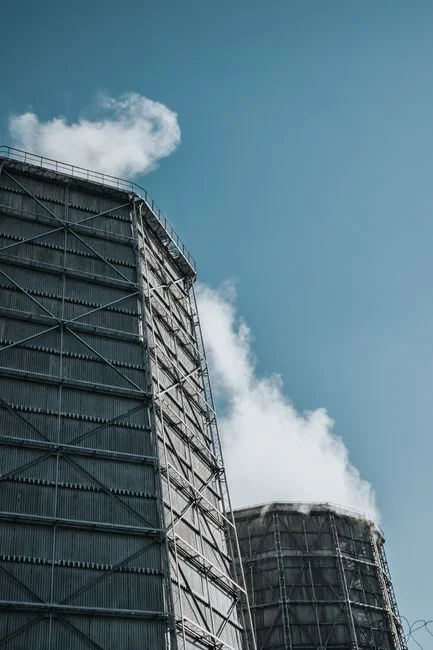
A defensible 2026 fab train runs in six modules: equalization → dissolved air flotation (DAF) → membrane bioreactor (MBR) → two-pass reverse osmosis (RO) → selective ion exchange (IX) → zero-liquid-discharge (ZLD) polishing when concentrate volume or contaminant class demands it. Equalization is sized at 8–12 hours retention, not the 4–6 hours typical of European designs, because Dhaka monsoon rainfall can triple hydraulic flow on an open-yard site; pH is held at 9–10 to drive fluoride and copper co-precipitation as their respective hydroxides. FRP or SS316L tanks are mandatory for fluoride resistance — carbon-steel equalization failed inside 18 months in 2024–2025 field service.
The DAF for fab pre-treatment sits ahead of the membranes to strip 70–90% of TSS, colloidal metals, and free oil before the biology stage; sizing is 15–25 m³/h per 100 m³/d of design flow. Downstream, a submerged PVDF MBR for fab UPW blowdown drops COD from 1,000–2,000 mg/L to under 100 mg/L at a surface loading of 0.5–0.8 m³/m²·h, with a ClO₂ backwash at 2–5 mg/L to control biofouling.
An industrial RO at 70–75% recovery in a two-pass configuration strips TDS and silica: first-pass recovery 70–75%, second-pass 85–90%, with combined concentrate at 25–40% of feed routed to brine treatment; FRP pressure vessels with energy recovery on the second pass are the 2026 default. Selective IX finishes the polish — activated alumina takes fluoride from 5–20 mg/L residual to under 1 mg/L, and chelating resin drops copper below 0.1 mg/L. ZLD via falling-film evaporator plus crystallizer is added only when concentrate volume exceeds 30 m³/d or when total chromium and TMAH removal must clear 95%; for a 200 m³/d fab that adder is BDT 8–15 crore in 2026. Sludge from chemical and biological stages goes to a plate and frame filter press for sludge dewatering to reach 25–35% dry solids. The process train is summarised below.
| Module | Function | 2026 sizing for Dhaka |
|---|---|---|
| Equalization | Flow and pH dampening; F⁻/Cu co-precipitation | 8–12 h retention, pH 9–10, +25% freeboard for monsoon |
| DAF | TSS, colloidal metals, oil removal | 70–90% TSS, <20 mg/L effluent TSS; 15–25 m³/h per 100 m³/d |
| MBR | COD and NH₃-N reduction | 0.1 µm PVDF, 0.5–0.8 m³/m²·h, COD <100 mg/L, ClO₂ backwash 2–5 mg/L |
| Two-pass RO | TDS and silica rejection | 1st pass 70–75%, 2nd pass 85–90%; permeate TDS <50 mg/L |
| Selective IX | Fluoride and copper polish | Activated alumina F⁻ <1 mg/L; chelating resin Cu <0.1 mg/L |
| ZLD (conditional) | Concentrate volume reduction, Cr/TMAH >95% | Falling-film evaporator + crystallizer; +BDT 8–15 crore at 200 m³/d |
| Sludge dewatering | Cake handling for chemical + biological sludge | Plate and frame filter press, 1–500 m² filter area, 25–35% dry solids |
2026 data-hall cooling blowdown train for Dhaka
Data-hall cooling blowdown does not need biological treatment; the load is inorganic and oxidant-bearing, not organic. The 2026 Dhaka train is therefore tighter, lower-CAPEX, and built around closed-loop cooling-tower make-up. A multi-media filter ahead of the membranes removes suspended solids and protects the RO from particulate fouling, and a 5–10 µm cartridge polisher guards the high-pressure pump. Softening follows — either lime-soda or a weak-acid cation softener ahead of data-hall RO — to drop hardness below 50 mg/L as CaCO₃ and silica below 20 mg/L as SiO₂ before the RO feed. In Dhaka's 30–45 °C ambient cooling-tower return, silica is the limiting species on cycle concentration; if silica is not softened out, it scales the chiller condenser at 5–8 cycles.
An antiscalant dose of 2–5 mg/L (phosphonate blend) lets the industrial RO run at 70–75% recovery, with permeate (TDS <50 mg/L) blended back into cooling-tower make-up. The concentrate — 25–30% of feed — is recycled to the cooling-tower basin as blowdown replacement; typical reuse rate is 70–85% of total blowdown volume. A DAF unit is sometimes added upstream when the cooling water carries carryover of corrosion inhibitor or microbiological floc from an open basin. A chlorine dioxide generator handles residual biocide control on the recycled stream. Auto-blowdown is triggered by a conductivity probe on the RO reject line at 4,000 µS/cm. Final discharge targets are TDS <2,100 mg/L, residual chlorine ≤1 mg/L, pH 6–9 — the same DoE envelope every other Dhaka industrial discharger must hit.
A 500 m³/d Dhaka data-hall train (DAF + softener + RO) is budgeted at BDT 4–6 crore in CAPEX with a 2.5–3.5 year simple payback against the BDT 60–120/m³ Dhaka industrial municipal water tariff. The train is summarised below.
| Module | Function | 2026 sizing for Dhaka |
|---|---|---|
| Optional DAF | Carryover floc and inhibitor removal | 10–25 m³/h per 100 m³/d; 60–80% TSS |
| Multi-media filter | Suspended solids and turbidity guard | Sand + anthracite + garnet, 10–15 µm effluent |
| Softener (lime-soda or WAC) | Hardness and silica reduction | Hardness <50 mg/L as CaCO₃; SiO₂ <20 mg/L |
| Cartridge polisher | High-pressure pump protection | 5–10 µm absolute |
| Antiscalant dosing | RO scale prevention | 2–5 mg/L phosphonate blend |
| RO (single-pass) | TDS rejection and reuse | 70–75% recovery; permeate TDS <50 mg/L |
| Conductivity-triggered blowdown | Cycle-side concentration control | Auto dump at 4,000 µS/cm on reject line |
Fab UPW blowdown vs data-hall cooling blowdown: which train do you actually need?
Both streams share a single DoE S.R.O. 229 envelope — design once, file once — but the process trains diverge sharply after equalization. A site that has no fab can skip the MBR and selective IX blocks entirely; a fab-only site can skip the closed-loop RO-to-cooling-tower recycle and send concentrate to ZLD or evaporative disposal. Mixed sites (fab pilot line plus a single hyperscale hall) can share equalization and sludge handling but should not share the RO loop, because the recycle endpoints are different. The same audit file covers both; the P&IDs do not.
| Decision axis | Fab UPW blowdown train | Data-hall cooling blowdown train |
|---|---|---|
| Dominant pollutant class | Organic, fluorinated, metallised (COD, F⁻, Cu, TMAH) | Inorganic, silica-laden, oxidiser-bearing (TDS, SiO₂, ClO₂/Cl₂) |
| Biological step required? | Yes — MBR mandatory | No |
| Heavy-metal removal | Selective IX (Cu, Cr) plus F⁻ on activated alumina | Not applicable |
| ZLD requirement | Required when concentrate >30 m³/d or Cr/TMAH >95% removal | Typically not required; concentrate recycles to cooling tower |
| Target reuse | 60–85% on-site; remainder ZLD or evaporative disposal | 70–85% recycled to cooling-tower basin |
| CAPEX band (200 m³/d) | BDT 6–12 crore (without ZLD) | BDT 4–6 crore (DAF + softener + RO) |
| OPEX band | BDT 25–55/m³ (fab-side) | BDT 18–35/m³ (cooling-side, lower chemical load) |
| Simple payback | 2.5–4 yr against BDT 60–120/m³ municipal tariff | 2.5–3.5 yr against same tariff |
| Equalization and sludge handling | Shared on mixed sites | Shared on mixed sites |
| RO loop | Two-pass; concentrate to ZLD | Single-pass; concentrate to cooling-tower basin |
| DoE sampling file | Shared two-year composite record under S.R.O. 229 | Shared two-year composite record under S.R.O. 229 |
2026 CAPEX, OPEX and payback for a Dhaka on-site train
On-site CAPEX for a 2026 fab or data-hall ETP in Dhaka, anchored at ~110 BDT/USD and inclusive of civil works, equipment, installation, instrumentation, and commissioning, scales as follows: 50 m³/d at BDT 1.5–3.5 crore; 200 m³/d at BDT 6–12 crore; 500 m³/d at BDT 18–28 crore; 1,000 m³/d at BDT 30–45 crore. OPEX for a 200 m³/d fab or data-hall train breaks down as energy BDT 8–18/m³, chemicals BDT 6–15/m³, sludge handling BDT 3–7/m³, labour BDT 4–9/m³, and membrane replacement reserve BDT 2–5/m³ — a total OPEX band of BDT 25–55/m³.
A 60% water-recovery rate on a 200 m³/d plant running 365 days/year saves roughly 73,000 m³/year, or BDT 44–88 lakh/year in offset municipal water purchase, yielding a simple payback of 2.5–4 years against the CAPEX above. The CETP shortcut looks cheaper on paper — DEPZ CETP tariff was BDT 14–50/m³ in 2024–2025, Hemayetpur tannery CETP BDT 5,000–18,000/m³ annualised because of high TDS and chromium load — but both reported more than 90% hydraulic utilisation in 2025, so a new fab or hyperscale data hall above 200 m³/d is unlikely to secure inlet capacity. A single upstream non-compliance inside a shared CETP also triggers DoE action against all members, which is why hyperscale buyers now require on-site trains in ESG audits. The Samsung 330,000 t/day fab reuse plan from KIWW 2026 is the global benchmark a hyperscale RFP will compare a Dhaka project against.
| Plant size | Site profile | CAPEX (BDT, on-site) | OPEX (BDT/m³) | Simple payback |
|---|---|---|---|---|
| 50 m³/d | Edge data hall, small fab pilot line | 1.5–3.5 crore | 30–60 | 3–5 yr |
| 200 m³/d | Mid-size fab support, single hyperscale hall | 6–12 crore | 25–55 | 2.5–4 yr |
| 500 m³/d | Full fab, multi-hall hyperscale campus | 18–28 crore | 22–45 | 2.5–3.5 yr |
| 1,000 m³/d | Multi-line fab, hyperscale cluster | 30–45 crore | 20–40 | 2–3 yr |
Six-step audit-readiness workflow for 2026
- Pull the Online Environmental Clearance Monitoring System record and confirm the discharge category — inland surface water, irrigation land, or municipal sewer — because each category carries a different limit on the same parameter under S.R.O. 229/Law/2023.
- Commission two weeks of 24-hour composite sampling on the load-bearing parameters: BOD, COD, TDS, F⁻, Cu, NH₃-N, TMAH for a fab; TDS, silica, hardness, residual biocide for a data hall.
- Size equalization at 8–12 hours retention with 25% extra freeboard; the Dhaka monsoon can triple hydraulic flow on an open-yard site, and a 4–6 hour European-sized basin bulks inside 72 hours.
- Select DAF plus MBR (or submerged UF for data-hall) as the protected front-end, sized 15–20% over design flow so monsoon load swings do not push the membranes past their recovery curve.
- Design RO at 70–75% recovery with concentrate routed to ZLD or evaporative disposal, and document the reuse targets inside the DoE file so the next Environmental Clearance renewal is a non-event.
- Lock in two years of compliant sampling under S.R.O. 229/Law/2023 — that record is the difference between a renewal and a closure order, and is the audit artefact every hyperscale buyer will request on a 2026 site visit.
Frequently asked questions
What are the DoE discharge limits a Dhaka data centre must meet in 2026?
Under S.R.O. 229/Law/2023, inland surface-water discharge must meet BOD ≤50 mg/L, COD ≤200 mg/L, TSS ≤150 mg/L, TDS ≤2,100 mg/L, pH 6–9, total chromium ≤2 mg/L, and residual chlorine ≤1 mg/L. The renewal cycle now requires two years of compliant 24-hour composite sampling on file, so design margin should sit above the line, not on it. The full DoE S.R.O. 229/Law/2023 inland surface-water limits are documented in the 2026 Bangladesh compliance guide.
How much water does a fab-support site in Dhaka actually consume?
A single fab consumes about 14 billion litres of UPW per year, and every litre of UPW needs 1.4–1.6 litres of municipal intake upstream (TNFD case study, 2025). A hyperscale data-hall on its own draws 25 million–770 million litres per year, and a Kaliakoir campus can exceed 2 billion litres per year — the order of magnitude that turns a DEPZ or Kaliakoir intake permit into a multi-agency review in 2026.
Do fab and data-hall blowdown share the same process train?
No. Fab UPW blowdown needs equalization, DAF, MBR, two-pass RO, selective IX, and sometimes ZLD, because it carries COD 200–1,500 mg/L, F⁻ 50–800 mg/L, and TMAH 5–50 mg/L. Data-hall cooling blowdown needs only DAF (optional), multi-media filtration, softening, and single-pass RO with concentrate recycled to the cooling-tower basin — the load is inorganic and oxidant-bearing, not organic. Both trains share the same DoE S.R.O. 229 envelope and the same two-year sampling file, but the P&IDs are not the same.
Is on-site treatment cheaper than DEPZ or Hemayetpur CETP?
On-site is the defensible answer above 200 m³/d in 2026. DEPZ CETP tariff was BDT 14–50/m³ in 2024–2025 and Hemayetpur CETP BDT 5,000–18,000/m³ annualised, but both reported >90% hydraulic utilisation in 2025, so new inlet capacity is unavailable. A shared CETP also exposes the operator to a single upstream non-compliance event, which is why hyperscale ESG audits now require on-site trains. On-site CAPEX at 200 m³/d is BDT 6–12 crore with OPEX of BDT 25–55/m³ and a 2.5–4 year simple payback from water-reuse savings.
How are fluoride, copper and TMAH controlled in a 2026 fab train?
Selective IX on activated alumina takes fluoride from 5–20 mg/L residual to <1 mg/L, and chelating resin drops copper below 0.1 mg/L. TMAH is controlled through MBR COD reduction plus concentrate ZLD when the 95% removal threshold applies. PFAS monitoring is not yet numeric in Bangladesh but follows the South Korea Water Environment Conservation Act pattern of real-time emission tracking at advanced fabs, and a 2026 facility that documents PFAS influent and removal voluntarily pre-empts the rule TNFD-aligned investors are already asking for.