
Why Freeport Chemical Plants Stress a Conventional Activated Sludge System
Freeport, Texas sits at the lower Brazos River basin and hosts one of the densest clusters of petrochemical, specialty-chemical, and olefins capacity in North America — Dow, INEOS Olefins, BASF, and a long tail of mid-sized plants that discharge under TCEQ-administered TPDES permits. Influent to the on-site secondary treatment train is routinely 35–45 °C, 3,000–8,000 mg/L TDS, with chloride at 500–1,500 mg/L and sulfate at 200–800 mg/L during low-Brazos-flow summers. Free oil and grease (FOG) regularly exceeds 150 mg/L after oil/water separation, and storm events push hydraulic loading 2–3× design within hours during hurricane season (June–November). For a conventional activated sludge (CAS) system, each of those numbers is a specific failure mode, not a generic inconvenience.
Sludge bulking is the first casualty. Filamentous organisms — Microthrix parvicella, Nocardia spp., and halotolerant Haliscomenobacter — proliferate on FOG-coated mixed liquor, and the resulting high SVI destroys clarifier settling. Hydraulic shock from a Brazos-fronting site or a hurricane storm surge is the second: clarifier overflow rate climbs, the sludge blanket rises, and solids wash into the effluent for hours. Nitrification collapse is the third. Ammonia spikes above 200–300 mg/L — common after a process unit slug or a tank-farm turnover — strip the slow-growing nitrifier population; at Freeport's typical 35 °C and 1,000 mg/L chloride, free ammonia toxicity and chloride inhibition are both active. Finally, open aeration tanks strip VOCs (BTEX, vinyl chloride, hexane) into the air, creating a separate TCEQ air-permit headache that closed-cell MBR basins avoid.
Banu et al. (2009) demonstrated that a long-SRT MBR can run stably at high MLSS for 270 days at a designed flux of 77 LMH — a non-trivial finding for chemical operators, because it shows the membrane decouples HRT from SRT in a way CAS cannot. HydropureWater's 2026 engineering brief puts it bluntly: the secondary clarifier is the single point of failure in CAS, and Gulf-Coast chemical plants stress that point of failure every week. For a Freeport site, those failure modes are not edge cases — they are monthly events.
MBR Process Fundamentals: How a Membrane Bioreactor Replaces the Clarifier
An MBR is an activated-sludge reactor in which submerged microfiltration or ultrafiltration membranes (typically 0.1–0.4 μm PVDF flat sheet or hollow fiber) replace the secondary clarifier as the solid–liquid separation step. Mixed liquor is drawn through the membrane under a small vacuum (typically 0.1–0.3 bar transmembrane pressure), permeate exits as effluent, and the rejected biomass stays in the aeration basin. There is no settling step, no sludge blanket, and no clarifier overflow rate to manage. HydropureWater's integrated MBR membrane bioreactor system packages this into a skid-mounted train for flows from 10 to 2,000 m³/d.
The 2012 MBR thesis work at the Institut Européen des Membranes (Montpellier) found that membranes with a cutoff in the 0.04–0.2 μm range retain bacteria and viruses "almost completely" — a useful side benefit for chemical plants that also need to control pathogens in cooling-tower reuse loops. The mechanical consequence is what matters most for chemical operators: HRT and SRT decouple. MBR routinely runs at SRT 20–60 days (sometimes higher on recalcitrant streams) while HRT stays at 4–12 hours, because biomass cannot wash out through a defined 0.1 μm pore the way it can wash out over a clarifier weir. MLSS sits at 8,000–12,000 mg/L, two to four times CAS, and the F/M ratio drops to 0.05–0.15 d⁻¹, which favors slower-growing nitrifiers and reduces sludge yield.
In the DF-series flat-sheet cassette design — HydropureWater's PVDF module line — each cassette integrates a coarse-bubble aeration box beneath the membrane panels, providing membrane scour as a side effect of biological aeration. Standard cassettes are rated at 80–225 m² of membrane area, draw permeate through a single header, and operate with relaxed-cycle or back-pulse sequences every 8–12 minutes to control fouling. The mechanical simplification is real: no clarifier, no RAS pumping station, no scum trough, no sludge blanket to chase.
MBR vs CAS Operating Parameters for Chemicals Wastewater
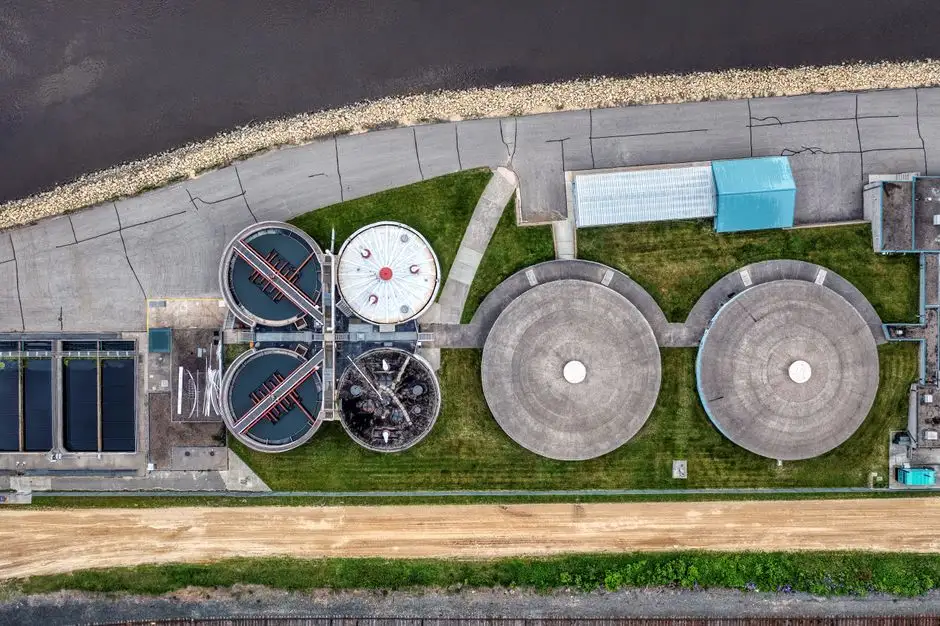
The table below consolidates the design envelope a Freeport engineer needs to defend either choice to a TCEQ reviewer or a capital committee. Values are typical ranges for high-strength industrial streams, not municipal defaults.
| Parameter | MBR | CAS | Source / note |
|---|---|---|---|
| MLSS (mg/L) | 8,000–12,000 | 2,000–5,000 | HydropureWater 2026 design guide |
| SRT (days) | 20–60 | 5–15 | Banu et al. 2009; long-SRT stability |
| HRT (hours) | 4–12 | 6–24 | Chemical-stream design basis |
| F/M (d⁻¹) | 0.05–0.15 | 0.2–0.5 | HydropureWater 2026 |
| TSS effluent (mg/L) | <5 | 10–30 | TCEQ-permit-relevant |
| BOD₅ effluent (mg/L) | <5 | 15–30 | Typical chemical-stream effluent |
| Turbidity (NTU) | <1 | 5–20 | On-line probe, settled |
| SDI to RO | typically <3 | typically >5 | RO pretreatment threshold |
| Sludge yield (kg WAS/kg COD removed) | 0.15–0.25 | 0.25–0.40 | Banu et al. 2009; long-SRT decay |
| Footprint vs CAS | 40–60% smaller | baseline | DF series rated ~60% smaller (2026) |
| Ammonia tolerance (mg/L NH₃-N) | stable to 200–800 | nitrification collapse >300 | Field experience, chemical service |
| Influent COD tolerance (mg/L) | 1,000–10,000+ | 1,000–3,000 comfortable | HydropureWater 2026 |
The sludge-yield line deserves attention: at matched SRT, MBR produces 20–40% less waste activated sludge than CAS, per Banu et al.'s 2009 finding of "relatively high decay rate and less sludge production due to much longer sludge age." For a Freeport chemical plant already paying Texas-licensed hazardous-sludge disposal rates (often $300–$800 per wet ton), that delta is a six-figure annual number, not a rounding error. The SDI line is the other one to circle: MBR permeate typically reads SDI <3, which is the threshold below which thin-film composite RO membranes can be fed directly. CAS effluent almost never meets that without tertiary filtration or DAF, which brings us to dollars.
2026 CAPEX and OPEX Comparison for a Freeport Chemical Plant
Indicative 2026 turnkey CAPEX for skid-integrated, EPC-scope plants lands at $80–$220 per m³/d for CAS and $180–$420 per m³/d for MBR (HydropureWater 2026 ranges). Freeport chemical projects cluster in the upper half of those ranges because of stainless construction in chloride service, higher influent strength requiring thicker tanks and larger blowers, and TPDES permit-driven monitoring. OPEX lands at $0.10–$0.22/m³ for CAS and $0.18–$0.42/m³ for MBR, with three line items driving the MBR premium: membrane-scour air (30–50% of MBR electrical load, separate from biological oxygen demand), CIP chemicals (NaOCl at 300–500 mg/L followed by citric or oxalic acid, on a 1–4 week cycle), and membrane replacement amortized over 5–8 years.
| Cost line (2026 USD) | CAS | MBR | Notes for Freeport chemical |
|---|---|---|---|
| Turnkey CAPEX ($/m³/d) | $80–$220 | $180–$420 | Stainless construction in upper half |
| OPEX ($/m³ treated) | $0.10–$0.22 | $0.18–$0.42 | MBR premium real, decomposable |
| Scour air share of energy | n/a | 30–50% | Separate from BOD aeration |
| CIP chemicals | n/a | NaOCl 300–500 mg/L + citric/oxalic, 1–4 wk | Weekly on FOG slugs |
| Membrane replacement | n/a | amortized 5–8 yr | Shortened by solvent breakthrough |
| Tertiary filtration to <10 mg/L TSS | Often required (sand, cloth-media disc) | Not required | Closes ~half the CAPEX gap |
| RO pretreatment (multimedia / DAF) | Usually required | Not required | SDI <3 permeate is RO-ready |
| RO CIP interval extension | baseline | +30–50% vs CAS-fed RO | HydropureWater field data, 2025-Q4 |
The hidden CAS costs matter as much as the headline. To meet a TCEQ limit of <10 mg/L TSS or to feed RO for cooling-tower reuse, a CAS train typically needs tertiary filtration (sand filters or cloth-media discs) and, often, a separate DAF or multimedia filter ahead of the RO. Those line items routinely close half the headline CAPEX gap between CAS and MBR. The reuse credit on the MBR side is the offsetting saving: a Freeport chemical plant with a cooling-tower or boiler-feed reuse loop can feed MBR permeate directly to RO, extending RO CIP intervals by 30–50% relative to CAS-fed RO (HydropureWater field data, 2025-Q4). For a 5,000 m³/d reuse loop, that delta alone can fund the MBR CAPEX differential inside the payback window. HydropureWater's DF-series PVDF flat-sheet MBR cassettes are the standard reference for the membrane module in this cost line.
Chemical-Specific Pretreatment and Membrane Protection
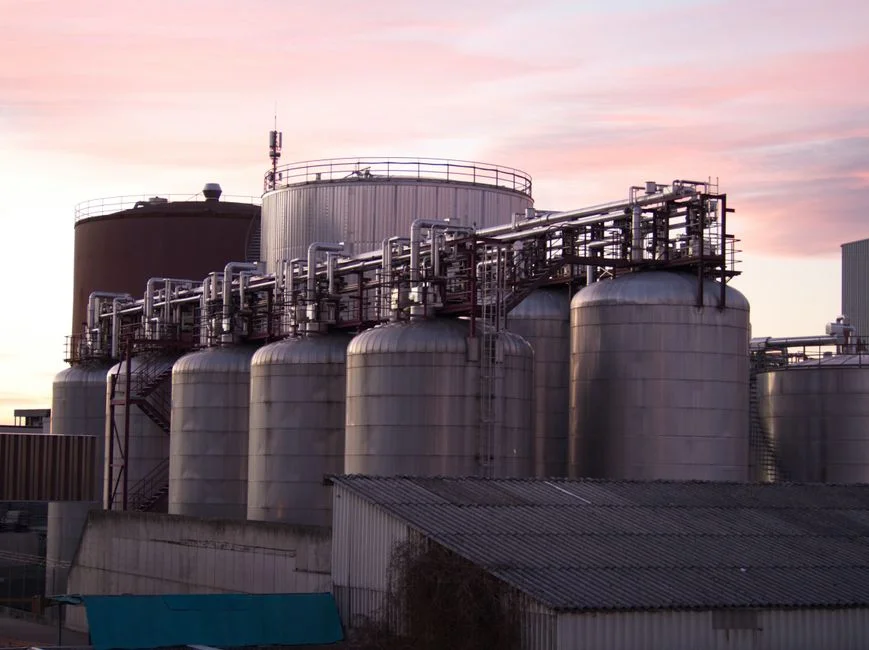
For a Freeport chemical influent, the MBR is almost never the first unit operation. The realistic pretreatment chain is: rotary bar screen → oil/water separator or DAF for FOG and free oil → equalization basin (mandatory for hydraulic and concentration shock) → pH adjustment → nutrient feed if BOD:N:P is outside 100:5:1 → MBR. Skipping any of these steps pushes fouling onto the membranes, where the cost shows up as shortened cassette life and weekly CIP rather than monthly.
FOG is the dominant fouling vector. Hydrocarbon-coated PVDF membranes foul irreversibly — the fouling is mechanical (pore occlusion) and chemical (oils adsorbing into the polymer), and no CIP cycle fully recovers flux. Lamella-clarifier.com's process comparison flags DAF as essential ahead of MBR on oily streams, and field experience on Freeport-style petrochemical influent confirms it: a well-sized DAF cutting FOG from 200 mg/L to <30 mg/L is the difference between monthly and weekly CIP. Solvent breakthrough, surfactant slugs from cleaning operations, and a hot TDS spike from a cooling-tower blowdown cross-connection all shorten CIP cycles the same way. HydropureWater's DAF for FOG and free-oil removal (4–300 m³/h) and the GX-series rotary bar screen for chemical headworks are the matching upstream units. Equalization is not optional: a 12–24 hour EQ basin with mechanical mixing absorbs both hydraulic surge (Brazos-fronting hurricane events) and concentration slug (tank-farm turnovers, process unit startups), and it is the cheapest insurance on the entire train.
Decision Matrix: When MBR Wins, When CAS Still Wins for Freeport Chemicals
The right choice depends on permit limits, land, influent character, and whether reuse water has a paying role. The matrix below is built for a real Freeport chemical project, not a textbook.
| Project condition | Recommendation | Why |
|---|---|---|
| TCEQ permit requires <10 mg/L TSS, or any reuse obligation | MBR | Eliminates tertiary filtration; SDI <3 permeate |
| Site is land-constrained (urban infill, inside existing shed) | MBR | 40–60% footprint saving changes site economics |
| Influent is high-COD (>2,000 mg/L) or high-FOG with shock loads | MBR | High MLSS, long SRT, decoupled HRT/SRT |
| Downstream RO planned for cooling-tower or boiler-feed reuse | MBR | Direct RO feed, 30–50% longer RO CIP intervals |
| Greenfield, ample land, biodegradable low-FOG low-TDS influent | CAS | Lowest cost-to-compliance; established operator skill |
| Existing CAS asset, only polishing needs upgrade | CAS retrofit (or hybrid) | Avoids stranding the aeration-basin civil investment |
| Operator base is municipal-trained, no membrane experience | CAS | Membrane discipline is a real operating risk |
| Existing CAS retrofit inside an operating Freeport plant | MBR retrofit | Repurpose aeration basin, add cassettes, remove clarifier |
Payback for a CAS-to-MBR upgrade lands at 3–6 years when any of three conditions hold: reuse water is needed and the CAS baseline includes a tertiary train, land cost is high enough that the 40–60% footprint saving shifts project economics, or the discharge consent forces <10 mg/L TSS and the CAS baseline would need cloth-media discs to meet it (HydropureWater 2026). If none of those apply, CAS remains the lower-cost compliant option. For Freeport retrofits specifically — the most common 2026 project type — the realistic path is to repurpose the existing aeration basin as the MBR aeration zone, drop in submerged DF-series cassettes, and demolish the clarifier. That retrofit is often cheaper than a greenfield MBR and avoids writing off sunk civil cost, and it is the configuration operating plants should price first. For a broader engineering view, HydropureWater's generic 2026 MBR vs CAS engineering comparison covers the same matrix in non-geographic terms.
Frequently Asked Questions
What is the main difference between MBR and conventional activated sludge for chemical plant wastewater?
MBR replaces the secondary clarifier with a 0.1–0.4 μm PVDF membrane, operating at 8,000–12,000 mg/L MLSS versus 2,000–5,000 mg/L for CAS. The mechanical result is that MBR decouples HRT from SRT and produces TSS <5 mg/L permeate, while CAS depends on sludge settling that fails on FOG, halide, and shock-loaded petrochemical streams. For a Freeport plant, that is the difference between a 270-day stable run and a monthly clarifier event (per Banu et al., 2009).
Is MBR cost-effective for high-strength chemical wastewater in Freeport?
At 2026 turnkey CAPEX of $180–$420 per m³/d and OPEX of $0.18–$0.42/m³, MBR is more expensive than CAS on a unit basis, but the gap closes by roughly half when CAS-side tertiary filtration and RO pretreatment are priced in. Payback lands at 3–6 years when reuse water is monetized, when land is constrained, or when the TCEQ permit forces <10 mg/L TSS (HydropureWater 2026).
How does MBR handle saline, high-TDS influent common on the Brazos Basin?
MBR's long SRT (20–60 days) maintains a nitrifier population that tolerates 500–1,500 mg/L chloride and 3,000–8,000 mg/L TDS — influent envelopes that collapse CAS nitrification above 300 mg/L ammonia. Operating at the upper end of the SRT range (40–60 days) further stabilizes the community but raises mixed-liquor viscosity, so membrane scour airflow must be sized accordingly.
What pretreatment does a chemical plant need before an MBR?
The realistic chain is rotary bar screen, oil/water separator or DAF for FOG, equalization basin, pH adjustment, and nutrient balance before the MBR. Skipping DAF on a Freeport-style influent pushes FOG onto the PVDF membranes and shortens CIP cycles from monthly to weekly; HydropureWater's DAF for FOG and free-oil removal is the standard match for this duty.
Can an existing CAS plant in Freeport be retrofitted to MBR?
Yes, and it is often cheaper than a greenfield MBR. The existing aeration basin is repurposed as the MBR aeration zone, DF-series flat-sheet cassettes are added in the basin, and the secondary clarifier is taken offline. RAS pumping, scum removal, and mixed-liquor distribution need redesign, but the aeration-tank civil cost is preserved — and the 40–60% footprint saving is captured without new land.
Does MBR permeate feed RO directly for cooling-tower or boiler reuse?
Yes, with SDI typically <3, MBR permeate can feed thin-film composite RO without multimedia filtration or DAF pretreatment. HydropureWater's RO water purification trains are paired with MBR for this duty, and field data from 2025-Q4 shows RO CIP intervals extend 30–50% relative to CAS-fed RO on the same chemical stream.