Why Tampa Chemical Plants Are Re-evaluating DAF vs. Clarifier in 2026
For Tampa chemical plants in 2026, choose a DAF when the wastewater carries emulsified oils, FOG, or low-density organics; a clarifier (preferably lamella) when the load is heavy, settleable inorganic solids. The Ecologix 2026 guide reports DAF removes 95% of oils and greases versus 70% for a clarifier on the same stream, while a clarifier delivers up to 90% suspended-solids removal at lower OPEX. For mixed streams, run DAF primary, clarifier secondary.
That default is now under pressure. Discharges to the City of Tampa Water Department's POTW are governed by the local Industrial Pretreatment Program (IPP), and the 2026 re-permitting cycle is tightening FOG, TSS, and priority-pollutant limits for Significant Industrial Users. Chemical manufacturers along the Port Tampa, Palm River, and East Tampa industrial corridors are dealing with influent that does not behave like a textbook municipal stream: batch reactor washouts, solvent emulsions, hot process water reaching 140°F, and brackish make-up drawn from the Hillsborough River or city supply. The federal floor is 40 CFR Part 465 — the Organic Chemicals, Plastics, and Synthetic Fibers (OCPSF) category — which sets categorical effluent limits for TSS, O&G, and COD that any DAF or clarifier train must be able to meet without tertiary polishing in most subcategories.
Enforcement practice has also shifted. Hillsborough County sampling in 2026 leans more on 24-hour composite programs than single grab samples, which means a short FOG excursion that would have been missed under a grab schedule now shows up on the compliance report and triggers surcharges. That changes the math: under-sized primary separation is no longer a paper risk, it is a recurring line item. The choice between dissolved air flotation and gravity clarification is now a direct compliance cost decision. For a peer reference on how Gulf-coast chemical plants are handling the same shift, see the Goose Creek chemical plant 2026 pretreatment guide.
How a DAF System and a Clarifier Actually Work
A dissolved air flotation (DAF) unit removes contaminants by floating them. A portion of clarified effluent — typically 20–50% of forward flow — is taken as recycle, pressurized in an air-saturation vessel at 60–90 psig, and saturated with compressed air. On pressure release through a specialized relief valve, the dissolved air comes out of solution as a cloud of micro-bubbles in the 20–40 µm range (per the DAF Corp micro-bubble generator spec). Those bubbles attach to oils, FOG, fibers, and fine floc, and the air-laden particles rise to the surface, where a mechanical skimmer drives the float to a sludge trough. The DAF float is typically 2–4% total solids, thick enough to feed a plate-and-frame press directly.
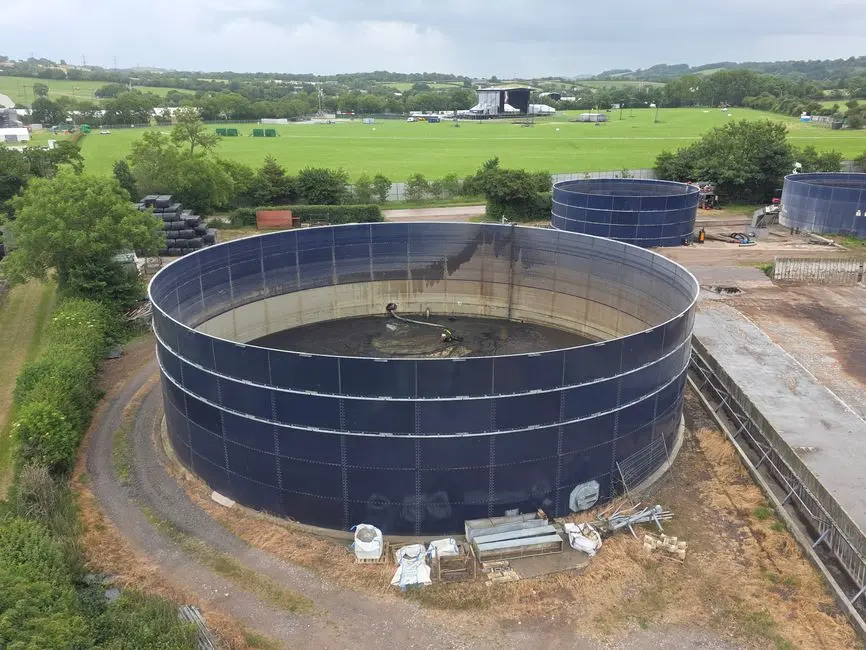
A clarifier does the opposite: it relies on gravity sedimentation. Heavier settleable solids fall to a sludge cone at the bottom of the tank and are pumped out as underflow, while clarified overflow exits over peripheral or launder weirs. A lamella clarifier (inclined plate settler) installs a pack of plates at 55–60° inside the tank, which shortens the effective settling path of a given particle and raises the effective surface loading rate to roughly 20–40 m/h — typically 4–6× higher than a conventional circular clarifier on a footprint basis. Rectangular DAF units ship fully shop-assembled and slot into narrow retrofit sites (per ClearStream), which is why they show up in space-constrained Tampa plant rooms where a circular clarifier of equivalent flow would not physically fit.
That mechanism difference is the entire basis for the technology choice. DAF thrives on low-density contaminants — emulsified oils, FOG, latex, biological floc, fine fibers — anything with a specific gravity close to water that will not settle in a reasonable residence time. A clarifier thrives on dense, fast-settling floc: metal hydroxides from pH adjustment, inorganic pigments, calcium carbonate, and other precipitates that drop out of suspension on their own once chemistry is correct. The hybrid — DAF primary, lamella secondary — is the standard answer when both contaminant classes are present and the engineer cannot afford to let either pass through.
DAF vs. Clarifier: Head-to-Head on Six Tampa-Relevant Criteria
This is the section to bookmark. The six criteria below are the ones a Tampa chemical plant engineer actually defends in front of plant leadership and the City IPP reviewer: FOG removal, TSS removal, footprint, CAPEX, OPEX, and best-fit chemical sub-sector. All numbers are drawn from the sources cited inline — do not generalize beyond them.
| Decision criterion | DAF | Lamella / Conventional Clarifier | Best fit for Tampa |
|---|---|---|---|
| FOG / oil removal | ~95% (Ecologix 2026 food case) | ~70% on the same stream (Ecologix 2026) | DAF where emulsified oil is present |
| TSS removal | 92–98% (DAF Corp FC Maximizer spec) | Up to 90% (Ecologix 2026 mining case) | DAF for colloidal/fine TSS; clarifier competitive for inorganic TSS |
| Footprint | 4–6× smaller per unit flow; rectangular DAFs ship shop-assembled (ClearStream) | Larger basin area; conventional circular clarifiers 0.5–1.0 gpm/ft² | DAF where bay footprint is constrained |
| CAPEX (order of magnitude, EPA 821-R-98-016 §2.8 and §2.2.2) | Higher — saturation skid, recycle pumps, skimmer drive, controls | Lower — tankage, scraper, sludge pump | Clarifier on CAPEX alone; DAF on life-cycle basis |
| OPEX | Compressed air + recycle-pump kWh + polymer; wins OPEX on FOG streams | Lower energy; may need more polymer on fine solids | Clarifier for inorganic streams; DAF for FOG streams |
| Best-fit Tampa chemical sub-sector | Specialty batch, cosmetic, agrochemical, resin, plasticizers, food-grade chemical | Inorganic pigments, fertilizer, mineral acid neutralization, metal-finishing pretreatment | Hybrid DAF+lamella for petroleum additives and lube-oil blending |
Two cautions. First, "DAF CAPEX" and "clarifier CAPEX" are not directly comparable unless you include the polymer dosing skid, the saturation system, the sludge pump, and the plate-and-frame press downstream — the EPA 821-R-98-016 cost curves at §2.2.2 (clarification) and §2.8 (DAF) treat the boundary differently, and so do most vendor quotes. Second, the Ecologix "95% vs. 70%" FOG figure is a single case study on a food-processing stream, not a guaranteed Tampa-chemical number — piloting is the only way to confirm it on your specific emulsion. For a side-by-side at a similar Gulf-coast chemical site, the Fredericksburg chemicals DAF-vs-clarifier guide walks through the same matrix from a different regulatory angle.
Tampa Worked Example: 80 gpm Specialty-Batch Chemical Plant
Consider a specialty-batch chemical plant on the Port Tampa corridor: average forward flow 80 gpm (~18 m³/h), influent TSS 600 mg/L, intermittent oil & grease spikes to 300 mg/L during batch changeovers, pH swings between 4 and 11, peak temperature 130°F. The plant discharges to the City of Tampa POTW and must meet local FOG and TSS limits on a 24-hour composite.
DAF-only option. A unit in the size class of the dissolved air flotation system rated for 80 gpm — DAF Corp's FC Maximizer line, for reference, covers 48 gpm up to 11,000 gpm, with rectangular RC UniMax units rated 85–90% TSS and round FC units rated 92–98% TSS. Expect 95% FOG removal and 92–95% TSS removal, with effluent around 25 mg/L TSS, polymer dose 3–6 mg/L. A rectangular shop-assembled DAF in this flow class typically fits in an 8 ft × 14 ft footprint, which matters on a constrained Tampa site.
Clarifier-only option. A 12 ft diameter HydropureWater lamella clarifier will deliver roughly 90% TSS removal — effluent ~60 mg/L — but only about 70% FOG, which means ~90 mg/L FOG in the discharge during a 300 mg/L spike. Under Tampa's composite-sampling regime, that excursion is now visible and billable.
Hybrid (DAF primary, lamella secondary). The DAF polishes FOG below 20 ppm; the lamella polishes carryover floc; combined TSS drops below 10 ppm. Polymer use on the lamella step is lower because the DAF already flocculated the bulk of the load. CAPEX runs ~15% over the DAF-only case, but compliance margin stabilizes and downstream sludge quality improves.
For installed CAPEX order of magnitude — anchored to the EPA 821-R-98-016 §2.2.2 (clarification) and §2.8 (DAF) cost curves, which were developed for centralized waste treatment but are the most-cited public reference and apply as scaling curves to chemical-plant flows: DAF-only $250K–$450K; lamella-only $150K–$280K; hybrid $320K–$550K. Treat these as ranges, not quotes. Polymer feed, pH adjustment, and sludge dewatering with a plate-and-frame filter press sit outside these curves and must be added separately.
Compliance and Local-Discharge Considerations in Tampa
The federal floor is 40 CFR Part 465, the OCPSF category, which structures effluent limits by subcategory and tier — BPT (Best Practicable Control Technology Currently Available), BAT (Best Available Technology), and BCT (Best Conventional Pollutant Control Technology). For most OCPSF subcategories, DAF effluent — typically 25–60 mg/L TSS and sub-20 ppm FOG — will satisfy BPT/BAT limits for TSS, O&G, and COD without tertiary polishing. A lamella clarifier alone will meet BPT for TSS in inorganic subcategories but typically cannot meet O&G limits on an emulsion without a coagulant program and tighter polymer control.
The local layer is the City of Tampa Water Department Industrial Pretreatment Program, which sets local limits on FOG, pH, and metals that are often stricter than the federal categorical numbers, and which now relies heavily on composite sampling for Significant Industrial Users. Under the 2026 enforcement posture, a short FOG excursion that would have been invisible on a grab sample becomes a 24-hour average that triggers a surcharge or a Notice of Violation. That is the operational reason to size DAF for the worst realistic spike, not the average — DAF Corp's FC Maximizer spec sheet shows the unit clearing 2000 mg/L TSS inlet down to below 50 ppm TSS, which is the headroom you want on a batch plant.
Tampa wastewater also runs hot and brackish. Make-up water from the Hillsborough basin or city supply routinely carries several hundred mg/L TDS, and process discharges can hit 130–140°F during batch exotherms or clean-in-place cycles. The qualitative engineering point: DAF efficiency is governed by bubble–particle attachment and is relatively stable across that temperature range, while a clarifier depends on density-driven settling, which is impaired at elevated temperature because water viscosity drops and settling velocities decrease. Brackish make-up generally improves DAF performance slightly (higher ionic strength compresses the electrical double layer and aids coagulation) but is neutral to slightly negative for clarifier settling of metal hydroxides. For a side-by-side read on a comparable Gulf-coast pretreatment regime, the Seadrift petrochemical pretreatment compliance guide covers a similar enforcement pattern.
Downstream, DAF float at 2–4% solids feeds a HydropureWater plate-and-frame filter press directly and dewateres to a stackable cake; clarifier underflow at 0.5–1.5% solids typically needs a thickener first or a much larger press. On disposal cost, that difference is significant over the life of the asset.
Decision Framework: Which One Should Your Tampa Plant Specify?
Three rules, in priority order, will resolve the choice for most Tampa chemical plant scenarios:
- If FOG or emulsified oil in the influent regularly exceeds 100 mg/L, default to DAF. A lamella will not reliably meet a 100 mg/L FOG influent to a 20–30 ppm discharge on composite sampling. Specify the DAF first; add lamella polishing only if downstream reuse or a tighter metals limit demands it.
- If TSS is primarily dense, settleable inorganic solids (metal hydroxides, pigments, calcium salts) and FOG is consistently below 50 mg/L, default to lamella/clarifier. You will save 30–40% on CAPEX and operate at lower energy. Use a DAF only if colloidal fines break through.
- If the influent is mixed, batch-variable, or the plant is future-proofing for new product lines, specify DAF primary + lamella secondary. The hybrid trains absorb product-mix changes without re-permitting and stabilize compliance margin against composite-sampling enforcement.
One last step that earns its place on every project memo: pilot. DAF Corp explicitly offers pilot FC-60 units at 48 gpm and RC UniMax pilots at 80–100 gpm; ClearStream's engineering process is similarly pilot-led. A 48–100 gpm pilot run for two to four weeks on the actual plant stream is the cheapest insurance against a $300K+ mis-spec, and the EPA 821-R-98-016 methodology treats pilot-and-test as standard front-end engineering, not optional. Follow the pilot with jar tests for polymer selection, and dose via a HydropureWater automatic chemical dosing system sized to the validated dose rate, not to a vendor default.
Frequently Asked Questions
What is the typical cost difference between a DAF and a clarifier for a Tampa chemical plant?
Order-of-magnitude installed CAPEX for an 80 gpm chemical-plant stream, anchored to the EPA 821-R-98-016 DAF (§2.8) and clarification (§2.2.2) cost curves: DAF-only roughly $250K–$450K, lamella clarifier roughly $150K–$280K, hybrid DAF+lamella roughly $320K–$550K (per EPA 821-R-98-016 cost curves, 1998 base year — escalation to 2026 should be applied separately). DAF is consistently higher on CAPEX but typically lower on OPEX for FOG-dominated streams because it removes more contaminant per kWh of mixing energy.
When should a Tampa chemical plant run a DAF and a clarifier together instead of choosing one?
Run DAF primary and lamella secondary when the influent carries both emulsified FOG (which DAF removes at ~95% per the Ecologix 2026 case) and dense inorganic TSS that benefits from a polishing sedimentation step. This is the standard configuration for petroleum additives, lube-oil blending, and resin/plasticizer operations that produce both an oil phase and a precipitated-catalyst solids stream.
How does a DAF perform on FOG compared to a clarifier?
On a comparable food-processing stream, DAF achieved 95% FOG removal versus 70% for a clarifier (Ecologix 2026 guide). On Tampa chemical streams — solvent emulsions, vegetable-based process oils, mineral oils — the gap is typically similar but should be confirmed by jar testing or a 48–100 gpm on-site pilot (per DAF Corp's pilot offering) before specification.
Does Tampa's brackish make-up water affect DAF performance?
Qualitatively, brackish make-up water (higher TDS, several hundred mg/L typical from Hillsborough basin sources) generally has a neutral-to-slightly-positive effect on DAF because higher ionic strength compresses the electrical double layer around colloidal particles, improving coagulant performance and bubble–particle attachment. Clarifier performance on metal-hydroxide floc can be slightly impaired at very high TDS. This is a chemistry/buoyancy principle, not a guaranteed number — piloting on the actual Tampa site water is recommended before specification.
How much polymer does a DAF system typically use compared to a clarifier?
For an 80 gpm chemical-plant stream with 600 mg/L TSS, DAF polymer demand typically runs 3–6 mg/L with a properly tuned coagulant program (cationic flocculant matched to the emulsion charge). A lamella clarifier on the same stream can run higher — 5–10 mg/L — because it relies more on dense floc formation and has less bubble-assisted contact. Polymer cost is a meaningful line item in OPEX; verify with jar tests on your actual stream.
What sludge solids concentration should a Tampa plant expect from DAF float versus clarifier underflow?
DAF float typically runs 2–4% total solids (per DAF Corp's FC Maximizer spec), which feeds a plate-and-frame filter press directly. Clarifier underflow typically runs 0.5–1.5% total solids and usually needs a thickener step or a much larger press. On a Tampa plant with high solids disposal cost, the DAF float advantage compounds into lower annual hauling and disposal fees over the life of the asset.