What the 2026 pretreatment stack actually looks like near Goose Creek
Federal pretreatment law in 2026 traces directly to the Water Pollution Control Act of 1972, the 1977 Clean Water Act amendments, and the EPA's 1978 General Pretreatment Regulations codified at 40 CFR Part 403, as outlined by the Plum Creek Water Reclamation Authority pretreatment overview (PCWRA, 2025). The rules govern "indirect discharge" — wastewater routed to a sanitary sewer, treated by a Publicly Owned Treatment Works (POTW), and then released to a receiving stream. For a chemical plant on the Lower Broad Creek interceptor near Goose Creek, the enforcement chain runs from EPA to SCDHEC's Bureau of Water (which retains delegated authority for non-delegated pretreatment programs) down to the local POTW, almost always Berkeley County Water & Sanitation for industrial users inside the county sewer service area. Where the local POTW's pretreatment program is not formally approved under 40 CFR 403.10, EPA Region 4 in Atlanta defaults as the control authority and the plant works directly with federal permit writers rather than the local sewer district.
Because the dominant NAICS code for these facilities is 2869 or 2899 (industrial organic and inorganic chemicals), they sit inside a federally regulated industrial category under 40 CFR Parts 405–471 and are automatically classified as Categorical Industrial Users (per 40 CFR 403.6, as cited in King County's discharge limits reference, 2025). That classification means a full waste discharge permit is required regardless of daily flow, and the plant is on the hook for both failure modes the federal program is built around: interference with POTW biological treatment and pass-through of pollutants into the receiving stream. For most chemical plants in this corridor, the receiving stream assessment is anchored on the Charleston Harbor watershed via Lower Broad Creek, which is what makes local limits on FOG, sulfide, and toxicity in the receiving environment enforceable in practice. A useful peer reference is the Piedmont chemical plant pretreatment playbook, which covers the same federal framework in a different jurisdictional context.
The parameter gauntlet: pH, metals, cyanide, sulfide, FOG, and VOCs
The numerical envelope a chemical plant's discharge must stay inside is defined by 40 CFR 403.5 prohibited discharge standards, the relevant 40 CFR Part 405–471 categorical standard, and the local POTW limits layered on top. The King County Industrial Waste Program publishes a representative set of these limits that the table below adapts to the Goose Creek context (King County, 2025). Categorical plants must meet all three layers simultaneously; a single excursion is a permit violation regardless of which layer the local inspector cites.
| Parameter | Federal floor (40 CFR 403.5) | Local POTW ceiling (typical 2026) | Failure mode if exceeded |
|---|---|---|---|
| pH | No numerical federal floor; categorical standards vary | Instantaneous max 12.0; min violation <5.0 grab, <5.5 sustained 15 min or 4 consecutive grabs in 24 h | Sewer corrosion; biological kill in aeration basins |
| Total metals (Cd, Cr, Cu, Pb, Ni, Zn, etc.) | Categorical limits in 40 CFR Parts 405–471 | Total (not dissolved) metals, instantaneous max for non-SIUs; daily-max plus mass-based lb/day via 1-sigma allocation for SIUs | Sludge contamination; pass-through to receiving stream |
| Cyanide | Categorical where applicable | Cyanide amenable to chlorination, not total cyanide; typical ceiling <1 mg/L | Toxicity to POTW biomass; HCN release in aeration |
| Soluble sulfide / H₂S | 40 CFR 403.5(b)(4) prohibition on toxic gases | Screening level 0.1 mg/L; atmospheric H₂S limits at monitoring stations | H₂S + H₂O → H₂SO₄ → concrete sewer corrosion |
| Nonpolar FOG | Categorical where applicable | 100 mg/L ceiling; separator plans must be POTW-approved | Pass-through; digester foaming and upset |
| Temperature | 40 CFR 403.5(b)(6) prohibition on heat interference | ≤150°F (65°C) at point of discharge; prohibited above 104°F (40°C) at headworks | Biological kill in aeration basins |
| Flash / explosivity | 40 CFR 261.21 closed-cup test method | No discharge with closed-cup flash <140°F (60°C); LEL rule: no two successive readings >5% LEL, no single reading >10% LEL | Sewer fire or explosion; worker safety |
| VOCs / organics | 40 CFR 403.5(b)(4) toxic gas prohibition | POTW VOC screening levels published as guidance, not authorization; permit required | Atmospheric toxicity in collection system; pass-through |
| Settleable solids | Categorical where applicable | Local settleable-solids limit; non-domestic waste prohibitions | Line blockages; sewage backups and liability |
Each parameter in the table links to a specific mechanical or chemical unit operation, which is why the table is the spine of the rest of the article. For a deeper walk-through of the parameter stack, the Snyder-area chemical plant pretreatment guide covers the same limits in a different state context.
Step-by-step: how a chemical plant builds a 2026 pretreatment train
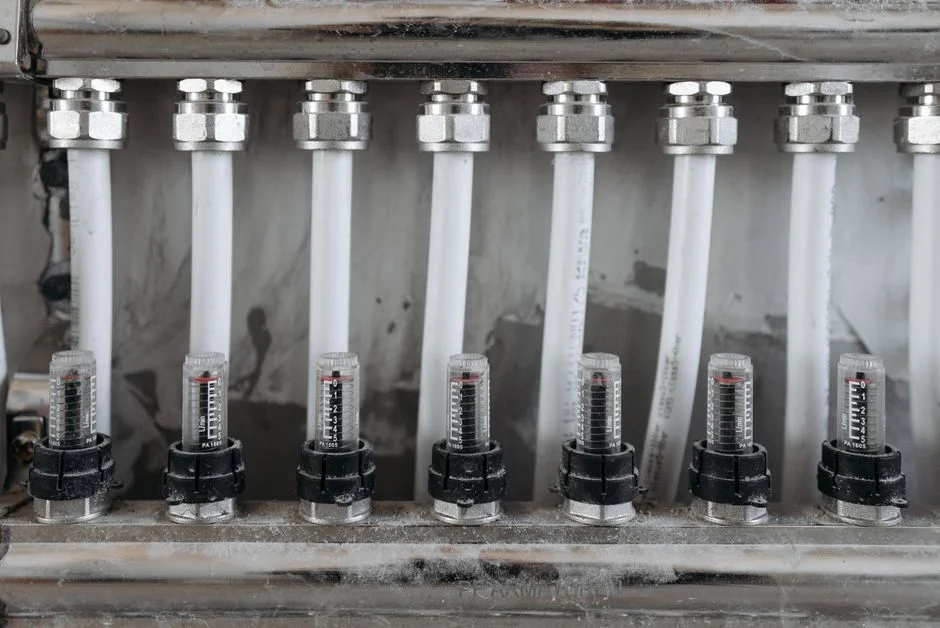
The path from a permit application to a working pretreatment train runs through six repeatable steps, each of which the regulator expects to see documented.
- Build a process wastewater inventory. Map every stream by source (batch vs. continuous, contact vs. non-contact) and tag it against NAICS 2869 or 2899 categories. Anything that touches a reaction vessel, washdown, or solvent recovery is contact water and counts toward the categorical inventory.
- Classify the user. Under 40 CFR 403.3, a Significant Industrial User (SIU) is any user discharging ≥25,000 gpd, contributing ≥5% of POTW flow, or subject to categorical rules; chemical plants in NAICS 2869/2899 hit the categorical trigger automatically (King County, 2025).
- Sample every stream. Use 24-hour composite plus grab protocols for the parameter list above, and run RCRA characteristic tests (ignitability per 40 CFR 261.21, corrosivity pH ≤2 or ≥12.5, reactivity, toxicity) on every listed waste stream.
- Select unit operations per parameter. Cross-reference the equipment matrix in the next section. Do not start equipment sizing before the sampling data is in hand; vendors quoting off the conceptual permit will almost always miss something.
- Submit the waste discharge permit application. Include KCIW-equivalent separator plans if nonpolar FOG >100 mg/L in any waste stream; submit the full categorical application even if the local POTW would otherwise consider a T Permit.
- Implement self-monitoring, BMPs, and an Enforcement Response Plan. 40 CFR 403.8(f)(2)(iii) requires the discharger to have written SOPs, a written ERP, and self-monitoring reports. Categorical industries must hold a full permit regardless of discharge volume (King County, 2025).
The same six steps, applied to a different industrial corridor, are covered in the Trenton chemical plant 40 CFR 403 guide.
Matching each limit to the right unit operation
Once the parameter data is in hand, the next job is to assign each limit to a specific piece of equipment. The matrix below pairs every parameter in the previous section with the unit operation that controls it, plus the design point each unit is sized against.
| Parameter | Unit operation | Design point |
|---|---|---|
| pH excursions | PLC-controlled acid/caustic dosing skid with closed-loop pH probe at the equalization tank outlet | PLC-controlled chemical dosing skid sized for 1.5× peak excursion load |
| Total metals | Lamella clarifier for metals precipitation with sludge recirculation and coagulant/flocculant dosing | Surface loading 20–40 m/h; pH-adjusted to metal-specific minimum solubility (HydropureWater catalogue, 2026) |
| Suspended solids / colloidal load | DAF system for FOG and TSS removal at 4–300 m³/h | Micro-bubble flotation for FOG + TSS co-removal; lamella as the lower-chemical alternative |
| Nonpolar FOG | API or coalescing oil-water separator with POTW-approved plans, followed by DAF for residual emulsified FOG ≤100 mg/L | Separator sized per KCIW fact sheet, then DAF polishing |
| Cyanide amenable to chlorination | Alkaline chlorination reactor (pH >10.5) with ORP-controlled NaOCl dosing; dechlorination with SO₂ before discharge | ORP setpoint ~+350 mV at pH >10.5; 30 min contact time |
| Soluble sulfide | Oxidant dosing (H₂O₂ or NaOCl) plus iron precipitation; controlled to <0.1 mg/L screening level | Two-stage iron salt + oxidant; verify with on-line sulfide probe |
| High temperature | Quench/cool via heat exchanger to ≤150°F discharge, ≤104°F at headworks | Plate heat exchanger sized to peak mass flow; bypass interlock required |
| VOCs / organics | Activated carbon polishing or on-site ClO₂ oxidation; flammable streams need closed-cup flash ≥140°F per 40 CFR 261.21 or formal POTW approval | Carbon bed sized to 2× expected daily VOC load; ClO₂ residual 0.2–0.5 mg/L |
| Solids handling | Plate-and-frame filter press for metal hydroxide sludge; rotary bar screen at headworks for rags/fibres from process spills | Filter press at 1–500 m² chamber area; bar screen 3–6 mm aperture |
For plants weighing DAF against lamella as the primary clarifier, the short rule is: DAF when FOG is the dominant load and chemical consumption must stay low; lamella when metals precipitation is the dominant load and sludge volume matters more than FOG polish. The two can run in series, and often do, when both parameters are in violation.
RCRA, reporting, and the 100 kg/month notification trigger
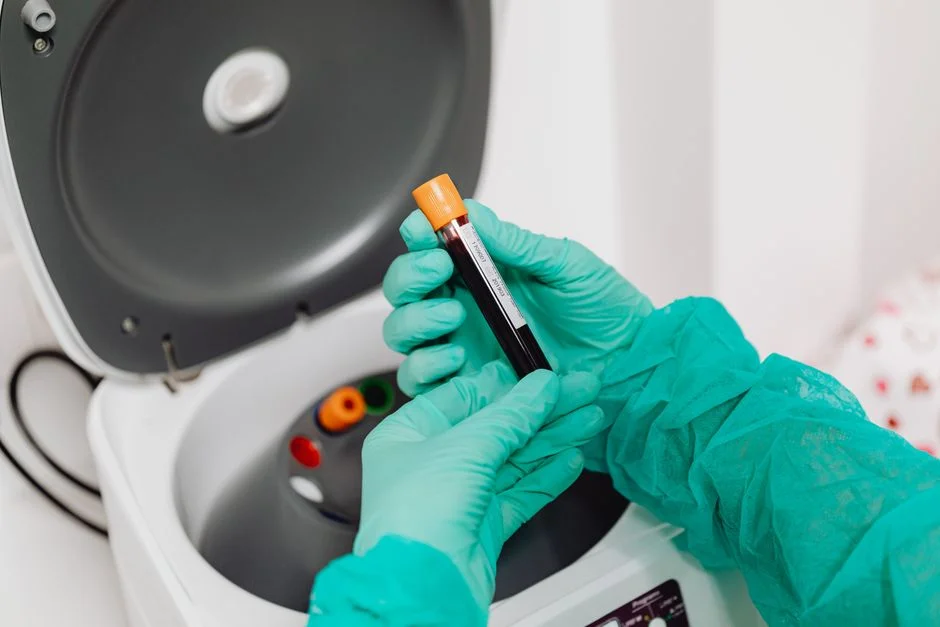
Pretreatment compliance does not relieve the plant of Resource Conservation and Recovery Act (RCRA) obligations; in many cases, the two regulatory tracks run in parallel and a single shipment can trigger both. The threshold that matters most for chemical plants is the >100 kg/month listed or characteristic hazardous waste trigger: if a facility ships more than 100 kilograms per month of RCRA-listed or RCRA-characteristic hazardous waste to the sewer, EPA Region 4 in Atlanta and SCDHEC must be notified in addition to the local POTW (King County, 2025). Identifying the listed or characteristic hazardous wastes on the wastewater discharge permit application serves as notice to the POTW, but the EPA and state notification is a separate filing.
The same parameters that drive pretreatment failure can also drive RCRA characteristic classification. Hydrogen sulfide reacting with sewer moisture forms sulfuric acid, which attacks concrete — the indirect discharge violation is independent of the screening level, and any pH excursion that drives the stream to ≤2 or ≥12.5 makes the waste RCRA-corrosive and prohibits sewering without treatment and notification. Chemical manufacturers under NAICS 325 carry the highest baseline risk because the listed wastes in 40 CFR Part 261 are written around their feedstocks. The Cordova chemical plant 2026 pretreatment guide covers the same RCRA mechanics in a different state context.
2026 retrofit checklist and capital-intensity framing for Goose Creek plants
The retrofit scopes below cover roughly 90% of the equipment packages a chemical plant near Goose Creek will need in 2026, ordered from smallest to largest. Equalization plus a pH dosing skid is the fastest ROI on excursions, since pH is the parameter that drives the most immediate permit violations. The mid-tier scope — a DAF plus chemical dosing plus a lamella clarifier — is the typical project for a batch specialty chemical plant, with the DAF handling FOG and TSS, the lamella handling metals precipitation, and the dosing skid feeding both. Plants also pursuing water reuse should evaluate an MBR package, which polishes effluent to sub-micron levels and folds in secondary clarification; this is the largest scope and only pays back where reuse offsets freshwater intake.
Almost every retrofit downstream of metal precipitation will also need a plate-and-frame filter press to handle the metal hydroxide sludge. Plan for 1–500 m² of filter area depending on sludge volume, and budget the polymer conditioning skid alongside. The 40 CFR 403.8(f)(2)(iii) self-monitoring and Enforcement Response Plan documentation is the compliance bookend on every scope. Categorical industries must hold a full permit regardless of flow (King County, 2025), and any equipment selection that ignores that fact will force a redesign at the application stage. For the sludge end of the train, the 2026 sludge dewatering design guide covers chamber sizing, polymer selection, and cake-handling in more depth.
Frequently Asked Questions
What makes a chemical plant near Goose Creek a Significant Industrial User under 40 CFR 403?
Under 40 CFR 403.3, an industrial user is Significant if it discharges ≥25,000 gpd, contributes ≥5% of the POTW flow, or falls inside a categorical rule under 40 CFR Parts 405–471. Most chemical plants on the Lower Broad Creek interceptor hit the categorical trigger automatically through NAICS 2869 or 2899, and that means a full waste discharge permit is required regardless of daily flow (per King County's categorical discharger reference, 2025).
Who actually enforces pretreatment limits near Goose Creek, SC?
EPA Region 4 delegates implementation to SCDHEC and to the local POTW. For most chemical plants near Goose Creek, the POTW is Berkeley County Water & Sanitation, with SCDHEC's Bureau of Water retaining oversight for non-delegated portions of the program. Where the local POTW's program is not approved under 40 CFR 403.10, EPA defaults as the control authority.
What is the local POTW limit for nonpolar FOG in 2026?
100 mg/L is the standard nonpolar FOG ceiling applied by POTWs that follow the King County template, including Berkeley County-area programs. The separator plans must be approved by the local industrial waste program, and free-floating polar FOG is controlled through a written FOG Control Plan rather than a numerical limit (King County, 2025).
What closed-cup flash point triggers a sewer-discharge prohibition?
Per 40 CFR 261.21 test methods referenced in 40 CFR 403.5, no waste with a closed-cup flash point below 140°F (60°C) may be discharged to the sewer. The LEL rule layers on top: no two successive readings on an explosion hazard meter at the point of discharge may exceed 5% of the Lower Explosive Limit, and no single reading may exceed 10% LEL.
When does a chemical plant need to notify EPA under RCRA in addition to the POTW?
Any facility that ships more than 100 kg per month of RCRA-listed or RCRA-characteristic hazardous waste to the sewer must notify EPA Region 4 (Atlanta) and SCDHEC in addition to the local POTW. Identifying the hazardous wastes on the wastewater discharge permit application is notice to the POTW, but the federal and state notifications are separate filings (King County, 2025). The same threshold often runs alongside the pretreatment permit; a plant that misses it can be in technical RCRA violation even with a perfect POTW permit.