Why Colloidal Solids Decide the UF vs DAF Question in Pharma Wastewater
RO membrane fouling in pharmaceutical plants is overwhelmingly a colloidal-solids problem. The fouling layer that kills flux in an RO skid is built from particles in the 0.001–1 µm range: solubilized excipients (PVP, HPMC, PEG), polymer residues from coating operations, antifoam silicones, antibiotic carryover from batch dumps, and cell debris from fermentation APIs. These particles are too small to settle in a primary clarifier and too small to attach reliably to the 30–50 µm micro-bubbles a DAF unit produces without aggressive coagulant chemistry.
The cost of getting this step wrong is quantifiable. Colloidal SDI overshoot in front of an RO skid accelerates flux decline, forcing 2–3× more frequent CIP cycles and shortening membrane life from the typical 5–7 years toward 3–4. In a 50 m³/h API plant, every additional CIP cycle costs roughly $8,000–$15,000 in chemicals, downtime, and concentrate disposal. In 2026, more pharmaceutical plants are evaluating water reuse or ZLD, which tightens the RO feed spec to SDI15 ≤ 3 and turbidity <1 NTU, and pushes the colloidal-removal decision upstream into capital planning rather than treating it as an afterthought.
What an RO Membrane Actually Needs from Its Pretreatment
An RO membrane is unforgiving. It will pass water and reject salts only as long as the feed meets a tight envelope of physical and chemical parameters. The standard targets for a brackish-water thin-film composite RO, sized into a pharmaceutical RO system, are SDI15 ≤ 3 (≤ 5 is acceptable for brackish feeds with wider tolerance), turbidity <1 NTU, TSS <1 mg/L, free chlorine <0.1 mg/L, and iron <0.1 mg/L. Temperature should stay at or below 35°C to protect the polyamide chemistry, and pH is bounded by the membrane selection — typically 2–11 for standard composites and tighter for specialized low-fouling variants.
Every one of these numbers is directly controlled by the colloidal fraction. Turbidity measures scattered light from particles in the 0.001–1 µm range, exactly the API excipient window. SDI15 is a fouling-index test that responds to the same particle population. TSS captures the larger end of the colloid spectrum. When SDI15 drifts above 5, RO flux decline accelerates and CIP frequency roughly doubles (per HydropureWater field data, 2025–2026); when it stays at or below 3, membranes typically run their full nominal life. The pretreatment design is therefore not a generic clarification problem — it is a colloidal-removal problem with a membrane-protection deliverable.
| Parameter | RO feed target | Controlled by | Failure mode if missed |
|---|---|---|---|
| SDI15 (15-min silt density index) | ≤ 3 (≤ 5 brackish) | Colloidal fraction 0.001–1 µm | 2–3× more frequent CIP, flux decline |
| Turbidity | < 1 NTU | Sub-micron and suspended solids | Surface fouling, differential pressure rise |
| TSS | < 1 mg/L | Larger colloids and floatables | Pretreatment screen blinding, pump wear |
| Free chlorine | < 0.1 mg/L | Disinfection residual upstream | Oxidative damage to polyamide membrane |
| Iron (Fe) | < 0.1 mg/L | Corrosion in piping, antifoam residues | Irreversible fouling, biofilm seeding |
| Temperature | ≤ 35°C | Process heat exchangers | Accelerated membrane aging |
How DAF Performs on Pharmaceutical API and Formulation Wastewater
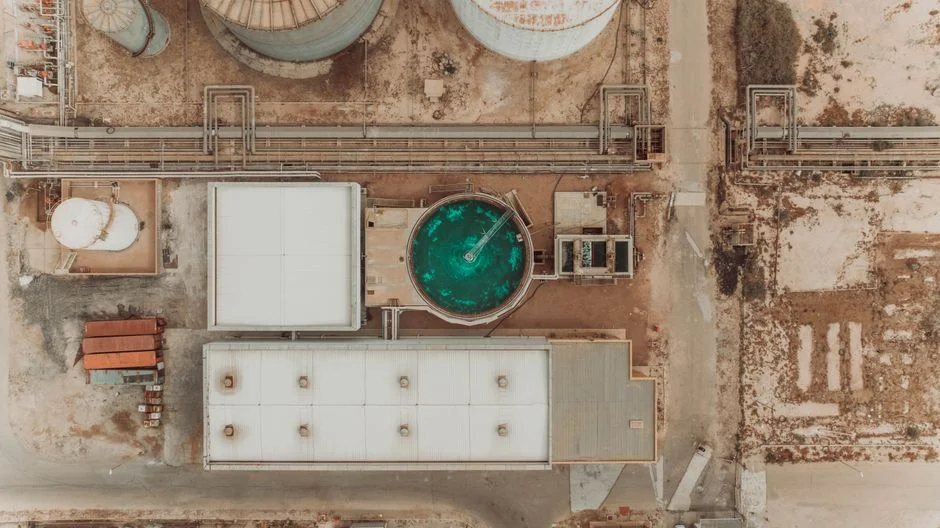
A DAF unit works by pressurizing 20–40% of clarified effluent with air, then releasing that recycle stream into the flotation tank at atmospheric pressure, where the dissolved air comes out of solution as 30–50 µm micro-bubbles. Those bubbles attach to chemically conditioned flocs and float suspended matter, oil and grease, and light biological solids to the surface, where a skimmer removes them. The mechanism is well proven for floatable suspended matter across food, dairy, pulp and paper, refinery, and metal-finishing operations (Clearwater Industries; Kemco Systems).
For pharmaceutical API and formulation wastewater, DAF brings real strengths. It pulls out the FOG, antifoam silicones, and bulk TSS that would otherwise blind an upstream screen or a downstream UF membrane, and it produces a dense float layer that dewaters well. Where it plateaus is on the colloidal fraction that drives the RO feed spec. DAF is designed for floatable suspended matter, not for the 0.001–1 µm colloids that drive SDI15 and turbidity. Even with coagulant and polymer dosing, DAF effluent typically lands in the 5–20 NTU turbidity range, well above the <1 NTU an RO needs, and it cannot consistently hit SDI15 ≤ 3 on its own (Clearwater Industries).
Pharma-specific friction makes the DAF operating envelope tighter than in food or refinery service. High COD from solvent residues depresses floc formation, pH swings between batch dumps force re-tuning of the coagulant dose, and antibiotic carryover disrupts floc structure. Stable small colloids in particular need ferric chloride or aluminum sulfate to grow into bubble-attachable flocs, and overdose raises both chemical OPEX and sludge volume. The right role for DAF in a pharmaceutical train is as an upstream FOG and bulk-solids workhorse, not as the RO guard.
How UF Performs on Pharmaceutical API and Formulation Wastewater
UF rejects colloidal solids physically, on pore size rather than on chemistry. A 0.03 µm PVDF hollow-fiber membrane has a nominal pore size small enough to retain the 0.001–1 µm colloids that drive SDI15, regardless of surface charge, floc strength, or upstream chemistry variability. Effluent from a properly operated hollow-fiber ultrafiltration system typically lands at turbidity <0.1 NTU and SDI15 ≤ 3 directly, with no coagulant demand on the UF itself.
The operating envelope matches pharmaceutical chemistry variability. PVDF membranes tolerate pH 2–11, which covers most acid and caustic cleaning cycles plus the pH swings in a typical API plant. Automatic backwash and air scour keep flux stable without taking the skid offline, and chemical CIP recovers flux after fouling events. Skid-mounted hollow-fiber systems scale from 2,000 to 40,000 L/h on a single frame, fitting both batch API operations with variable flow and continuous formulation lines running near steady state. UF also accepts feed turbidity up to roughly 300 ppm with the right pretreatment screen, so a UF skid can absorb the upsets a DAF passes downstream.
UF still needs upstream protection. A coarse screen at ≤ 500 µm keeps fibers and rag carryover out of the module, and in pharmaceutical service, a DAF or lamella ahead of the UF is the right call to strip FOG, antifoam silicones, and bulk TSS that would otherwise coat the membrane surface. UF is a colloidal-control step, not a complete front end on its own.
UF vs DAF: Head-to-Head Comparison for RO Pretreatment
The decision matrix below scores both technologies against the parameters a process engineer needs to defend a selection: rejection performance on the metrics that drive RO fouling, operating demands, and the pharmaceutical-specific risks that show up in batch operation. UF wins the colloidal-solids metrics by design. DAF wins the FOG and bulk-TSS metrics. The verdict for RO pretreatment is clear: UF is the RO guard, DAF is the upstream workhorse.
| Criterion | DAF (with coagulant) | UF (0.03 µm PVDF) | Winner for RO pretreatment |
|---|---|---|---|
| Turbidity reduction | Feed → 5–20 NTU typical | Feed → <0.1 NTU | UF |
| SDI15 | Inconsistent, often > 5 | Consistently ≤ 3 | UF |
| TSS removal | 60–90% on floatables | > 99% on retained size | UF |
| FOG and antifoam | 80–95% on free and emulsified oil | Partial — requires upstream DAF for blinding protection | DAF |
| COD reduction | 30–60% with coagulant | Minimal on soluble COD | DAF |
| Chemical demand | High: coagulant + polymer daily | Low: CIP chemicals monthly | UF |
| Sludge volume | Higher (chemical floc + float) | Lower (concentrate bleed) | UF |
| pH tolerance | Tight: requires adjustment | Wide: pH 2–11 | UF |
| Solvent/antibiotic shock | Disrupts floc, re-tuning needed | Robust to shock if within CIP envelope | UF |
| Energy per m³ | 0.05–0.15 kWh/m³ (recycle pump, compressor) | 0.3–0.8 kWh/m³ (feed pump, backwash, CIP) | DAF (lower energy) |
| Footprint | Compact for the flow | Modular, scales by skid count | Comparable |
| CAPEX order of magnitude | Lower unit cost | Higher entry cost | DAF (lower CAPEX) |
| OPEX drivers | Polymer, sludge hauling | Membrane replacement 5–7 yr, energy | UF (lower recurring) |
The matrix is the defensible artifact for a selection memo. The two technologies are not interchangeable: DAF protects UF, UF protects RO. For plants targeting water reuse or ZLD in 2026, the question is not which single technology to choose, but where in the train to place each one.
When DAF Still Wins, and How to Combine DAF + UF
DAF wins wherever FOG, antifoam silicones, emulsified oils, or bulk floatable TSS dominate the feed. In a formulation plant running coating operations or an API plant with fermentation broth carryover, a dissolved air flotation system upstream of the UF strips the oils and floatables that would otherwise coat UF fibers. Field experience in pharmaceutical service shows this hybrid train cuts UF backwash frequency by roughly 30–50%, extends membrane life, and lowers CIP chemical consumption (per HydropureWater field data, 2025–2026).
The defensible hybrid recipe for an API or formulation plant targeting RO with reuse or ZLD in 2026 is: equalization basin for batch dampening, coarse screening at ≤ 500 µm, pH adjustment with an automatic chemical dosing skid, DAF with coagulant and polymer, 5 µm保安 filter as UF guard, UF, then RO. The hybrid train adds one stage but reduces total OPEX by protecting both UF and RO from premature replacement, and it gives the plant a stable RO feed under the variable loads that batch API operations produce.
Sizing, Cost, and 2026 Selection Checklist
Sizing starts with two numbers. UF flux for pharmaceutical feed typically lands in the 40–60 L/m²·h range, depending on feed TSS and FOG load. DAF hydraulic loading runs 5–15 m³/m²·h, with the higher end suitable for low-solids streams and the lower end needed for heavy FOG or floatable TSS. CAPEX order of magnitude: a DAF skid has a lower entry cost than a UF skid of equivalent flow, but UF carries lower recurring chemical and sludge-handling cost. OPEX drivers to compare head-to-head are polymer consumption for DAF, UF and RO membrane replacements every 5–7 years, energy per m³, and sludge hauling cost per dry ton.
| Selection criterion | Choose DAF | Choose UF | Choose DAF + UF hybrid |
|---|---|---|---|
| Binding constraint | FOG, antifoam, bulk floatables | RO feed spec (SDI15, turbidity) | Both FOG and RO spec binding |
| Feed turbidity target | < 50 NTU downstream | < 0.1 NTU downstream | < 0.1 NTU with upstream FOG strip |
| SDI15 target | Cannot guarantee ≤ 3 alone | ≤ 3 consistently | ≤ 3 with margin |
| Operation mode | Batch with floatable peaks | Continuous, stable feed | Batch API with variable feed |
| End point | Discharge after biological | RO for reuse | RO and ZLD |
The single-sentence rule for a 2026 selection: if the RO feed spec is the binding constraint, choose UF in front of the RO; if FOG and bulk floatables dominate, start with DAF and put UF in front of the RO. For pharmaceutical plants evaluating water reuse or ZLD, the hybrid DAF + UF + RO train is the defensible answer.
Frequently Asked Questions
Which is better for RO pretreatment in pharmaceutical wastewater, UF or DAF?
UF is better for RO pretreatment because 0.03 µm PVDF membranes deliver turbidity below 0.1 NTU and SDI15 at or below 3, the threshold RO membranes need, while DAF with coagulant typically leaves 5–20 NTU and cannot reliably meet the RO spec on its own.
Can DAF alone protect an RO skid in an API plant?
No. DAF reliably removes FOG, antifoam, and bulk TSS, but it cannot consistently hit the SDI15 ≤ 3 and turbidity < 1 NTU that RO feed requires without heavy coagulant dosing, and even then the colloidal fraction that drives membrane fouling often passes through.
Does UF need a DAF upstream in a pharmaceutical plant?
Yes, in most API and formulation plants. DAF upstream of UF strips FOG, antifoam silicones, and bulk floatables that would otherwise blind UF fibers, cutting backwash frequency by 30–50% and extending membrane life.
What SDI15 does a pharmaceutical RO system need?
A pharmaceutical RO system needs SDI15 at or below 3 for reliable operation; brackish systems tolerate up to 5, but anything above 5 correlates with 2–3× more frequent CIP cycles and accelerated flux decline.
Is the DAF + UF + RO train defensible for ZLD in 2026?
Yes. The hybrid train delivers a stable RO feed under the variable loads of batch API operation, protects both UF and RO from premature replacement, and is the standard configuration for pharmaceutical plants targeting water reuse or zero liquid discharge in 2026.