What Calvert City Chemicals Plants Are Actually Discharging in 2026
Calvert City's 2026 influent envelope sits squarely inside the organic-and-specialty-chemicals band, with daily flows dominated by silicones manufacturing (Wacker Polysilicon), chlorinated intermediates, plasticizers, and pigment/binder residues from coatings operations. The paint-and-coatings reference stream documented in industry process surveys (S4, 2025-01) is the closest defensible upper-bound analogue for the same chemistry: TSS 1,000–10,000 mg/L, O&G 100–2,000 mg/L, COD 5,000–50,000 mg/L, pH 2–12, sulfate 500–5,000 mg/L, and temperature 25–45°C. Solvents and binders from intermediates lines run toward the upper end of that COD range; silicone hydrolysis and pigment wash water run toward the upper end of the sulfate range. A Marshall County plant engineer should treat those numbers as the design envelope until pilot or jar data narrows it.
The practical move is to split the discharge into two functional streams before any technology conversation. The light stream carries oils, greases, latex, residual solvents, and buoyant colloids that respond to bubble attachment. The heavy stream carries gypsum, metal hydroxides from spent catalyst precipitation, fines, and brine residues whose specific gravity exceeds 1.05. EPA's 1975 Process Design Manual for Suspended Solids Removal (S1) frames this same split in terms of solids-fraction distribution — settleable, supracolloidal, and colloidal — and ties the technology choice to which fraction carries the load. For most Calvert City plants, the load is bimodal: a colloidal/buoyant fraction from the organic side and a settleable fraction from the mineral side.
The regulatory ceiling in Marshall County is 40 CFR Part 414 (Organic Chemicals, Plastics, and Synthetic Fibers) overlaid on the KPDES general permit for industrial discharges. Part 414 imposes daily-max and monthly-average limits on BOD, TSS, O&G, and — for many subcategories — hexane-extractable material. Under-performing primary separation is the most common trigger for KPDES permit reopener language in EPA Region 4 inspections, so the technology choice downstream of equalization has to be defensible against both daily-max excursions and rolling 30-day averages.
How a DAF Unit and a Clarifier Actually Work in a Chemicals Plant
A dissolved air flotation unit removes suspended matter by attaching micro-bubbles to floc and floating it to the surface. Saturated recycle at 4–6 bar (typically 20–30% of the feed flow) is released through needle valves into the contact zone, generating bubbles in the 10–100 µm range that adhere to destabilized particles. A surface skimmer removes the float; clarified effluent leaves the bottom. Documented performance on chemicals/paint-industry streams runs 85–95% TSS removal and 90–98% O&G removal (S4, 2025-01). An industrial DAF system sized for a 50 m³/h chemicals stream typically carries 15–25 kW of compressor load to maintain saturation pressure and recycle ratio.
A lamella clarifier separates by gravity on inclined plates set at 55–60°, multiplying the effective settling area inside a small footprint. The influent enters a sludge-recirculation contact zone, the floc blanket acts as a polishing filter, and the sludge compacts into a bottom hopper. Effective surface loading for a well-designed inclined-plate unit runs 20–40 m/h — roughly an order of magnitude above a conventional clarifier's 1–2 m/h — which is why a lamella clarifier fits where civil footprint is constrained but the solids are settleable rather than buoyant. The 1975 EPA manual (S1) still anchors lamella-style design in Section 7.9 (Shallow Settling Devices) and inclined-tube modules in Figure 7-8.
The coagulation chemistry upstream is shared. Standard practice is rapid mix at 100–150 rpm for 1–2 minutes, slow mix at 20–40 rpm for 15–20 minutes, with FeCl₃ dosed at 100–500 mg/L (or PAC/alum as the alternative), and an anionic or cationic polymer at 0.5–2 mg/L. Jar testing on the actual plant stream sets the dose. The downstream physics — bubble attachment versus gravity settling — is what differentiates the two unit operations. For pH-volatile streams (the 2–12 envelope above), a PLC-controlled coagulant and polymer dosing system tied to inline pH is the only way to keep floc strength consistent across shifts; manual dosing drifts and produces weak floc that either shatters in the DAF recycle pump or blows out of the clarifier weirs.
Side-by-Side Comparison: DAF vs Lamella Clarifier for Chemicals Wastewater
The table below is the artifact an engineer should paste into the CapEx memo. Numbers reflect typical operating ranges on organic-and-specialty-chemicals streams in the 20–80 m³/h band, not municipal or food-processing analogies.
| Parameter | DAF | Lamella Clarifier |
|---|---|---|
| Primary mechanism | Bubble attachment, surface skimming | Gravity settling on 55–60° inclined plates |
| Typical TSS removal | 85–95% | 60–85% on chemicals streams, 90%+ on heavy mineral streams (S2, 2026) |
| Typical O&G removal | 90–98% | 40–70% (poor on buoyant colloids) |
| Hydraulic / surface loading | 5–25 m/h depending on recycle ratio | 20–40 m/h effective (HydropureWater spec) |
| Footprint (50 m³/h) | Compact, ~8–12 m² tank area | Larger, ~15–25 m² with plate pack |
| Energy | Compressor + recycle pump 15–25 kW | No air system; 2–4 kW pumping |
| Chemical demand | FeCl₃ 100–500 mg/L + polymer 0.5–2 mg/L | Same; ~30% lower polymer use on settleable streams |
| Sludge dry solids | 3–6% (float) | 1–3% (underflow) |
| pH swing tolerance | Moderate; floc must hold against bubble shear | Good for precipitate-driven streams; poor if floc is buoyant |
| Temperature sensitivity | Lower in cold; bubble size grows, reduces efficiency below 10°C | Viscosity-dependent; lamella tolerates 5–45°C |
| VOC release | Yes — covered/ducted DAF + carbon polishing often required | Minimal (closed tank) |
| Best-fit influent | O&G > 200 mg/L, buoyant colloids, low-D (< 5,000 mg/L) streams | Heavy mineral, sulfate precipitates, high TDS, high specific-gravity solids |
| Worst-fit influent | High TDS brine alone (no floatable phase) | Emulsified oil alone (no settleable phase) |
| 2026 installed CapEx (50 m³/h) | $180–350k | $90–180k |
The hidden line item for DAF on solvents-bearing streams is the covered/ducted enclosure plus carbon polishing to control VOC release to atmosphere. For high-VOC feeds, this can add 20–40% to the installed DAF cost and should be included in any honest comparison. The Ecologix industrial cases (S2, 2026) anchor the food-vs-mineral analogy: 95% O&G on a high-oil stream with DAF, 90% sediment reduction on a heavy mineral stream with a clarifier. Translate that to chemicals and the analogy still holds — but with the VOC caveat attached.
The 2026 Decision Tree for Calvert City
For most Calvert City plants, the question collapses to four branches:
- Branch A — DAF primary. If O&G exceeds 200 mg/L, the TSS fraction is dominated by buoyant colloids, or residual solvents make the floatable phase the main pollution load, spec DAF as the primary step. A typical configuration: equalization → neutralization to pH 6.5–8.5 → rapid/slow mix with FeCl₃ and polymer → DAF → pH correction for downstream biological or carbon.
- Branch B — Lamella clarifier primary. If TDS exceeds 5,000 mg/L, sulfate exceeds 2,000 mg/L (gypsum precipitation regime), or pH swings force heavy-metal hydroxide precipitation, spec a lamella clarifier as the primary, with sludge recirculation to keep the floc blanket dense. The 20–40 m/h surface loading handles the flux without civil expansion.
- Branch C — Hybrid DAF → clarifier. This is the most common Calvert City case. DAF strips the oil/solvent/colloid load (90–98% O&G, 85–95% TSS), then the lamella clarifier polishes and thickens the residual solids. The paint-industry flow diagram in S4 (2025-01) is the structural reference: DAF → Fenton (if color/COD is the problem) → secondary clarifier → multimedia filter → carbon. For a chemicals plant, swap the multimedia/carbon train for the unit operations already in place (biological, GAC, or ZLD).
- Branch D — Add AOP between DAF and clarifier. If color exceeds 500 Pt-Co units and COD/BOD ratio is below 0.3 (non-biodegradable organics), insert Fenton oxidation between DAF and clarifier: pH 3–3.5, FeSO₄ 500–2,000 mg/L, H₂O₂ 1,000–5,000 mg/L, 60–120 min reaction, 90–98% color removal. The coagulant dosing engineering guide covers the upstream chemistry that determines whether the Fenton iron carryover will load the downstream clarifier.
2026 Economics and Compliance Posture for a Calvert City Retrofit
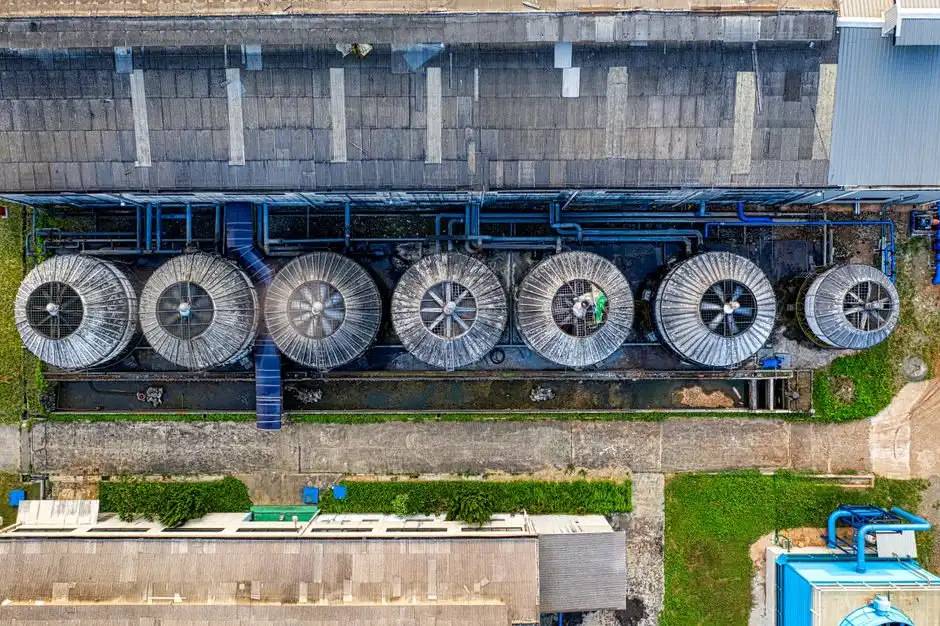
For a 50 m³/h chemicals retrofit, a DAF unit runs $180–350k installed (tank, saturation system, compressor, skimmer, controls); the compressor and saturation tank are the largest opex line, typically 0.8–1.4 kWh/m³ treated. A lamella clarifier in the same duty runs $90–180k installed with 2–4 kW pumping and ~30% lower polymer consumption on settleable streams, but the civil footprint (concrete basin, plate pack access) is larger. Polymer cost is the swing variable either way: at $1.50–3.20/kg (2026 spot), a 1 mg/L dose difference across 50 m³/h and 8,000 operating hours/year is roughly $2,200–4,600/year per mg/L of dose.
Compliance is where the technology choice becomes a board-level decision. 40 CFR Part 414 daily-max and monthly-average limits on BOD, TSS, and O&G are the enforceable numbers, and KPDES general permit conditions for Marshall County add monitoring and reporting on top. A single daily-max excursion on TSS or O&G in 2025–2026 has been the most common Notice of Violation pathway in EPA Region 4 chemical-sector inspections (per Region 4 inspection summaries, 2025-2026). Under-investing in primary separation to save $50–100k on CapEx typically shows up as 3–5 NOV cycles over a permit term, each carrying consent-agreement risk and public-record exposure that dwarfs the original savings.
Sludge handling differs in form but not mass. DAF float at 3–6% dry solids needs thickening before dewatering; clarifier underflow at 1–3% needs dewatering directly. Total dry solids mass per m³ treated is similar in either configuration, but the dewatering equipment is sized for different feed consistencies. A plate-and-frame filter press downstream of either unit produces 25–35% dry cake suitable for off-site disposal or, for some Calvert City plants, on-site landfill depending on the toxicity characteristic leaching procedure (TCLP) result. The 1975 EPA manual (S1) cost curves in Section 10 are still a useful sanity check on 2026 installed-cost estimates, scaled by ENR construction-cost index.
Spec it this way for the 2026 CapEx memo: DAF as primary for O&G and colloid removal, lamella clarifier as polishing/sludge thickener, Fenton AOP if color and non-biodegradable COD dominate, plate-and-frame filter press on the combined sludge stream, and a PLC-controlled dosing system for coagulant and polymer tied to inline pH and streaming-current measurement. If the stream is 80% heavy mineral (high TDS, high sulfate, low O&G), flip the order: lamella primary, DAF only as a polishing step for the residual floatable fraction.
Frequently Asked Questions
For a 2026 Calvert City chemicals plant, should we choose DAF or a clarifier?
Choose DAF when O&G exceeds ~200 mg/L or buoyant colloids dominate the TSS; choose a lamella clarifier when the stream is heavy on mineral solids, sulfate precipitates, or high-TDS brine. Most Calvert City plants benefit from a hybrid: DAF primary (90–98% O&G, 85–95% TSS), lamella clarifier as polishing, with Fenton AOP inserted when color and non-biodegradable COD dominate.
What removal efficiency does a DAF actually deliver on chemicals wastewater, and what operating parameters get us there?
Documented performance on organic-and-specialty-chemicals streams runs 85–95% TSS and 90–98% O&G removal (S4, 2025-01). To hit the upper end, operate at 4–6 bar saturation pressure, 20–30% recycle ratio, 10–100 µm bubble size, with FeCl₃ at 100–500 mg/L and polymer at 0.5–2 mg/L dosed under PLC control on inline pH.
When does a lamella clarifier beat DAF for an organic chemicals plant?
A lamella clarifier outperforms DAF when the stream is high in settleable mineral solids, sulfate (gypsum) precipitates, or TDS above 5,000 mg/L with little buoyant phase. Effective surface loading of 20–40 m/h handles the flux in a small footprint, polymer consumption runs ~30% lower than DAF on settleable streams, and there is no VOC stripping to atmosphere.
What does 40 CFR Part 414 actually require for primary separation at an organic chemicals plant?
Part 414 sets subcategory-specific daily-maximum and monthly-average numerical limits on BOD, TSS, O&G, and — for many subcategories — hexane-extractable material. The 2026 KPDES general permit for Marshall County enforces those limits through monitoring, reporting, and permit-reopener language; a single daily-max excursion on TSS or O&G is the most common Notice of Violation pathway in EPA Region 4 chemical-sector inspections (2025–2026).
Is a hybrid DAF-plus-clarifier train overkill for a 20 m³/h organic chemicals plant?
For 20 m³/h with a mixed O&G-plus-mineral signature, the hybrid is the standard configuration, not overkill. A DAF sized to 20 m³/h with 20–30% recycle sits in the $90–180k installed band; a polishing lamella adds $40–80k. The combined train consistently hits both the daily-max and monthly-average Part 414 limits, which is harder to achieve with either unit alone on a bimodal influent.