Why the DAF-vs-Clarifier Question Is Different in Flowery Branch Mining
Flowery Branch sits inside the Lake Lanier watershed in Hall County, Northeast Georgia, where aggregate washing, hard-rock processing, and a growing fabricated-metals corridor share the same water table and the same EPD reviewers. Both Hall County and Georgia EPD favor closed-loop reuse where the plant can justify it, and they review discharges into the Chattahoochee basin case by case. That local reality — not the catalog page — is what sets the DAF-or-clarifier decision for a 2026 plant engineer.
The binding federal rule is 40 CFR Part 437, the Metal Mining Point Source Category, which sets monthly-average effluent limits for TSS, settleable solids, and a heavy-metal suite that includes lead, zinc, copper, nickel, and chromium. Whether a Flowery Branch facility discharges directly under 437 or runs a metals-bearing side stream into a local industrial POTW, the same chemistry — hydroxide co-precipitation of dissolved metals at pH 8.5–9.5 — drives the unit-operation choice upstream.
The decision is rarely "which technology is better." It is "which technology fits the feed." Mining and metals feeds split into two camps: floc-dominated streams (heavy-metal precipitation sludges, metalworking FOG, fine chemical precipitates) and sand/silt-dominated streams (aggregate wash, hard-rock tailings, classifier overflow). The first camp is where dissolved air flotation wins on mechanism; the second is where a conventional or lamella clarifier wins on cost per cubic meter. Plants that try to force one technology onto the wrong feed spend the next decade chasing a moving compliance target.
Footprint is the third local variable. Brownfield sites in the Oakwood and Chestnut Mountain industrial belt rarely have room for a 15 m circular clarifier next to an operating mill, so a compact DAF system or a high-rate lamella often beats a conventional gravity unit on civil cost alone.
How a DAF System and a Clarifier Actually Separate Solids
DAF and clarifiers look similar from the catwalk — rectangular or circular tank, surface or bottom launder, sludge withdrawal — but the physics is opposite. A dissolved air flotation unit separates solids by buoyancy; a clarifier separates them by gravity. Once a Flowery Branch engineer internalizes that, the technology choice for a given feed almost writes itself.
In a DAF system, a pressurized recycle stream is saturated with air at ≥5 bar (per the wastewatermachinery DAF technical sheet, 2026) and then released into the flotation tank through proprietary air-release nozzles. The pressure drop generates 30–50 µm microbubbles (per SigmaDAF / Clearwater Industries process description, 2026) that attach to chemically conditioned flocs and lift them to the surface, where a counter-current paddle skimmer removes the float. Clarified water exits below the float blanket, and 20–40% of it is typically recycled back through the saturator to close the air-dissolution loop.
A clarifier inverts that logic. Feed enters a center well or distribution baffle, and dense particles settle under gravity through a sludge blanket to a raked floor or hopper. In a conventional circular clarifier, overflow is laundered at the perimeter; in a lamella clarifier, inclined plates at 55–60° shorten the effective settling path and lift the surface loading rate from roughly 1 m/h on a conventional unit to 20–40 m/h — the reason high-efficiency lamella sedimentation tanks show up on so many metals plant P&IDs.
For mining and metals feeds, the mechanism dictates the match. Hydroxide flocs from lead, zinc, or chromium precipitation are low-density and voluminous; oil and FOG from cutting fluids are buoyant by definition. Both rise faster than they settle, so DAF captures them mechanically. Conversely, silica sand, coarse limestone, and dense tailings settle faster than they float, so a clarifier moves them with less energy per cubic meter. A lamella recovers most of the size penalty that a conventional clarifier pays for that mechanism.
Head-to-Head: DAF vs Clarifier on the Numbers That Matter
Side-by-side numbers help procurement defend the technology choice in front of a P&ID review. The table below maps the parameters a Flowery Branch engineer usually has to justify: removal efficiency, footprint, OPEX drivers, and chemical demand. All figures reflect 2026 manufacturer data and published case studies, not theoretical maxima.
| Parameter | DAF System | Conventional Clarifier | Lamella Clarifier |
|---|---|---|---|
| TSS removal (typical) | Up to 97% (wastewatermachinery, 2026) | ~90% on mining sediment (Ecologix case, 2026) | 85–95% on floc-bearing feeds |
| COD / organics removal | 60–80% (wastewatermachinery, 2026) | 30–50% without coagulant aid | 40–60% with polymer aid |
| FOG / oil removal | ~95% (Ecologix case, 2026) | ~70% (Ecologix case, 2026) | ~75–85% |
| Footprint for 3–120 m³/h | 2.4–4.4 m wide skid (wastewatermachinery sizing table, 2026) | 5–15 m diameter circular | Compact rectangular, ~1/3 of conventional |
| Surface loading rate | 5–25 m/h hydraulic | 1–2 m/h typical | 20–40 m/h on the plate area |
| Recycle / energy | Saturator pump + air compressor | Low; rake drive only | Low; rake or no moving parts |
| Sludge consistency | Thicker float (3–5% DS typical) | Thinner underflow (0.5–2% DS) | Thin underflow, often needs thickening |
| Chemical demand | Coagulant + flocculant routine | Coagulant only; flocculant on upset | Coagulant + occasional flocculant |
| Best-fit influent | Fine TSS, FOG, hydroxide flocs | Dense, inert settleables | Mixed feeds, brownfield retrofits |
Read that table alongside the operator's actual jar tests. DAF routinely pulls COD 60–80% on a well-conditioned feed (wastewatermachinery DAF performance data, 2026) but the same unit on a sand-laden aggregate wash stream is over-engineered. A lamella clarifier, by contrast, will quietly hit 85–95% on a mixed floc-and-silt feed while drawing a fraction of the recycle power — which is why it keeps showing up in mid-sized metals plant retrofits. Pairing the primary separator with an automatic coagulant and flocculant dosing skid is what closes the gap between the catalog number and the real plant number.
Matching the Technology to Mining and Metals Wastewater Streams
The fastest way to choose a primary unit in 2026 is to start with the feed, not the catalog. The four streams below cover most of what a Flowery Branch mining, aggregate, or fabricated-metals plant actually runs through its headworks.
Aggregate wash water and sand-plant effluent. This feed is high-density, inert, and dominated by settleable silica or limestone fines. A conventional or lamella clarifier wins on capital cost, steady OPEX, and mechanical simplicity. DAF is overspecified — the float mechanism adds nothing when the particles want to fall. If the wash water is being recycled, a multi-media polishing filter downstream usually does more for reuse quality than any change to the primary clarifier.
Metal ore processing with sulfide flotation or cyanide-leach circuits. These streams usually arrive at the treatment plant already partially clarified, but they carry residual fines, residual reagents, and FOG from mill lubricants. DAF is the right polisher here because it protects downstream RO or reuse loops from fouling and strips FOG that a clarifier would re-suspend. The DAF also handles upset feeds when the mill's thickener overflows.
Heavy-metal precipitation (pH 8.5–9.5 hydroxide co-precipitation of Pb, Zn, Cu, Ni, Cr). The flocs from a hydroxide precipitation stage are low-density, voluminous, and notoriously hard to settle. This is the textbook 2026 case for DAF as the workhorse primary unit. A clarifier alone underperforms on these flocs and produces a dilute sludge that doubles dewatering cost. DAF lifts the flocs into a float that dewaters cleanly on a plate-and-frame press.
Fabricated metals — cutting fluids, stamping oils, rinse water with FOG. DAF is the standard answer for these emulsified oily streams because it physically breaks the oil-water attachment with bubbles, then floats the oil and the metal fines together. A clarifier struggles with stable emulsions and lets oil re-entrain into the overflow. For plants that mix oily metalworking waste with high-density tailings water — a common Flowery Branch scenario — a DAF + lamella hybrid is the most defensible 2026 configuration, and it is one most of the top-ranking pages skip entirely.
The 2026 Compliance Check: 40 CFR 437 Effluent Limits
For a Flowery Branch facility operating under 40 CFR Part 437 — directly, or by extension through a metals-bearing side stream into an industrial POTW — the technology choice is really a compliance question. The federal monthly-average limits for the Ore Mining and Beneficiation subcategory are the binding numbers, and they are tight.
| Parameter (Ore Mining & Beneficiation) | 40 CFR 437 Monthly-Average Limit (mg/L) | DAF as Primary | Clarifier as Primary |
|---|---|---|---|
| Total Suspended Solids (TSS) | ~30 | Typically meets on first pass | Often needs polishing filter |
| Settleable Solids | ≤ 0.2 mL/L (per e-CFR text, verify before publication) | Easily met | Easily met |
| Lead (Pb) | 0.69 | Reliable with co-precipitation + DAF | Needs polymer + polish |
| Zinc (Zn) | 1.48 | Reliable | Needs polish |
| Copper (Cu) | 3.38 | Reliable | Needs polish |
| Nickel (Ni) | 3.98 | Reliable | Needs polish |
| Chromium (Cr, total) | 2.77 | Reliable | Needs polish |
DAF is usually the unit that reliably hits the metal suite on hydroxide flocs because the float captures the freshly precipitated solids before they can re-dissolve or break through. A clarifier more often needs polymer addition plus a downstream polishing filter to meet the same numbers, and that filter loads faster because the clarifier underflow is dilute. Note that Georgia EPD can impose stricter local limits depending on discharge path; Hall County sites discharging to the Chattahoochee / Lake Lanier basin are reviewed case-by-case, and the engineer should always pull the current e-CFR text and the most recent state permit before signing a purchase order.
Whichever primary unit is selected, pair it with a plate-and-frame filter press for sludge dewatering so the metal-bearing sludge is captured as a defined cake for disposal rather than returned to the head of the plant, where it would re-load the system indefinitely.
Flowery Branch Site Constraints That Tilt the Decision
Local constraints are not a footnote in Flowery Branch — they often decide the project. Brownfield sites in the Oakwood and Chestnut Mountain industrial belt are tight, and a 15 m circular clarifier rarely fits next to an operating mill without ripping out a building or relocating a haul road. That alone pushes most retrofits toward a skid-mounted DAF or a lamella package that can sit on a small concrete pad beside the existing headworks.
Winter temperature swings in Northeast Georgia are mild compared with northern mining hubs like Milwaukee or Poulsbo, so DAF saturation efficiency stays stable year-round. There is no need for a freeze-protection premium on the saturator or the air-release nozzles, and hydraulic performance does not sag through a January cold snap. By contrast, a Flowery Branch plant comparing itself to a Milwaukee mining and metals guide or a Poulsbo mining and metals guide will see very different winter sizing factors.
Power and compressed-air availability also matter. A DAF adds a saturator pump and an air compressor that have to be sized against existing utility capacity, not greenfield assumptions. A common 2026 retrofit mistake is to specify a DAF recycle pump that pushes the plant's 480 V service past its transformer limit. On the sludge side, metal-bearing cake from a Flowery Branch plant is usually TCLP-tested before disposal; a filter press cake is easier to characterize and ship than clarifier underflow, which is one more quiet argument for closing the loop with a press rather than a lagoon.
Decision Framework: Which Unit Should Your Flowery Branch Plant Buy in 2026?
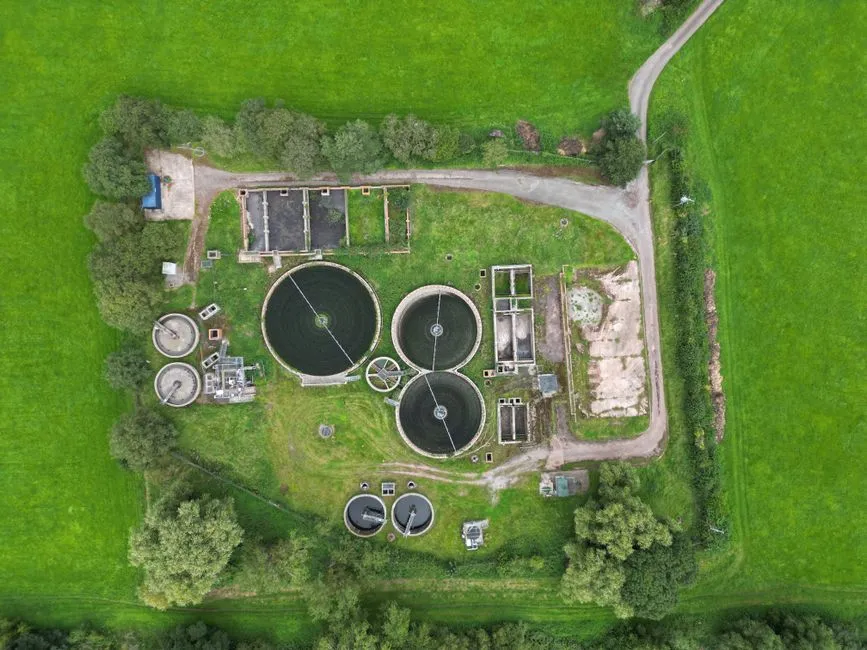
Use this four-step framework to convert the article into a one-page decision the procurement team can act on. It mirrors the way a plant engineer actually triages a vendor proposal in 2026.
- Characterize the feed. Run a jar test with site wastewater. Identify whether TSS is dominated by fines, FOG, hydroxide flocs, or settleable sand/silt. A 1 L jar test costs less than one day of pilot work and saves the wrong equipment order.
- Match feed to mechanism. Buoyant or floc-dominated feed → DAF system. Dense, inert, settleable feed → conventional or lamella clarifier. Mixed oily + high-density feed → DAF + lamella hybrid.
- Check the compliance envelope. Map the chosen unit's expected effluent to 40 CFR 437 monthly-average limits and to any Georgia EPD site-specific requirements. Add a multi-media polishing filter if the primary unit is forecast to land within 30% of any metal limit.
- Close the solids loop. Pair the primary separator with an automatic chemical dosing skid and a plate-and-frame filter press. Without chemical conditioning and sludge dewatering, neither DAF nor a clarifier reliably meets 40 CFR 437 on a sustained basis.
For most mid-sized Flowery Branch metals plants in 2026, the answer lands on the DAF + lamella hybrid: DAF to strip FOG and float metal-hydroxide flocs, lamella to settle the residual high-density tailings water, and a press to capture the cake. Plants that are purely aggregate-wash operations can stay on a lamella clarifier and skip the DAF entirely.
Frequently Asked Questions
What TSS removal can a DAF system realistically hit on a Flowery Branch mining or metals feed in 2026?
A well-sized DAF with proper coagulant and flocculant conditioning can cut TSS by up to 97% on fine, floc-dominated mining or metalworking feed, per 2026 manufacturer performance data. On a sand-dominated aggregate wash stream the same DAF will work but is typically over-specified — a lamella clarifier will deliver ~90% at lower steady OPEX.
Does a DAF system or a clarifier do a better job of meeting 40 CFR 437 heavy-metal limits?
DAF is generally the more reliable primary unit for the 40 CFR 437 Ore Mining heavy-metal suite (Pb 0.69, Zn 1.48, Cu 3.38, Ni 3.98, Cr 2.77 mg/L monthly averages) because the float captures freshly precipitated hydroxide flocs on the first pass. A clarifier typically needs a coagulant aid plus a downstream polishing filter to hit the same metal numbers, and the engineer should always verify the current e-CFR text and any Georgia EPD site-specific limit before final equipment selection.
How does a DAF system actually lift solids — what bubble size and pressure are involved?
A DAF saturator pressurizes a recycle stream to ≥5 bar to dissolve air into water, then releases the pressure through proprietary nozzles. The pressure drop generates 30–50 µm microbubbles (per SigmaDAF / Clearwater Industries process data, 2026) that attach to conditioned flocs and lift them to the surface, where a counter-current skimmer removes the float. Saturation pressure and air-to-solids ratio are the two design knobs a jar test will not tell you — pilot or vendor data does.
Is a DAF + lamella hybrid worth the extra cost for a Flowery Branch metals plant?
For a mid-sized plant that mixes oily metalworking waste with high-density tailings water — a common 2026 scenario in the Hall County fabricated-metals and aggregate corridor — yes. The DAF strips FOG and floats metal-hydroxide flocs, the lamella settles the residual sand and silt, and the combined effluent sits well inside 40 CFR 437 envelope without a third polishing stage. For a pure aggregate wash plant the hybrid is overkill; a lamella alone will do. A Fairhope mining and metals buyer's guide covers a similar hybrid question for Alabama plants with comparable brownfield constraints.