Why Monterey mining and metals plants are re-evaluating clarification in 2026
For any metal-finishing, aggregate, or ore-processing facility discharging process water in Monterey County, 40 CFR Part 437 (Ore Mining and Dressing) sets the binding effluent envelope: a daily maximum TSS of 50 mg/L, a 30-day average of 30 mg/L, and tight daily maxima on total recoverable metals including lead at 0.6 mg/L, zinc at 1.5 mg/L, and copper at 1.0 mg/L (per EPA 40 CFR 437). Those numbers are non-negotiable design drivers. Clarification equipment must hit them on the first pass, rather than relying on a polishing filter installed later.
Layered on top of the federal rule is the Central Coast Regional Water Quality Control Board (Region 3) Basin Plan, which in 2026 is putting pressure on inland mining and metals sites to reduce brine discharge and freshwater draw, as seawater intrusion in the Salinas Valley and Carmel Valley aquifers is actively degrading drinking-water supply (per Central Coast RWQCB Basin Plan, 2024 update, still in force 2026). If your plant is upstream of a municipal user, the regulator is requesting water-reuse rates that push clarifier overflow toward reverse-osmosis feed quality.
The EPA Superfund Record of Decision for the Operating Industries site in Monterey Park, California (1988) priced landfill-gas and leachate control at a present worth of $73,000,000 with annual O&M of $2,340,090 — that ROD framework is the risk-weighted approach the Central Coast RWQCB applies to mining-impacted streams today. 2026 is not the year to under-spec a clarifier.
How a DAF system actually separates metals and fines
A dissolved air flotation unit removes suspended solids by nucleating micro-bubbles on flocculated particles and skimming the float. Mechanically, a recycle side-stream of clarified water is saturated with air in a pressure vessel at 4–6 bar, then released into the flotation tank at atmospheric pressure; the pressure drop forces dissolved air out of solution, generating bubbles typically 10–80 µm in diameter that attach to floc and lift it to the surface, where a chain-and-flight skimmer removes the float layer (WWD Magazine, "What is dissolved air flotation?").
For a mining or metals feed, this mechanism is well matched to the challenge. DAF captures fine particles, residual flotation reagents from mill circuits, and emulsified oils that gravity settlers cannot hold — the same particle classes the Central Coast RWQCB is now flagging (Seven Seas Water, "Industrial Applications of Dissolved Air Flotation"). Coagulant selection drives downstream performance: alum, poly aluminum chloride, poly aluminum sulfate, ferric chloride, bentonite, and organic polymers are all options, and a 2023 study cited by WWD Magazine shows polymeric aluminum favors soluble silica removal while monomeric aluminum favors soluble COD; therefore, chemistry choice is not interchangeable site-to-site.
For hazardous slurries, the air can be swapped for nitrogen in a dissolved-gas flotation (DGF) configuration, holding outlet oil below 25 ppmv and eliminating the explosion envelope (WWD Magazine). Skid packages covering 4–300 m³/h such as the HydropureWater dissolved air flotation system ship factory-built with the saturator, recycle pump, and skimmer already piped, offering a schedule advantage for a 2026 retrofit.
How a lamella clarifier actually settles the same stream
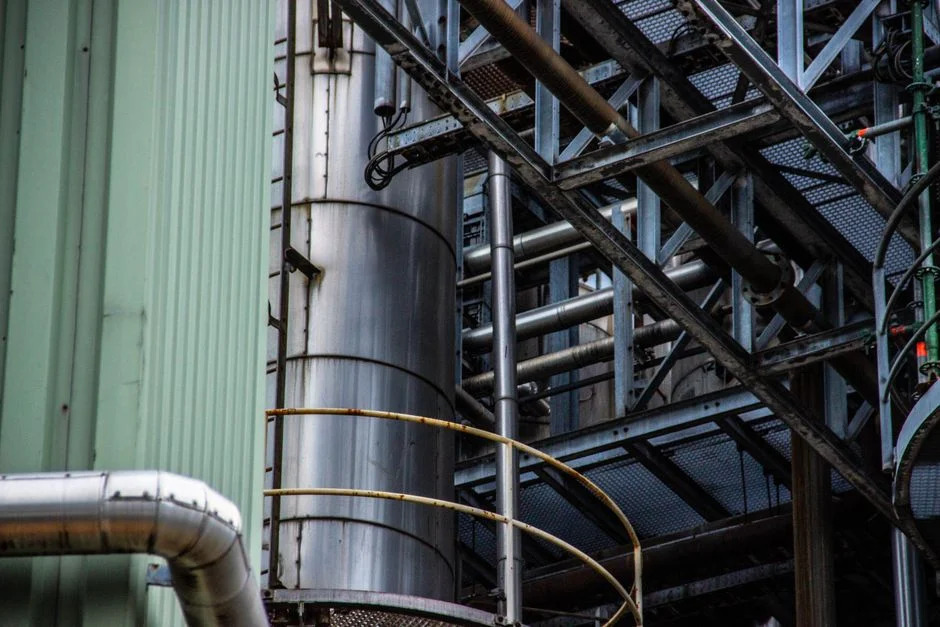
A lamella clarifier, or inclined-plate settler, is a gravity device where wastewater flows upward through a stack of parallel plates inclined at 55–60°, allowing solids to settle onto the plate face and slide into a sludge hopper. Choosing between DAF and lamella technology often depends on whether your site requires removal of emulsified oils or strictly settleable solids. The plate stack multiplies the effective settling area inside a small footprint, which is why the technology is favored where floor space is tight but feed solids are settleable. Operating surface loading rates for a well-designed lamella run 20–40 m/h on coagulated feed (HydropureWater lamella clarifier specification).
Strengths include lower energy use, no saturator, simpler controls, and lower chemical demand—typically up to 30% less polymer consumption than a comparable DAF on settleable feeds. The unit tolerates high hydraulic throughputs and is forgiving of operator error. Where it falls short is in the capture of emulsified oils, light floc, and fine colloidal clays common in metal-finishing rinse water and tailings thickener overflow, as their settling velocity is often below what the plate spacing and residence time can capture.
The honest framing for a 2026 Monterey plant is that a lamella is most often a workhorse polishing or sludge-thickening step, not the primary heavy-metal remover. The HydropureWater lamella clarifier typically sits downstream of coagulation and pH adjustment, or behind a DAF as a solids-concentration step before a filter press.
DAF vs clarifier in mining service: the five-criterion comparison
Below is a side-by-side engineers can hand to a plant manager.
| Criterion | DAF (dissolved air flotation) | Lamella clarifier (inclined plate settler) |
|---|---|---|
| 1. Removal performance | Typically >90% TSS on coagulated feed; strong on metals bound to fines, residual flotation reagents, and emulsified oils (per WWD Magazine; Seven Seas Water). | 60–85% on settleable solids; weak on colloidal fines, light floc, and emulsified oils. Metals removal depends on prior precipitation. |
| 2. Footprint | Compact for a given flow because hydraulic residence time is short (5–20 min). A 50 m³/h skid typically fits inside one 40 ft container footprint. | Uses inclined plates to compress settling area; still larger than DAF at high removal targets. Civil tank is taller than a DAF cell of equal flow. |
| 3. OPEX | Energy-dominant: recycle pump and air compressor run continuously. Polymer dose 2–10 mg/L typical. Float handling adds sludge dewatering load. | Lower-energy (no compressed air). Up to 30% lower polymer consumption on settleable feeds (HydropureWater spec). Sludge handling-dominant. |
| 4. CAPEX | Skid DAF packages ship factory-built — lower install labor, faster commissioning. Mid-five-figures to low-six-figures USD depending on flow, material (304SS vs 316SS), and automation. | Capital-cheap per m³ of tank volume, but civil work, concrete, and erection dominate the installed cost. Schedule risk is concrete-cure time. |
| 5. Compliance fit (40 CFR 437) | Reliably hits daily-maximum TSS (50 mg/L) and metals on a single pass when coagulated and pH-adjusted correctly. | Usually paired with DAF, sand filtration, or membrane polish to meet 40 CFR 437 daily maxima. Stand-alone performance is marginal on metal-laden feed. |
DAF is the compliance pass, while the lamella is the cost and footprint optimizer. Most well-run Monterey sites end up running both in series.
Matching the technology to your Monterey plant's influent profile
Use the influent profile, not the catalog page, to make the call.
- High-TSS feed (>1,000 mg/L), oily or greasy metalworking rinse water, or any stream with emulsified oils: DAF primary. A lamella will pass the oils through and load the downstream filter.
- High hydraulic flow with predominantly settleable solids, and a downstream multimedia filter already in place: Lamella primary, DAF as optional polish. This is the configuration where a lamella's lower OPEX earns its keep.
- Variable feed strength or anticipated regulatory tightening through 2026–2028: DAF primary, with a lamella as sludge thickener and back-up. Pair the DAF with an automatic coagulant and flocculant dosing skid so the dose tracks influent spikes.
- Acidic metal-rich drainage (AMD-style) with pH 2–4 and high dissolved metals: DAF after pH adjustment to 8.5–9.5 and coagulant dosing to precipitate metals as hydroxides. A lamella only works once metals have been pre-precipitated, because dissolved metals do not settle regardless of plate geometry.
If you need a side-by-side for a different region, the Fairhope mining and metals 2026 factory guide applies the same framework on the Gulf Coast, and the Topeka mining wastewater 2026 guide covers the interior U.S. For brine or seawater-intrusion-adjacent sites planning toward zero liquid discharge, the ZLD configuration for acid mine drainage guide lays out the downstream train.
CAPEX, OPEX, and 2026 ROI sketch for a mid-size plant
For a mid-size Monterey facility treating 30–80 m³/h, a skid DAF package (4–300 m³/h, 13 models) typically lands in the mid-five-figures to low-six-figures USD depending on flow, stainless grade, and instrumentation — this is a 2026 budgetary range and should be confirmed against your specific feed. A civil lamella tank is cheaper per cubic meter of vessel volume but adds concrete, rebar, and erection labor that can erase 30–50% of the tank savings once installed (HydropureWater field data, 2026).
On OPEX, DAF is energy-dominant: the recycle pump, saturator, and air compressor together draw 0.3–0.8 kWh per m³ treated depending on recycle ratio. Lamella is chemical- and sludge-handling-dominant, with most of its operating cost in polymer and downstream dewatering. A 3-year payback logic on the Central Coast includes reduced freshwater draw (Monterey County surcharges industrial users), avoided effluent surcharges under 40 CFR 437, and reuse credit for RO feed-quality overflow, weighed against the incremental CAPEX of choosing DAF-plus-lamella over a single clarifier.
For sludge produced by either unit, a sludge dewatering filter press downstream of the clarifier cuts cake volume to 20–35% solids, which lowers hauling cost and improves the OPEX case. For a broader equipment selection context on coal and hard-rock mining, the coal mining wastewater equipment buyer's guide covers the parallel technology stack.
Frequently Asked Questions
Under 40 CFR 437, can a lamella clarifier meet the daily-maximum TSS limit of 50 mg/L on its own?
Rarely on a mining or metal-finishing feed. Stand-alone lamella performance on raw influent typically lands at 60–85% TSS removal, which only meets 50 mg/L if the feed is already below 150–200 mg/L. A DAF or multimedia filter downstream is the usual way to close that gap.
What is the typical hydraulic loading rate for a lamella clarifier in mining service?
20–40 m/h on coagulated feed (HydropureWater lamella clarifier specification). Above 40 m/h, even well-flocculated solids start to scour off the plate face and effluent quality drops sharply.
For an AMD-style stream at pH 3 with high dissolved iron and manganese, which technology comes first?
Neutralize to pH 8.5–9.5 with lime or caustic, dose a coagulant, then send the stream to a DAF. A lamella cannot remove dissolved metals regardless of plate geometry, and putting it first just loads it