
Why Generic ZLD Pages Fail Acid Mine Drainage
Acid mine drainage (AMD) carries pH typically 2–4, sulfate often 1,000–5,000 mg/L, and elevated dissolved iron, manganese, and aluminum, with trace copper, zinc, and arsenic in coal and metal-mine contexts. Each of these species breaks the assumptions baked into a generic mine-water ZLD article. Sulfate above ~1,500 mg/L drives gypsum (CaSO4·2H2O) scaling on heat-transfer surfaces and forces a pretreatment block upstream of any thermal stage. Chloride above 10,000 mg/L in deeper pit water shifts metallurgy to higher alloys in the evaporator body. Residual dissolved metals foul reverse osmosis membranes and depress recovery below the 95–98% MLD band that a standard ZLD guide quotes without qualification.
Standard "ZLD for mines" sources (e.g., Minetek, 2026) treat the wastewater as a generic concentrate, and that framing is where the engineering gap starts. AMD-specific chemistry breaks the assumption that a single block of mechanical evaporation can be dropped in front of a clarifier, and forces an AMD-tuned pretreatment train: lime or NaOH neutralization, gypsum dewatering, metals precipitation, and a DAF or lamella clarifier. The 2020 University of Rhode Island co-treatment thesis (S5) reinforces the point academically: AMD remains a distinct, high-risk waste stream even when co-managed with municipal effluent, because its sulfate and metals load sits well outside typical municipal design envelopes.
The second gap is energy basis. A generic ZLD page lists evaporator type without quantifying steam-versus-electricity trade-offs against AMD's high-fouling feed. The third gap is the disposal endpoint. AMD generates both a crystallized mixed-salt cake and a high-volume gypsum cake; only the AMD-specific configuration treats these as separate engineering and financial streams. None of the top three results in this SERP carry that chemistry-first framing, which is why a properly scoped AMD ZLD spec has to start with the water analysis, not the equipment list.
The Four-Block ZLD Configuration for AMD
A ZLD configuration for acid mine drainage stacks four blocks, and each block's output defines the next block's feed spec. Treat this as a process flow, not a parts list.
Block 1 — AMD-specific pretreatment. Lime (Ca(OH)2) or sodium hydroxide raises raw AMD from pH 2–4 to pH 8.5–9.5 in a staged reactor, with a PLC-controlled chemical dosing system for AMD neutralization holding the setpoint within ±0.2 units. At that pH, sulfate precipitates as gypsum and dissolved iron, manganese, and aluminum drop out as hydroxides; the slurry is then thickened in a lamella clarifier for AMD gypsum separation, with a DAF system for AMD pretreatment polishing the overflow when colloidal metal hydroxides carry over. The underflow gypsum and metal-hydroxide cake is dewatered on a filter press for AMD gypsum and metal-hydroxide cake to 60–70% solids before landfill or mine-backfill placement. The clarifier overflow is the feed to Block 2.
Block 2 — Primary concentration. A brackish-water reverse osmosis train takes the pretreated feed and recovers 95–98% of the water at roughly 3–6 kWh/m³, depending on feed TDS and recovery target. Where sulfate remains high after lime softening, nanofiltration can be substituted to selectively pass monovalent ions and reject divalent sulfate, which protects the downstream evaporator from gypsum scaling. This is the workhorse block; in many operations it is the only concentration step, and the MLD-only case stops here. A heavy-metal polishing step using sulfide precipitation for dissolved metals in AMD sits ahead of the membranes when arsenic, mercury, or selenide specifications demand sub-ppb effluent quality.
Block 3 — Thermal polishing. The RO concentrate, now 5–10% of the original volume at 50,000–80,000 mg/L TDS, feeds either an MEE or MVR evaporator that drives water recovery from 95–98% to ~100%. Block 3 is what turns a MLD plant into a ZLD plant, and it is the single largest capex line in the train.
Block 4 — Crystallization. The evaporator bottoms at 200,000–250,000 mg/L TDS feed a forced-circulation crystallizer that produces a dry mixed-salt cake (typically Na2SO4/NaCl with residual CaSO4) for landfill, sub-surface disposal, or — where the 10% mineral-recovery tax credit applies — saleable byproduct. This block is small in flow but defines the project's waste-handling liability and, increasingly, its revenue line. The four-block stack is summarized in the table below.
| Block | Function | Key Equipment | Typical Output Spec |
|---|---|---|---|
| 1 — Pretreatment | pH correction, gypsum precipitation, metals removal | Lime/NaOH dosing, lamella clarifier, DAF, filter press | Overflow at pH 8.5–9.5, sulfate <1,500 mg/L, Fe/Mn/Al <1 mg/L each |
| 2 — Primary concentration | Volume reduction 95–98% | Brackish RO or nanofiltration | Permeate <500 mg/L TDS; concentrate 50,000–80,000 mg/L |
| 3 — Thermal polishing | Drive recovery to 100% | MEE or MVR evaporator | Distillate <50 mg/L TDS; bottoms 200,000+ mg/L |
| 4 — Crystallization | Solidify residual brine | Forced-circulation crystallizer, centrifuge, dry cake handling | Dry mixed-salt cake at >95% solids |
MEE vs MVR vs Hybrid: Choosing the Thermal Stage
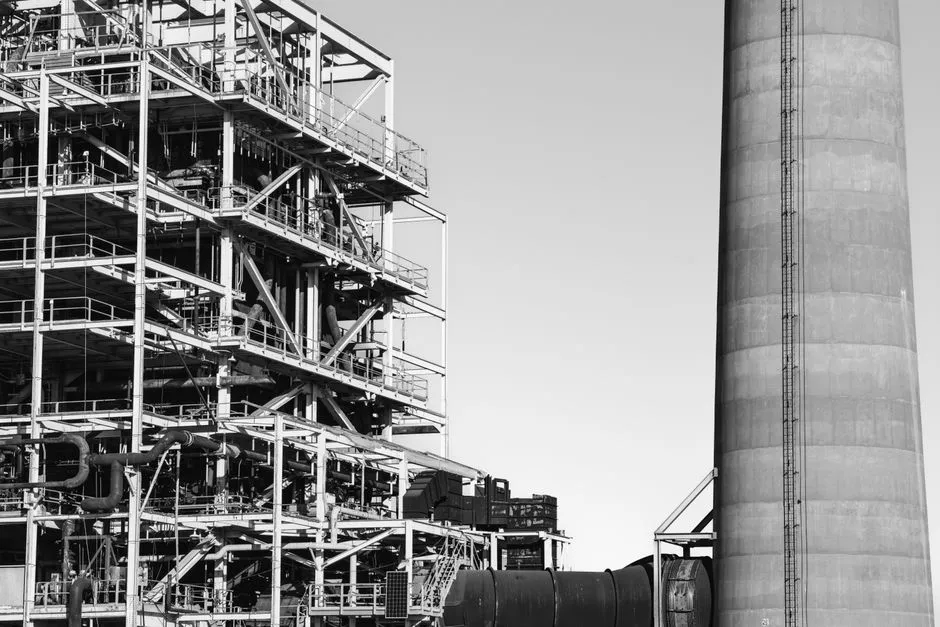
The thermal stage is the most expensive block in an AMD ZLD train, and the choice between mechanical vapor recompression (MVR), multi-effect evaporation (MEE), and a hybrid train is driven by feed character, energy basis, and site steam availability. The parameter table below summarizes the engineering trade-offs.
| Parameter | MEE (Multi-Effect Evaporation) | MVR (Mechanical Vapor Recompression) | Hybrid (MEE → MVR) |
|---|---|---|---|
| Feed TDS range | 50,000–250,000 mg/L (high-fouling tolerant) | 30,000–80,000 mg/L (cleaner feed preferred) | MEE up front, MVR polish on the cleaner RO concentrate |
| Energy basis | Steam-driven; 0.25–0.35 kWh electrical + steam equivalent per m³ (descriptive range) | Electrically driven; lower steam demand, higher electrical load | Blended; uses waste-heat steam for MEE first stage |
| Fouling tolerance | High — handles gypsum, silica, and metals variability | Lower — sensitive to scaling; needs soft RO feed | High — MEE absorbs the fouling, MVR polishes the clean side |
| Capex / opex character | Lower capex if steam is available; higher opex from steam | Higher capex (compressor); lower opex when power is reliable | Highest capex; balanced opex on brownfield sites with existing steam |
| Best-fit AMD scenario | Variable AMD chemistry, remote site with available steam | Brownfield site with reliable power, RO pre-polished feed | Variable influent + existing waste-heat steam, large throughput |
MVR is the energy-lean choice when a reliable power supply and lower steam demand matter; the trade-off is a higher electrical load on the compressor and tighter feed-quality limits because compressor-driven evaporators scale faster than steam-driven ones. MEE is the default for high-fouling, high-TDS AMD brines because the steam-driven, falling-film configuration handles gypsum and silica variability with simpler metallurgy. A hybrid train — MEE followed by MVR — is appropriate when influent is variable or when a brownfield site already has waste-heat steam available from a power island or autoclave vent. Exact steam-kWh figures should be sourced from vendor selection sizing; the energy ranges in the table above are descriptive engineering bands, not site-specific projections.
Reuse, Discharge, or Closure Storage: The Decision Tree
Whether the full ZLD train — or only a 95–98% MLD plant — is justified depends on three site-specific variables: water-stress context, regulatory trajectory, and closure-liability exposure. The decision framework below maps those variables to the right plant scope.
| Site Condition | MLD Only (RO/NF, 95–98% recovery) | Partial ZLD (RO + thermal polish, >99% recovery) | Full ZLD (four-block, 100% recovery) |
|---|---|---|---|
| Water-stress index (high/medium/low) | Low: brine can be stored or evaporated in ponds | Medium: minimize pond volume, recover most water | High: zero liquid discharge required to maintain social license |
| Regulatory trajectory (2026–2030) | Permitted surface discharge still available; standards stable | Tightening standards; partial discharge permitted but shrinking | Standards banning liquid discharge by 2030 (S4); ZLD future-proofs the site |
| Closure-liability exposure | Long-term pond management acceptable; closure bond modest | Closure plan requires reduced pond volume | Closure requires dry solids only; no post-closure water treatment obligation |
On the reuse path, RO permeate is returned to the process — heap-leach make-up, dust suppression, mill wash, or cooling-tower make-up — and MLD-only is often sufficient, avoiding the thermal capex entirely. On the discharge path, in jurisdictions still permitting surface discharge, the RO permeate plus compliant brine disposal may satisfy permit limits; however, evolving standards (S4) potentially banning liquid discharge by 2030 raise the floor for ZLD adoption in any new spec. On the closure path, ZLD is the lowest-liability option because accumulated pit water and tailings water can be processed to dry solids before mine closure, removing long-term post-closure water management obligations. A site scoring high on water-stress index, facing tightening regulation, and carrying significant closure exposure lands in the full ZLD column. A site with low water stress, stable regulation, and modest closure bonding can justify stopping at MLD.
Integrating ZLD with Mine Water Strategy and Closure Planning
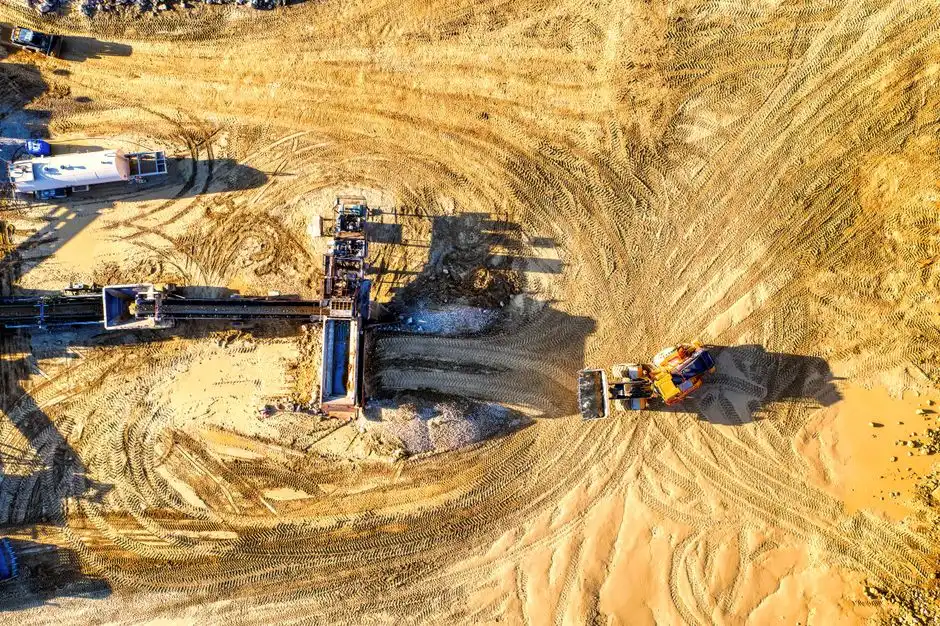
ZLD is not a standalone skid, and sizing it against only the design-day AMD flow is the most common spec error. The train must be sized against cumulative tailings water, pit dewatering, and process wastewater generation over the full mine life, including the 5–10 years of post-closure seepage that most state regulators now require the operator to treat in perpetuity. A ZLD train commissioned mid-life becomes a closure asset: it processes accumulated water to dry solids instead of leaving a treatment pond for the next 30+ years, which materially reduces the financial assurance bond the regulator holds.
Where the 10% mineral-recovery tax credit (S4) applies, the brine stream is a revenue line, not a cost center, and that changes the financial model of the train. A saleable sodium-sulfate or mixed-salt byproduct can offset 15–30% of the evaporator opex, depending on market price and purity. Operational integration matters as well: chemical dosing, sludge dewatering, and RO pretreatment are continuous-duty plant functions delivered by equipment such as an MBR-integrated wastewater treatment train and a multi-media filter for RO feed polishing, not campaign-mode additions. Specifying ZLD as an integrated node in the mine water plan — rather than a bolt-on evaporator — is what separates a defensible 2026 spec from one that will be re-engineered at the next permit renewal. For engineers working through the broader heavy-metal wastewater envelope, the same configuration logic appears in the related ZLD blueprint for heavy-metal wastewater.
Frequently Asked Questions
What ZLD configuration treats acid mine drainage for reuse or discharge?
A four-block ZLD configuration treats acid mine drainage for reuse or discharge: (1) AMD-specific pretreatment with lime/NaOH neutralization, gypsum precipitation, metals removal, and a lamella clarifier or DAF; (2) primary concentration by reverse osmosis or nanofiltration, recovering 95–98% of the water; (3) thermal polishing with MVR or MEE to drive recovery to 100%; and (4) crystallization of the residual brine into a disposable or recoverable salt cake.
What is the difference between MLD and ZLD for AMD?
MLD (minimum liquid discharge) for AMD targets 95–98% water recovery using RO or NF only, leaving 2–5% of the flow as a brine that is stored, evaporated in ponds, or further treated. ZLD adds a thermal polishing block (MEE or MVR) and a crystallizer to drive recovery to 100%, producing only dry solid residuals and eliminating all liquid discharge from the mine site.
How do I choose between MEE and MVR for AMD brine?
Choose MEE for variable, high-fouling AMD brines above 80,000 mg/L TDS where steam is available and scaling tolerance matters more than energy efficiency. Choose MVR for cleaner RO pre-polished feed below 80,000 mg/L TDS where reliable power is available and lower steam demand justifies the higher compressor capex. Choose a hybrid MEE→MVR train when the influent is variable and the site already has waste-heat steam from a power island or autoclave vent.
Will liquid discharge from mines be banned by 2030?
Regulatory trajectories in multiple jurisdictions point toward tightening discharge standards that could effectively ban routine liquid discharge from new and expanding mine operations by 2030 (S4, 2026). Operators specifying AMD treatment today should size the train against the 2030 envelope, not the current permit, and treat the thermal polish block as a future-proofing investment rather than a discretionary add-on.
Related Equipment
- industrial RO system for AMD concentrate volume reduction — specifications, capacity range, and technical data