Why Chemical Wastewater in East Setauket Is a Different Decision
East Setauket batch chemical plants discharge a wastewater fingerprint that breaks the assumptions most generic DAF-versus-clarifier articles are built on. Effluent pH swings 2–12 between campaign changes; reactor wash water carries oil-in-water emulsions stabilized by surfactants; catalyst residues settle as dense inorganic fines; and occasional solvent spikes defeat biological treatment. The Setauket / Port Jefferson industrial corridor feeds the Suffolk County Sewer District No. 1 (SCSD #1) interceptor, which enforces a local industrial waste permit on top of New York State SPDES discharge rules. Underneath both sits the federal floor: 40 CFR 446 (Organic Chemicals, Plastics, and Synthetic Fibers), which sets oil and grease at 37 mg/L daily max and TSS at 60 mg/L daily max for the category. Food-plant DAF case studies and mining clarifier case studies transfer poorly to this matrix because the inlet is rarely a steady oil load or a steady mineral load; it is a campaign-driven mix that demands a configurable train, not a single unit.
How a DAF and a Clarifier Actually Treat Chemical Streams
A dissolved air flotation chemical plant system works by pressurizing a recycle stream of clarified effluent with air, then releasing that pressure through a nozzle near the tank center. The pressure drop nucleates 20–40 micron micro-bubbles that attach to oil droplets and fine TSS, reducing particle density and floating the load to the surface for skimming. Per ClearStream, the bubble generator sits at tank center to maximize contact time before clarified water exits below the separation wall. The chemistry front-end — coagulant plus flocculant — is what turns an emulsion into a floatable floc; without it, the bubble column passes through the oil without attachment. Komline's product literature puts it plainly: DAF is best applied to materials that settle slowly, persist in suspension, or tend to float — exactly the description of an emulsified reactor wash water or a latex residue stream.
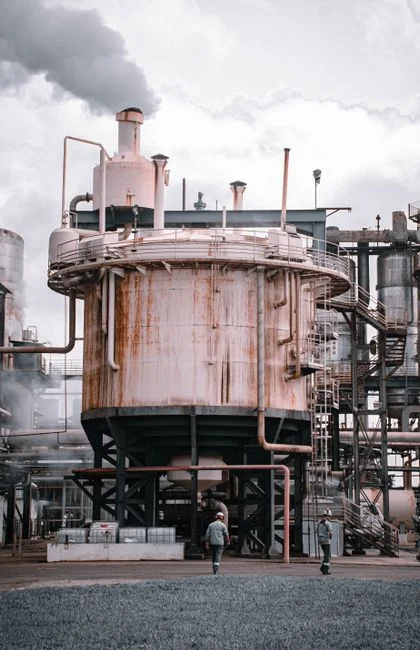
A lamella clarifier, including the HydropureWater high-efficiency lamella clarifier, does the opposite job. Quiescent flow passes between inclined plates spaced roughly 50 mm apart; effective settling area is multiplied by the plate count, so a lamella pack reaches 20–40 m/h surface loading in a footprint roughly one-third that of a conventional clarifier. It wins where sludge settleability is good — metals hydroxide precipitation, gypsum-like sulfate slurries, catalyst fines — and loses where the load is buoyant or emulsified. The hybrid DAF-then-clarifier train uses the DAF to strip oil and float light TSS first, then sends the underflow to a lamella for a polish on whatever settleable carryover remains. That configuration is the 2026 default for mixed East Setauket streams.
DAF vs Clarifier: Side-by-Side for Chemical Plants
Generic comparison pages stop at "DAF for oils, clarifier for solids." Chemical-plant procurement in 2026 needs a parameter matrix, not a slogan. The table below consolidates the numbers that actually drive a capex decision for a 5–80 m³/h batch chemical facility on Long Island.
| Parameter | DAF (e.g., HydropureWater / FC Maximizer) | Lamella Clarifier | Hybrid DAF + Lamella |
|---|---|---|---|
| TSS removal | 92–98% (DAF Corp FC Maximizer, zero-velocity shallow tank) | 70–90% on settleable solids | >95% combined |
| Oil & grease removal | ~95% (Ecologix, 2026 update) | ~70% (Ecologix, 2026 update) | >97% |
| Footprint at 50 m³/h | 0.4–0.6 m² per m³/h, rectangular shop-assembled | 0.2–0.3 m² per m³/h, taller profile | Sum of both plus 1–2 m walkway |
| Hydraulic retention | 15–30 min | 60–120 min | 80–150 min total |
| CapEx band, 50 m³/h (USD) | 80,000–450,000 (DAF skid range, 4–50 m³/h) | 60,000–120,000 | 150,000–550,000 |
| OpEx band (USD/m³) | 0.08–0.20 (air, recycle pump, polymer) | 0.05–0.15 (sludge pumping, polymer) | 0.12–0.30 |
| Chemical demand | pH adjust + coagulant + flocculant typical | pH adjust + flocculant, less on dense inorganics | Both skids, optimized per stage |
| Operator skill | Moderate (air system, recycle ratio) | Low-to-moderate (sludge wasting) | Moderate (two unit processes) |
| Best-fit chemical substream | Reactor wash water, lube oils, latex residues, surfactants | Metals precipitation, catalyst fines, sulfate slurries | Mixed emulsions + solids, the typical East Setauket batch case |
CapEx ranges are planning-grade only. Komline (2026 catalog) states explicitly that DAF cost is "difficult to give a specific cost since there are many sizes and designs" — get a budgetary quote against your jar-test data before locking a number. The HydropureWater dissolved air flotation system is sized for the 4–300 m³/h envelope that covers most Suffolk County batch sites.
Sizing for East Setauket Chemical Plants: Flow Ranges and Layouts
Suffolk County batch chemical plants typically peak at 5–80 m³/h, driven by reactor wash-downs, CIP cycles, and campaign changeovers rather than steady production. DAF Corp catalogs the same envelope with skid units from 48 gpm (≈11 m³/h) up to 11,000 gpm (≈2,500 m³/h) circular field-erected tanks, which means the equipment is not the constraint — building access is. Rectangular DAFs ship fully shop-assembled with integral coagulation and flocculation chambers, so a Setauket plant with a 3 m doorway and a 12 m bay can drop a 30 m³/h unit in during a long weekend without breaking the concrete. Circular DAFs become attractive above ~50 ft diameter where the torque-tube rotating skimmer design is more economical per square foot of surface area, but they want a greenfield concrete tank. The HydropureWater high-efficiency lamella clarifier covers the same flow range in roughly one-third the footprint of a conventional clarifier, which matters when the plant sits on a constrained East Setauket lot near the harbor.
Chemistry in Front of the Unit: Coagulants, Flocculants, pH
Unit selection without chemistry tuning is decoration. Komline's 2026 product page notes that chemical pretreatment is "often required to increase the effectiveness" of DAF, and the same is true of clarifier performance on chemical emulsions. For East Setauket reactor wash water carrying emulsified oils, the front-end envelope is: pH adjustment to 6.5–8.5 with sulfuric acid or caustic, a coagulant dose (alum at 50–150 mg/L, PAC at 20–80 mg/L, or ferric chloride at 30–100 mg/L) to neutralize the surfactant charge at the oil-water interface, and a cationic polyacrylamide flocculant at 1–5 mg/L to build a floatable or settleable floc. An HydropureWater automatic chemical dosing skid with flow-paced control keeps the dose on target across batch swings — important because campaign changeovers hit within minutes, not hours. If the stream carries non-biodegradable solvents or resins, send the DAF float to a HydropureWater plate and frame filter press rather than back to a biological stage; the press reaches 22–28% dry solids versus 2–4% straight out of the DAF, which cuts disposal cost and avoids recycling toxic load.
Compliance Check: 40 CFR 446 and NY-SPDES Limits
The federal baseline is 40 CFR 446 — Organic Chemicals, Plastics, and Synthetic Fibers — which is the category most Setauket specialty/batch chemical plants fall into. Representative daily-maximum limits are oil & grease 37 mg/L and TSS 60 mg/L, with COD and BOD benchmarks varying by subcategory. New York State SPDES permits typically mirror the federal numbers but may add monitoring on pH (6.0–9.0 range), sulfide, and specific organics; Suffolk County SCSD #1 then layers its own industrial waste permit on top, and SCSD can impose stricter local limits through its discharge authorization. A clarifier alone on a real chemical emulsion is borderline: Ecologix's 2026 update puts clarifier oil removal at ~70% from a 200+ mg/L feed, which would leave ~60 mg/L in the effluent — above the 37 mg/L federal daily max. A DAF at ~95% oil removal from the same feed leaves ~10 mg/L, comfortably under the limit. The table below summarizes the regulatory envelope for a 2026 East Setauket capex.
| Parameter | 40 CFR 446 Daily Max | Typical NY-SPDES Permit | Clarifier-Only Effluent (est.) | DAF Effluent (est.) |
|---|---|---|---|---|
| Oil & grease | 37 mg/L | 15–25 mg/L (SCSD may require lower) | ~60 mg/L (fails) | ~10 mg/L (passes) |
| TSS | 60 mg/L | 30–50 mg/L | 20–60 mg/L (borderline) | 5–20 mg/L (passes) |
| pH | 6.0–9.0 (standard) | 6.0–9.0 with continuous monitoring | Set by chemistry skid | Set by chemistry skid |
| COD | Subcategory-specific | Subcategory-specific | 40–60% removal | 50–70% removal |
Before sizing, run a jar test plus a DAF bench test on a representative worst-case batch. Komline (2026) confirms lab or pilot testing is the standard feasibility method for chemical streams; both Komline and DAF Corp rent pilot units in the 48–500 gpm range so a Setauket plant can validate performance without a capex commitment. The DAF or clarifier for chemicals wastewater in Morristown guide walks the same feasibility logic for a comparable New Jersey corridor and can be read in parallel for the bench-test protocol.
Decision Framework: Which Unit Should Your East Setauket Plant Pick in 2026?
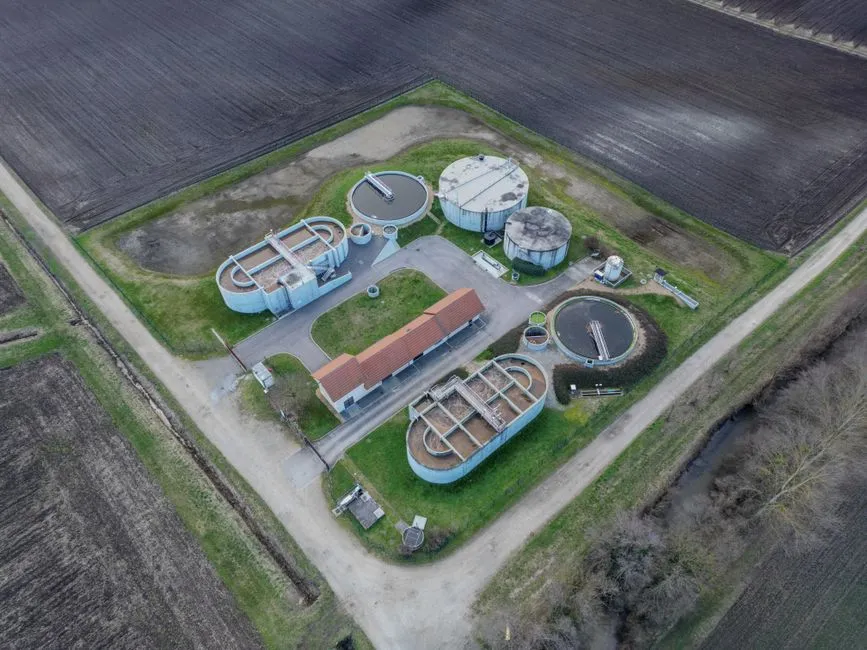
Use this decision tree during your next planning meeting:
- Stream >70% oil/grease or stable emulsion: Specify a DAF only, in the HydropureWater DAF range of 4–300 m³/h. Budget USD 100,000–500,000 for a 50 m³/h skid with chemistry front-end. Float goes to sludge dewatering, not back to biology.
- Stream >70% dense inorganic TSS (metals precipitation, catalyst fines, sulfate slurries): Specify a lamella clarifier only. Budget USD 60,000–120,000 for 50 m³/h, with a pH adjustment skid upstream if metals are pH-sensitive.
- Stream is a mix of oils, organics, and inorganics — the typical East Setauket batch-chemical case: Specify a hybrid DAF-then-lamella train, with the automatic chemical dosing skid upstream and a plate and frame filter press downstream for float dewatering. Budget USD 200,000–550,000 for 50 m³/h. This is the 2026 default for most Suffolk County batch chemical sites discharging to SCSD #1.
- Budget cap below USD 100,000 for 50 m³/h: Choose a lamella clarifier and tighten upstream segregation to keep emulsions out of the stream. A clarifier alone will not reliably meet 40 CFR 446 oil & grease on a mixed chemical feed, so this is a compromise, not a default.
- Always run a pilot first. Komline-Sanderson and DAF Corp both offer rental pilot units (48–500 gpm); an on-site two-week pilot costs a fraction of a capex mistake and generates the data your SPDES renewal will need.
Frequently Asked Questions
Can a chemical plant use a DAF and a clarifier on the same stream?
Yes. A DAF-then-lamella-clarifier train is the standard 2026 hybrid for mixed emulsions and is documented across the commercial DAF literature as a way to combine oil removal with sediment polishing. Plan for two unit processes, two chemistry feed points, and a shared sludge-handling train.
What flow rate does a typical East Setauket batch chemical plant need to treat?
Most Suffolk County batch chemical sites sit in the 5–80 m³/h range, well within the DAF envelope of 4–300 m³/h and the lamella clarifier envelope of 10–200 m³/h. Size to your 95th-percentile hourly flow, not your average, because campaign changeovers drive the peak.
How does a clarifier perform on chemical emulsions compared to DAF?
A lamella clarifier typically removes ~70% of oils versus ~95% for DAF on the same chemical emulsion (per the 2026 Ecologix selection guide). On a 200 mg/L oil feed, the clarifier leaves ~60 mg/L — above the 40 CFR 446 daily max of 37 mg/L — so it fails the federal limit on emulsified feeds without a DAF polish upstream.
Is pilot testing required before buying?
Strongly recommended. Komline (2026 catalog) and DAF Corp both state that lab or pilot testing is the standard feasibility method for chemical streams. Pilot rental from either vendor runs 48–500 gpm and produces the operating data — air-to-solids ratio, polymer dose, float solids — that your design basis needs.
What is the 40 CFR 446 oil and grease limit for chemical plants?
The federal benchmark is 37 mg/L daily maximum for the Organic Chemicals, Plastics, and Synthetic Fibers category. Suffolk County SCSD #1 may impose stricter local limits through its industrial waste permit, so confirm with your discharge authorization before sizing. Foam events on a DAF can also push you over a permit trigger; the 2026 foam control guide for wastewater treatment covers antifoam selection and weir design if you are seeing carryover. If COD is your binding constraint rather than oil & grease, the methods and technologies to reduce COD in industrial wastewater piece lays out the post-DAF polishing options.